Evaluation of the Potential Use of Cannabidiol in the Treatment of Cocaine Use Disorder: A Systematic Review

 Pharmacology Biochemistry and BehaviorCannabinoids may have an important therapeutic potential for the treatment of dependence on crack cocaine.

Cannabidiol (CBD), in particular, has anxiolytic, antipsychotic and anticonvulsant properties and plays a role in regulating motivation circuitry and controlling sleep disorders. Several studies were performed evaluating CBD in experimental models for cocaine.

This systematic review aims evaluate the potential use of CBD in the treatment of cocaine use disorder.

Major findings: Fifty-one studies were analyzed, and 14 were selected. No studies conducted with humans were found; only one clinical trial was ongoing. The results were grouped into the following categories: cocaine self-administration, brain-stimulation reward, conditioned place preference, neuronal proliferation, anxiety, hepatic protection, anticonvulsant effect and locomotor sensitization response Only four studies had a low risk of bias. CBD promotes reduction on cocaine self-administration. Also, it interferes in cocaine induce brain reward stimulation and dopamine release. CBD promotes alteration in contextual memory associated with cocaine and in the neuroadaptations, hepatotoxicity and seizures induced by cocaine.

Conclusion: The evidence indicates that CBD is a promising adjunct therapy for the treatment of cocaine dependence due to its effect on: cocaine reward effects, cocaine consumption, behavioral responses, anxiety, neuronal proliferation, hepatic protection and safety. Moreover, clinical trials are strongly required to determine whether the findings in animal models occur in humans diagnosed for cocaine or crack cocaine use disorder.”

https://pubmed.ncbi.nlm.nih.gov/32645315/

“CBD is a promising adjunct therapy for the treatment of cocaine dependence. CBD promotes reduction on cocaine self-administration.”

https://www.sciencedirect.com/science/article/pii/S0091305720300307?via%3Dihub

Anticancer Effect of New Cannabinoids Derived From Tetrahydrocannabinolic Acid on PANC-1 and AsPC-1 Human Pancreas Tumor Cells

View details for Journal of Pancreatic Cancer cover image

“New tetrahydrocannabinolic acid (THCA) derivatives ALAM027 and ALAM108 were proposed for the treatment of the pancreatic cancer disease.

Methods: The in vitro effect of new cannabinoids ALAM027 and ALAM108 was tested against PANC-1 and AsPC-1 cell lines by CellTiter Glo assay. Pancreatic cancer xenograft model was used for the in vivo anticancer activity study of these compounds on PANC-1 cells.

Results: The in vitro study of new cannabinoids showed greater activity of ALAM108 than ALAM027 both for PANC-1 and AsPC-1 cells. The in vivo study of new cannabinoids on PANC-1 cells showed that their oral administration was effective in reducing tumor volume and tumor weight, and did not lead to any discomfort and weight loss of mice.

Conclusion: The cannabinoids ALAM108 and ALAM027 inhibited the tumor growing 1.6-2 times in mice with human PANC-1 cells.”

https://pubmed.ncbi.nlm.nih.gov/32642629/

“The in vitro study of new cannabinoids showed greater activity of ALAM108 than of ALAM027 both for PANC-1 and AsPC-1 pancreas tumor cells. The in vivo study of these cannabinoids on PANC-1 cells showed that their oral administration decreased the tumor size 1.6–2 times and did not lead to any discomfort, psychotic effects, and weight loss of mice. Further study of these compounds will allow to determine the mechanism of their action on cancer cells and may open the way to new therapeutic drugs based on THCA.”

https://www.liebertpub.com/doi/10.1089/pancan.2020.0003

FIG. 1.

Cannabinoids and Cannabinoid Receptors: The Story So Far

 iScience journal (@iScience_CP) | Twitter“Like most modern molecular biology and natural product chemistry, understanding cannabinoid pharmacology centers around molecular interactions, in this case, between the cannabinoids and their putative targets, the G-protein coupled receptors (GPCRs) cannabinoid receptor 1 (CB1) and cannabinoid receptor 2 (CB2). Understanding the complex structure and interplay between the partners in this molecular dance is required to understand the mechanism of action of synthetic, endogenous, and phytochemical cannabinoids. This review, with 91 references, surveys our understanding of the structural biology of the cannabinoids and their target receptors including both a critical comparison of the extant crystal structures and the computationally derived homology models, as well as an in-depth discussion about the binding modes of the major cannabinoids. The aim is to assist in situating structural biochemists, synthetic chemists, and molecular biologists who are new to the field of cannabis research.”
https://pubmed.ncbi.nlm.nih.gov/32629422/

https://www.cell.com/iscience/pdf/S2589-0042(20)30488-0.pdf?_returnURL=https%3A%2F%2Flinkinghub.elsevier.com%2Fretrieve%2Fpii%2FS2589004220304880%3Fshowall%3Dtrue

Cannabidiol and Sports Performance: A Narrative Review of Relevant Evidence and Recommendations for Future Research

Sports Medicine - Open Cover Image “Cannabidiol (CBD) is a non-intoxicating cannabinoid derived from Cannabis sativa. CBD initially drew scientific interest due to its anticonvulsant properties but increasing evidence of other therapeutic effects has attracted the attention of additional clinical and non-clinical populations, including athletes.

Unlike the intoxicating cannabinoid, Δ9-tetrahydrocannabinol (Δ9-THC), CBD is no longer prohibited by the World Anti-Doping Agency and appears to be safe and well-tolerated in humans. It has also become readily available in many countries with the introduction of over-the-counter “nutraceutical” products.

The aim of this narrative review was to explore various physiological and psychological effects of CBD that may be relevant to the sport and/or exercise context and to identify key areas for future research. As direct studies of CBD and sports performance are is currently lacking, evidence for this narrative review was sourced from preclinical studies and a limited number of clinical trials in non-athlete populations.

Preclinical studies have observed robust anti-inflammatory, neuroprotective and analgesic effects of CBD in animal models. Preliminary preclinical evidence also suggests that CBD may protect against gastrointestinal damage associated with inflammation and promote healing of traumatic skeletal injuries. However, further research is required to confirm these observations.

Early stage clinical studies suggest that CBD may be anxiolytic in “stress-inducing” situations and in individuals with anxiety disorders. While some case reports indicate that CBD improves sleep, robust evidence is currently lacking. Cognitive function and thermoregulation appear to be unaffected by CBD while effects on food intake, metabolic function, cardiovascular function, and infection require further study.

CBD may exert a number of physiological, biochemical, and psychological effects with the potential to benefit athletes. However, well controlled, studies in athlete populations are required before definitive conclusions can be reached regarding the utility of CBD in supporting athletic performance.”

https://pubmed.ncbi.nlm.nih.gov/32632671/

“CBD has been reported to exert a number of physiological, biochemical, and psychological effects that have the potential to benefit athletes. For instance, there is preliminary supportive evidence for anti-inflammatory, neuroprotective, analgesic, and anxiolytic actions of CBD and the possibility it may protect against GI damage associated with inflammation and promote the healing of traumatic skeletal injuries.”

https://sportsmedicine-open.springeropen.com/articles/10.1186/s40798-020-00251-0

Cannabinoids in Multiple Sclerosis: A Neurophysiological Analysis

Publication cover image “Objectives: To investigate the action of cannabinoids on spasticity and pain in secondary progressive multiple sclerosis, by means of neurophysiological indexes.

Conclusions: The THC-CBD spray improved spasticity and pain in secondary progressive MS patients. The spray prolonged CSP duration, which appears a promising tool for assessing and monitoring the analgesic effects of THC-CBD in MS.”

https://pubmed.ncbi.nlm.nih.gov/32632918/

https://onlinelibrary.wiley.com/doi/abs/10.1111/ane.13313

The Expression Level of Cannabinoid Receptors Type 1 and 2 in the Different Types of Astrocytomas

 SpringerLink“Astrocytomas, the most prevalent primary brain tumors, can be divided by histology and malignancy levels into four following types: pilocytic astrocytoma (grade I), diffuse fibrillary astrocytoma (grade II), anaplastic astrocytoma (grade III), and glioblastoma multiforme (grade IV). For high grade astrocytomas (grade III and grade IV), blood vessels formation is considered as the most important property.

The distribution of cannabinoid receptors type 1 (CB1) and cannabinoid receptor type 2 (CB2) in blood vessels and tumor tissue of astrocytoma is still controversial. Asrocytoma tissues were collected from 45 patients under the condition of tumor-related neurosurgical operation. The expression of CB1 and CB2 receptors was assessed using immunofluorescence, quantitative real-time RT-PCR and western blotting.

The results indicated an increased expression of CB1 receptors in tumor tissue. There was a significant difference in the mount of CB2 receptors in blood vessels. More was observed in the grade III and glioblastoma (grade IV) than astrocytoma of grade II and control.

This study suggested that, the expression increase of cannabinoid receptors is an index for astrocytoma malignancy and can be targeted as a therapeutic approach for the inhibition of astrocytoma growth among patients.”

https://pubmed.ncbi.nlm.nih.gov/32623617/

https://link.springer.com/article/10.1007%2Fs11033-020-05636-8

The Seed of Industrial Hemp ( Cannabis sativa L.): Nutritional Quality and Potential Functionality for Human Health and Nutrition

nutrients-logo“Hempseeds, the edible fruits of the Cannabis sativa L. plant, were initially considered a by-product of the hemp technical fibre industry. Nowadays, following the restorationing of the cultivation of C. sativa L. plants containing an amount of delta-9-tetrahydrocannabinol (THC) <0.3% or 0.2% (industrial hemp) there is a growing interest for the hempseeds production due to their high nutritional value and functional features.
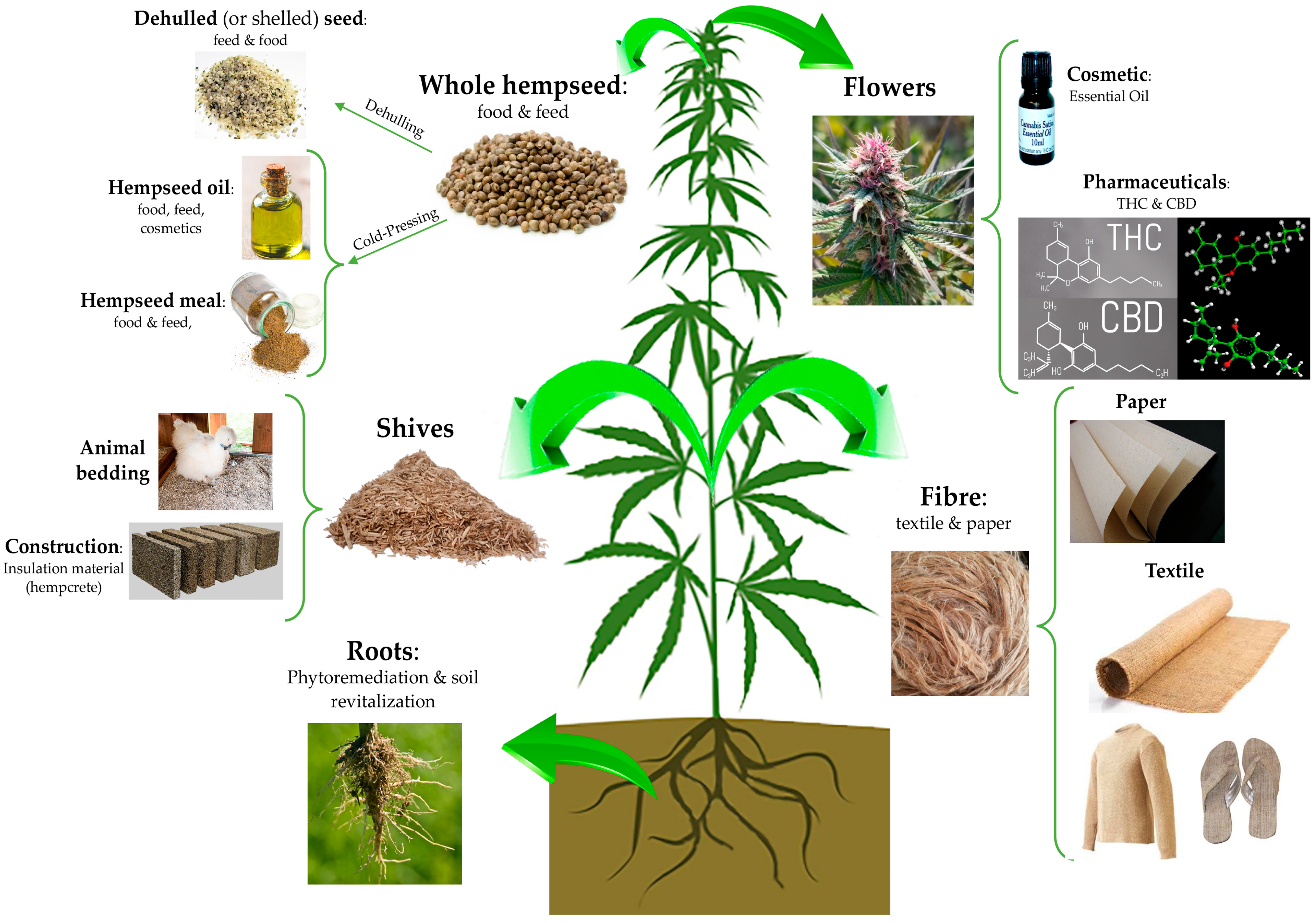

The goal of this review is to examine the scientific literature concerning the nutritional and functional properties of hempseeds. Furthermore, we revised the scientific literature regarding the potential use of hempseeds and their derivatives as a dietary supplement for the prevention and treatment of inflammatory and chronic-degenerative diseases on animal models and humans too.

In the first part of the work, we provide information regarding the genetic, biochemical, and legislative aspects of this plant that are, in our opinion essential to understand the difference between “industrial” and “drug-type” hemp. In the final part of the review, the employment of hempseeds by the food industry as livestock feed supplement and as ingredient to enrich or fortify daily foods has also revised.

Overall, this review intends to encourage further and comprehensive investigations about the adoption of hempseeds in the functional foods field.”

https://pubmed.ncbi.nlm.nih.gov/32610691/

https://www.mdpi.com/2072-6643/12/7/1935

Administration of Δ9-Tetrahydrocannabinol (THC) Post-Staphylococcal Enterotoxin B Exposure Protects Mice From Acute Respiratory Distress Syndrome and Toxicity

Frontiers in Pharmacology welcomes new Field Chief Editor ...“Acute Respiratory Distress Syndrome (ARDS) is a life-threatening complication that can ensue following Staphylococcus aureus infection. The enterotoxin produced by these bacteria (SEB) acts as a superantigen thereby activating a large proportion of T cells leading to cytokine storm and severe lung injury.

Δ9Tetrahydrocannabinol (THC), a psychoactive ingredient found in Cannabis sativa, has been shown to act as a potent anti-inflammatory agent. In the current study, we investigated the effect of THC treatment on SEB-induced ARDS in mice.

While exposure to SEB resulted in acute mortality, treatment with THC led to 100% survival of mice. THC treatment significantly suppressed the inflammatory cytokines, IFN-γ and TNF-α. Additionally, THC elevated the induction of regulatory T cells (Tregs) and their associated cytokines, IL-10 and TGF-β. Moreover, THC caused induction of Myeloid-Derived Suppressor Cells (MDSCs).

THC acted through CB2 receptor as pharmacological inhibitor of CB2 receptors blocked the anti-inflammatory effects. THC-treated mice showed significant alterations in the expression of miRNA (miRs) in the lung-infiltrated mononuclear cells (MNCs). Specifically, THC caused downregulation of let7a-5p which targeted SOCS1 and downregulation of miR-34-5p which caused increased expression of FoxP3, NOS1, and CSF1R.

Together, these data suggested that THC-mediated alterations in miR expression in the lungs may play a critical role in the induction of immunosuppressive Tregs and MDSCs as well as suppression of cytokine storm leading to attenuation of SEB-mediated lung injury.”

https://pubmed.ncbi.nlm.nih.gov/32612530/

“In summary, the current study suggests that treatment of mice with THC post-SEB challenge protects mice from SEB-mediated toxicity by inhibiting inflammation and ARDS through the modulation of miRs. Because SEB is a super antigen that drives cytokine storm, our studies suggest that THC is a potent anti-inflammatory agent that has the potential to be used as a therapeutic modality to treat SEB-induced ARDS.

It is of interest to note that a significant proportion of Coronavirus disease 2019 (COVID-19) patients come down with sepsis and ARDS accompanied by cytokine storm. ”

https://www.frontiersin.org/articles/10.3389/fphar.2020.00893/full

A Systematic Review of Minor Phytocannabinoids With Promising Neuroprotective Potential

British Journal of Pharmacology “Embase and Pubmed were systematically searched for articles addressing the neuroprotective properties of phytocannabinoids, aside from cannabidiol and Δ9 -tetrahydrocannabinol, including Δ9 -tetrahydrocannabinolic acid (Δ9 -THCA), Δ9 -tetrahydrocannabivarin (Δ9 -THCV), cannabidiolic acid (CBDA), cannabidivarin (CBDV), cannabichromene (CBC), cannabichromenic acid (CBCA), cannabichromevarin (CBCV), cannabigerol (CBG), cannabigerolic acid (CBGA), cannabigerivarin (CBGV), cannabigerovarinic acid (CBGVA), cannabichromevarinic acid (CBCVA) cannabidivarinic acid (CBDVA) and cannabinol (CBN).

CBG (range 5 mg.kg-1 to 20 mg.kg-1 ) and CBDV (range 0.2 mg.kg-1 to 400 mg.kg-1 ) displayed efficacy in models of Huntington’s disease and epilepsy.

CBC (10-75 mg.kg-1 ), Δ9 -THCA (20 mg.kg-1 ) and Δ9 -THCV (range 0.025-2.5 mg.kg-1 ) showed promise in models of seizure and hypomobility, Huntington’s and Parkinson’s disease.

Limited mechanistic data showed CBG, VCE.003, VCE.003.2 and Δ9 -THCA mediated some of their effects through PPARy, but no other receptors were probed. Further studies with these phytocannabinoids, and their combinations, are warranted across a range of neurodegenerative disorders.”

https://pubmed.ncbi.nlm.nih.gov/32608035/

https://bpspubs.onlinelibrary.wiley.com/doi/abs/10.1111/bph.15185

The pharmacokinetics, efficacy, and safety of a novel selective‐dose cannabis inhaler in patients with chronic pain: A randomized, double‐blinded, placebo‐controlled trial

European Journal of Pain“Precise cannabis treatment dosing remains a major challenge, leading to physicians’ reluctance to prescribe medical cannabis.

Objective

To test the pharmacokinetics, analgesic effect, cognitive performance and safety effects of an innovative medical device that enables the delivery of inhaled therapeutic doses of Δ9‐Tetrahydrocannabinol (THC) in patients with chronic pain.

Methods

In a randomized, three‐arms, double‐blinded, placebo‐controlled, cross‐over trial, 27 patients received a single inhalation of Δ9‐THC: 0.5mg, 1mg, or a placebo.

Δ9‐THC plasma levels were measured at baseline and up to 150‐min post‐inhalation. Pain intensity and safety parameters were recorded on a 10‐cm visual analogue scale (VAS) at pre‐defined time points. The cognitive performance was evaluated using the selective sub‐tests of the Cambridge Neuropsychological Test Automated Battery (CANTAB).

Results

Following inhalation of 0.5 mg or 1mg, Δ9‐THC plasma max ± SD were 14.3 ± 7.7 and 33.8 ± 25.7 ng/ml. max ± SD were 3.7 ± 1.4 and 4.4 ± 2.1 min, and AUC0 → infinity±SD were 300 ± 144 and 769 ± 331 ng*min/ml, respectively. Both doses, but not the placebo, demonstrated a significant reduction in pain intensity compared with baseline and remained stable for 150‐min. The 1‐mg dose showed a significant pain decrease compared to the placebo. Adverse events were mostly mild and resolved spontaneously. There was no evidence of consistent impairments in cognitive performance.

Conclusion

This feasibility trial demonstrated that a metered‐dose cannabis inhaler delivered precise and low THC doses, produced a dose‐dependent and safe analgesic effect in patients with neuropathic pain/ complex‐regional pain syndrome (CRPS). Thus, it enables individualization of medical cannabis regimens that can be evaluated pharmacokinetically and pharmacodynamically by accepted pharmaceutical models.

Significance

Evidence suggests that cannabis‐based medicines are an effective treatment for chronic pain in adults. The pharmacokinetics of THC varies as a function of its route of administration. Pulmonary assimilation of inhaled THC causes rapid onset of analgesia. However, currently used routes of cannabinoids delivery provide unknown doses, making it impossible to implement a pharmaceutical standard treatment plan. A novel selective‐dose cannabis inhaler delivers significantly low and precise doses of THC, thus allowing the administration of inhaled cannabis‐based medicines according to high pharmaceutical standards. These low doses of THC can produce safe and effective analgesia in patients with chronic pain.

To the best of our knowledge, it is the first time that the delivery of selective, significantly low, and precise therapeutic single doses of inhaled THC demonstrates an analgesic effect. It allows patients to reach the optimum balance between symptom relief and controlled side effects, enabling patients to regain their quality of life. In addition, this metered‐dose cannabis inhaler enables the individualization of medical cannabis regimens that can be evaluated pharmacokinetically and pharmacodynamically using accepted pharmaceutical models.”

https://onlinelibrary.wiley.com/doi/10.1002/ejp.1605

Study Finds Microdosing THC Reduces Pain Levels”  https://www.painnewsnetwork.org/stories/2020/7/1/study-finds-microdosing-thc-reduces-pain-levels