Localisation of Cannabinoid and Cannabinoid-Related Receptors in the Equine Dorsal Root Ganglia

Publication cover image“Growing evidence recognises cannabinoid receptors as potential therapeutic targets for pain. Consequently, there is increasing interest in developing cannabinoid receptor agonists for treating pain.

As a general rule, to better understand the actions of a drug, it would be of extreme importance to know the cellular distribution of its specific receptors. The localisation of cannabinoid receptors in the dorsal root ganglia of the horse has not yet been investigated.

Conclusions: This study highlighted the expression of cannabinoid receptors in the sensory neurons and glial cells of the dorsal root ganglia. These findings could be of particular relevance for future functional studies assessing the effects of cannabinoids in horses to manage pain.”

https://pubmed.ncbi.nlm.nih.gov/32524649/

https://beva.onlinelibrary.wiley.com/doi/abs/10.1111/evj.13305

Cannabinoid 1 Receptor (CB1R) Antagonists Play a Neuroprotective Role in Chronic Alcoholic Hippocampal Injury Related to Pyroptosis Pathway

 Alcoholism: Clinical and Experimental Research“Alcohol use disorders affect millions of people worldwide and there is growing evidence that excessive alcohol intake causes severe damage to the brain of both humans and animals.

Numerous studies on chronic alcohol exposure in animal models have identified that many functional impairments are associated with the hippocampus, which is a structure exhibiting substantial vulnerability to alcohol exposure. However, the precise mechanisms that lead to structural and functional impairments of the hippocampus are poorly understood.

Herein, we report a novel cell death type, namely pyroptosis, which accounts for alcohol neurotoxicity in mice.

Conclusions: Alcohol induces hippocampal pyroptosis, which leads to neurotoxicity thereby indicating that pyroptosis may be an essential pathway involved in chronic alcohol-induced hippocampal neurotoxicity. Further, cannabinoid receptors are regulated during this process, which suggests promising therapeutic strategies against alcohol-induced neurotoxicity through pharmacologic inhibition of CB1R.”

https://pubmed.ncbi.nlm.nih.gov/32524615/

https://onlinelibrary.wiley.com/doi/abs/10.1111/acer.14391

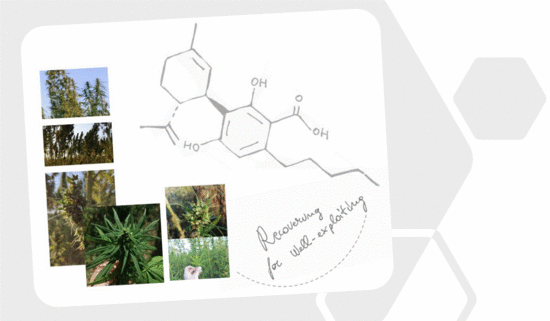
(‒)-Cannabidiolic Acid, a Still Overlooked Bioactive Compound: An Introductory Review and Preliminary Research

molecules-logo“Cannabidiolic acid (CBDA) is the main phytocannabinoid in fiber and seed-oil hemp (Cannabis sativa L.) plants, but its potential health-related capabilities have been masked for years by a greater scientific interest towards its neutral derivative cannabidiol (CBD). This review aims to collect from the literature and critically discuss all the information about this molecule, starting from its biosynthesis, and focusing on its bioactivity, as an anti-inflammatory, anti-emetic, anti-convulsant, and anti-cancerogenic drug. Furthermore, in the awareness that, despite its multiple bioactive effects, currently poor efforts have been made to achieve its reliable purification, herein, we propose a relatively simple, fast, and inexpensive procedure for its recovery from pollen of industrial hemp cultivars. Spectroscopic and spectrometric techniques allowed us to unequivocally identify pure isolated CBDA and to distinguish it from the constitutional isomer tetrahydrocannabinolic acid (THCA-A).”

https://pubmed.ncbi.nlm.nih.gov/32517131/

https://www.mdpi.com/1420-3049/25/11/2638

The Potential of Cannabidiol in the COVID-19 Pandemic: A Hypothesis Letter

British Journal of Pharmacology“Identifying candidate drugs effective in the new coronavirus disease 2019 (Covid-19) is crucial, pending a vaccine against SARS-CoV2. We suggest the hypothesis that Cannabidiol (CBD), a non-psychotropic phytocannabinoid, has the potential to limit the severity and progression of the disease for several reasons: 1) High-CBD Cannabis Sativa extracts are able to downregulate the expression of the two key receptors for SARS-CoV2 in several models of human epithelia 2) CBD exerts a wide range of immunomodulatory and anti-inflammatory effects and it can mitigate the uncontrolled cytokine production featuring Acute Lung Injury 3) Being a PPARγ agonist, it can display a direct antiviral activity 4) PPARγ agonists are regulators of fibroblast/myofibroblast activation and can inhibit the development of pulmonary fibrosis, thus ameliorating lung function in recovered patients. We hope our hypothesis, corroborated by several preclinical evidence, will inspire further targeted studies to test CBD as a support drug against the COVID-19 pandemic.”

https://pubmed.ncbi.nlm.nih.gov/32519753/

https://bpspubs.onlinelibrary.wiley.com/doi/abs/10.1111/bph.15157

Targeting the Endocannabinoid CB1 Receptor to Treat Body Weight Disorders: A Preclinical and Clinical Review of the Therapeutic Potential of Past and Present CB1 Drugs

biomolecules-logo“Obesity rates are increasing worldwide and there is a need for novel therapeutic treatment options.

The endocannabinoid system has been linked to homeostatic processes, including metabolism, food intake, and the regulation of body weight.

Rimonabant, an inverse agonist for the cannabinoid CB1 receptor, was effective at producing weight loss in obese subjects. However, due to adverse psychiatric side effects, rimonabant was removed from the market.

More recently, we reported an inverse relationship between cannabis use and BMI, which has now been duplicated by several groups.

As those results may appear contradictory, we review here preclinical and clinical studies that have studied the impact on body weight of various cannabinoid CB1 drugs. Notably, we will review the impact of CB1 inverse agonists, agonists, partial agonists, and neutral antagonists.

Those findings clearly point out the cannabinoid CB1 as a potential effective target for the treatment of obesity. Recent preclinical studies suggest that ligands targeting the CB1 may retain the therapeutic potential of rimonabant without the negative side effect profile. Such approaches should be tested in clinical trials for validation.”

https://pubmed.ncbi.nlm.nih.gov/32512776/

https://www.mdpi.com/2218-273X/10/6/855

Medicinal Cannabis Effective for Chronic Insomnia in Clinical Trial

April 2020 cover“A randomized double-blind clinical trial evaluating the efficacy of a medicinal cannabis formulation (ZTL-101; Zelira Therapeutics Ltd, Perth, Australia) for treating chronic insomnia showed that the therapy is effective and safe.

Participants treated with medicinal cannabis went to sleep faster, slept significantly longer, and went back to sleep sooner after waking. Those participants reported significant improvements in quality of life, including feeling rested after sleep, feeling less stressed and less fatigued, and overall improved functioning.

For the trial, 23 participants were treated with the therapy for 14 nights, and after a 1-week washout period, received a placebo for 14 nights. Each participant took a single dose (.5 ml of 11.5 mg total cannabinoids) or a double dose (1 ml of 23 mg total cannabinoids) of the therapy, delivered sublingually, according to their symptoms.

“The fact that ZTL-101 treatment achieved statistically significant, dose-responsive improvements across a broad range of key insomnia indices is impressive, particularly given the relatively short 2-week dosing window,” said Peter Eastwood, director, Centre for Sleep Science, University of Western Australia.”

https://practicalneurology.com/news/medicinal-cannabis-effective-for-chronic-insomnia-in-clinical-trial

Δ9‐TETRAHYDROCANNABINOLIC ACID ALLEVIATES COLLAGEN‐INDUCED ARTHRITIS: ROLE OF PPARγ AND CB1 RECEPTORS

British Journal of Pharmacology “Δ9‐THCA‐A, the precursor of Δ9‐THC, is a non‐psychotropic phytocannabinoid that shows PPARγ agonistic activity. Herein, we investigated Δ9‐THCA ability to modulate classic cannabinoid receptors (CB1 and CB2) and evaluated its anti‐arthritis activity.

Experimental Approach

Cannabinoid receptors binding and intrinsic activity, as well as their downstream signaling were analyzed in vitro and in silico . The anti‐arthritis properties of Δ9‐THCA‐A were studied in human chondrocytes and in the murine model of collagen‐induced arthritis (CIA). Plasmatic disease biomarkers were identified by liquid chromatography‐tandem mass spectrometry (LC‐MS/MS) based on proteomic and ELISA assays.

Key Results

Functional and docking analyses showed that Δ9‐THCA‐A can act as an orthosteric CB1 agonist and also as a positive allosteric modulator in the presence of CP‐55,940. In addition, Δ9‐THCA‐A seemed to be an inverse agonist for CB2. In vivo experiments showed that Δ9‐THCA‐A reduced arthritis in CIA mice. Δ9‐THCA‐A prevented the infiltration of inflammatory cells; synovium hyperplasia and cartilage damage. Furthermore, Δ9‐THCA‐A inhibited the expression of inflammatory and catabolic genes on knee joints. The anti‐arthritic effect of Δ9‐THCA‐A was ablated by either SR141716 or T0070907. Analysis of plasmatic biomarkers as well as determination of cytokines and anti‐collagen antibodies confirmed that Δ9‐THCA‐A mediates its activity mainly through PPARγ and CB1 pathways.

Conclusion and Implications

Δ9‐THCA‐A modulates CB1 receptor through the orthosteric and allosteric binding sites. In addition, our studies document that Δ9‐THCA‐A exerts anti‐arthritis activity through CB1/PPARγ pathways, highlighting its potential for the treatment of chronic inflammatory diseases such as Rheumatoid Arthritis (RA).”

https://pubmed.ncbi.nlm.nih.gov/32510591/

https://bpspubs.onlinelibrary.wiley.com/doi/abs/10.1111/bph.15155

 British Pharmacological Society | Journals

Conversion of Cannabidiol (CBD) Into Psychotropic Cannabinoids Including Tetrahydrocannabinol (THC): A Controversy in the Scientific Literature

PubMed Overview “Cannabidiol (CBD) is a naturally occurring, non-psychotropic cannabinoid of the hemp plant Cannabis sativa L. and has been known to induce several physiological and pharmacological effects. While CBD is approved as a medicinal product subject to prescription, it is also widely sold over the counter (OTC) in the form of food supplements, cosmetics and electronic cigarette liquids. However, regulatory difficulties arise from its origin being a narcotic plant or its status as an unapproved novel food ingredient.

Regarding the consumer safety of these OTC products, the question whether or not CBD might be degraded into psychotropic cannabinoids, most prominently tetrahydrocannabinol (THC), under in vivo conditions initiated an ongoing scientific debate. This feature review aims to summarize the current knowledge of CBD degradation processes, specifically the results of in vitro and in vivo studies. Additionally, the literature on psychotropic effects of cannabinoids was carefully studied with a focus on the degradants and metabolites of CBD, but data were found to be sparse.

While the literature is contradictory, most studies suggest that CBD is not converted to psychotropic THC under in vivo conditions. Nevertheless, it is certain that CBD degrades to psychotropic products in acidic environments. Hence, the storage stability of commercial formulations requires more attention in the future.”

https://pubmed.ncbi.nlm.nih.gov/32503116/


Cannabinoid as Beneficial Replacement Therapy for Psychotropics to Treat Neuropsychiatric Symptoms in Severe Alzheimer’s Dementia: A Clinical Case Report

CrossFit | 190629“Alzheimer’s Dementia (AD) is a devastating neurodegenerative disease that affects approximately 17% of people aged 75-84. Neuropsychiatric symptoms (NPS) such as delusions, agitation, anxiety, and hallucinations are present in up to 95% of patients in all stages of dementia. To date, any approved and effective pharmacological interventions for the treatment of NPS are still not available.

We describe a clinical case of a female patient diagnosed with AD with continuous cognitive decline and dementia-related behavioral symptoms. Between 2008 and 2019, the patient was examined half-yearly at the memory clinic of the Medical University of Innsbruck. At each visit, cognitive state and pharmacological treatment were evaluated. In addition, NPs were assessed by using the neuropsychiatric inventory (NPI). In 2018, the patient progressed to severe AD stage and presented with progressive NPs (anxiety, suspected delusions, agitation, aggressive behavior, and suspected pain due to long immobility).

Consequently, off-label treatment with low-dose dronabinol was initiated, which facilitated a reduction of psychopharmacological treatment from six to three psychotropics. At the same time, the patient’s emotional state improved, while disruptive behavior, aggression, and sedation decreased significantly. This case report underpins the need for randomized, controlled trials to explore the effect of cannabinoid receptor agonists on behavioral and psychological symptoms in patients with severe AD.”

https://pubmed.ncbi.nlm.nih.gov/32477187/

“Cannabinoids have a distinct pharmacologic profile that may offer an alternative pharmacologic approach to antipsychotics and sedatives for treating NPs in patients with AD. In addition, the beneficial effect on appetite and pain may significantly improve quality of life of AD-patients and their caregivers.”

https://www.frontiersin.org/articles/10.3389/fpsyt.2020.00413/full

Evaluation of Repeated or Acute Treatment With Cannabidiol (CBD), Cannabidiolic Acid (CBDA) or CBDA Methyl Ester (HU-580) on Nausea and/or Vomiting in Rats and Shrews

 SpringerLink“Rationale: When acutely administered intraperitoneally, the non-psychoactive cannabinoid cannabidiol (CBD), its acidic precursor cannabidiolic acid (CBDA) and a stable methyl ester of CBDA (HU-580) reduce lithium chloride (LiCl)-induced conditioned gaping in male rats (a selective preclinical model of acute nausea) via activation of the serotonin 1A (5-HT1A) receptor.

Objectives: To utilise these compounds to manage nausea in the clinic, we must determine if their effectiveness is maintained when injected subcutaneously (s.c) and when repeatedly administered. First, we compared the effectiveness of each of these compounds to reduce conditioned gaping following repeated (7-day) and acute (1-day) pretreatments and whether these anti-nausea effects were mediated by the 5-HT1A receptor. Next, we assessed whether the effectiveness of these compounds can be maintained when administered prior to each of 4 conditioning trials (once per week). We also evaluated the ability of repeated CBD (7 days) to reduce LiCl-induced vomiting in Suncus murinus. Finally, we examined whether acute CBD was equally effective in male and female rats.

Results: Both acute and repeated (7 day) s.c. administrations of CBD (5 mg/kg), CBDA (1 μg/kg) and HU-580 (1 μg/kg) similarly reduced LiCl-induced conditioned gaping, and these effects were blocked by 5HT1A receptor antagonism. When administered over 4 weekly conditioning trials, the anti-nausea effectiveness of each of these compounds was also maintained. Repeated CBD (5 mg/kg, s.c.) maintained its anti-emetic efficacy in S. murinus. Acute CBD (5 and 20 mg/kg, s.c.) administration reduced LiCl-induced conditioned gaping similarly in male and female rats.

Conclusion: When administered repeatedly (7 days), CBD, CBDA and HU-580 did not lose efficacy in reducing nausea and continued to act via agonism of the 5-HT1A receptor. When administered across 4 weekly conditioning trials, they maintained their effectiveness in reducing LiCl-induced nausea. Repeated CBD also reduced vomiting in shrews. Finally, CBD’s anti-nausea effects were similar in male and female rats. This suggests that these cannabinoids may be useful anti-nausea and anti-emetic treatments for chronic conditions, without the development of tolerance.”

https://pubmed.ncbi.nlm.nih.gov/32488349/

https://link.springer.com/article/10.1007%2Fs00213-020-05559-z