
The endocannabinoid system misfires in ADHD mice (Commentary on Castelli et al.)

European Journal of Neuroscience

“Attention-deficit hyperactivity disorder (ADHD) is characterized by short attention span, hyperactivity and impulsiveness and affects both children and adults. Its social and economic significance can hardly be overrated, with a recent literature review estimating a worldwide prevalence of more than 5% (Polanczyk et al., 2007). With importance comes controversy, and the biological basis of ADHD, its diagnostic criteria and its treatments continue to divide opinions.

Neuroscientists have tackled ADHD at several levels. Brain imaging has revealed abnormalities in ADHD patients, particularly in the neural networks linking the frontal cortex to the basal ganglia (Cubillo et al., 2011). The genetic factors underlying ADHD are also being unravelled. Several lines of research point to an involvement of the dopaminergic system, and the dopamine transporter (DAT) in particular. DAT polymorphism is correlated with ADHD (Gizer et al., 2009). Intriguingly, abnormalities of the DAT and its pharmacology may explain the apparent paradox that stimulants such as amphetamine and methylphenidate (Ritalin), which inhibit DAT activity and increase extracellular dopamine, are effective (and widespread) treatments for ADHD symptoms.

Given these findings, the use of animal models of ADHD carrying mutations in the DAT gene holds great promise. In a study published in this issue of EJN, Castelli et al. (2011) used a knock-in transgenic mouse in which a mutant version of the DAT gene results in a protein that becomes insensitive to cocaine, while retaining at least in part its functionality (Chen et al., 2006). These DAT mutant mice are hyperactive and respond paradoxically to both cocaine and methylphenidate: these drugs, which induce hyperlocomotor states in normal mice, reduce motor activity in the DAT mutants (Tilley & Gu, 2008).

Castelli et al. (2011) focused on the endocannabinoid system in the striatum of these DAT mutant mice. There are good reasons to investigate in this direction. Dopamine promotes endocannabinoid release in the striatum (Yin & Lovinger, 2006) and striatal dopamine levels are elevated in DAT mutant mice.

In normal animals, striatal projection neurons release endocannabinoids in response to ionotropic and metabotropic receptor activation. Endocannabinoids then act as retrograde messengers, diffusing in the extracellular space and binding presynaptic CB1 receptors located on glutamatergic and GABAergic terminals. In both cases, this decreases neurotransmitter release.

Castelli et al. (2011) found that endocannabinoid signalling is dramatically impaired in DAT mutant mice. Surprisingly, the mice present a specific deficit of the endocannabinoid-mediated control of GABA release, while control of glutamate is unaffected. The potential implications of these findings are fascinating: the striatum, whose intrinsic circuits are mostly GABAergic, is involved in the action selection process (Kimchi & Laubach, 2009). Thus, the inability of striatal projection neurons to suppress inhibition may be directly linked to abnormal action selection – a cardinal feature of ADHD.

This is one of several changes induced by the mutated DAT gene in the striatal network, including those of dopamine signalling previously described by the same group (Napolitano et al., 2010). However, this is the first indication that the endocannabinoid-mediated control of synaptic inhibition may be selectively impaired in ADHD, and raises the possibility that drugs able to restore this process may prove effective in its treatment.”

http://onlinelibrary.wiley.com/doi/10.1111/j.1460-9568.2011.07917.x/full
Loss of striatal cannabinoid CB1 receptor function in attention-deficit / hyperactivity disorder mice with point-mutation of the dopamine transporter.

“Abnormal dopamine (DA) transmission in the striatum plays a pivotal role in attention-deficit/hyperactivity disorder (ADHD).

As striatal DA signalling modulates the endocannabinoid system (ECS), the present study was aimed at investigating cannabinoid CB1 receptor (CB1R) function in a model of ADHD…

Our results point to CB1Rs as novel molecular players in ADHD, and suggest that therapeutic strategies aimed at interfering with the ECS might prove effective in this disorder.”

http://www.ncbi.nlm.nih.gov/pubmed/22034972

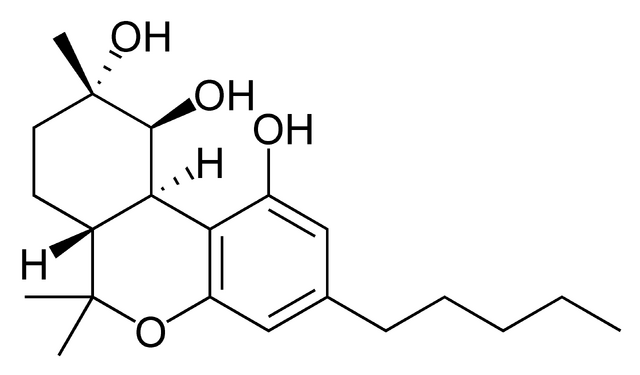
(+/-)9,10-Dihydroxy-delta6a(10a)-tetrahydrocannabinol and (+/-)8,9-dihydroxy-delta6a(10a)-tetrahydrocannabinol: 2 new cannabinoids from Cannabis sativa L.

“The structures of 2 new polyhydroxylated cannabinoids, (+/-)9,10-dihydroxy-delta6a(10a)-tetrahydrocannabinol and (+/-)8,9-dihydroxy-delta6a(10a)-tetrahydrocannabinol, obtained from a hexane extract of an Indian Cannabis variant were determined by spectral means and correlation with cannabinol.”

http://www.ncbi.nlm.nih.gov/pubmed/720501

Cannabinoid compounds in South African Cannabis sativa L.

“Dagga (Cannabis sativa L.) samples were collected from various geographical regions of South Africa. These were classified into age, sex and plant part and the cannabinoids were analysed quantitatively by gas-liquid chromatography and mass spectrometry. Analytical results show that there appears to be at least three chemovariants of Cannabis sativa growing in South Africa with respect to relative cannabinoid content. One of these variants appears to be unique to Southern Africa. It also appears that South African C. sativa ranks among the world’s more potent C. sativa variants in terms of its delta 9-tetrahydrocannabinol content.”

http://www.ncbi.nlm.nih.gov/pubmed/6102121

Production of Δ9-tetrahydrocannabinolic acid from cannabigerolic acid by whole cells of Pichia (Komagataella) pastoris expressing Δ9-tetrahydrocannabinolic acid synthase from Cannabis sativa L.

“The Δ9-tetrahydrocannabinolic acid synthase (THCAS) from Cannabis sativa was expressed intracellularly in different organisms to investigate the potential of a biotechnological production of Δ9-tetrahydrocannabinolic acid (THCA) using whole cells…

CONCLUSION:

Whole cells of P. pastoris offer the capability of synthesizing pharmaceutical THCA production.”

http://www.ncbi.nlm.nih.gov/pubmed/25994576

Isolation and Pharmacological Evaluation of Minor Cannabinoids from High-Potency Cannabis sativa.

“Seven new naturally occurring hydroxylated cannabinoids (1-7), along with the known cannabiripsol (8), have been isolated from the aerial parts of high-potency Cannabis sativa.

The structures of the new compounds were determined by 1D and 2D NMR spectroscopic analysis, GC-MS, and HRESIMS as 8α-hydroxy-Δ9-tetrahydrocannabinol (1), 8β-hydroxy-Δ9-tetrahydrocannabinol (2), 10α-hydroxy-Δ8-tetrahydrocannabinol (3), 10β-hydroxy-Δ8-tetrahydrocannabinol (4), 10α-hydroxy-Δ9,11-hexahydrocannabinol (5), 9β,10β-epoxyhexahydrocannabinol (6), and 11-acetoxy-Δ9-tetrahydrocannabinolic acid A (7).

The binding affinity of isolated compounds 1-8, Δ9-tetrahydrocannabinol, and Δ8-tetrahydrocannabinol toward CB1 and CB2 receptors as well as their behavioral effects in a mouse tetrad assay were studied.

The results indicated that compound 3, with the highest affinity to the CB1 receptors, exerted the most potent cannabimimetic-like actions in the tetrad assay, while compound 4 showed partial cannabimimetic actions. Compound 2, on the other hand, displayed a dose-dependent hypolocomotive effect only.”

http://www.ncbi.nlm.nih.gov/pubmed/26000707

Enhancement of endocannabinoid signaling protects against cocaine-induced neurotoxicity.

“Cocaine is an addictive substance with a potential to cause deleterious effects in the brain. The strategies for treating its neurotoxicity, however, are limited.

Evidence suggests that the endocannabinoid system exerts neuroprotective functions against various stimuli. Thus, we hypothesized that inhibition of fatty acid amide hydrolase (FAAH), the main enzyme responsible for terminating the actions of the endocannabinoid anandamide, reduces seizures and cell death in the hippocampus in a model of cocaine intoxication…

In conclusion, the pharmacological facilitation of the anandamide/CB1/PI3K signaling protects the brain against cocaine intoxication in experimental models. This strategy may be further explored in the development of treatments for drug-induced neurotoxicity.”

http://www.ncbi.nlm.nih.gov/pubmed/25933444

Cannabidiol Rescues Acute Hepatic Toxicity and Seizure Induced by Cocaine.

“Cocaine is a commonly abused illicit drug that causes significant morbidity and mortality. The most severe and common complications are seizures, ischemic strokes, myocardial infarction, and acute liver injury. Here, we demonstrated that acute cocaine intoxication promoted seizure along with acute liver damage in mice, with intense inflammatory infiltrate.

Considering the protective role of the endocannabinoid system against cell toxicity, we hypothesized that treatment with an anandamide hydrolysis inhibitor, URB597, or with a phytocannabinoid, cannabidiol (CBD), protects against cocaine toxicity.

URB597 (1.0 mg/kg) abolished cocaine-induced seizure, yet it did not protect against acute liver injury.

Using confocal liver intravital microscopy, we observed that CBD reduced acute liver inflammation and damage induced by cocaine and prevented associated seizure.

Additionally, we showed that previous liver damage induced by another hepatotoxic drug (acetaminophen) increased seizure and lethality induced by cocaine intoxication, linking hepatotoxicity to seizure dynamics.

These findings suggest that activation of cannabinoid system may have protective actions on both liver and brain induced by cocaine, minimizing inflammatory injury promoted by cocaine, supporting its further clinical application in the treatment of cocaine abuse.”

http://www.ncbi.nlm.nih.gov/pubmed/25999668

http://www.ncbi.nlm.nih.gov/pmc/articles/PMC4427116/

Full FAAH inhibition combined with partial monoacylglycerol lipase inhibition: Augmented and sustained antinociceptive effects with negligible cannabimimetic side effects in mice.

“Inhibition of fatty acid amide hydrolase (FAAH) or monoacylglycerol lipase (MAGL), the primary hydrolytic enzymes for the respective endocannabinoids, N-arachidonoylethanolamine (AEA) and 2-arachidonylglycerol (2-AG), produces antinociception, but with minimal cannabimimetic side effects.

Although selective inhibitors of either enzyme often show partial efficacy in various nociceptive models, their combined blockade elicits augmented antinociceptive effects, but side effects emerge. Moreover, complete and prolonged MAGL blockade leads to CB1 receptor functional tolerance, which represents another challenge in this potential therapeutic strategy.

Therefore, the present study tested whether full FAAH inhibition, combined with partial MAGL inhibition, would produce sustained antinociceptive effects with minimal cannabimimetic side effects…

Thus, full FAAH inhibition combined with partial MAGL inhibition reduces neuropathic and inflammatory pain states, with minimal cannabimimetic effects.”