

“Purpose: Since the passage of the Agricultural Improvement Act of 2018, hand surgeons have increasingly encountered patients seeking counseling on over-the-counter, topical cannabidiol (CBD) for the treatment of pain. To this end, we designed a human clinical trial to investigate the therapeutic potential of CBD for the treatment of pain associated with thumb basal joint arthritis.
Methods: Following Food and Drug Administration and institutional approval, a phase 1 skin test was completed with 10 healthy participants monitored for 1 week after twice-daily application of 1 mL of topical CBD (6.2 mg/mL) with shea butter. After no adverse events were identified, we proceeded with a phase 2, double-blinded, randomized controlled trial. Eighteen participants with symptomatic thumb basal joint arthritis were randomized to 2 weeks of twice-daily treatment with CBD (6.2 mg/mL CBD with shea butter) or shea butter alone, followed by a 1-week washout period and then crossover for 2 weeks with the other treatment. Safety data and physical examination measurements were obtained at baseline and after completion of each treatment arm.
Results: Cannabidiol treatment resulted in improvements from baseline among patient-reported outcome measures, including Visual Analog Scale pain; Disabilities of the Arm, Shoulder, and Hand; and Single Assessment Numeric Evaluation scores, compared to the control arm during the study period. There were similar physical parameters identified with range of motion, grip, and pinch strength.
Conclusions: In this single-center, randomized controlled trial, topical CBD treatment demonstrated significant improvements in thumb basal joint arthritis-related pain and disability without adverse events.”
https://pubmed.ncbi.nlm.nih.gov/35637038/
https://www.jhandsurg.org/article/S0363-5023(22)00133-2/fulltext


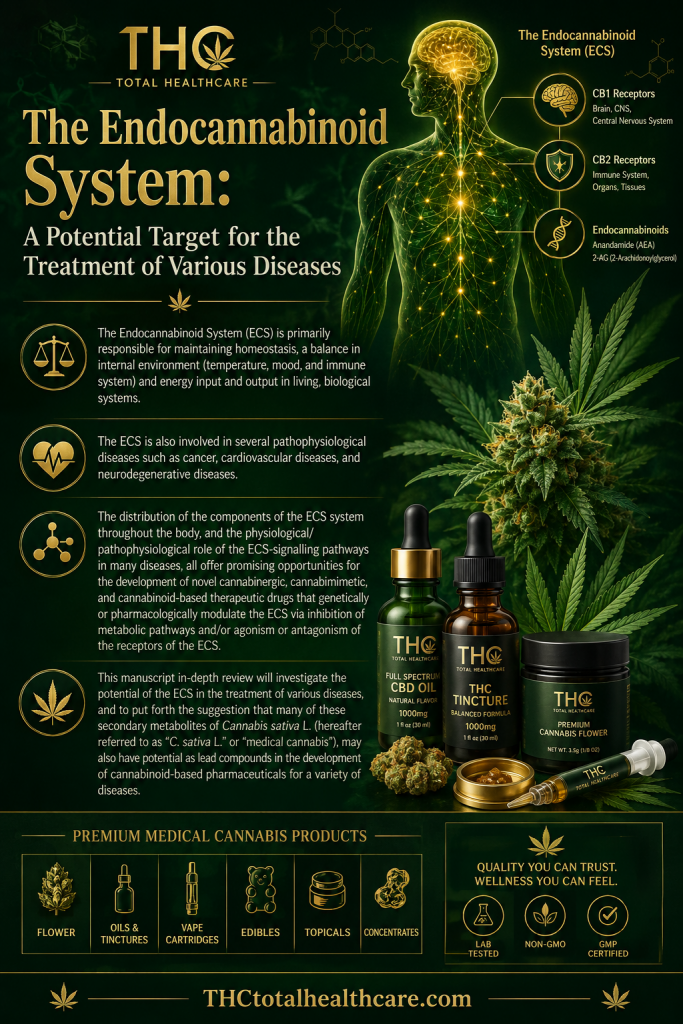
 “The Endocannabinoid System (ECS) is primarily responsible for maintaining homeostasis, a balance in internal environment (temperature, mood, and immune system) and energy input and output in living, biological systems.
 “In humans, various sites like cannabinoid receptors (CBR) having a binding affinity with cannabinoids are distributed on the surface of different cell types, where endocannabinoids (ECs) and derivatives of fatty acid can bind. The binding of these substance(s) triggers the activation of specific receptors required for various physiological functions, including pain sensation, memory, and appetite.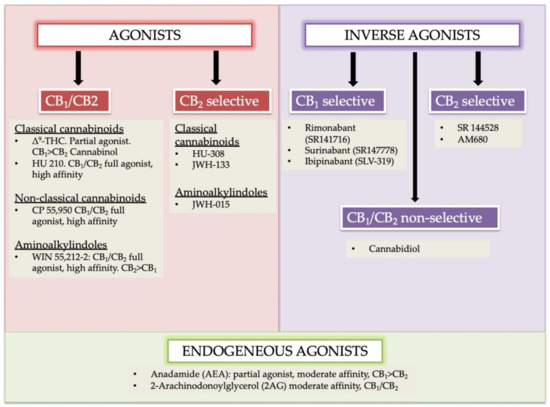
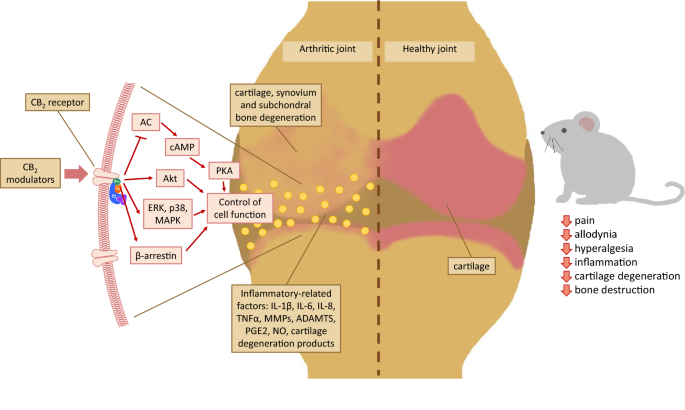 “Over the last several decades, the percentage of patients suffering from different forms of arthritis has increased due to the ageing population and the increasing risk of civilization diseases, e.g. obesity, which contributes to arthritis development. Osteoarthritis and rheumatoid arthritis are estimated to affect 50-60% of people over 65 years old and cause serious health and economic problems. Currently, therapeutic strategies are limited and focus mainly on pain attenuation and maintaining joint functionality. First-line therapies are nonsteroidal anti-inflammatory drugs; in more advanced stages, stronger analgesics, such as opioids, are required, and in the most severe cases, joint arthroplasty is the only option to ensure joint mobility.
  “Cannabis sativa L. is an aromatic annual herb belonging to the family Cannabaceae and it is widely distributed worldwide. Cultivation, selling, and consumption of cannabis and cannabis related products, regardless of its use, was prohibited in Lebanon until April 22, 2020. Nevertheless, cannabis oil has been traditionally used unlawfully for many years in Lebanon to treat diseases such as arthritis, diabetes, cancer and few neurological disorders.
 “Background/objectives: Use of cannabis is increasing in a variety of populations in the United States; however, few investigations about how and for what reasons cannabis is used in older populations exist.
 “Cannabidiol (CBD) is a non-intoxicating phytocannabinoid from cannabis sativa that has demonstrated anti-inflammatory effects in several inflammatory conditions including arthritis.