“Two major cannabinoids of cannabis, namely cannabidiol (CBD) and tetrahydrocannabinol (THC) have been reportedly used as alternative medicine for diabetes treatment in both pre-clinical and clinical research. However, their mechanisms of action still remain unclear. Therefore, this study aimed to evaluate the α-glucosidase inhibitory activity of THC, CBD and the standardized cannabinoid extracts.
Based on in silico studies, THC generated hydrogen bonding and Van der Waals interactions, while CBD exhibited only Van der Waals interactions with functional residues of target α-glucosidase protein, with good binding energies of -7.5 and -6.9 kcal/mol, respectively. In addition, both of them showed excellent pharmacokinetic profiles with minor toxicity in terms of tumorigenic and reproductive effects. In addition, the enzyme based in vitro assay on α-glucosidase revealed that THC and CBD exhibited good inhibitory activity, with the IC50 values of 3.0 ± 0.37 and 5.5 ± 0.28 μg/ml, respectively.
These were better than the standard drug, acarbose (IC50 of 488.6 ± 10.23 μg/ml).
Furthermore, two standardized cannabinoid extracts, SCE-I (C. sativa leaf extract) and SCE-II (C. sativa inflorescence extract) exhibited stronger inhibitory activity than THC and CBD, with the IC50 values of 1.2 ± 0.62 and 0.16 ± 0.01 μg/ml, respectively.
The present study provides the first evidence that the standardized cannabinoid extracts containing THC and CBD have greater potential than CBD and THC in application as an α-glucosidase inhibitor.”
https://pubmed.ncbi.nlm.nih.gov/35856057/
https://www.sciencedirect.com/science/article/pii/S2665927122001046?via%3Dihub

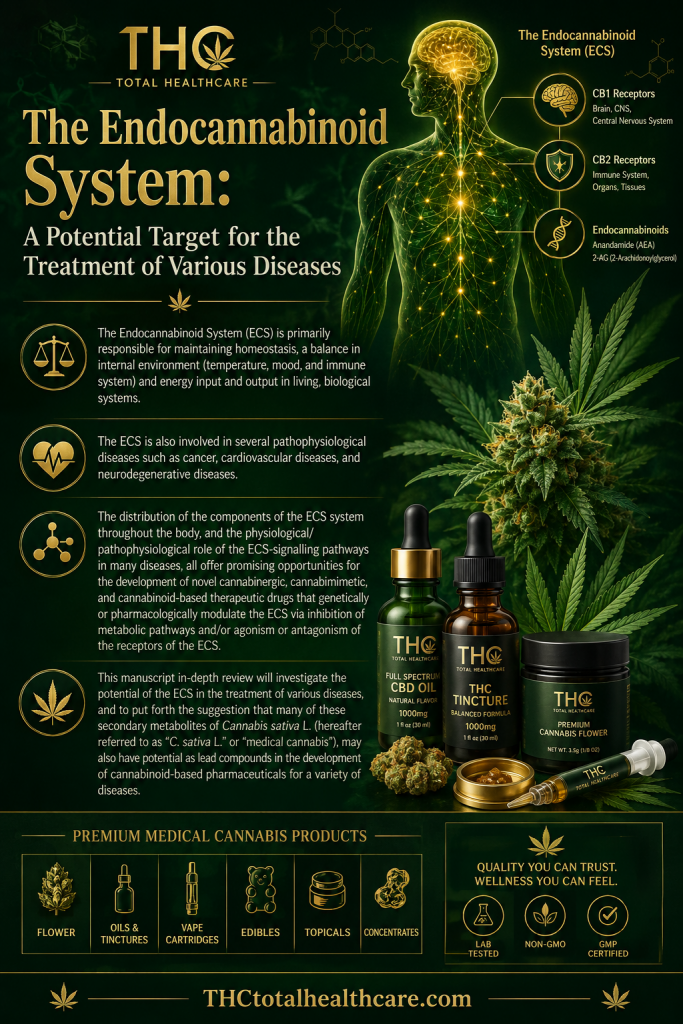
 “The Endocannabinoid System (ECS) is primarily responsible for maintaining homeostasis, a balance in internal environment (temperature, mood, and immune system) and energy input and output in living, biological systems.
 “Obesity-related insulin resistance (IR) and attenuated brain insulin signaling are significant risk factors for neurodegenerative disorders, e.g., Alzheimer’s disease. IR and type 2 diabetes correlate with an increased concentration of sphingolipids, a class of lipids that play an essential structural role in cellular membranes and cell signaling pathways.
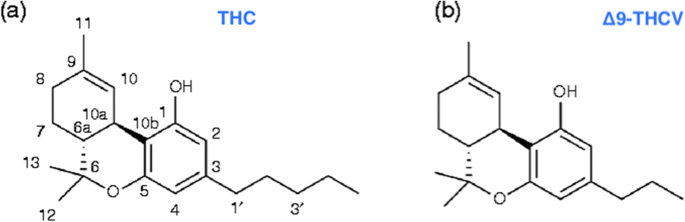 “Δ9-Tetrahydrocannabivarin (THCV) is a cannabis-derived compound with unique properties that set it apart from the more common cannabinoids, such as Δ9-tetrahydrocannabinol (THC). The main advantage of THCV over THC is the lack of psychoactive effects.
  “In humans, various sites like cannabinoid receptors (CBR) having a binding affinity with cannabinoids are distributed on the surface of different cell types, where endocannabinoids (ECs) and derivatives of fatty acid can bind. The binding of these substance(s) triggers the activation of specific receptors required for various physiological functions, including pain sensation, memory, and appetite.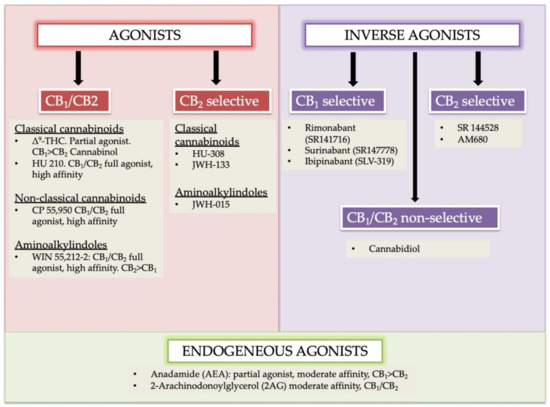
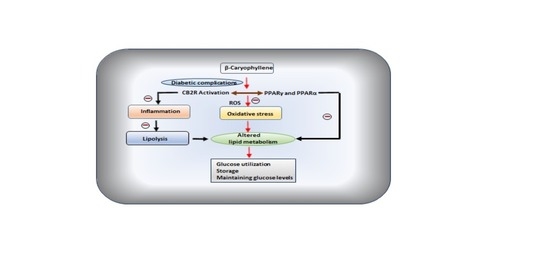
 “(E)-β-caryophyllene (BCP) is a bicyclic sesquiterpene widely distributed in the plant kingdom, where it contributes a unique aroma to essential oils and has a pivotal role in the survival and evolution of higher plants.
 “The endocannabinoid system (ECS) is natural physiological system in the humans. The presence of the ECS system involves different roles in body. The endocannabinoid system involves regulation of most of the centers, which regulates the hunger and leads to changes in the weight.