
 “Aged skeletal muscle undergoes metabolic and structural alterations eventually resulting in a loss of muscle strength and mass, i.e. age-related sarcopenia. Therefore, novel targets for muscle growth purposes in elderly are needed.
Here, we explored the role of the cannabinoid system in muscle plasticity through the expression of muscle cannabinoid receptors (CBs) in young and old humans.
The CB1 expression was higher (+ 25%; p = 0.04) in muscle of old (≥ 65 years) vs. young adults (20-27 years), whereas CB2 was not differently expressed. Furthermore, resistance exercise tended to increase the CB1 (+ 11%; p = 0.055) and CB2 (+ 37%; p = 0.066) expression in muscle of older adults. Interestingly, increases in the expression of CB2 following resistance exercise positively correlated with changes in key mechanisms of muscle homeostasis, such as catabolism (FOXO3a) and regenerative capacity (Pax7, MyoD).
This study for the first time shows that CB1 is differentially expressed with aging and that changes in CB2 expression upon resistance exercise training correlate with changes in mediators that play a central role in muscle plasticity.
These data confirm earlier work in cells and mice showing that the cannabinoid system might orchestrate muscle growth, which is an incentive to further explore CB-based strategies that might counteract sarcopenia.”
“In conclusion, cell culture and murine experiments suggested that CBs can be a promising target to treat cachexia and sarcopenia through modulation of the metabolism and muscle regenerative capacity. These data imply that CB modulation might be a promising tool to combat muscle degeneration. ”
 “Inflammatory bowel diseases (IBDs) are chronic, idiopathic, inflammatory, gastrointestinal disorders.
  “Cannabinoids, active components of the plant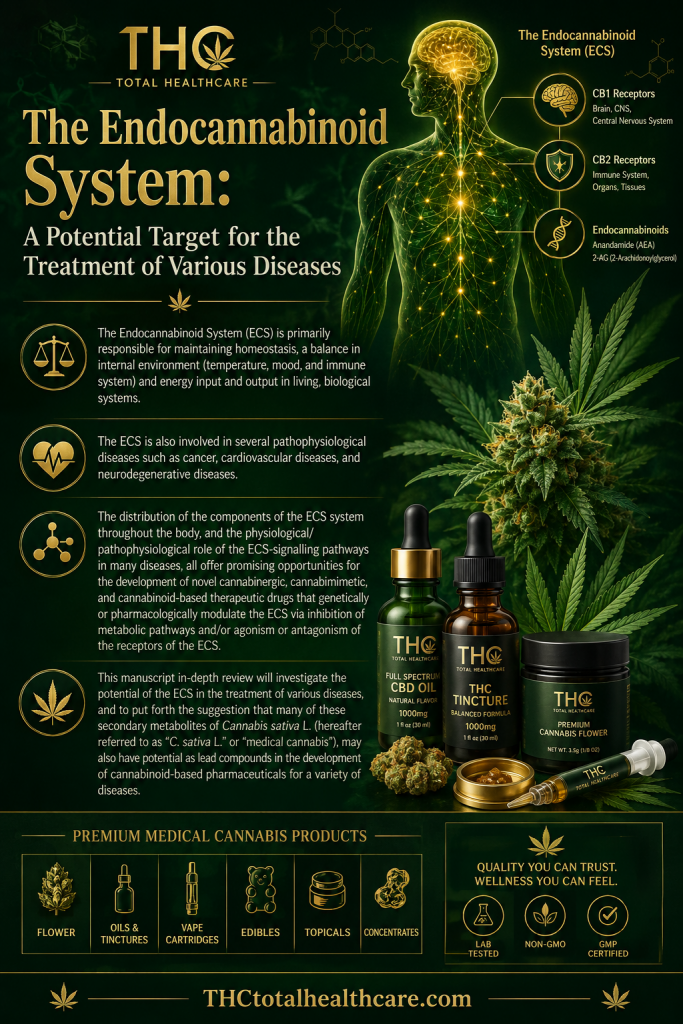
 “The Endocannabinoid System (ECS) is primarily responsible for maintaining homeostasis, a balance in internal environment (temperature, mood, and immune system) and energy input and output in living, biological systems.
 “Persistent inflammation occurs in people with HIV (PWH) and has many downstream adverse effects including myocardial infarction, neurocognitive impairment and death.
 “Objectives: To evaluate the impact of cannabinoids on neurobehavioral outcomes in preclinical models of nontraumatic and traumatic spinal cord injury (SCI), with the aim of determining suitability for clinical trials involving SCI patients.
 “Colic is a common digestive disorder in horses and one of the most urgent problems in equine medicine. A growing body of literature has indicated that the activation of cannabinoid receptors could exert beneficial effects on gastrointestinal inflammation and visceral hypersensitivity.
  “Background:
  “Cannabidiol is increasingly considered for treatment of a wide range of medical conditions.