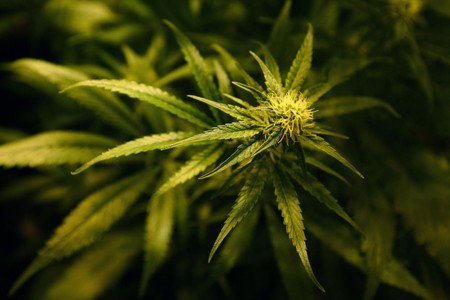
Therapeutic potential of cannabinoid medicines.

Drug Testing and Analysis

“Cannabis was extensively used as a medicine throughout the developed world in the nineteenth century but went into decline early in the twentieth century ahead of its emergence as the most widely used illicit recreational drug later that century. Recent advances in cannabinoid pharmacology alongside the discovery of the endocannabinoid system (ECS) have re-ignited interest in cannabis-based medicines.

The ECS has emerged as an important physiological system and plausible target for new medicines. Its receptors and endogenous ligands play a vital modulatory role in diverse functions including immune response, food intake, cognition, emotion, perception, behavioural reinforcement, motor co-ordination, body temperature, wake/sleep cycle, bone formation and resorption, and various aspects of hormonal control. In disease it may act as part of the physiological response or as a component of the underlying pathology.

In the forefront of clinical research are the cannabinoids delta-9-tetrahydrocannabinol and cannabidiol, and their contrasting pharmacology will be briefly outlined. The therapeutic potential and possible risks of drugs that inhibit the ECS will also be considered. This paper will then go on to review clinical research exploring the potential of cannabinoid medicines in the following indications: symptomatic relief in multiple sclerosis, chronic neuropathic pain, intractable nausea and vomiting, loss of appetite and weight in the context of cancer or AIDS, psychosis, epilepsy, addiction, and metabolic disorders.”

http://www.ncbi.nlm.nih.gov/pubmed/24006213

http://onlinelibrary.wiley.com/doi/10.1002/dta.1529/abstract

Cannabis-Derived Drug for Type 2 Enters Phase 2

“Cannabis-based drug for type 2s on the way?”

 
“A British drug company is looking to medical marijuana- or at least a derivative of it-to help treat a variety of different diseases, including type 2 diabetes.

The company, GW Pharma, is in the process of creating a collection of cannabinoid-based drugs, including one that takes aim at diabetes. The first of this type of drug the company has produced is Sativex, a nasal spray used to treat spasms associated with multiple sclerosis. Sativex has been okayed in eight countries, and is currently awaiting FDA approval in the United States.

The diabetes drug, GWP4204, is currently in its second phase of testing after a small but successful double-blind study. That study featured 62 type 2 patients who received various levels of the oral-administered drug or a placebo.”

More: http://diabeteshealth.com/read/2013/07/20/7933/cannabis-derived-drug-for-type-2-enters-phase-2–

Cannabis Kills Cancer Cells

“Marijuana also found to prevent pain associated with chemotherapy”

Cannabis Kills Cancer Cells

“Studies in Spain have shown findings that Tetrahydrocannabinol (THC), the active ingredient found in marijuana, can induce the death of brain cancer cells, according to scientist Guillermo Velasco and his research team from the School of Biology at Complutense University in Madrid.

In a laboratory study where mice were “engineered” to carry three varying kinds of human cancer tumor grafts, THC was introduced into the brain, triggering a self-digestion development on a cellular level, known as “autophagy.” Within this process, the research team managed to isolate the particular activation route from which this process evolved.

The research team was also conducting clinical trials in concert, on two consenting brain cancer patients, said to be suffering from a rapidly aggressive form of cancer, known as “recurrent glioblastoma multiforme.”

The team, using electron microscopes to analyze brain tissue extracted before and after the 26 to 30-day regime, found that the THC had eradicated cancer cells, leaving the healthy cells undamaged.

The findings can now lend themselves to future design in newer cancer therapies, using the concept of autophagy activation.”

More: http://guardianlv.com/2013/08/cannabis-kills-cancer-cells/

Cannabis Can Prevent Cancer Caused By Cigarette Use, According To New Study

tobacco cigarettes marijuana cannabis

“A new study published by the journal J-Stage, and funded by the Ministry of Education, Culture, Sports, Science and Technology of Japan, has found that cannabinoids – whether THC, CBD or CBDV – were effective at blocking a certain enzyme which is known to cause cancer, and is produced in large amount when cigarettes are consumed.”

“These results suggest that the pentylresorcinol structure in CBD may have structurally important roles in direct CYP1A1 inhibition, although the whole structure of CBD is required for overall inhibition”, according to researchers.

CYP1A1 is an enzyme which isn’t dangerous at low-levels, but is produced in large quantities when someone smokes cigarettes; at large doses, the enzyme has been linked to cancer.

Researchers state that; “Accordingly, CBD and its related compounds, which are potent inhibitors of CYP1A1 activity, would be useful as a lead compound in anticancer chemotherapy.””

http://www.theweedblog.com/cannabis-can-prevent-cancer-caused-by-cigarette-use-according-to-new-study/

“Marijuana Disrupts Cancer Pathway of Cigarettes: Study” http://www.truthonpot.com/2013/08/19/marijuana-disrupts-cancer-pathway-of-cigarettes-study/

Chemicals in marijuana block the activity of a cancer-causing enzyme present in cigarette smokers.
 
“Chemicals in marijuana can block the activity of a cancer-causing enzyme commonly found in cigarette smokers.”


“Cannabis Can Prevent Cancer Caused by Cigarette Use, According to New Study” http://thejointblog.com/cannabis-can-prevent-cancer-caused-by-cigarrette-use-according-to-new-study/ 

“Marijuana Can Prevent Millions of Tobacco Deaths” http://salem-news.com/articles/august122013/tobacco-marijuanapl.php

Active Ingredient in Marijuana Kills Brain Cancer Cells

“New research out of Spain suggests that THC — the active ingredient in marijuana — appears to prompt the death of brain cancer cells.”

 
“The finding is based on work with mice designed to carry human cancer tumors, as well as from an analysis of THC’s impact on tumor cells extracted from two patients coping with a highly aggressive form of brain cancer.”
 

THC is anticarcinogenic: marijuana may be cancer cure!

“Toxicology and Carcinogenesis Studies of 1-Trans-[Delta.sup.9]-Tetrahydrocannabinol

Summation of above:

“Thus, in our studies, rats and mice that received THC for 2 years exhibited body weight reductions, enhanced survival rates, and decreased tumor incidences in several sites, mainly organs under hormonal control. These earlier experimental carcinogenesis results on THC clearly lend further validity to the notion that cannabinoids may indeed be anticarcinogenic.””

 link
http://www.thefreelibrary.com/Antitumor+Effects+of+THC-a06814…

http://www.sodahead.com/united-states/thc-is-anticarcinogenic-marijuana-may-be-cancer-cure/question-1031413/?link=ibaf&q=THC+anti-carcinogenic+news

Texas A&M Pharmacy Researcher Fights Cancer, Pain With New Cannabinoid Receptor Drug

DrDaiLu

“Dr. Lu has been working to find new types of chemotherapeutic drugs that both kill pancreatic cancer and suppress the cancer pain at the same time by targeting a special G-protein coupled receptor that belongs to the biological system responsible for the effects of Tetrahydrocannabinol (THC), a compound derived from some varieties of cannabis (hemp) or made synthetically, that is the primary psychoactive agent in marijuana and hashish.

 Dr. Lu says pancreatic cancer cells have more type 2 cannabinoid receptors than do healthy cells.

 Consequently, drug molecules that selectively activate this receptor can induce cancer cell death without affecting normal pancreatic cells, noting that when given to mice with pancreatic tumors, the molecule prevented tumor growth and suppressed the spread of cancer to healthy organs.

 Meanwhile, this class of compounds also generates painkillers comparable to morphine’s pain killing effect…”

More: http://www.bionews-tx.com/news/2013/08/20/texas-am-pharmacy-researcher-fights-cancer-pain-with-new-cannabinoid-receptor-drug/

Cannabinoids may be a target for new strategies in cancer treatment

“Cannabis-like substances that are produced by the body have both therapeutic and harmful properties, besides their well-known intoxicating effects, and the body’s cannabinoid system may be a target for new strategies in cancer treatment…

Cannabinoids have moreover been shown to affect the fate of cells. Cannabinoids protect some brain cells, whereas cells in certain types of brain tumors, such as glioma, are stimulated to commit controlled cell suicide (apoptosis)…

In summary, the findings of Sofia Gustafsson’s studies show that cannabinoids can be toxic for cancer cells… These findings are important for our knowledge both of the potential of the cannabinoid system as a target system for new strategies in cancer treatment…”

More: http://www.news-medical.net/news/20120229/Cannabinoids-may-be-a-target-for-new-strategies-in-cancer-treatment.aspx

HAL BROWN: Medical marijuana could have eased wife’s pain

“My only direct personal experience with the effectiveness of medical marijuana was when my wife was dying of cancer and was on chemo. Without going deeply into details, her life became a living hell as death became imminent.
 

She was very resistant when a friend tried to persuade her to try some marijuana, which he said he could get from his son (a responsible recreational user with a good job, wife, and family). When her Dana Farber oncologist didn’t tell her NOT to try it (being reluctant to tell her TO try it, let’s call it a wink and an affirmative nod), she agreed.

She did so once, and the results were amazing. She had six full hours where her debilitating symptoms were significantly relieved. The severe persistent nausea which plagued her, despite being on three anti-nausea drugs, disappeared. Even so, she refused to try it again. She toughed it out until the end, which was a brutal four days at Brigham and Women’s, as even the strongest pain medication had no effect.

I have little doubt that eventually the chemicals which can relieve diseases and symptoms will be synthesized, and be approved as prescription medications.

Until then, it seems to me that the good of making medical marijuana available for those who get a doctor’s prescription outweighs the bad.

I think almost everyone who has had a loved one suffer with an illness which makes life unbearable, and for which marijuana would help, would agree with me. We need to deal with drug abuse aggressively in Middleboro; but making sick people pay the price for drug abusers by withholding treatment for people truly in need seems cruel and insensitive.

I urge anyone who disagrees with me to read this article from the American Cancer Society website.”

http://www.enterprisenews.com/newsnow/x1343094540/COMMENTARY-Medical-marijuana-could-have-eased-wife-s-pain

Rx Marijuana: Most Readers Support Use

“In one way or another, more than 80% of MedPage Today readers have a favorable opinion about medical marijuana.

A total of 60.7% of the more than 5,600 readers who voted in our survey last week indicated they have always favored medical marijuana, while another 20.4% who had previously opposed the legalization of pot as a medication indicated a change of heart (read “My Cannabis Conversion” by Dr. Sanjay Gupta).

Many readers suggested medical marijuana is a better option than the current crop of legal opiates.”

More: http://www.medpagetoday.com/PublicHealthPolicy/PublicHealth/41176