
 “Although studied in a few randomized controlled trials (RCTs), the efficacy of medical cannabis (MC) for chronic pain remains controversial. Using an alternative approach, this multicenter, questionnaire-based prospective cohort was aimed to assess the long-term effects of MC on chronic pain of various etiologies and to identify predictors for MC treatment success.
Results: 1045 patients completed the baseline questionnaires and initiated MC treatment, and 551 completed the 12 month follow-up. At one year, average pain intensity declined from baseline by 20% [-1.97 points (95%CI= -2.13 to -1.81; p<0.001)]. All other parameters improved by 10-30% (p<0.001). A significant decrease of 42% [reduction of 27mg; (95%CI= -34.89 to -18.56, p<0.001)] from baseline in morphine equivalent daily dosage of opioids was also observed. Reported adverse effects were common but mostly non-serious. Presence of normal to long sleep duration, lower body mass index (BMI) and lower depression score predicted relatively higher treatment success, whereas presence of neuropathic pain predicted the opposite.
Conclusions: This prospective study provides further evidence for the effects of MC on chronic pain and related symptoms, demonstrating an overall mild to modest long-term improvement of the tested measures and identifying possible predictors for treatment success.
Significance: This “real world” paper shows that MC mildly to modestly attenuates chronic pain and related symptoms. MC treatment can also cause frequent, but mostly non-serious adverse effects, although central nervous system (CNS)-related AEs that can impair the ability to drive vehicles are not uncommon. This study is novel in identifying possible predictors for treatment success, including normal to long sleep duration, lower BMI and lower depression scores. In contrast to current beliefs the diagnosis of neuropathic pain predicts a less favorable outcome. These findings provide physicians with new data to support decision making on recommendations for MC treatment.”
 “The burden of chronic pain has affected many individuals leading to distress and discomfort, alongside numerous side effects with conventional therapeutic approaches.
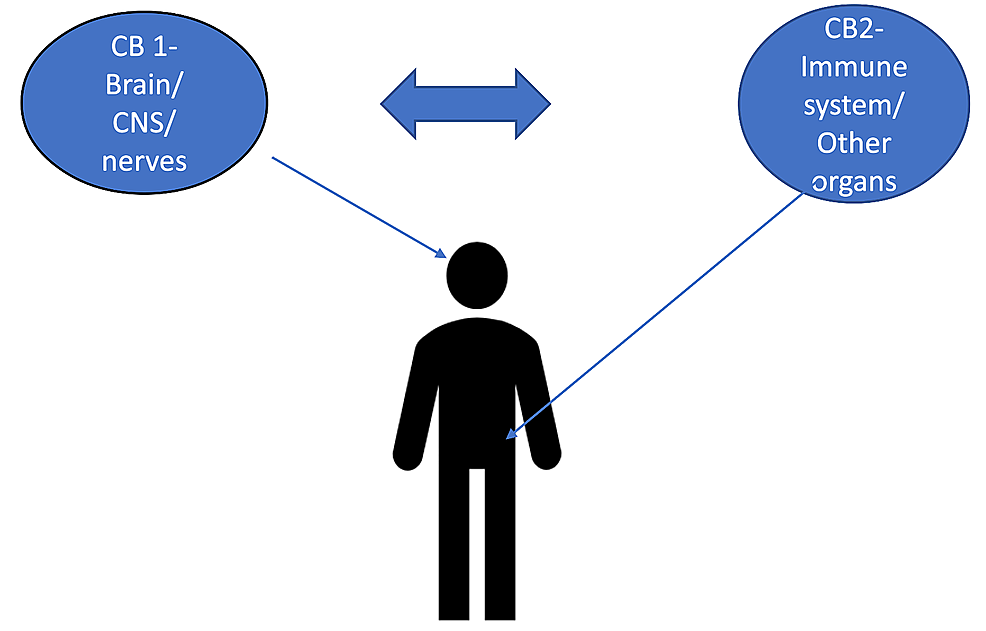
 “Cannabinoids help in pain treatment through their action on CB1 and CB2 receptors.
 “Background/objectives: Use of cannabis is increasing in a variety of populations in the United States; however, few investigations about how and for what reasons cannabis is used in older populations exist.
 “Rett syndrome (RTT) is a rare neurologic disorder, characterized by severe behavioural and physiological symptoms. RTT is caused by mutations in the MECP2 gene in about 95% of cases and to date no cure is available.
 “Chronic pain can be recurrent or constant pain that lasts for longer than 3 months and can result in disability, suffering, and a physical disturbance. Related to the complex nature of chronic pain, treatments have a pharmacological and non-pharmacological approach.
 “Cannabidiol (CBD) is reported to produce pain relief, but the clinically relevant cellular and molecular mechanisms remain uncertain.
 “Cannabis exposure is becoming more common in older age but little is known about how it is associated with brain health in this population.
 “To determine if cannabis may be used as an alternative or adjunct treatment for intermittent and chronic prescription opioid users.
 “Recent years have seen an increase in the adoption of cannabinoid medicines, which have demonstrated effectiveness for the treatment of chronic pain.