
 “The cannabinoid receptor subtype 2 (CB2R) represents an interesting and new therapeutic target for its involvement in the first steps of neurodegeneration as well as in cancer onset and progression.
Several studies, focused on different types of tumors, report a promising anticancer activity induced by CB2R agonists due to their ability to reduce inflammation and cell proliferation. Moreover, in neuroinflammation, the stimulation of CB2R, overexpressed in microglial cells, exerts beneficial effects in neurodegenerative disorders.
With the aim to overcome current treatment limitations, new drugs can be developed by specifically modulating, together with CB2R, other targets involved in such multifactorial disorders.
Building on successful case studies of already developed multitarget strategies involving CB2R, in this Perspective we aim at prompting the scientific community to consider new promising target associations involving HDACs (histone deacetylases) and σ receptors by employing modern approaches based on molecular hybridization, computational polypharmacology, and machine learning algorithms.”
https://pubmed.ncbi.nlm.nih.gov/33094613/
https://pubs.acs.org/doi/10.1021/acs.jmedchem.0c01357

 “Uterus transplantation is a complex surgical procedure. Uterine ischemia/reperfusion (IR) damage occurring in this process may cause loss of function in the uterus. Cell damage must be prevented for a healthy uterine function and successful transplantation.
 “The burden of chronic pain has affected many individuals leading to distress and discomfort, alongside numerous side effects with conventional therapeutic approaches.
 “The identification of the human cannabinoid receptors and their roles in health and disease, has been one of the most significant biochemical and pharmacological advancements to have occurred in the past few decades. In spite of the major strides made in furthering endocannabinoid research, therapeutic exploitation of the endocannabinoid system has often been a challenging task.
 “The inflammatory sequence is the first phase of wound healing. Macrophages (MPhs) and mesenchymal stromal cells (MSCs) respond to an inflammatory microenvironment by adapting their functional activity, which polarizes them into the pro-inflammatory phenotypes M1 and MSC1. Prolongation of the inflammatory phase results in the formation of chronic wounds. The endocannabinoid system (ECS) possesses immunomodulatory properties that may impede this cellular phenotypic switch.
 “Graft versus host disease (GVHD) pathophysiology is a complex interplay between cells that comprise the adaptive and innate arms of the immune system. Effective prophylactic strategies are therefore contingent upon approaches that address contributions from both immune cell compartments.
 “Cannabinoids have long been used for their psychotropic and possible medical properties of symptom relief. In the past few years, a vast literature shows that cannabinoids are neuroprotective under different pathological situations.
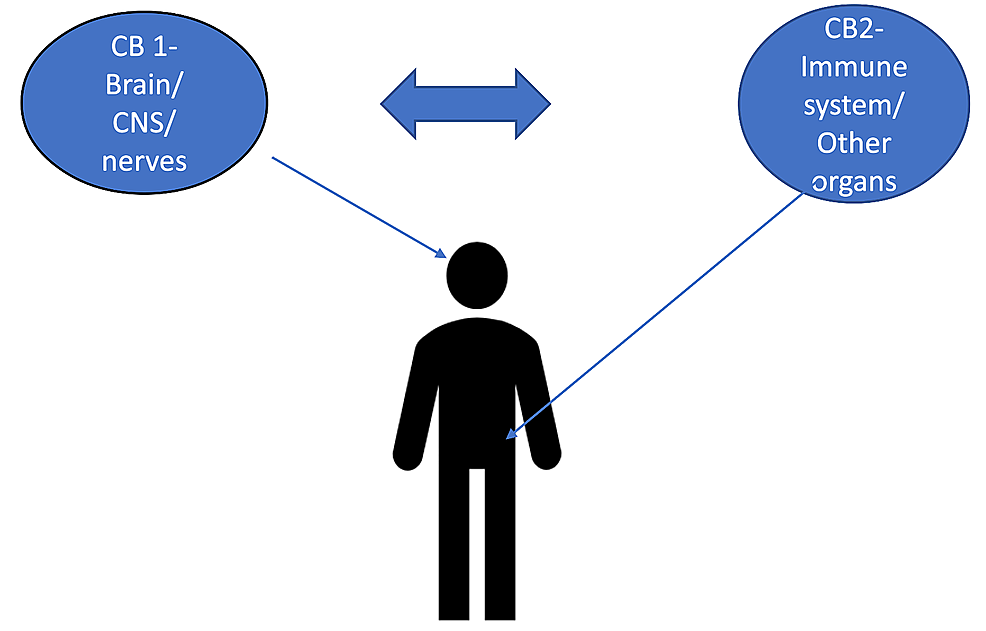
 “Cannabinoids help in pain treatment through their action on CB1 and CB2 receptors.


 “∆ 9 -Tetrahydrocannabinol (∆9 -THC), the active phytocannabinoid in cannabis, is virtually an adjunct to the endogenous endocannabinoid signaling system.