
“While the US has been experiencing an opioid epidemic, 29 states and Washington DC have legalized cannabis for medical use. This study examined whether statewide medical cannabis legalization was associated with reduction in opioids received by Medicaid enrollees.
Tag Archives: cannabis
In Vitro Model of Neuroinflammation: Efficacy of Cannabigerol, a Non-Psychoactive Cannabinoid.
 “Inflammation and oxidative stress play main roles in neurodegeneration. Interestingly, different natural compounds may be able to exert neuroprotective actions against inflammation and oxidative stress, protecting from neuronal cell loss.
Among these natural sources, Cannabis sativa represents a reservoir of compounds exerting beneficial properties, including cannabigerol (CBG), whose antioxidant properties have already been demonstrated in macrophages.
Here, we aimed to evaluate the ability of CBG to protect NSC-34 motor neurons against the toxicity induced from the medium of LPS-stimulated RAW 264.7 macrophages.
All together, these results indicated the neuroprotective effects of CBG, that may be a potential treatment against neuroinflammation and oxidative stress.”
https://www.ncbi.nlm.nih.gov/pubmed/29986533
http://www.mdpi.com/1422-0067/19/7/1992
The protocol for the Cannabidiol in children with refractory epileptic encephalopathy (CARE-E) study: a phase 1 dosage escalation study.
“Initial studies suggest pharmaceutical grade cannabidiol (CBD) can reduce the frequency of convulsive seizures and lead to improvements in quality of life in children affected by epileptic encephalopathies. With limited access to pharmaceutical CBD, Cannabis extracts in oil are becoming increasingly available. The primary aims of the study presented in this protocol are (i) To determine whether CBD enriched Cannabis extract is safe and well-tolerated for pediatric patients with refractory epilepsy, (ii) To monitor the effects of CBD-enriched Cannabis extract on the frequency and duration of seizure types and on quality of life.
DISCUSSION:
This paper describes the study design of a phase 1 trial of CBD-enriched Cannabis herbal extract in children with treatment-resistant epileptic encephalopathy. This study will provide the first high quality analysis of safety of CBD-enriched Cannabis herbal extract in pediatric patients in relation to dosage and pharmacokinetics of the active cannabinoids.” https://www.ncbi.nlm.nih.gov/pubmed/29981580 “Children with epileptic encephalopathies resistant to standard therapy are at considerable risk for long-term neurocognitive impairment and poor quality of life. CBD-enriched Cannabis based therapies have been shown in several studies to provide a reduction in seizure frequencies and improvements in sleep patterns, mood, and alertness.” https://bmcpediatr.biomedcentral.com/articles/10.1186/s12887-018-1191-y]]>Allosteric and orthosteric pharmacology of cannabidiol and cannabidiol-dimethylheptyl at the type 1 and type 2 cannabinoid receptors.
“We sought to understand why (-)-cannabidiol (CBD) and (-)-cannabidiol-dimethylheptyl (CBD-DMH) exhibit distinct pharmacology, despite near identical structures.
KEY RESULTS:
At CB1R, CBD was a negative allosteric modulator (NAM) and CBD-DMH was a mixed agonist/positive allosteric modulator. CBD and Org27569 shared multiple interacting residues in the antagonist-bound model of CB1R (5TGZ), but shared a binding site with CP55,940 in the agonist-bound model of CB1R (5XRA). The binding site for CBD-DMH in the CB1R models overlapped with CP55,940 and Org27569. At CB2R, CBD was a partial agonist, and CBD-DMH was a positive allosteric modulator of cAMP modulation, but a NAM of βarrestin1 recruitment. CBD, CP55,940, and SR144528 shared a binding site in the CB2R models that was separate from CBD-DMH.CONCLUSION AND IMPLICATIONS:
The pharmacological activity of CBD and CBD-DMH in HEK293A cells and their modelled binding sites at CB1R and CB2R may explain their in vivo effects and illuminates the difficulties associated with the development of allosteric modulators for CB1R and CB2R.” https://www.ncbi.nlm.nih.gov/pubmed/29981240 https://bpspubs.onlinelibrary.wiley.com/doi/abs/10.1111/bph.14440]]>Hippocampal mammalian target of rapamycin is implicated in stress-coping behavior induced by cannabidiol in the forced swim test.

“Cannabidiol is a non-psychotomimetic compound with antidepressant-like effects.
However, the mechanisms and brain regions involved in cannabidiol effects are not yet completely understood. Brain-derived neurotrophic factor/tropomyosin-receptor kinase B/mammalian target of rapamycin (BDNF-TrkB-mTOR) signaling, especially in limbic structures, seems to play a central role in mediating the effects of antidepressant drugs.
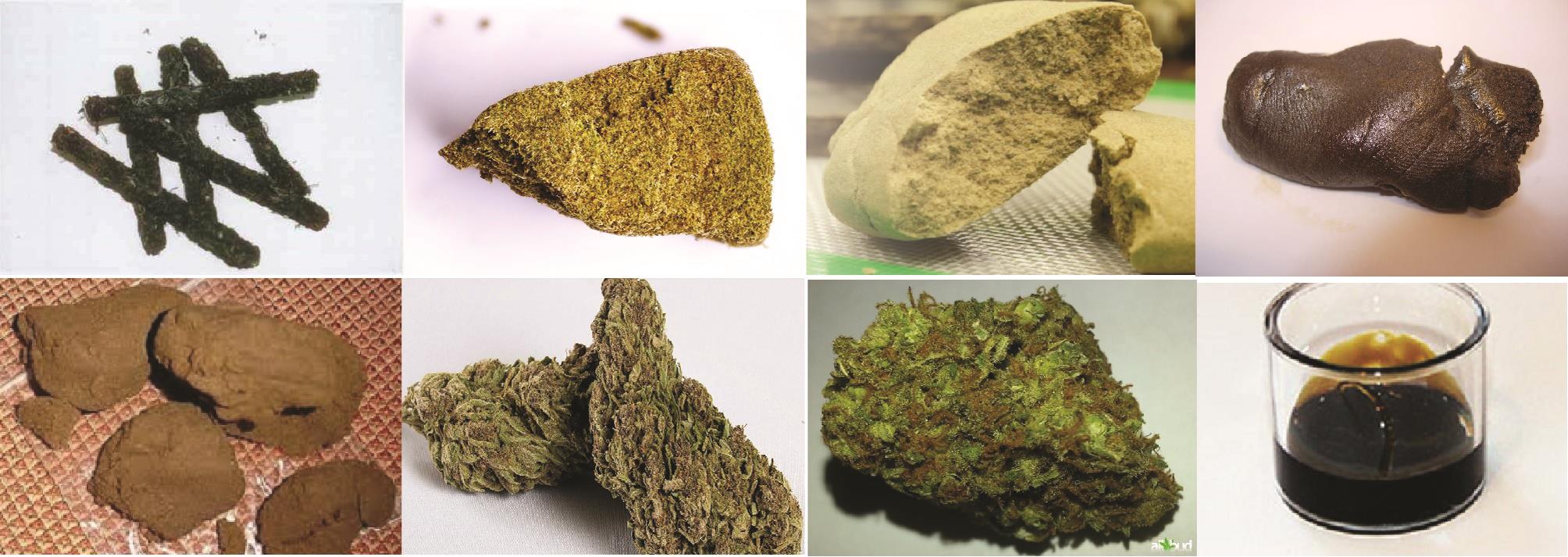 “Cannabis products. First row, left to right: Indian, Lebanese, Turkish and Pakistani hashish. Second row, left to right: Swiss hashish, Zairean marijuana, Swiss marijuana, Moroccan hash oil.”]]>
 “The G protein-coupled receptors 3, 6, and 12 (GPR3, GPR6, and GPR12) comprise a family of closely related orphan receptors with no confirmed endogenous ligands. These receptors are constitutively active and capable of signaling through G protein-mediated and non-G protein-mediated mechanisms. These orphan receptors have previously been reported to play important roles in many normal physiological functions and to be involved in a variety of pathological conditions.
Although they are orphans, GPR3, GPR6, and GPR12 are phylogenetically most closely related to the