
Cannabidiol Prevents the Expression of the Locomotor Sensitization and the Metabolic Changes in the Nucleus Accumbens and Prefrontal Cortex Elicited by the Combined Administration of Cocaine and Caffeine in Rats

 SpringerLink“In the last years, clinical and preclinical researchers have increased their interest in non-psychotomimetic cannabinoids, like cannabidiol (CBD), as a strategy for treating psychostimulant use disorders. However, there are discrepancies in the pharmacological effects and brain targets of CBD.

We evaluated if CBD was able to prevent the locomotor sensitization elicited by cocaine and caffeine co-administration. The effect of CBD on putative alterations in the metabolic activity of the medial prefrontal cortex (mPFC) and nucleus accumbens (NAc), and its respective subregions (cingulated, prelimbic, and infralimbic cortices, and NAc core and shell) associated to the behavioral response, was also investigated.

Rats were intraperitoneally and repeatedly treated with CBD (20 mg/kg) or its vehicle, followed by the combination of cocaine and caffeine (Coc+Caf; 5 mg/kg and 2.5 mg/kg, respectively) or saline for 3 days. After 5 days of withdrawal, all animals were challenged with Coc+Caf (day 9). Locomotor activity was automatically recorded and analyzed by a video-tracking software.

The metabolic activity was determined by measuring cytochrome oxidase-I (CO-I) staining. Locomotion was significantly and similarly increased both in Veh-Coc+Caf- and CBD-Coc+Caf-treated animals during the pretreatment period (3 days); however, on day 9, the expression of the sensitization was blunted in CBD-treated animals. A hypoactive metabolic response and a hyperactive metabolic response in mPFC and NAc subregions respectively were observed after the behavioral sensitization.

CBD prevented almost all these changes.

Our findings substantially contribute to the understanding of the functional changes associated with cocaine- and caffeine-induced sensitization and the effect of CBD on this process.”

https://pubmed.ncbi.nlm.nih.gov/32415526/

https://link.springer.com/article/10.1007%2Fs12640-020-00218-9

A Balanced Approach for Cannabidiol Use in Chronic Pain

Frontiers in Pharmacology (@FrontPharmacol) | Twitter “Cannabidiol (CBD), the major non-psychoactive constituent of Cannabis sativa L., has gained traction as a potential treatment for intractable chronic pain in many conditions. Clinical evidence suggests that CBD provides therapeutic benefit in certain forms of epilepsy and imparts analgesia in certain conditions, and improves quality of life.
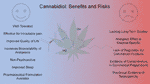

CBD continues to be Schedule I or V on the list of controlled substances of the Drug Enforcement Agency of the United States. However, preparations labeled CBD are available publicly in stores and on the streets. However, use of CBD does not always resolve pain. CBD purchased freely entails the risk of adulteration by potentially hazardous chemicals. As well, CBD use by pregnant women is rising and poses a major health-hazard for future generations.

In this mini-review, we present balanced and unbiased pre-clinical and clinical findings for the beneficial effects of CBD treatment on chronic pain and its deleterious effects on prenatal development.”

https://pubmed.ncbi.nlm.nih.gov/32425793/

https://www.frontiersin.org/articles/10.3389/fphar.2020.00561/full

www.frontiersin.org

The Therapeutic Effectiveness of Full Spectrum Hemp Oil Using a Chronic Neuropathic Pain Model

life-logo“Few models exist that can control for placebo and expectancy effects commonly observed in clinical trials measuring ‘Cannabis’ pharmacodynamics. We used the Foramen Rotundum Inflammatory Constriction Trigeminal Infraorbital Nerve injury (FRICT-ION) model to measure the effect of “full-spectrum” whole plant extracted hemp oil on chronic neuropathic pain sensitivity in mice.

Results: Mechanical allodynia was alleviated within 1 h (d = 2.50, p < 0.001) with a peak reversal effect at 4 h (d = 7.21, p < 0.001) and remained significant throughout the 6 h observation window. There was no threshold change on contralateral whisker pad after hemp oil administration, demonstrating the localization of anesthetic response to affected areas.

Conclusion: Future research should focus on how whole plant extracted hemp oil affects multi-sensory and cognitive-attentional systems that process pain.

The present study shows for the first time that common, commercially available, and easily reproducible full-spectrum hemp oil induces significant anti-allodynic effects with a bell-shaped pain sensitivity effect peeking between 2 and 4 h and lasting over 6 h. The study provides evidence that phytochemical extracts of the Cannabis plant, even with relatively low levels of THC, can significantly improve mechanical pressure pain in animals with established chronic neuropathic hypersensitivity.”

https://www.mdpi.com/2075-1729/10/5/69/htm

“Legal Cannabis hemp oil effectively treats chronic neuropathic pain: study”   https://medicalxpress.com/news/2020-05-legal-cannabis-hemp-oil-effectively.html

Investigation of cannabidiol gastro retentive tablets based on regional absorption of cannabinoids in rats.

European Journal of Pharmaceutics and Biopharmaceutics“The cannabis plant has been widely researched for many therapeutic indications and found to be effective in many chronic conditions such as epilepsy, neuropathic or chronic pain and more. However, biased opinion against compounds of the plant, regulatory as well as compounding challenges have led to very few approved medicinal products. Those formulations which are approved are dosed several times a day, creating an unmet need for controlled release (CR) formulations of cannabinoids. Conventional CR formulations rely on prolonged absorption including the colon. The purpose of this work is to investigate regional absorption of major cannabinoids THC and CBD from the colon and develop a suitable CR formulation. As hypothesized by researchers, THC and CBD have poor absorption from the colon compared to small intestine, suggesting that these compounds have a narrow absorption window. The suggested formulation examined in-vitro was a floating gastro retentive tablet based on egg albumin matrix, gas generating agents and surfactants. In-vivo investigation of CBD containing formulation in the freely moving rat model proved a prolonged absorption phase with a substantial increase in bioavailability compared to CBD solution. The findings of this paper answer a crucial question regarding potential application of CR dosage forms for cannabinoids and shed light on the regional intestinal absorption of these compounds. Ultimately, these results cement the way for future development of cannabinoid gastro retentive dosage forms.”
https://www.ncbi.nlm.nih.gov/pubmed/32422168

https://www.sciencedirect.com/science/article/abs/pii/S0939641120301375?via%3Dihub

Cannabidiol (CBD) as a treatment of acute and chronic back pain: A case series and literature review.

 Journal of opioid management (in SafetyLit)“Two patient case reports are presented describing the use of cannabidiol (CBD) for the symptomatic relief of a lumbar compression fracture and in the mitigation of thoracic discomfort and dysesthesia secondary to a surgically resected meningioma.

DISCUSSION:

CBD appears to have antisnociceptive and anti-inflammatory effects on opioid-naive patients with neuro-pathic and radicular pain. Of note, the patients in this case series used the same CBD cream: Baskin Essentials Body Wellness Cream (400 mg CBD per two oz.) Conclusion: Hemp-derived CBD in a transdermal cream provided significant symptom and pain relief for the patients described in this case series. Based on these results, we believe further investigation is warranted to see if CBD-containing products should have a more prominent role in the treatment of acute and chronic pain.”

https://www.ncbi.nlm.nih.gov/pubmed/32421842

Biological potential of varinic-, minor-, and acidic phytocannabinoids.

Pharmacological Research“While natural Δ9-tetrahidrocannabinol (Δ9THC), cannabidiol (CBD), and their therapeutic potential have been extensively researched, some cannabinoids have not been widely investigated.
The present article compiles data from the literature that highlights research on and the therapeutic possibilities of lesser known phytocannabinoids, which we have divided into varinic, acidic, and “minor” (i.e., cannabinoids that are not present in high quantities in common varieties of Cannabis sativa L).

A growing interest in these compounds, which are enriched in some cannabis varieties, has already resulted in enough preclinical information to show that they are promising therapeutic agents for a variety of diseases.

Each phytocannabinoid has a “preferential” mechanism of action, and often target the cannabinoid receptors CB1 and/or CB2. The recent resolution of the structure of cannabinoid receptors demonstrates the atypical nature of cannabinoid binding, and that different binding modes depend on the agonist or partial agonist/inverse agonist, which allows for differential signaling, even acting on the same cannabinoid receptor. In addition, other players and multiple signaling pathways may be targeted/engaged by phytocannabinoids, thereby expanding the mechanistic possibilities for therapeutic use.”

https://www.ncbi.nlm.nih.gov/pubmed/32416215

https://www.sciencedirect.com/science/article/abs/pii/S1043661820311099?via%3Dihub

Inhibitor of Differentiation 1 (Id1) in Cancer and Cancer Therapy.

International Journal of Medical Sciences“The inhibitor of DNA binding (Id) proteins are regulators of cell cycle and cell differentiation. Of all Id family proteins, Id1 is mostly linked to tumorigenesis, cellular senescence as well as cell proliferation and survival.


Overall, Id1 represent a promising target of anti-tumor therapeutics based on its potent promotion effect to cancer. Numerous drugs were found exerting their anti-tumor function through Id1-related signaling pathways, such as fucoidan, berberine, tetramethylpyrazine, crizotinib, cannabidiol and vinblastine.”

https://www.ncbi.nlm.nih.gov/pubmed/32410828

“Id1 is a promising target of anti-tumor treatment as many compounds exert anti-tumor properties by mediating Id1-related pathways.”

https://www.medsci.org/v17p0995.htm

“Cannabidiol as a novel inhibitor of Id-1 gene expression in aggressive breast cancer cells. CBD represents the first nontoxic exogenous agent that can significantly decrease Id-1 expression in metastatic breast cancer cells leading to the down-regulation of tumor aggressiveness. Moreover, reducing Id-1 expression with cannabinoids could also provide a therapeutic strategy for the treatment of additional aggressive cancers because Id-1 expression was found to be up-regulated during the progression of almost all types of solid tumors investigated.”

https://mct.aacrjournals.org/content/6/11/2921

A Phase 1, Randomised, Placebo-Controlled, Dose Escalation Study to Investigate the Safety, Tolerability and Pharmacokinetics of Cannabidiol in Fed Healthy Volunteers.

SpringerLink“There is increasing interest in the use of purified cannabidiol (CBD) as a treatment for a wide range of conditions due to its reported anti-inflammatory, anxiolytic, antiemetic and anticonvulsant properties.

OBJECTIVE:

The objective of this study was to assess the safety, tolerability and pharmacokinetics of a single ascending dose of a new lipid-based oral formulation of CBD in healthy volunteers after a high-fat meal.

RESULTS:

CBD was well tolerated in the healthy volunteers (mean age: 24.0 years) treated with a single oral dose of CBD. There were no safety concerns with increasing the dose and the safety profiles of the CBD-treated and placebo-treated subjects were similar. The most frequently reported treatment emergent adverse events (TEAEs) were headache (17%) and diarrhoea (8%). There were no reported serious adverse events (SAEs) and no clinical laboratory findings, vital signs, ECGs or physical examination findings that were reported as TEAEs or were of clinical significance during the study. After a high-fat meal, CBD was detected in plasma samples at 15 min postdose; the median time to maximum plasma concentration (Tmax) was 4 h across all three CBD dose cohorts. The CBD plasma exposure [maximum observed plasma concentration (Cmax) and the area under the concentration-time curve (AUC)] increased in a dose-proportional manner and declined to levels approaching the lower level of quantification by day 8. The terminal elimination half-life was approximately 70 h, suggesting that 2-3 weeks are needed to fully eliminate CBD.

CONCLUSIONS:

This new CBD formulation demonstrated a favourable safety and tolerability profile in healthy volunteers that was consistent with the profiles reported for other purified CBD products. No severe or serious AEs were observed in this study and there were no safety concerns.”

https://www.ncbi.nlm.nih.gov/pubmed/32409982

“Cannabidiol (CBD) is a major nonpsychoactive cannabinoid derived from the Cannabis plant that has attracted significant interest due to its anti-inflammatory, anxiolytic, antiemetic and anticonvulsant properties. The findings of this study contribute to the evolving knowledge of cannabidiol pharmacokinetics and indicate that this new oral lipid-based formulation of cannabidiol is generally safe and well tolerated at all doses studied. No severe or serious AEs were observed and there were no safety concerns.”

https://link.springer.com/article/10.1007%2Fs13318-020-00624-6

Cannabidiol on 5-FU-induced oral mucositis in mice.

Oral Diseases

“The aim of this study was to evaluate the clinical, histological, hematological and oxidative stress effects of cannabidiol (CBD) in mice with induced oral mucositis.

RESULTS:

In the clinical evaluation, the groups treated with CBD showed less severity of oral lesions compared with the positive control at both experimental times. The intensity of the inflammatory response was also lower in the groups treated with this drug, but there was no statistically significant difference when compared with the positive control. With regard to erythrocyte, leukocyte and platelet counts and antioxidant enzyme activity, the groups treated with CBD showed better results, but only some of these variables showed statistically significant differences.

CONCLUSIONS:

CBD seems to exert an anti-inflammatory and antioxidant activity favoring a faster resolution of oral mucositis in this animal model.”

https://www.ncbi.nlm.nih.gov/pubmed/32400905

https://onlinelibrary.wiley.com/doi/abs/10.1111/odi.13413

PLGA Nanoparticles for the Intraperitoneal Administration of CBD in the Treatment of Ovarian Cancer: In Vitro and In Ovo Assessment.

pharmaceutics-logo“The intraperitoneal administration of chemotherapeutics has emerged as a potential route in ovarian cancer treatment. Nanoparticles as carriers for these agents could be interesting by increasing the retention of chemotherapeutics within the peritoneal cavity. Moreover, nanoparticles could be internalised by cancer cells and let the drug release near the biological target, which could increase the anticancer efficacy.
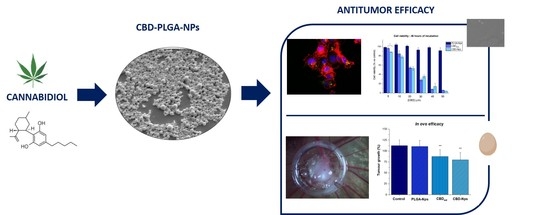
Cannabidiol (CBD), the main nonpsychotropic cannabinoid, appears as a potential anticancer drug. The aim of this work was to develop polymer nanoparticles as CBD carriers capable of being internalised by ovarian cancer cells.

The drug-loaded nanoparticles (CBD-NPs) exhibited a spherical shape, a particle size around 240 nm and a negative zeta potential (-16.6 ± 1.2 mV). The encapsulation efficiency was high, with values above 95%. A controlled CBD release for 96 h was achieved. Nanoparticle internalisation in SKOV-3 epithelial ovarian cancer cells mainly occurred between 2 and 4 h of incubation. CBD antiproliferative activity in ovarian cancer cells was preserved after encapsulation. In fact, CBD-NPs showed a lower IC50 values than CBD in solution. Both CBD in solution and CBD-NPs induced the expression of PARP, indicating the onset of apoptosis. In SKOV-3-derived tumours formed in the chick embryo model, a slightly higher-although not statistically significant-tumour growth inhibition was observed with CBD-NPs compared to CBD in solution.

To sum up, poly-lactic-co-glycolic acid (PLGA) nanoparticles could be a good strategy to deliver CBD intraperitoneally for ovarian cancer treatment.”

https://www.ncbi.nlm.nih.gov/pubmed/32397428

https://www.mdpi.com/1999-4923/12/5/439