
 “Industrial hemp is a multiuse crop that has been widely cultivated to produce fibers and nutrients. The capability of the essential oil (EO) from inflorescences as antimicrobial agent has been reported. However, literature data are still lacking about the hemp EO antiprotozoal efficacy in vivo.
The present study aims to unravel this concern through the evaluation of the efficacy of hemp EOs (2.5 mL/kg, intraperitoneally) of three different cultivars, namely Futura 75, Carmagnola selezionata and Eletta campana, in mice intraperitoneally infected with Leishmania tropica. A detailed description of EO composition and targets-components analysis is reported.
Myrcene, α-pinene and E-caryophyllene were the main components of the EOs, as indicated by the gas-chromatographic analysis. However, a prominent position in the scenario of the theoretical interactions underlying the bio-pharmacological activity was also occupied by selina-3,7(11)-diene, which displayed affinities in the micromolar range (5.4-28.9) towards proliferator-activated receptor α, cannabinoid CB2 receptor and acetylcholinesterase. The content of this compound was higher in Futura 75 and Eletta campana, in accordance with their higher scavenging/reducing properties and efficacy against the tissue wound, induced by L. tropica.
Overall, the present study recommends hemp female inflorescences, as sources of biomolecules with potential pharmacological applications, especially towards infective diseases.”
https://pubmed.ncbi.nlm.nih.gov/33673274/
https://www.mdpi.com/2218-273X/11/2/272
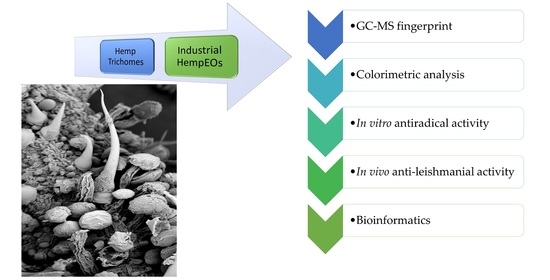
 “Industrial hemp is characterized by a huge amount of by-products, such as inflorescences, that may represent high-quality sources of biomolecules with pharmaceutical interest.
 “The activity of a new, terpene-based formulation, code-named NT-VRL-1, against Human Coronavirus (HCoV) strain 229E was evaluated in human lung fibroblasts (MRC-5 cells), with and without the addition of cannabidiol (CBD). The main constituents in the terpene formulation used for the experiment were beta caryophyllene, eucalyptol, and citral. The tested formulation exhibited an antiviral effect when it was pre-incubated with the host cells prior to virus infection. The combination of NT-VRL-1 with CBD potentiated the antiviral effect better than the positive controls pyrazofurin and glycyrrhizin. There was a strong correlation between the quantitative results from a cell-viability assay and the cytopathic effect seen under the microscope after 72 h. To the best of our knowledge, this is the first report of activity of a combination of terpenes and CBD against a coronavirus.”


 “The cannabis plant (Cannabis sativa L.) produces an estimated 545 chemical compounds of different biogenetic classes. In addition to economic value, many of these phytochemicals have medicinal and physiological activity. The plant is most popularly known for its two most-prominent and most-studied secondary metabolites-Δ9-tetrahydrocannabinol (Δ9-THC) and cannabidiol (CBD). Both Δ9-THC and CBD have a wide therapeutic window across many ailments and form part of a class of secondary metabolites called cannabinoids-of which approximately over 104 exist.
 “Breast cancer is the leading cause of cancer-related death in women worldwide. In the last years, cannabinoids have gained attention in the clinical setting and clinical trials with cannabinoid-based preparations are underway. However, contradictory anti-tumour properties have also been reported. Thus, the elucidation of the molecular mechanisms behind their anti-tumour efficacy is crucial to better understand its therapeutic potential.
 “Cannabis was extensively utilized for its medicinal properties till the 19th century. A steep decline in its medicinal usage was observed later due to its emergence as an illegal recreational drug. Advances in technology and scientific findings led to the discovery of delta-9-tetrahydrocannabinol (THC), the primary psychoactive compound of cannabis, that further led to the discovery of endogenous cannabinoids system consisting of G-protein-coupled receptors – cannabinoid receptor 1 and cannabinoid receptor 2 along with their ligands, mainly anandamide and 2-arachidonoylglycerol. Endocannabinoid (EC) is shown to be a modulator not only for physiological functions but also for the immune system, endocrine network, and central nervous system. Medicinal research and meta-data analysis over the last few decades have shown a significant potential for both THC and cannabidiol (CBD) to exert palliative effects. People suffering from many forms of advanced stages of cancers undergo chemotherapy-induced nausea and vomiting followed by severe and chronic neuropathic pain and weight loss. THC and CBD exhibit effective analgesic, anxiolytic, and appetite-stimulating effect on patients suffering from cancer. Drugs currently available in the market to treat such chemotherapy-induced cancer-related ailments are Sativex (GW Pharmaceutical), Dronabinol (Unimed Pharmaceuticals), and Nabilone (Valeant Pharmaceuticals). Apart from exerting palliative effects, THC also shows promising role in the treatment of cancer growth, neurodegenerative diseases (multiple sclerosis and Alzheimer’s disease), and alcohol addiction and hence should be exploited for potential benefits. The current review discusses the nature and role of CB receptors, specific applications of cannabinoids, and major studies that have assessed the role of cannabinoids in cancer management.”
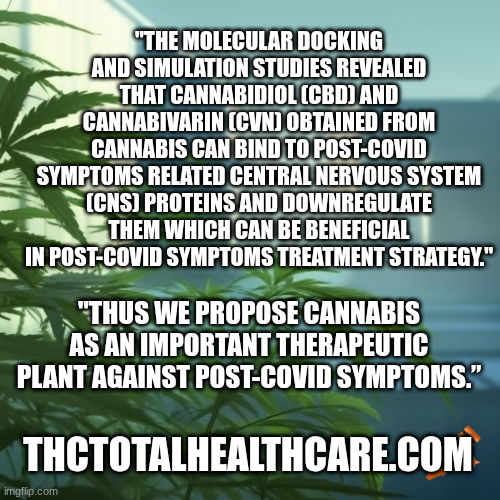
 “The rapid spread of COVID-19 underscores the need for new treatments.