
Effects of standardized Cannabis sativa extract and ionizing radiation in melanoma cells in vitro

Journal of Cancer Research and Therapeutics “Melanoma causes the highest number of skin cancer-related deaths worldwide. New treatment methods are essential for the management of this life-threatening disease.

Aims: In this study, we investigated the efficacy of a standardized Cannabis sativa extract alone or in combination with single radiation dose (6 Gy) in B16F10 mouse melanoma cells in an extract dose-dependent manner.

Results: Administration of the extract alone or alongside radiation substantially inhibited melanoma cell viability and proliferation in the extract dose response-dependent manner. The inhibition of melanoma cell viability was paralleled by an increase in necrosis but not apoptosis when melanoma cells were treated with the extract alone. Radiation alone did not have any antiproliferative effects, and radiation also did not synergize antiproliferative effects of the extract when the extract and radiation were combined.

Conclusion: Our data suggest that C. sativa extract may have significant health and physiological implications for the treatment of melanoma. The results of this study also indicate that B16F10 mouse melanoma cells are radioresistant. Taken together, these findings may lead to the identification of new therapeutic strategy for the management of melanoma.”

https://pubmed.ncbi.nlm.nih.gov/33342819/

“This study provides the first evidence of antitumor effects of C. sativa extract, when administered alone or in combination with radiation, to mouse melanoma cells in vitro. Our results may verify the value of C. sativa extract for the treatment of melanoma and may complement the therapeutic profile of C. sativa extracts administration in the future.”

https://www.cancerjournal.net/article.asp?issn=0973-1482;year=2020;volume=16;issue=6;spage=1495;epage=1499;aulast=Naderi

Cannabinoid control of neurogenic inflammation

 British Journal of Pharmacology“A significant number of cannabinoids are known to have analgesic and anti-inflammatory properties in various diseases. Due to their presynaptic/terminal location, cannabinoid receptors can inhibit synaptic transmission and have the potential to regulate neurogenic inflammation. Neurogenic inflammation occurs when a noxious signal is detected in the periphery initiating an antidromic axon reflex in the same sensory neurone leading to depolarization of the afferent terminal. Neuropeptides are subsequently released and contribute to vasodilation, plasma extravasation and modulation of immune cells. Endocannabinoids, synthetic cannabinoids and phytocannabinoids can reduce neuroinflammation by inhibiting afferent firing and inflammatory neuropeptide release. Thus, in addition to a direct effect on vascular smooth muscle and inflammatory cells, cannabinoids can reduce inflammation by silencing small diameter neurones. This review examines the neuropharmacological processes involved in regulating antidromic depolarization of afferent nerve terminals by cannabinoids and the control of neurogenic inflammation in different diseases.”

https://pubmed.ncbi.nlm.nih.gov/33289534/

https://bpspubs.onlinelibrary.wiley.com/doi/abs/10.1111/bph.15208

Assessment of antiviral potencies of cannabinoids against SARS-CoV-2 using computational and in vitro approaches

International Journal of Biological Macromolecules“Effective treatment choices to the severe acute respiratory syndrome coronavirus-2 (SARS-CoV-2) are limited because of the absence of effective target-based therapeutics. The main object of the current research was to estimate the antiviral activity of cannabinoids (CBDs) against the human coronavirus SARS-CoV-2.

In the presented research work, we performed in silico and in vitro experiments to aid the sighting of lead CBDs for treating the viral infections of SARS-CoV-2. Virtual screening was carried out for interactions between 32 CBDs and the SARS-CoV-2 Mpro enzyme. Afterward, in vitro antiviral activity was carried out of five CBDs molecules against SARS-CoV-2.

Interestingly, among them, two CBDs molecules namely Δ (Yu et al., 2020 [9])-tetrahydrocannabinol (IC50 = 10.25 μM) and cannabidiol (IC50 = 7.91 μM) were observed to be more potent antiviral molecules against SARS-CoV-2 compared to the reference drugs lopinavir, chloroquine, and remdesivir (IC50 ranges of 8.16-13.15 μM). These molecules were found to have stable conformations with the active binding pocket of the SARS-CoV-2 Mpro by molecular dynamic simulation and density functional theory.

Our findings suggest cannabidiol and Δ (Yu et al., 2020 [9])-tetrahydrocannabinol are possible drugs against human coronavirus that might be used in combination or with other drug molecules to treat COVID-19 patients.”

https://pubmed.ncbi.nlm.nih.gov/33290767/

“In summary, this report demonstrates the antiviral potencies of CBD and Δ9-THC against SARS-CoV-2. Based on privileged safety index CBD and Δ9-THC in human and their current in vitro potencies against SARS-CoV-2, it can be concluded that these compounds are potential antiviral molecules towards SARS-CoV-2 and may have worked as dual-acting against SARS-CoV-2, not only block the viral translation procedure by inhibiting SARS-CoV-2 Mpro but also reduce pro-inflammatory cytokines levels in lung cells by acting as agonists of CB-2 receptor. The successful in vitro work here of CBD and Δ9-THC lays the framework for their application in human clinical trials for the treatment of human coronavirus infections. Thus, CBD and Δ9-THC may be used in combination or with other drugs to treat COVID-19 patients.”

https://www.sciencedirect.com/science/article/pii/S0141813020351783?via%3Dihub

Fig. 1

Medicinal Applications of Cannabinoids Extracted from Cannabis sativa (L.): A new Route to Fight against COVID-19?

 “Cannabis sativa is a well-known plant which has been of benefit since ancient times in several medicinal systems, including Chinese, Indian, Greek and Egyptian ones.

Although C. sativa is one of the most investigated medicinal plants in the world, it faces the most controversial of issues for its legalization as a medication. C. sativa contains several hundreds of phytoconstituents including the infamous «cannabinoid.” It is necessary to properly understand the medicinal importance of these phytochemicals and spread awareness among the countries where it’s still facing legal complexities.

The current review is focusing on most recent literature pertaining to the various applications of cannabinoids with a special focus on medicinal aspect of the phytochemicals. Peer reviewed articles focusing on the importance of cannabis and cannabinoids were the target of this review. Articles were selected based on the relevance to the general scope of the work i.e. application of cannabinoids.

Cannabinoids can truly be regarded as wonder drug keeping their immense diversity of usage but unfortunately, many of the mares never researched biologically or pharmacologically due to their low yield in the plant. However, the approval of some cannabinoids by the FDA (along with other recognized national medical health systems) has opened the horizons for the explicit use of these natural drugs in medicines such as Epidiolex® (cannabidiol used for the treatment of severe forms of epilepsy) and Sativex®(‘Δ9 -tetrahydrocannabinol and cannabidiol’ used for the treatment of spasticity caused by multiple sclerosis, aka: MS.)

Many pharmacological properties of C. sativa are attributed to cannabidiol (CBD), a non-psychoactive component, along with Δ9 -tetrahydrocannabinol (Δ9 -THC), a psychoactive component. This review addresses the most important application or current utilization of cannabinoids in a variety of treatments such as: chronic pain, cancer, emesis, anorexia, irritable bowel syndrome, communicative diseases, glaucoma and central nervous system disorders. The biosynthetic pathway of cannabinoids is also discussed. In short, this plant has a myriad of bioactive compounds which have the potential to increase the list of approved cannabinoids suitable for therapy.”

https://pubmed.ncbi.nlm.nih.gov/33267756/

https://www.eurekaselect.com/188617/article

Natural Salicylates and Their Roles in Human Health

ijms-logo“Salicylic acid (SA) is a plant hormone which plays a crucial role in the plant defense against various pathogens and abiotic stresses. Increasing reports suggest that this phenolic compound and its derivatives, collectively termed salicylates, not only regulate plant defense but also have beneficial effects on human health. Both natural and synthetic salicylates are known to have multiple targets in humans, thereby exhibiting various appreciating pharmacological roles, including anti-inflammatory, anticancer, neuroprotective, antidiabetic effects, and so on. The role of some salicylates, such as acetylsalicylic acid (aspirin), 5-aminosalicylic acid (mesalazine), and amorfrutins in human diseases has been well studied in vitro. However, their clinical significance in different diseases is largely unknown. Based on recent studies, five natural salicylates, including amorfrutin, ginkgolic acid, grifolic acid, tetrahydrocannabinolic acid, and cannabidiolic acid, showed potential roles in different challenging human diseases. This review summarizes together some of the recent information on multitarget regulatory activities of these natural salicylates and their pharmacological roles in human health.”
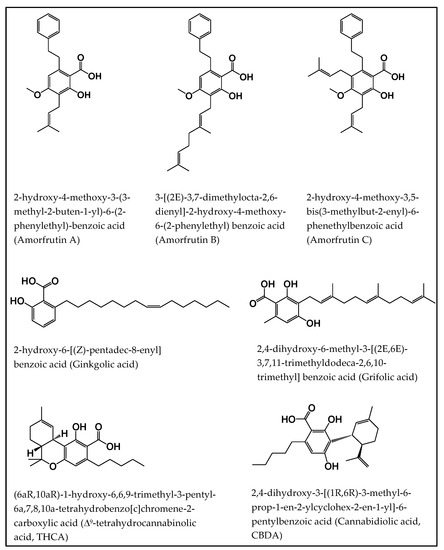

https://pubmed.ncbi.nlm.nih.gov/33260759/

https://www.mdpi.com/1422-0067/21/23/9049

Changes in Lipid Profile of Keratinocytes from Rat Skin Exposed to Chronic UVA or UVB Radiation and Topical Application of Cannabidiol

antioxidants-logo“UV radiation is a well-established environmental risk factor known to cause oxidative stress and disrupt the metabolism of keratinocyte phospholipids. Cannabidiol (CBD) is a phytocannabinoid with anti-inflammatory and antioxidant effects.
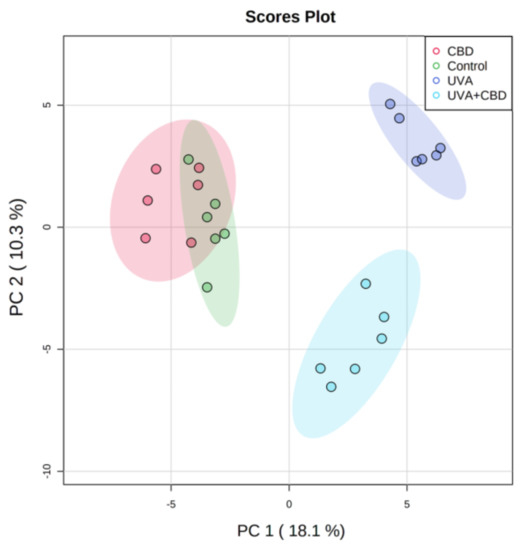
In this study, we examined changes in the keratinocyte phospholipid profile from nude rat skin exposed to UVA and UVB radiation that was also treated topically with CBD.

UVA and UVB radiation promoted up-regulation of phosphatidylcholines (PC), lysophosphatidylcholines (LPC), phosphatidylethanolamines (PE) and down-regulation of sphingomyelin (SM) levels and enhanced the activity of phospholipase A2 (PLA2) and sphingomyelinase (SMase).

Application of CBD to the skin of control rats led to down-regulation of SM and up-regulation of SMase activity. After CBD treatment of rats irradiated with UVA or UVB, SM was up-regulated and down-regulated, respectively, while ceramide (CER) levels and SMase activity were down-regulated and up-regulated, respectively. CBD applied to the skin of UV-irradiated rats down-regulated LPC, up-regulated PE and phosphatidylserines (PS) and reduced PLA2 activity.

In conclusion, up-regulation of PS may suggest that CBD inhibits their oxidative modification, while changes in the content of PE and SM may indicate a role of CBD in promoting autophagy and improving the status of the transepidermal barrier.”

https://pubmed.ncbi.nlm.nih.gov/33255796/

https://www.mdpi.com/2076-3921/9/12/1178

The effect of cannabidiol on canine neoplastic cell proliferation and MAP Kinase activation during autophagy and apoptosis

“Low tetrahydrocannabinol Cannabis sativa products, also known as hemp products, have become widely available and their use in veterinary patients has become increasingly popular. Despite prevalence of use, the veterinary literature is lacking and evidence-based resource for cannabinoid efficacy.

The most prevailing cannabinoid found in hemp is cannabidiolic acid (CBDA) and becomes cannabidiol (CBD) during heat extraction; CBD has been studied for its direct anti-neoplastic properties alone and in combination with standard cancer therapies, yielding encouraging results.

The objectives of our study were to explore the anti-proliferative and cell death response associated with in vitro treatment of canine cancer cell lines with CBD alone and combination with common chemotherapeutics, as well as investigation into major proliferative pathways (e.g. p38, JNK, AKT, mTOR) potentially involved in the response to treatment with CBD.

CBD significantly reduced canine cancer cell proliferation far better than cannabidiolic acid (CBDA) across five canine neoplastic cell lines when treated with concentrations ranging from 2.5-10 μg/mL. Combinatory treatment with CBD and vincristine reduced cell proliferation in a synergistic or additive manner at anti-proliferative concentrations with less clear results using doxorubicin in combination with CBD. The cellular signaling effects of CBD treatment, showed that autophagy supervened induction of apoptosis and may be related to prompt induction of ERK and JNK phosphorylation prior to autophagy.

In conclusion, CBD is effective at hindering cell proliferation and induction of autophagy and apoptosis rapidly across neoplastic cell lines and further clinical trials are needed to understand its efficacy and interactions with traditional chemotherapy.”

https://pubmed.ncbi.nlm.nih.gov/33247539/

https://onlinelibrary.wiley.com/doi/10.1111/vco.12669

Cannabis and its Constituents for Cancer: History, Biogenesis, Chemistry and Pharmacological Activities

Pharmacological Research “Cannabis has long been used for healing and recreation in several regions of the world. Over 400 bioactive constituents, including more than 100 phytocannabinoids, have been isolated from this plant. The non-psychoactive cannabidiol (CBD) and the psychoactive Δ9-tetrahydrocannabinol (Δ9-THC) are the major and widely studied constituents from this plant.

Cannabinoids exert their effects through the endocannabinoid system (ECS) that comprises cannabinoid receptors (CB1, CB2), endogenous ligands, and metabolizing enzymes. Several preclinical studies have demonstrated the potential of cannabinoids against leukemia, lymphoma, glioblastoma, and cancers of the breast, colorectum, pancreas, cervix and prostate.

Cannabis and its constituents can modulate multiple cancer related pathways such as PKB, AMPK, CAMKK-β, mTOR, PDHK, HIF-1α, and PPAR-γ. Cannabinoids can block cell growth, progression of cell cycle and induce apoptosis selectively in tumour cells. Cannabinoids can also enhance the efficacy of cancer therapeutics. These compounds have been used for the management of anorexia, queasiness, and pain in cancer patients.

Cannabinoid based products such as dronabinol, nabilone, nabiximols, and epidyolex are now approved for medical use in cancer patients. Cannabinoids are reported to produce a favourable safety profile. However, psychoactive properties and poor bioavailability limit the use of some cannabinoids. The Academic Institutions across the globe are offering training courses on cannabis. How cannabis and its constituents exert anticancer activities is discussed in this article. We also discuss areas that require attention and more extensive research.”

https://pubmed.ncbi.nlm.nih.gov/33246167/

https://www.sciencedirect.com/science/article/abs/pii/S1043661820316108?via%3Dihub

Cannabidiol enhances cytotoxicity of anti-cancer drugs in human head and neck squamous cell carcinoma

 Scientific Reports“Cannabidiol (CBD) has anti-tumorigenic activity. However, the anti-cancer effect of CBD on head and neck squamous cell carcinoma (HNSCC) remains unclear. The cytotoxicity of CBD on HNSCC was analyzed using cell survival and colony-forming assays in vitro.

CBD treatment significantly reduced migration/invasion and viability of HNSCC cells in a dose- and time-dependent manner. HNSCC mouse xenograft models revealed anti-tumor effects of CBD. Furthermore, combinational treatment with CBD enhanced the efficacy of chemotherapy drugs.

We identified CBD as a new potential anti-cancer compound for single or combination therapy of HNSCC.”

https://pubmed.ncbi.nlm.nih.gov/33244087/

In conclusion, our study determined the anti-tumorigenic potential of CBD. In addition, single treatment of CBD or co-treatment with chemotherapeutic agents promoted HNSCC cell death along with apoptosis and autophagy processes. Therefore, our study suggests that CBD can be an excellent therapeutic agent against HNSCC. Cannabidiol (CBD) is one of the components in the Cannabis sativa L. (marijuana) family of plants.”

https://www.nature.com/articles/s41598-020-77674-y

Cannabidiol: A Potential New Alternative for the Treatment of Anxiety, Depression, and Psychotic Disorders

biomolecules-logo“The potential therapeutic use of some Cannabis sativa plant compounds has been attracting great interest, especially for managing neuropsychiatric disorders due to the relative lack of efficacy of the current treatments.
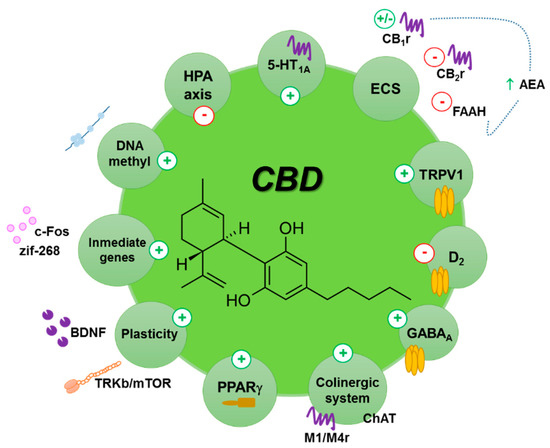
Numerous studies have been carried out using the main phytocannabinoids, tetrahydrocannabinol (THC) and cannabidiol (CBD). CBD displays an interesting pharmacological profile without the potential for becoming a drug of abuse, unlike THC.

In this review, we focused on the anxiolytic, antidepressant, and antipsychotic effects of CBD found in animal and human studies. In rodents, results suggest that the effects of CBD depend on the dose, the strain, the administration time course (acute vs. chronic), and the route of administration. In addition, certain key targets have been related with these CBD pharmacological actions, including cannabinoid receptors (CB1r and CB2r), 5-HT1A receptor and neurogenesis factors.

Preliminary clinical trials also support the efficacy of CBD as an anxiolytic, antipsychotic, and antidepressant, and more importantly, a positive risk-benefit profile. These promising results support the development of large-scale studies to further evaluate CBD as a potential new drug for the treatment of these psychiatric disorders.”

https://pubmed.ncbi.nlm.nih.gov/33228239/

https://www.mdpi.com/2218-273X/10/11/1575