Targeting Cannabinoid Signaling in the Immune System: “High”-ly Exciting Questions, Possibilities, and Challenges

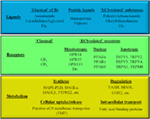
Image result for frontiers in immunology“It is well known that certain active ingredients of the plants of Cannabis genus, i.e., the “phytocannabinoids” [pCBs; e.g., (−)-trans-Δ9-tetrahydrocannabinol (THC), (−)-cannabidiol, etc.] can influence a wide array of biological processes, and the human body is able to produce endogenous analogs of these substances [“endocannabinoids” (eCB), e.g., arachidonoylethanolamine (anandamide, AEA), 2-arachidonoylglycerol (2-AG), etc.]. These ligands, together with multiple receptors (e.g., CB1 and CB2 cannabinoid receptors, etc.), and a complex enzyme and transporter apparatus involved in the synthesis and degradation of the ligands constitute the endocannabinoid system (ECS), a recently emerging regulator of several physiological processes. The ECS is widely expressed in the human body, including several members of the innate and adaptive immune system, where eCBs, as well as several pCBs were shown to deeply influence immune functions thereby regulating inflammation, autoimmunity, antitumor, as well as antipathogen immune responses, etc. Based on this knowledge, many in vitro and in vivo studies aimed at exploiting the putative therapeutic potential of cannabinoid signaling in inflammation-accompanied diseases (e.g., multiple sclerosis) or in organ transplantation, and to dissect the complex immunological effects of medical and “recreational” marijuana consumption. Thus, the objective of the current article is (i) to summarize the most recent findings of the field; (ii) to highlight the putative therapeutic potential of targeting cannabinoid signaling; (iii) to identify open questions and key challenges; and (iv) to suggest promising future directions for cannabinoid-based drug development.

Active Components of Cannabis sativa (Hemp)—Phytocannabinoids (pCBs) and Beyond

It is known since ancient times that consumption of different parts of the plant Cannabis sativa can lead to psychotropic effects. Moreover, mostly, but not exclusively because of its potent analgesic actions, it was considered to be beneficial in the management of several diseases. Nowadays it is a common knowledge that these effects were mediated by the complex mixture of biologically active substances produced by the plant. So far, at least 545 active compounds have been identified in it, among which, the best-studied ones are the so-called pCBs. It is also noteworthy that besides these compounds, ca. 140 different terpenes [including the potent and selective CB2 agonist sesquiterpene β-caryophyllene (BCP)], multiple flavonoids, alkanes, sugars, non-cannabinoid phenols, phenylpropanoids, steroids, fatty acids, and various nitrogenous compounds can be found in the plant, individual biological actions of which are mostly still nebulous. Among the so far identified > 100 pCBs, the psychotropic (−)-trans-Δ9-tetrahydrocannabinol (THC) and the non-psychotropic (−)-cannabidiol (CBD) are the best-studied ones, exerting a wide-variety of biological actions [including but not exclusively: anticonvulsive, analgesic, antiemetic, and anti inflammatory effects]. Of great importance, pCBs have been shown to modulate the activity of a plethora of cellular targets, extending their impact far beyond the “classical” (see above) cannabinoid signaling. Indeed, besides being agonists [or in some cases even antagonists of CB1 and CB2 cannabinoid receptors, some pCBs were shown to differentially modulate the activity of certain TRP channels, PPARs, serotonin, α adrenergic, adenosine or opioid receptors, and to inhibit COX and lipoxygenase enzymes, FAAH, EMT, etc.. Moreover, from a clinical point-of-view, it should also be noted that pCBs can indirectly modify pharmacokinetics of multiple drugs (e.g., cyclosporine A) by interacting with several cytochrome P 450 (CYP) enzymes. Taken together, pCBs can be considered as multitarget polypharmacons, each of them having unique “molecular fingerprints” created by the characteristic activation/inhibition pattern of its locally available cellular targets.

Concluding Remarks—Lessons to Learn from Cannabis

Research efforts of the past few decades have unambiguously evidenced that ECS is one of the central orchestrators of both innate and adaptive immune systems, and that pure pCBs as well as complex cannabis-derivatives can also deeply influence immune responses. Although, many open questions await to be answered, pharmacological modulation of the (endo)cannabinoid signaling, and restoration of the homeostatic eCB tone of the tissues augur to be very promising future directions in the management of several pathological inflammation-accompanied diseases. Moreover, in depth analysis of the (quite complex) mechanism-of-action of the most promising pCBs is likely to shed light to previously unknown immune regulatory mechanisms and can therefore pave new “high”-ways toward developing completely novel classes of therapeutic agents to manage a wide-variety of diseases.”

https://www.frontiersin.org/articles/10.3389/fimmu.2017.01487/full
www.frontiersin.org

From Cannabinoids and Neurosteroids to Statins and the Ketogenic Diet: New Therapeutic Avenues in Rett Syndrome?

Image result for frontiers in neuroscience “Rett syndrome (RTT) is an X-linked neurodevelopmental disorder caused mainly by mutations in the MECP2 gene, being one of the leading causes of mental disability in females.

Epilepsy is one of the most common symptoms in RTT, occurring in 60 to 80% of RTT cases, being associated with worsening of other symptoms. At this point, no cure for RTT is available and there is a pressing need for the discovery of new drug candidates to treat its severe symptoms.

New and exciting evidence has been gathered and the etiopathogenesis of this complex, severe and untreatable disease is slowly being unfolded. Advances in gene editing techniques have prompted cure-oriented research in RTT. Nonetheless, at this point, finding a cure is a distant reality, highlighting the importance of further investigating the basic pathological mechanisms of this disease.”

https://www.ncbi.nlm.nih.gov/pubmed/31333401

“Very recently, a new study using CBDV has confirmed the potential of this particular phytocannabinoid in RTT.  The promising antiseizure effects of CBD, even in cases of refractory-epilepsy, observed in both clinical trials with humans and in laboratory animals, the effects of combinations of CBD and Δ9-THC in controlling muscle spasticity and motor symptoms, and the positive results of CBDV administration in two different mouse models of RTT, place cannabinoids as a viable therapeutic strategy in RTT. Moreover, CBD positively modifies impairments in motor, cognitive and social processes in animal models, further highlighting the potential of cannabinoid molecules to tackle RTT-symptomology.”

https://www.frontiersin.org/articles/10.3389/fnins.2019.00680/full

Cannabidiol binding and negative allosteric modulation at the cannabinoid type 1 receptor in the presence of delta-9-tetrahydrocannabinol: An In Silico study.

Image result for plos one “Recent evidence has raised in discussion the possibility that cannabidiol can act as a negative allosteric modulator of the cannabinoid type 1 receptor. Here we have used computational methods to study the modulation exerted by cannabidiol on the effects of delta-9-tetrahydrocannabinol in the cannabinoid receptor type 1 and the possibility of direct receptor blockade. We propose a putative allosteric binding site that is located in the N-terminal region of receptor, partially overlapping the orthosteric binding site. Molecular dynamics simulations reveled a coordinated movement involving the outward rotation of helixes 1 and 2 and subsequent expansion of the orthosteric binding site upon cannabidiol binding. Finally, changes in the cytoplasmic region and high helix 8 mobility were related to impaired receptor internalization. Together, these results offer a possible explanation to how cannabidiol can directly modulate effects of delta-9-tetrahydrocannabinol on the cannabinoid receptor type 1.”

https://www.ncbi.nlm.nih.gov/pubmed/31335889

https://journals.plos.org/plosone/article?id=10.1371/journal.pone.0220025

Dosage Related Efficacy and Tolerability of Cannabidiol in Children With Treatment-Resistant Epileptic Encephalopathy: Preliminary Results of the CARE-E Study.

 Image result for frontiers in neurology“There is uncertainty regarding the appropriate dose of Cannabidiol (CBD) for childhood epilepsy.
We present the preliminary data of seven participants from the Cannabidiol in Children with Refractory Epileptic Encephalopathy (CARE-E) study.

Methods: The study is an open-label, prospective, dose-escalation trial. Participants received escalating doses of a Cannabis Herbal Extract (CHE) preparation of 1:20 Δ9-tetrahydrocannabinol (THC): CBD up to 10-12 mg CBD/kg/day. Seizure frequency was monitored in daily logs, participants underwent regular electroencephalograms, and parents filled out modified Quality of Life in Childhood Epilepsy (QOLCE) and Side Effect rating scale questionnaires. Steady-state trough levels (Css, Min) of selected cannabinoids were quantified.

Results: All seven participants tolerated the CHE up to 10-12 mg CBD/kg/day and had improvements in seizure frequency and QOLCE scores. CSS, Min plasma levels for CBD, THC, and cannabichromene (CBC) showed dose-independent pharmacokinetics in all but one participant. CSS, Min CBD levels associated with a >50% reduction in seizures and seizure freedom were lower than those reported previously with purified CBD. In most patients, CSS, Min levels of THC remained lower than what would be expected to cause intoxication.

Conclusion: The preliminary data suggest an initial CBD target dose of 5-6 mg/kg/day when a 1:20 THC:CBD CHE is used. Possible non-linear pharmacokinetics of CBD and CBC needs investigation. The reduction in seizure frequency seen suggests improved seizure control when a whole plant CHE is used. Plasma THC levels suggest a low risk of THC intoxication when a 1:20 THC:CBD CHE is used in doses up to 12 mg/kg CBD/kg/day.”

https://www.ncbi.nlm.nih.gov/pubmed/31333569

https://www.frontiersin.org/articles/10.3389/fneur.2019.00716/full

Pharmacology of Medical Cannabis.

 “The Cannabis plant has been used for many of years as a medicinal agent in the relief of pain and seizures. It contains approximately 540 natural compounds including more than 100 that have been identified as phytocannabinoids due to their shared chemical structure. The predominant psychotropic component is Δ9-tetrahydrocannabinol (Δ9-THC), while the major non-psychoactive ingredient is cannabidiol (CBD). These compounds have been shown to be partial agonists or antagonists at the prototypical cannabinoid receptors, CB1 and CB2. The therapeutic actions of Δ9-THC and CBD include an ability to act as analgesics, anti-emetics, anti-inflammatory agents, anti-seizure compounds and as protective agents in neurodegeneration. However, there is a lack of well-controlled, double blind, randomized clinical trials to provide clarity on the efficacy of either Δ9-THC or CBD as therapeutics. Moreover, the safety concerns regarding the unwanted side effects of Δ9-THC as a psychoactive agent preclude its widespread use in the clinic. The legalization of cannabis for medicinal purposes and for recreational use in some regions will allow for much needed research on the pharmacokinetics and pharmocology of medical cannabis. This brief review focuses on the use of cannabis as a medicinal agent in the treatment of pain, epilepsy and neurodegenerative diseases. Despite the paucity of information, attention is paid to the mechanisms by which medical cannabis may act to relieve pain and seizures.”

https://www.ncbi.nlm.nih.gov/pubmed/31332738

https://link.springer.com/chapter/10.1007%2F978-3-030-21737-2_8

The Potential of Cannabidiol as a Treatment for Psychosis and Addiction: Who Benefits Most? A Systematic Review.

jcm-logo

“The endogenous cannabinoid (eCB) system plays an important role in the pathophysiology of both psychotic disorders and substance use disorders (SUDs). The non-psychoactive cannabinoid compound, cannabidiol (CBD) is a highly promising tool in the treatment of both disorders. Here we review human clinical studies that investigated the efficacy of CBD treatment for schizophrenia, substance use disorders, and their comorbidity. In particular, we examined possible profiles of patients who may benefit the most from CBD treatment. CBD, either as monotherapy or added to regular antipsychotic medication, improved symptoms in patients with schizophrenia, with particularly promising effects in the early stages of illness. A potential biomarker is the level of anandamide in blood. CBD and THC mixtures showed positive effects in reducing short-term withdrawal and craving in cannabis use disorders. Studies on schizophrenia and comorbid substance use are lacking. Future studies should focus on the effects of CBD on psychotic disorders in different stages of illness, together with the effects on comorbid substance use. These studies should use standardized measures to assess cannabis use. In addition, future efforts should be taken to study the relationship between the eCB system, GABA/glutamate, and the immune system to reveal the underlying neurobiology of the effects of CBD.”

Acute and short-term administrations of delta-9-tetrahydrocannabinol modulate major gut metabolomic regulatory pathways in C57BL/6 mice.

Scientific Reports “Delta-9-tetrahydrocannabinol (THC) is the primary psychoactive compound in Cannabis, which is studied extensively for its medicinal value. A central gap in the science is the underlying mechanisms surrounding THC’s therapeutic effects and the role of gut metabolite profiles. Using a mass-spectrometry based metabolomics, we show here that intraperitoneal injection of THC in C57BL/6 mice modulates metabolic profiles that have previously been identified as integral to health. Specifically, we investigated the effects of acute (single THC injection denoted here as ‘1X’) and short -term (five THC injections on alternate days denoted as ‘5X’) THC administration on fecal and intestinal tissue metabolite profiles. Results are consistent with the hypothesis that THC administration alters host metabolism by targeting two prominent lipid metabolism pathways: glycerophospholipid metabolism and fatty acid biosynthesis.”
https://www.ncbi.nlm.nih.gov/pubmed/31324830

https://www.nature.com/articles/s41598-019-46478-0

Probing the antioxidant activity of Δ9-tetrahydrocannabinol and cannabidiol in Cannabis sativa extracts.

“Herein, we report the antioxidant activity of cannabidiol (CBD) and Δ9-tetrahydrocannabinol (THC) in pure and mixed solutions at different ratios, as well as of six different Cannabis sativa extracts containing various proportions of CBD and THC by using spectrophotometric (reducing power assay, 2,2′-azino-bis(3-ethylbenzothiazoline-6-sulphonic acid) (ABTS), 2,2-diphenyl-1-picrylhydrazyl (DPPH), hypochlorous acid (HOCl) scavenging assays) and electrochemical methods (cyclic voltammetry and differential pulse voltammetry).
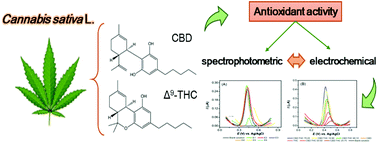
The isolated cannabinoids, the different stoichiometric ratios of CBD and THC, and the natural extracts proved to have remarkable antioxidant properties in all the methods employed in this work.

The antioxidant activity of CBD and THC was compared against that of the well-defined antioxidants such as ascorbic acid (AA), resveratrol (Resv) and (-)-epigallocatechin-3-gallate (EGCG). Clear evidence of the synergistic and antagonistic effects between CBD and THC regarding to their antioxidant activities was observed.

Moreover, a good correlation was obtained between the optical and electrochemical methods, which proved that the reported experimental procedures can easily be adapted to determine the antioxidant activity of extracts from various Cannabis sativa species and related compounds.”

https://www.ncbi.nlm.nih.gov/pubmed/31318364

https://pubs.rsc.org/en/content/articlelanding/2019/AN/C9AN00890J#!divAbstract

Graphical abstract: Probing the antioxidant activity of Δ9-tetrahydrocannabinol and cannabidiol in Cannabis sativa extracts

Nabiximols for the Treatment of Cannabis Dependence: A Randomized Clinical Trial.

Image result for jama network

“This study demonstrates that cannabinoid agonist treatment, in this case using nabiximols, in combination with psychosocial interventions is a safe approach for reducing cannabis use among individuals with cannabis dependence who are seeking treatment.”   https://www.ncbi.nlm.nih.gov/pubmed/31305874
https://jamanetwork.com/journals/jamainternalmedicine/fullarticle/2737918
“nabiximols: An herbal preparation containing a defined quantity of specific cannabinoids formulated for oromucosal spray administration with potential analgesic activity. Nabiximols contains a standardized extract of tetrahydrocannabinol (THC), the non-psychoactive cannabinoid cannabidiol (CBD), other minor cannabinoids, flavonoids, and terpenes from two cannabis plant varieties.” https://www.cancer.gov/publications/dictionaries/cancer-drug/def/nabiximols
“Cannabis treatment counters addiction: First study of its kind. Trial shows cannabis replacement therapy can be effective” https://www.sciencedaily.com/releases/2019/07/190715114247.htm

Model-based analysis on systemic availability of coadministered cannabinoids after controlled vaporised administration.

Publication cover image

“The most important two medicinal cannabinoids are Δ9 -tetrahydrocannabinol (THC) and cannabidiol (CBD).

The results observed in this study are useful for guiding future pharmacokinetic studies of medicinal cannabinoids, and for development of dosing guidelines for medical use of cannabis in the ‘real world’ setting.”

https://www.ncbi.nlm.nih.gov/pubmed/31264294

https://onlinelibrary.wiley.com/doi/abs/10.1111/imj.14415