Cannabis use is associated with reduced risk of exposure to fentanyl among people on opioid agonist therapy during a community-wide overdose crisis

Drug and Alcohol Dependence “Background: The ongoing opioid overdose crisis is driven largely by exposure to illicitly-manufactured fentanyl. Preliminary observational and experimental research suggests that cannabis could potentially play a role in reducing use of prescription opioids among individuals with chronic pain. However, there is limited data on the effects of cannabis on illicit opioid consumption, particularly fentanyl, especially among individuals on opioid agonist therapy (OAT). We sought to assess the longitudinal association between cannabis use and exposure to fentanyl among people on OAT.

Results: Among the 819 participants on OAT who contributed 1989 observations over the study period, fentanyl exposure was common. At the baseline interview, fentanyl was detected in a majority of participants (431, 53 %), with lower prevalence among individuals with urine drug tests positive for tetrahydrocannabinol (47 vs. 56 %, p = 0.028). Over all study interviews, cannabis use was independently associated with reduced likelihood of being recently exposed to fentanyl (Adjusted Prevalence Ratio = 0.91, 95 % Confidence Interval: 0.83 – 0.99).

Conclusions: Participants on OAT using cannabis had significantly lower risk of being exposed to fentanyl. Our findings reinforce the need for experimental trials to investigate the potential benefits and risks of controlled cannabinoid administration for people on OAT.”

https://pubmed.ncbi.nlm.nih.gov/33342591/

“Opioid agonist therapies (OAT) are the primary treatments for opioid use disorder. Exposure to fentanyl is driving mortality risk in the overdose crisis. Among 819 participants on OAT, cannabis was negatively associated with fentanyl. Experimental trials are needed to evaluate cannabis use during OAT.”

https://www.sciencedirect.com/science/article/abs/pii/S0376871620305858?via%3Dihub

“Cannabis could reduce fentanyl use, reduce overdose risk: study” https://www.bccsu.ca/blog/news-release/cannabis-could-reduce-fentanyl-use-reduce-overdose-risk-study/

“Cannabis could reduce fentanyl use, reduce overdose risk” https://www.med.ubc.ca/news/cannabis-could-reduce-fentanyl-use-reduce-overdose-risk/
Cannabinoids in Medicine: Cancer, Immunity, and Microbial Diseases

ijms-logo“Recently, there has been a growing interest in the medical applications of Cannabis plants. They owe their unique properties to a group of secondary metabolites known as phytocannabinoids, which are specific for this genus. Phytocannabinoids, and cannabinoids generally, can interact with cannabinoid receptors being part of the endocannabinoid system present in animals. Over the years a growing body of scientific evidence has been gathered, suggesting that these compounds have therapeutic potential.
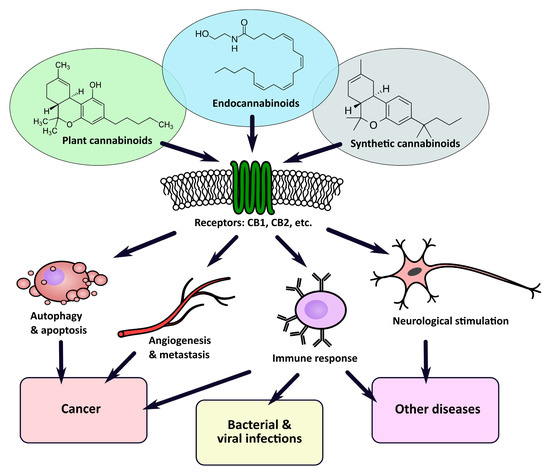

In this article, we review the classification of cannabinoids, the molecular mechanisms of their interaction with animal cells as well as their potential application in the treatment of human diseases. Specifically, we focus on the research concerning the anticancer potential of cannabinoids in preclinical studies, their possible use in cancer treatment and palliative medicine, as well as their influence on the immune system. We also discuss their potential as therapeutic agents in infectious, autoimmune, and gastrointestinal inflammatory diseases.

We postulate that the currently ongoing and future clinical trials should be accompanied by research focused on the cellular and molecular response to cannabinoids and Cannabis extracts, which will ultimately allow us to fully understand the mechanism, potency, and safety profile of cannabinoids as single agents and as complementary drugs.”

https://pubmed.ncbi.nlm.nih.gov/33383838/

“Additionally, much evidence from pre-clinical and clinical studies has been gathered over the last decade, suggesting that multiple substances produced by Cannabis plants have a therapeutic potential, including anticancer properties.”

https://www.mdpi.com/1422-0067/22/1/263/htm

(Endo)Cannabinoids and Gynaecological Cancers

cancers-logo“Gynaecological cancers can be primary neoplasms, originating either from the reproductive tract or the products of conception, or secondary neoplasms, representative of metastatic disease. For some of these cancers, the exact causes are unknown; however, it is recognised that the precise aetiopathogeneses for most are multifactorial and include exogenous (such as diet) and endogenous factors (such as genetic predisposition), which mutually interact in a complex manner.
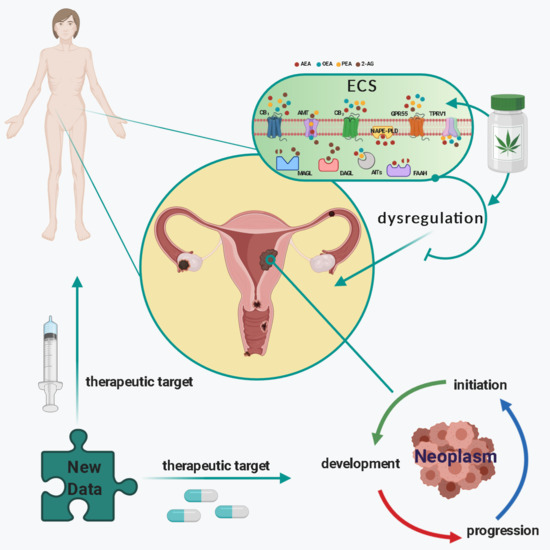
One factor that has been recognised to be involved in the pathogenesis and progression of gynaecological cancers is the endocannabinoid system (ECS). The ECS consists of endocannabinoids (bioactive lipids), their receptors, and metabolic enzymes responsible for their synthesis and degradation. In this review, the impact of plant-derived (Cannabis species) cannabinoids and endocannabinoids on gynaecological cancers will be discussed within the context of the complexity of the proteins that bind, transport, and metabolise these compounds in reproductive and other tissues. In particular, the potential of endocannabinoids, their receptors, and metabolic enzymes as biomarkers of specific cancers, such as those of the endometrium, will be addressed. Additionally, the therapeutic potential of targeting selected elements of the ECS as new action points for the development of innovative drugs will be presented.”

https://pubmed.ncbi.nlm.nih.gov/33375539/

“Cancers of the female reproductive system are common and are responsible for a large number of deaths in women. The exact reasons why some of these cancers occur are unknown. It is, however, known that for most of these cancers, several factors interact for them to happen. These interactions involve factors external and internal to the woman. An understanding of some of the internal factors involved in how these cancers arise will not only help drive preventive strategies, but will speed the development of new treatment approaches.

The endocannabinoid system is a family including chemicals (known as endocannabinoids) produced in the body that are similar to those derived from the cannabis plant. This system, which is widely distributed in the body, has been shown to be involved in various functions. Its disruption has been shown to lead to various diseases, one of which is cancer. In this review, we summarise current knowledge of this system, its various constituents, and how they are involved in reproductive events and their pathologies, especially cancers. Furthermore, we discuss the role of the endocannabinoid system in these cancers and how targeting it could lead to new approaches to diagnosis and treatment of cancers of the female reproductive system.”

https://www.mdpi.com/2072-6694/13/1/37

Phytocannabinoid Pharmacology: Medicinal Properties of Cannabis sativa Constituents Aside from the “Big Two”

 Go to Volume 0, Issue 0“Plant-based therapies date back centuries. Cannabis sativa is one such plant that was used medicinally up until the early part of the 20th century.
Although rich in diverse and interesting phytochemicals, cannabis was largely ignored by the modern scientific community due to its designation as a schedule 1 narcotic and restrictions on access for research purposes. There was renewed interest in the early 1990s when the endocannabinoid system (ECS) was discovered, a complex network of signaling pathways responsible for physiological homeostasis. Two key components of the ECS, cannabinoid receptor 1 (CB1) and cannabinoid receptor 2 (CB2), were identified as the molecular targets of the phytocannabinoid Δ9-tetrahydrocannabinol (Δ9-THC).

Restrictions on access to cannabis have eased worldwide, leading to a resurgence in interest in the therapeutic potential of cannabis. Much of the focus has been on the two major constituents, Δ9-THC and cannabidiol (CBD). Cannabis contains over 140 phytocannabinoids, although only a handful have been tested for pharmacological activity. Many of these minor cannabinoids potently modulate receptors, ionotropic channels, and enzymes associated with the ECS and show therapeutic potential individually or synergistically with other phytocannabinoids.

The following review will focus on the pharmacological developments of the next generation of phytocannabinoid therapeutics.”

https://pubmed.ncbi.nlm.nih.gov/33356248/

https://pubs.acs.org/doi/10.1021/acs.jnatprod.0c00965

Abstract Image

Phenolic Compounds Cannabidiol, Curcumin and Quercetin Cause Mitochondrial Dysfunction and Suppress Acute Lymphoblastic Leukemia Cells

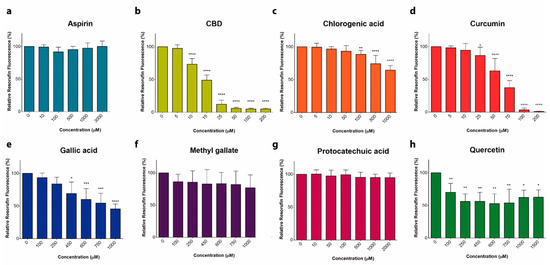
ijms-logo“Anticancer activity of different phenols is documented, but underlying mechanisms remain elusive. Recently, we have shown that cannabidiol kills the cells of acute lymphoblastic leukemia (ALL) by a direct interaction with mitochondria, with their consequent dysfunction.

In the present study, cytotoxic effects of several phenolic compounds against human the T-ALL cell line Jurkat were tested by means of resazurin-based metabolic assay. To unravel underlying mechanisms, mitochondrial membrane potential (∆Ψm) and [Ca2+]m measurements were undertaken, and reactive oxygen species generation and cell death were evaluated by flow cytometry.

Three out of eight tested phenolics, cannabidiol, curcumin and quercetin, which displayed a significant cytotoxic effect, also dissipated the ∆Ψm and induced a significant [Ca2+]m increase, whereas inefficient phenols did not.

Dissipation of the ∆Ψm by cannabidiol was prevented by cyclosporine A and reverted by Ru360, inhibitors of the permeation transition pore and mitochondrial Ca2+ uniporter, respectively. Ru360 prevented the phenol-induced [Ca2+]m rise, but neither cyclosporine A nor Ru360 affected the curcumin- and quercetin-induced ∆Ψm depolarization. Ru360 impeded the curcumin- and cannabidiol-induced cell death.

Thus, all three phenols exert their antileukemic activity via mitochondrial Ca2+ overload, whereas curcumin and quercetin suppress the metabolism of leukemic cells by direct mitochondrial uncoupling.”

https://pubmed.ncbi.nlm.nih.gov/33379175/

https://www.mdpi.com/1422-0067/22/1/204

Cannabis Significantly Reduces the Use of Prescription Opioids and Improves Quality of Life in Authorized Patients: Results of a Large Prospective Study

Pain Medicine“Objectives: This article presents findings from a large prospective examination of Canadian medical cannabis patients, with a focus on the impacts of cannabis on prescription opioid use and quality of life over a 6-month period.

Results: Participants were 57.6% female, with a median age of 52 years. Baseline opioid use was reported by 28% of participants, dropping to 11% at 6 months. Daily opioid use went from 152 mg morphine milligram equivalent (MME) at baseline to 32.2 mg MME at 6 months, a 78% reduction in mean opioid dosage. Similar reductions were also seen in the other four primary prescription drug classes identified by participants, and statistically significant improvements were reported in all four domains of the WHOQOL-BREF.

Conclusions: This study provides an individual-level perspective of cannabis substitution for opioids and other prescription drugs, as well as associated improvement in quality of life over 6 months. The high rate of cannabis use for chronic pain and the subsequent reductions in opioid use suggest that cannabis may play a harm reduction role in the opioid overdose crisis, potentially improving the quality of life of patients and overall public health.”

https://pubmed.ncbi.nlm.nih.gov/33367882/

https://academic.oup.com/painmedicine/advance-article-abstract/doi/10.1093/pm/pnaa396/6053211?redirectedFrom=fulltext

Cannabinoid receptor activation on hematopoietic cells and enterocytes protects against colitis

Oxford University Press“Cannabinoid receptor (CB) activation can attenuate inflammatory bowel disease (IBD) in experimental models and human cohorts. However, the role of the microbiome, metabolome, or the respective contributions of hematopoietic and non-hematopoietic cells in the anti-colitic effects of cannabinoids has yet to be determined.

Methods: Female C57BL/6 mice were treated with either cannabidiol (CBD), Δ 9-tetrahydrocannabinol (THC), a combination of CBD and THC or vehicle, in several models of chemically induced colitis. Clinical parameters of colitis were assessed by colonoscopy, histology, flow cytometry and detection of serum biomarkers; single-cell RNA sequencing and qRT-PCR were used to evaluate the effects of cannabinoids on enterocytes. Immune cell transfer from CB2 knockout mice was used to evaluate the contribution of hematopoietic and non-hematopoietic cells to colitis protection.

Results: We found that THC prevented colitis, and that CBD, at the dose tested, provided little benefit to the amelioration of colitis, or when added synergistically with THC. THC increased colonic barrier integrity by stimulating mucus, tight junction and antimicrobial peptide production, and these effects were specific to the large intestine. THC increased colonic gram-negative bacteria, but the anti-colitic effects of THC were independent of the microbiome. THC acted on both immune cells via CB2 and on enterocytes to attenuate colitis.

Conclusions: Our findings demonstrate how cannabinoid receptor activation on both immune cells and colonocytes is critical to prevent colonic inflammation. These studies also suggest how cannabinoid receptor activation can be used as a preventive and therapeutic modality against colitis.”

https://pubmed.ncbi.nlm.nih.gov/33331878/

https://academic.oup.com/ecco-jcc/advance-article-abstract/doi/10.1093/ecco-jcc/jjaa253/6040793?redirectedFrom=fulltext

In vivo and in vitro anti-inflammatory activity evaluation of Lebanese Cannabis sativa L. ssp. indica (Lam.)

Journal of Ethnopharmacology “Cannabis sativa L. is an aromatic annual herb belonging to the family Cannabaceae and it is widely distributed worldwide. Cultivation, selling, and consumption of cannabis and cannabis related products, regardless of its use, was prohibited in Lebanon until April 22, 2020. Nevertheless, cannabis oil has been traditionally used unlawfully for many years in Lebanon to treat diseases such as arthritis, diabetes, cancer and few neurological disorders.

Aim of the study: The present study aims to evaluate the phytochemical and anti-inflammatory properties of a cannabis oil preparation that is analogous to the illegally used cannabis oil in Lebanon.

Results: Chemical analysis of COE revealed that cannabidiol (CBD; 59.1%) and tetrahydrocannabinol (THC; 20.2%) were found to be the most abundant cannabinoids.Various monoterpenes (α-Pinene, Camphene, β-Myrecene and D-Limonene) and sesquiterpenes (β-Caryophyllene, α-Bergamotene, α-Humelene, Humulene epoxide II, and Caryophyllene oxide) were identified in the extract. Results showed that COE markedly suppressed the release of TNF-α in LPS-stimulated rat monocytes. Western blot analysis revealed that COE significantly inhibited LPS-induced COX-2 and i-NOS protein expressions and blocked the phosphorylation of MAPKs, specifically that of extracellular signal-regulated kinase (ERK), c-Jun NH2-terminal kinase (JNK) and p38 MAPK. COE displayed a significant inhibition of paw edema in both rat models. Histopathological examination revealed that COE reduced inflammation and edema in chronic paw edema model.

Conclusion: The current findings demonstrate that COE possesses remarkable in vivo and in vitro anti-inflammatory activities which support the traditional use of the Lebanese cannabis oil extract in the treatment of various inflammatory diseases including arthritis.”

https://pubmed.ncbi.nlm.nih.gov/33359187/

https://www.sciencedirect.com/science/article/abs/pii/S037887412033631X?via%3Dihub

Image 1

Healing autism spectrum disorder with cannabinoids: a neuroinflammatory story

 Neuroscience & Biobehavioral Reviews“Autism spectrum disorder (ASD) is a complex neurodevelopmental disorder with a multifactorial etiology. Latest researches are raising the hypothesis of a link between the onset of the main behavioral symptoms of ASD and the chronic neuroinflammatory condition of the autistic brain; increasing evidence of this connection is shedding light on new possible players in the pathogenesis of ASD.
The endocannabinoid system (ECS) has a key role in neurodevelopment as well as in normal inflammatory responses and it is not surprising that many preclinical and clinical studies account for alterations of the endocannabinoid signaling in ASD. These findings lay the foundation for a better understanding of the neurochemical mechanisms underlying ASD and for new therapeutic attempts aimed at exploiting the renowned anti-inflammatory properties of cannabinoids to treat pathologies encompassed in the autistic spectrum.

This review discusses the current preclinical and clinical evidence supporting a key role of the ECS in the neuroinflammatory state that characterizes ASD, providing hints to identify new biomarkers in ASD and promising therapies for the future.”

https://pubmed.ncbi.nlm.nih.gov/33358985/

“Autism spectrum disorder has a multifactorial and complex etiology. Changes in the endocannabinoid system are found in autistic patients. Neuroinflammation is detected in autistic patients. The endocannabinoid system has a key role in neuroinflammation. Future therapies exploiting cannabinoid drugs.”

https://www.sciencedirect.com/science/article/abs/pii/S0149763420306850?via%3Dihub

Role of marijuana components on the regenerative ability of stem cells

“Stem cell therapy promotes tissue regeneration and wound healing. Efforts have been made to prime stem cells to enhance their regenerative abilities.

Certain marijuana components, namely the non-psychoactive cannabidiol (CBD) and psychoactive tetrahydrocannabinol (THC), are defined as immunomodulators.9 We test whether two sources of stem cells, primed with CBD or THC, would demonstrate improved regenerative abilities.

Human adipose-derived stem cells (ASCs) and bone marrow-derived stem cells (BMDSCs), not obtained from the same individual, were treated with low (300 nM) or high (3 μM) concentration CBD. Porcine ASCs and BMDSCs were isolated from a single pig, and treated with either low or high concentrations of CBD or THC. Transwell migration and MTT proliferation assays were performed on the human ASCs and BMDSCs. Also, transwell migration assay was performed on the porcine ASCs and BMDSCs. Finally, a wound healing scratch assay in porcine primary fibroblasts (PFs) was performed, co-cultured with the cannabinoid-treated ASCs.

CBD priming at low concentration induces migration by 180% (P < .01) in porcine ASCs, and by only 93% (P < .02) in porcine BMDSCs. In porcine stem cells, THC priming at low concentration induces migration by 91.6% (P < .01) in ASCs but by only 44.3% (P < .03) in BMDSCs. Compared to PFs co-cultured with untreated ASCs, PFs co-cultured with low CBD-primed ASCs had 75% faster wound closure at 18 hours (P < .01).

CBD and THC priming of ASCs and BMDSCs, particularly at lower doses, enhances a number of regenerative parameters, suggesting that these major marijuana components may improve stem cell-based therapies.

SIGNIFICANCE OF THE STUDY: Our study demonstrates that cannabinoids can enhance the regenerative capacity of two major sources of stem cells, adipose- and bone marrow-derived, from human and porcine donors. Stem cell isolation and expansion is invasive, costly and time consuming. Stem cells with improved regenerative properties may be effective in the treatment of acute or chronic wounds. This is the first study to compare the priming potential of two sources of stem cells from the same animal, with the same genetic and epigenetic profile, as well as the first to prime with THC.”

https://pubmed.ncbi.nlm.nih.gov/33349985/

https://onlinelibrary.wiley.com/doi/10.1002/cbf.3609