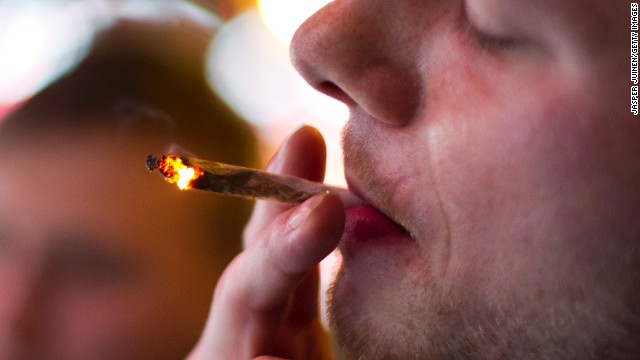
Smoking marijuana lowers risk for bladder cancer

“It’s enough to choke on, society tells us condoning any and all drug use is wrong.
If that’s true, why would there be the following?

Kaiser Permanente researchers studied 83,000 men ages 45-69 and found marijuana smokers are less likely to get bladder cancer than those who smoke cigarettes.

Smokers who used cannabis only, found a 45% decrease in the cancer opposed to those who used only tobacco. Those smokers found a 52% increase in the disease.

This is all based on smoking marijuana more than 500 times as opposed to the once or twice toker.

The study stems from findings at California Pacific Medical Center in San Francisco. The greenage could actually be the seed to stop the metastasis in many kinds of cancer, including breast, brain and cancer of the prostate.

Well munch on this; marijuana remains classified as the most dangerous controlled substance alongside heroin and LSD. This means the DEA has to approve any clinical trials of the drug. Yet our government obstructs that research.

In the midst of all this, Los Angeles councilman Bill Rosendahl posted this video announcing that his cancer is in remission, thanks to his use of medical marijuana.

Maybe all of this will cause the DEA to reconsider. After all, you want to cure cancer don’t you?”

http://newsfixnow.com/2013/05/17/smoking-marijuana-lowers-risk-for-bladder-cancer/

What Is Marijuana? What Is Cannabis?

“When talking about the drug, marijuana and cannabis both have the same meaning. When talking botanically – talking about the plant genus – we use the word Cannabis. Cannabis is a flowering plant genus that includes three acknowledged varieties:

  • Cannabis sativa
  • Cannabis indica
  • Cannabis ruderalis

The three types originally come from South and Central Asia.”

Bubba Kush

“Cannabis has been used for hundreds of years by humans, for fiber (hemp), seed oils, seed, medical treatment and recreationally.

This article focuses on cannabis’ medicinal and recreational aspects.”

Read more: http://www.medicalnewstoday.com/articles/246392.php

Cannabinoid receptor systems: therapeutic targets for tumour intervention.

Image result for taylor & francis online

“The past decade has witnessed a rapid expansion of our understanding of the biological roles of cannabinoids and their cognate receptors. It is now certain that Delta9-tetrahydrocannabinol, the principle psychoactive component of the Cannabis sativa plant, binds and activates membrane receptors of the 7-transmembrane domain, G-protein-coupled superfamily.

Several putative endocannabinoids have since been identified, including anandamide, 2-arachidonyl glycerol and noladin ether. Synthesis of numerous cannabinomimetics has also greatly expanded the repertoire of cannabinoid receptor ligands with the pharmacodynamic properties of agonists, antagonists and inverse agonists.

Collectively, these ligands have proven to be powerful tools both for the molecular characterisation of cannabinoid receptors and the delineation of their intrinsic signalling pathways. Much of our understanding of the signalling mechanisms activated by cannabinoids is derived from studies of receptors expressed by tumour cells; hence, this review provides a succinct summary of the molecular pharmacology of cannabinoid receptors and their roles in tumour cell biology.

Moreover, there is now a genuine expectation that the manipulation of cannabinoid receptor systems may have therapeutic potential for a diverse range of human diseases. Thus, this review also summarises the demonstrated antitumour actions of cannabinoids and indicates possible avenues for the future development of cannabinoids as antitumour agents.” http://www.ncbi.nlm.nih.gov/pubmed/14640910

http://www.tandfonline.com/doi/abs/10.1517/14728222.7.6.749

The endocannabinoid system and its therapeutic exploitation.

Image result for Nat Rev Drug Discov.

“The term ‘endocannabinoid’ – originally coined in the mid-1990s after the discovery of membrane receptors for the psychoactive principle in Cannabis, Delta9-tetrahydrocannabinol and their endogenous ligands – now indicates a whole signalling system that comprises cannabinoid receptors, endogenous ligands and enzymes for ligand biosynthesis and inactivation. This system seems to be involved in an ever-increasing number of pathological conditions. With novel products already being aimed at the pharmaceutical market little more than a decade since the discovery of cannabinoid receptors, the endocannabinoid system seems to hold even more promise for the future development of therapeutic drugs. We explore the conditions under which the potential of targeting the endocannabinoid system might be realized in the years to come.”  http://www.ncbi.nlm.nih.gov/pubmed/15340387

http://www.nature.com/nrd/journal/v3/n9/full/nrd1495.html

Cannabinoids.

“Since the discovery of an endogenous cannabinoid system, research into the pharmacology and therapeutic potential of cannabinoids has steadily increased. Two subtypes of G-protein coupled cannabinoid receptors, CB(1) and CB(1), have been cloned and several putative endogenous ligands (endocannabinoids) have been detected during the past 15 years. The main endocannabinoids are arachidonoyl ethanolamide (anandamide) and 2-arachidonoyl glycerol (2-AG), derivatives of arachidonic acid, that are produced “on demand” by cleavage of membrane lipid precursors.

 Besides phytocannabinoids of the cannabis plant, modulators of the cannabinoid system comprise synthetic agonists and antagonists at the CB receptors and inhibitors of endocannabinoid degradation. Cannabinoid receptors are distributed in the central nervous system and many peripheral tissues, including immune system, reproductive and gastrointestinal tracts, sympathetic ganglia, endocrine glands, arteries, lung and heart. There is evidence for some non-receptor dependent mechanisms of cannabinoids and for endocannabinoid effects mediated by vanilloid receptors.

Properties of CB receptor agonists that are of therapeutic interest include analgesia, muscle relaxation, immunosuppression, anti-inflammation, antiallergic effects, improvement of mood, stimulation of appetite, antiemesis, lowering of intraocular pressure, bronchodilation, neuroprotection and antineoplastic effects. The current main focus of clinical research is their efficacy in chronic pain and neurological disorders. CB receptor antagonists are under investigation for medical use in obesity and nicotine addiction. Additional potential was proposed for the treatment of alcohol and heroine dependency, schizophrenia, conditions with lowered blood pressure, Parkinson’s disease and memory impairment in Alzheimer’s disease.”

http://www.ncbi.nlm.nih.gov/pubmed/16266285

[The endocannabinoid system].

“The endocannabinoid system is a physiological system, which is responsible for the control of glucose and lipid-metabolism, as well as for the regulation of the body weight.

 The endocannabinoid receptors are distributed both in the central and peripher nervous system.

Different studies provide evidence that an hyperactive endocannabinoid system is involved in the development of different cardiovascular risk factors.

The pharmacological blockade of these cannabinoid receptors may represent a new approach for cardiometabolic risk management.””

http://www.ncbi.nlm.nih.gov/pubmed/18548817 

Marijuana: The next diabetes drug? – CNN

“Toking up may help marijuana users to stay slim and lower their risk of developing diabetes, according to the latest study, which suggests that cannabis compounds may help in controlling blood sugar.”

Marijuana may help control blood sugar and help users stay slimmer, researchers say.
 

“Although marijuana has a well-deserved reputation for increasing appetite via what stoners call “the munchies,” the new research, which was published in the American Journal of Medicine, is not the first to find that the drug has a two-faced relationship to weight.

Three prior studies have shown that marijuana users are less likely to be obese, have a lower risk for diabetes and have lower body-mass-index measurements. And these trends occurred despite the fact that they seemed to take in more calories. Why?”

Read more:http://www.cnn.com/2013/05/23/health/time-marijuana-diabetes/index.html 

Cannabis use associated with lower blood sugar – Fox News

“A new study published in the American Journal of Medicine has revealed a potential benefit from the use of cannabis. The article, entitled “The Impact of Marijuana Use on Glucose, Insulin, and Insulin Resistance among U.S. Adults,” investigated the blood sugar-related effects of cannabis use among participants in the National Health and Nutrition Examination Survey from 2005 to 2010.”Marijuana

“The researchers found that subjects who were current cannabis users had lower levels of fasting insulin, lower levels of insulin resistance, smaller waist circumference, and higher levels of HDL cholesterol, which is known to reduce the risk of cardiovascular disease. This supported findings from earlier studies in which cannabis users showed improved weight, improved insulin resistance, and reduced incidence of diabetes, as compared with non-users.”

Read more: http://www.foxnews.com/health/2013/05/22/cannabis-use-associated-with-lower-blood-sugar/

Marijuana: The Next Diabetes Drug? – TIME

“Toking up may help marijuana users to stay slim and lower their risk of developing diabetes, according to the latest study, which suggests that cannabis compounds may help in controlling blood sugar.”
 
Close Up Of Marijuana Leaf
 

“Although marijuana has a well-deserved reputation for increasing appetite via what stoners call “the munchies,” the new research, which was published in the American Journal of Medicine, is not the first to find that the drug has a two-faced relationship to weight. Three prior studies have shown that marijuana users are less likely to be obese, have a lower risk for diabetes and have lower body-mass-index measurements. And these trends occurred despite the fact that they seemed to take in more calories.”

Read more: http://healthland.time.com/2013/05/21/marijuana-the-next-diabetes-drug/

Marijuana might be able to treat your terrible case of the runs – MSN

“Seems there’s no end to the list of maladies medical marijuana can’t treat.”

Close-up of Marijuana Plant (© Adam Weiss/Getty Images) 

“The latest: diarrhea, the awful affliction that sounds like “dire rear” for a reason. According to the pot aficionados behind The Weed Blog (who mightn’t be the most unbiased sources on the matter), cannabis-derived products have been used to treat diarrhea in India since at least the late 1800s. These products reportedly cause diarrhea and its symptoms to subside, and — surprise, surprise — help patients regain their appetites. Around 3.5 million people die from diarrhea and its nasty effects every year, so these alleged benefits of pot aren’t just useful to stoners who could fake the runs to score a medical marijuana prescription.”