
 “Parkinson’s disease (PD) is a neurodegenerative disorder characterized by the loss of dopaminergic neurons in the Substantia Nigra pars compacta, leading to classical PD motor symptoms. Current therapies are purely symptomatic and do not modify disease progression.
Cannabidiol (CBD), one of the main phytocannabinoids identified in Cannabis Sativa, which exhibits a large spectrum of therapeutic properties, including anti-inflammatory and antioxidant effects, suggesting its potential as disease-modifying agent for PD.
The aim of this study was to evaluate the effects of chronic treatment with CBD (10 mg/kg, i.p.) on PD-associated neurodegenerative and neuroinflammatory processes, and motor deficits in the 6-hydroxydopamine model. Moreover, we investigated the potential mechanisms by which CBD exerted its effects in this model.
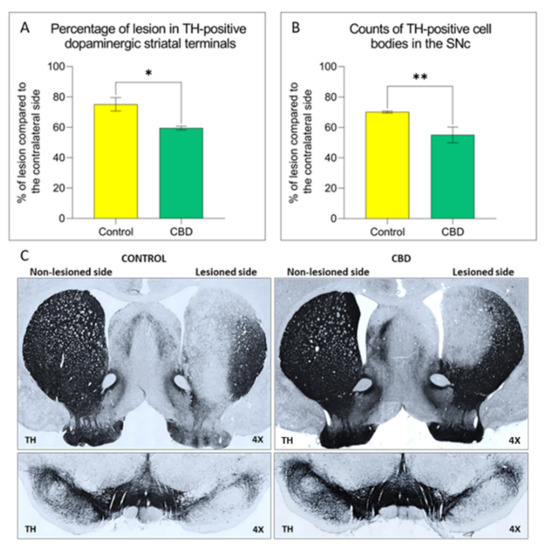
CBD-treated animals showed a reduction of nigrostriatal degeneration accompanied by a damping of the neuroinflammatory response and an improvement of motor performance. In particular, CBD exhibits a preferential action on astrocytes and activates the astrocytic transient receptor potential vanilloid 1 (TRPV1), thus, enhancing the endogenous neuroprotective response of ciliary neurotrophic factor (CNTF).
These results overall support the potential therapeutic utility of CBD in PD, as both neuroprotective and symptomatic agent.”
https://pubmed.ncbi.nlm.nih.gov/34445626/
https://www.mdpi.com/1422-0067/22/16/8920
 “Obesity-related insulin resistance (IR) and attenuated brain insulin signaling are significant risk factors for neurodegenerative disorders, e.g., Alzheimer’s disease. IR and type 2 diabetes correlate with an increased concentration of sphingolipids, a class of lipids that play an essential structural role in cellular membranes and cell signaling pathways.
 “Objectives: To evaluate the impact of cannabinoids on neurobehavioral outcomes in preclinical models of nontraumatic and traumatic spinal cord injury (SCI), with the aim of determining suitability for clinical trials involving SCI patients.
 “Colic is a common digestive disorder in horses and one of the most urgent problems in equine medicine. A growing body of literature has indicated that the activation of cannabinoid receptors could exert beneficial effects on gastrointestinal inflammation and visceral hypersensitivity.
  “Background:
  “Cannabidiol is increasingly considered for treatment of a wide range of medical conditions.
  “Background and purpose:
 “Despite the high incidence of traumatic brain injury (TBI), there is no universal treatment to safely treat patients. Blunt brain injuries destroy primary neural tissue that results in impaired perfusion, excessive release of glutamate, inflammation, excitotoxicity, and progressive secondary neuronal cell death.