
 “Cannabis has been used as a medicine for millennia. Prohibition in the mid-20th century precluded early scientific investigation.
‘Cannabis’ describes three separate forms – herbal cannabis, ‘hemp’ products, pharmaceutical-grade regulated cannabinoid-based medical products (CBMP).
The endocannabinoid system (ECS), delineated in the late 1990s, has increased the understanding and interest in research for appropriate clinical indications. The ubiquitous ECS has homeostatic and anti-inflammatory effects and comprises cannabinoid receptors, endocannabinoids and degrading enzymes.
Phytocannabinoids are partial agonists of the ECS. In pre-clinical studies, THC and CBD produce beneficial effects in chronic pain, anxiety, sleep and inflammation. Systematic reviews often conflate herbal cannabis and CBMP, confusing the evidence. Currently large randomised controlled trials are unlikely to be achieved. Other methodologies with quality end-points are required. Rich, valuable high-quality real-world evidence for the safe and effective use of CBMP provides an opportunity to examine benefits and potential harms.
Evidence demonstrates benefit of CBMP in multiple sclerosis, chronic neuropathic pain, chemotherapy induced nausea and vomiting, resistant paediatric epilepsy, anxiety and insomnia. CBMP are well tolerated with few serious adverse events. Additional clinical benefits are promising in many other resistant chronic conditions. Pharmaceutical grade prescribed CBMP has proven clinical benefits and provides another clinical option in the physician’s pharmacopeia.”
https://pubmed.ncbi.nlm.nih.gov/33215831/
“Medical use of cannabis has been practiced for millennia and pre‐dates recorded human history.”
 “A large number of cannabinoids have been discovered that could play a role in mitigating cardiac affections. However, none of them has been as widely studied as cannabidiol (CBD), most likely because, individually, the others offer only partial effects or can activate potential harmful pathways.
 “Medical cannabis and individual cannabinoids, such as tetrahydrocannabinol (THC) and cannabidiol (CBD), are receiving growing attention in both the media and the scientific literature. The Cannabis plant, however, produces over 100 different cannabinoids, and cannabigerol (CBG) serves as the precursor molecule for the most abundant phytocannabinoids.
 “The endocannabinoid (eCB) system encompasses the eCBs anandamide and 2-arachidonoylglycerol, their anabolic/catabolic enzymes, and the cannabinoid CB1 and CB2 receptors. Its expansion to include several eCB-like lipid mediators, their metabolic enzymes, and their molecular targets, forms the endocannabinoidome (eCBome).
 “Recently, cannabinoids, such as cannabidiol (CBD) and Δ9 -tetrahydrocannabinol (THC), have been the subject of intensive research and heavy scrutiny. Cannabinoids encompass a wide array of organic molecules, including those that are physiologically produced in humans, synthesized in laboratories, and extracted primarily from the Cannabis sativa plant. These organic molecules share similarities in their chemical structures as well as in their protein binding profiles. However, pronounced differences do exist in their mechanisms of action and clinical applications, which will be briefly compared and contrasted in this review. The mechanism of action of CBD and its potential applications in cancer therapy will be the major focus of this review article.”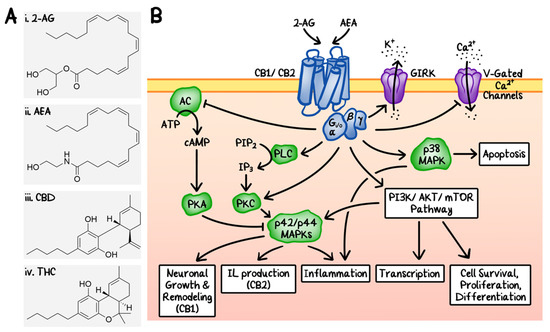
 “The aberrant accumulation of disease-specific protein aggregates accompanying cognitive decline is a pathological hallmark of age-associated neurological disorders, also termed as proteinopathies, including Alzheimer’s disease, Parkinson’s disease, Huntington’s disease, amyotrophic lateral sclerosis and multiple sclerosis.
 “Cannabidiol (CBD) is a non-psychoactive phytocannabinoid known for its beneficial effects including antioxidant and anti-inflammatory properties. Moreover, CBD is a compound with antidepressant, anxiolytic, anticonvulsant and antipsychotic effects. Thanks to all these properties, the interest of the scientific community for it has grown.
 “Introduction and objectives: Previous studies reveal conflicting data on the effect of cannabis use in patients with cirrhosis. This research evaluates the impact of cannabis on hepatic decompensation, health care utilization, and mortality in patients with cirrhosis.
 “Background: Older adults (≥50 years) represent the fastest-growing population of people who use cannabis, potentially due to the increasing promotion of cannabis as medicine by dispensaries and cannabis websites. Given healthy aging and cannabis use are both associated with cognitive decline, it is important to establish the effects of cannabis on cognition in healthy aging.