
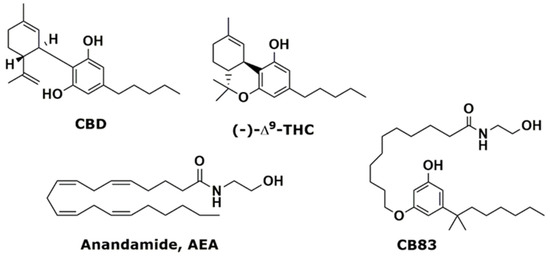
 “In this study, we investigated the effects of exposition to IC50 dose for 24 h of a new synthetic cannabinoid (CB83) and of phytocannabinoids Δ9-tetrahydrocannabinol (THC) and cannabidiol (CBD) on HT-29 colorectal carcinoma cells. Cell viability and proliferative activity evaluated using the MTT, lactate dehydrogenase (LDH), and CyQUANT assays showed that cell viability was significantly affected when CB83, THC, and CBD were administered to cells.
The results obtained showed that the reduced glutathione/oxidized glutathione ratio was significantly reduced in the cells exposed to CBD and significantly increased in the cells treated with the CB83 when compared to the controls. CBD treatment causes a significant increase in malondialdehyde content. The catalase activity was significantly reduced in HT-29 cells after incubation with CB83, THC, and CBD. The activities of glutathione reductase and glutathione peroxidase were significantly increased in cells exposed to THC and significantly decreased in those treated with CBD. The ascorbic acid content was significantly reduced in cells exposed to CB83, THC, and CBD. The ultrastructural investigation by TEM highlighted a significantly increased percentage of cells apoptotic and necrotic after CB83 exposition. The Annexin V-Propidium Iodide assay showed a significantly increased percentage of cells apoptotic after CB83 exposition and necrotic cells after CBD and THC exposition.
Our results proved that only CBD induced oxidative stress in HT-29 colorectal carcinoma cells via CB receptor-independent mechanisms and that CB83 caused a mainly CB2 receptor-mediated antiproliferative effect comparable to 5-Fuorouracil, which is still the mainstay drug in protocols for colorectal cancer.”
https://pubmed.ncbi.nlm.nih.gov/32752303/
https://www.mdpi.com/1422-0067/21/15/5533
 “In recent years, and even more since its legalization in several jurisdictions, cannabis and the endocannabinoid system have received an increasing amount of interest related to their potential exploitation in clinical settings. Cannabinoids have been suggested and shown to be effective in the treatment of various conditions. In cancer, the endocannabinoid system is altered in numerous types of tumours and can relate to cancer prognosis and disease outcome. Additionally, cannabinoids display anticancer effects in several models by suppressing the proliferation, migration and/or invasion of cancer cells, as well as tumour angiogenesis. However, the therapeutic use of cannabinoids is currently limited to the treatment of symptoms and pain associated with chemotherapy, while their potential use as cytotoxic drugs in chemotherapy still requires validation in patients. Along with cannabinoids, cannabis contains several other compounds that have also been shown to exert anti-tumorigenic actions. The potential anti-cancer effects of cannabinoids, terpenes and flavonoids, present in cannabis, are explored in this literature review.”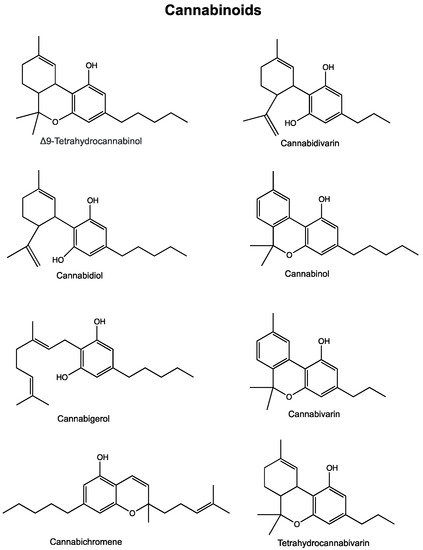
 “In this work, we evaluated, for the first time, the antitumor effect of cannabidiol (CBD) as monotherapy and in combination with conventional chemotherapeutics in ovarian cancer and developed PLGA-microparticles as CBD carriers to optimize its anticancer activity.


 “Astrocytomas, the most prevalent primary brain tumors, can be divided by histology and malignancy levels into four following types: pilocytic astrocytoma (grade I), diffuse fibrillary astrocytoma (grade II), anaplastic astrocytoma (grade III), and glioblastoma multiforme (grade IV). For high grade astrocytomas (grade III and grade IV), blood vessels formation is considered as the most important property.
 ‘T-cell acute lymphoblastic leukemia (T-ALL) is a highly heterogeneous malignant hematological disorder arising from T-cell progenitors.
 “The inhibitor of DNA binding (Id) proteins are regulators of cell cycle and cell differentiation. Of all Id family proteins, Id1 is mostly linked to tumorigenesis, cellular senescence as well as cell proliferation and survival.
 “The intraperitoneal administration of chemotherapeutics has emerged as a potential route in ovarian cancer treatment. Nanoparticles as carriers for these agents could be interesting by increasing the retention of chemotherapeutics within the peritoneal cavity. Moreover, nanoparticles could be internalised by cancer cells and let the drug release near the biological target, which could increase the anticancer efficacy.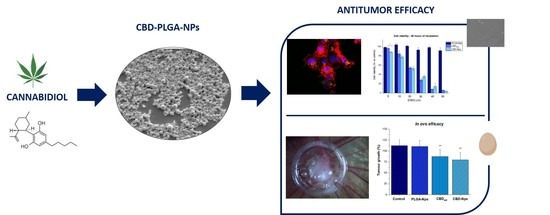
 “The treatment of cancer-induced bone pain (CIBP) has been proven ineffective and relies heavily on opioids, the target of highly visible criticism for their negative side effects.