
Endogenous cannabinoid levels and suicidality in combat veterans.

Psychiatry Research“Combat veterans are at elevated suicide risk. The goal of this study was to test the hypothesis that combat veterans who have made a suicide attempt post-deployment can be distinguished from combat veterans who have never made a suicide attempt based on differences in psychological and biological variables. For the latter, we focused on endogenous cannabinoids, neuroendocrine markers that are associated with stress. Demographic and clinical parameters of suicide attempters and non-attempters were assessed. Blood samples were assayed for anandamide (AEA), 2-arachidonoylglycerol (2-AG), and cortisol. Suicide attempters had higher Scale for Suicidal Ideation (SSI) scores in comparison to non-attempters. Controlling for gender, 2-AG levels were higher among suicide attempters in comparison to non-attempters. Cortisol levels positively correlated with 2-AG levels and negatively correlated with SSI scores among non-attempters but not among attempters. AEA levels negatively correlated with SSI scores among attempters but not among non-attempters. Our results indicate that there are psychological and biological differences between combat veterans with or without a history of suicidal attempt. Our findings also suggest that clinically observed differences between the groups may have a neurobiological basis.”

https://www.ncbi.nlm.nih.gov/pubmed/31375282

https://www.sciencedirect.com/science/article/abs/pii/S0165178119315173?via%3Dihub

“Role of the Endocannabinoid System in the Neurobiology of Suicide”  https://www.ncbi.nlm.nih.gov/books/NBK107200/

Stable Adult Hippocampal Neurogenesis in Cannabinoid Receptor CB2 Deficient Mice.

ijms-logo “The G-protein coupled cannabinoid receptor 2 (CB2) has been implicated in the regulation of adult neurogenesis in the hippocampus. The contribution of CB2 towards basal levels of proliferation and the number of neural progenitors in the subgranular zone (SGZ) of the dentate gyrus, however, remain unclear. We stained hippocampal brain sections of 16- to 17-week-old wildtype and CB2-deficient mice, for neural progenitor and immature neuron markers doublecortin (DCX) and calretinin (CR) and for the proliferation marker Ki67 and quantified the number of positive cells in the SGZ. The quantification revealed that CB2 deficiency neither altered overall cell proliferation nor the size of the DCX+ or DCX and CR double-positive populations in the SGZ compared to control animals. The results indicate that CB2 might not contribute to basal levels of adult neurogenesis in four-month-old healthy mice. CB2 signaling might be more relevant in conditions where adult neurogenesis is dynamically regulated, such as neuroinflammation.”

https://www.ncbi.nlm.nih.gov/pubmed/31374821

“Cannabinoids have been linked to the regulation of adult neurogenesis (AN), a process in the mammalian brain that takes place in stem cell niches in the adult brain and is responsible for the continued generation of new neurons.”

https://www.mdpi.com/1422-0067/20/15/3759/htm

β-Caryophyllene Mitigates Collagen Antibody Induced Arthritis (CAIA) in Mice Through a Cross-Talk between CB2 and PPAR-γ Receptors.

biomolecules-logo “β-caryophyllene (BCP) is a cannabinoid receptor 2 (CB2) agonist that tempers inflammation.

An interaction between the CB2 receptor and peroxisome proliferator-activated receptor gamma (PPAR-γ) has been suggested and PPAR-γ activation exerts anti-arthritic effects.

The aim of this study was to characterize the therapeutic activity of BCP and to investigate PPAR-γ involvement in a collagen antibody induced arthritis (CAIA) experimental model.

BCP significantly hampered the severity of the disease, reduced relevant pro-inflammatory cytokines, and increased the anti-inflammatory cytokine IL-13. BCP also decreased joint expression of matrix metalloproteinases 3 and 9. Arthritic joints showed increased COX2 and NF-ĸB mRNA expression and reduced expression of the PPARγ coactivator-1 alpha, PGC-1α, and PPAR-γ. These conditions were reverted following BCP treatment.

Finally, BCP reduced NF-ĸB activation and increased PGC-1α and PPAR-γ expression in human articular chondrocytes stimulated with LPS. These effects were reverted by AM630, a CB2 receptor antagonist.

These results suggest that BCP ameliorates arthritis through a cross-talk between CB2 and PPAR-γ.”

https://www.ncbi.nlm.nih.gov/pubmed/31370242

https://www.mdpi.com/2218-273X/9/8/326

“β-caryophyllene (BCP) is a common constitute of the essential oils of numerous spice, food plants and major component in Cannabis.”   http://www.ncbi.nlm.nih.gov/pubmed/23138934

“Beta-caryophyllene is a dietary cannabinoid.”   https://www.ncbi.nlm.nih.gov/pubmed/18574142

The curative effect of cannabinoid 2 receptor agonist on functional failure and disruptive inflammation caused by intestinal ischemia and reperfusion.

Fundamental & Clinical Pharmacology banner“Ischemia and reperfusion of intestinal tissue (intestinal I/R) induces disruption of ileal contractility and chain responses of inflammatory.

The aim of this study was to reveal whether therapeutic value of cannabinoid 2 (CB2) receptor activity in the intestinal I/R, via to the exogenous administration of CB2 agonist (AM-1241).

Intestinal I/R injury were performed through 30 min ischemia and 150 min reperfusion of mesenteric artery in Wistar rats. The pre-administered doses of 0.1, 1, and 5 mg/kg of CB2 agonist were studied to inhibit inflammation of intestinal I/R injury including ileum smooth muscle contractility, polymorphonuclear cell migration, oxidant/antioxidant defence system, and provocative cytokines.

Pre-administration with CB2 receptor agonist ensured to considerable improving the disrupted contractile responses in ileum smooth muscle along with decreased the formation of MDA that production of lipid peroxidation, reversed the depleted glutathione, inhibited the expression of TNF-α and of IL-1β in the intestinal I/R of rats.

Taken together results of this research, the agonistic activity of CB2 receptor for healing of intestinal I/R injury is ensuring associated with anti-inflammatory mechanisms such as the inhibiting of migration of inflammatory polymorphonuclear cells that origin of acute and initial responses of inflammation, the inhibiting of production of provocative and pro-inflammatory cytokines like TNF-α and IL-1β, the rebalancing of oxidant/antioxidant redox system disrupted in injury of reperfusion period, and the supporting of physiologic defensive systems in endothelial and inducible inflammatory cells.”

https://www.ncbi.nlm.nih.gov/pubmed/31373049

https://onlinelibrary.wiley.com/doi/abs/10.1111/fcp.12502

Cannabichromene is a cannabinoid CB2 receptor agonist.

British Journal of Pharmacology banner“Cannabichromene (CBC) is one of the most abundant phytocannabinoids in Cannabis spp. It has modest anti-nociceptive and anti-inflammatory effects and potentiates some effects of Δ9 – tetrahydrocannabinol (THC) in vivo. How CBC exerts these effects is poorly defined and there is little information about its efficacy at cannabinoid receptors. We sought to determine the functional activity of CBC at CB1 and CB2 receptors.

KEY RESULTS:

CBC activated CB2 but not CB1 receptors to produce a hyperpolarization of AtT20 cells. This activation was inhibited by a CB2 antagonist AM630, and sensitive to pertussis toxin. Application of CBC reduced activation of CB2 receptors (but not CB1 receptors) by subsequent co-application of CP55,940, an efficacious CB1 and CB2 agonist. Continuous CBC application induced loss of cell surface CB2 receptors and desensitisation of the CB2-induced hyperpolarization.

CONCLUSIONS AND IMPLICATIONS:

CBC is a selective CB2 receptor agonist displaying higher efficacy than THC in hyperpolarising AtT20 cells. CBC can also recruit CB2 receptor regulatory mechanisms. CBC may contribute to the potential therapeutic effectiveness of some cannabis preparations, potentially through CB2-mediated modulation of inflammation.”

https://www.ncbi.nlm.nih.gov/pubmed/31368508

https://bpspubs.onlinelibrary.wiley.com/doi/abs/10.1111/bph.14815

The Endocannabinoid System May Modulate Sleep Disorders In Aging.

“Aging is an inevitable process that involves changes along life in multiple neurochemical, neuroanatomical, hormonal systems, and many others. In addition, these biological modifications lead to an increase in age-related sickness such as cardiovascular diseases, osteoporosis, neurodegenerative disorders, and sleep disturbances, among others that affect activities of daily life. Demographic projections have demonstrated that aging will increase its worldwide rate in the coming years. The research on chronic diseases of the elderly is important to gain insights into this growing global burden.

Novel therapeutic approaches aimed for treatment of age-related pathologies have included the endocannabinoid system as an effective tools since this biological system shows beneficial effects in preclinical models. However, and despite these advances, little has been addressed in the arena of the endocannabinoid system as option for treating sleep disorders in aging since experimental evidence suggests that some elements of the endocannabinoid system modulate the sleep-wake cycle.

This article addresses this less-studied field, focusing on the likely perspective of the implication of the endocannabinoid system in the regulation of sleep problems reported in aged. We conclude that beneficial effects regarding the putative efficacy of the endocannabinoid system as therapeutic tools in aging is either inconclusive or still missing.”

https://www.ncbi.nlm.nih.gov/pubmed/31368874

http://www.eurekaselect.com/174043/article

Therapeutic potential of cannabinoids as neuroprotective agents for damaged cells conducing to movement disorders.

International Review of Neurobiology“The basal ganglia (BG), an organized network of nuclei that integrates cortical information, play a crucial role in controlling motor function. In fact, movement disorders such as Parkinson’s disease (PD) and Huntington’s disease (HD) are caused by the degeneration of specific structures within the BG.

There is substantial evidence supporting the idea that cannabinoids may constitute novel promising compounds for the treatment of movement disorders as neuroprotective and anti-inflammatory agents.

This potential therapeutic role of cannabinoids is based, among other qualities, on their capacity to reduce oxidative injury and excitotoxicity, control calcium influx and limit the toxicity of reactive microglia.

The mechanisms involved in these effects are related to CB1 and CB2 receptor activation, although some of the effects are CB receptor independent.

Thus, taking into account the aforementioned properties, compounds that act on the endocannabinoid system could be useful as a basis for developing disease-modifying therapies for PD and HD.”

https://www.ncbi.nlm.nih.gov/pubmed/31349929

https://www.sciencedirect.com/science/article/pii/S0074774219300327?via%3Dihub

Modulators of the endocannabinoid system influence skin barrier repair, epidermal proliferation, differentiation and inflammation in a mouse model.

Experimental Dermatology banner“Endocannabinoids (ECs) are important regulators of cell signaling.

Cannabinoid receptors are involved in keratinocyte proliferation/differentiation.

Elevation of the endogenous cannabinoid tone leads to strong anti-inflammatory effects.

Here, we explored the influence of endocannabinoid system (ECS) modulators on skin permeability barrier repair, epidermal proliferation, differentiation and inflammation in hairless mice.

We used WOBE440, a selective fatty acid amide hydrolase (FAAH) inhibitor, WOL067-531, an inhibitor of endocannabinoid reuptake with no relevant FAAH activity, which both signal via cannabinoid receptor-1and 2 (CB-1R and CB-2R) and compared them to WOBE15 which signals via CB-2R.

We found that barrier repair was significantly delayed by WOL067-531.

In summary, we showed that WOL067-531 exhibits a significant effect on skin barrier repair, epidermal proliferation/differentiation and inflammation.”

https://www.ncbi.nlm.nih.gov/pubmed/31350927

https://onlinelibrary.wiley.com/doi/abs/10.1111/exd.14012

Endocannabinoid System and the Kidneys: From Renal Physiology to Injury and Disease.

View details for Cannabis and Cannabinoid Research cover image“As the prevalence of kidney disease continues to rise worldwide, there is accumulating evidence that kidney injury and dysfunction, whether acute or chronic, is associated with major adverse outcomes, including mortality. Meanwhile, effective therapeutic options in the treatment of acute kidney injury (AKI) and chronic kidney disease (CKD) have been sparse.

Many of the effective treatments that are routinely utilized for different pathologies in patients without kidney disease have failed to demonstrate efficacy in those with renal dysfunction. Hence, there is an urgent need for discovery of novel pathways that can be targeted for innovative and effective clinical therapies in renal disease states.

There is now accumulating evidence that the endocannabinoid (EC) system plays a prominent role in normal renal homeostasis and function. In addition, numerous recent studies have described mechanisms through which alteration in the EC system can contribute to kidney damage and disease. These include a potential role for cannabinoid receptors in tubulo-glomerular damage and fibrosis, which are common features of AKI, interstitial nephritis, glomerulopathy, and other conditions leading to AKI and CKD.

These findings suggest that manipulating the EC system may be an effective therapeutic strategy for the treatment of kidney disease and injury. However, further mechanistic studies are needed to fully delineate the role of this system in various conditions affecting the kidneys. Furthermore, while most of the current literature is focused on the role of the EC system as a whole in renal pathophysiology, future studies will also need to clarify the contribution of each component of this system, including the EC mediators, in the pathogenesis of kidney disease and their potential role as part of a therapeutic strategy.”

FIG. 1. 

Targeting Cannabinoid Signaling in the Immune System: “High”-ly Exciting Questions, Possibilities, and Challenges

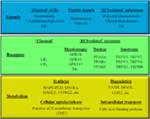
Image result for frontiers in immunology“It is well known that certain active ingredients of the plants of Cannabis genus, i.e., the “phytocannabinoids” [pCBs; e.g., (−)-trans-Δ9-tetrahydrocannabinol (THC), (−)-cannabidiol, etc.] can influence a wide array of biological processes, and the human body is able to produce endogenous analogs of these substances [“endocannabinoids” (eCB), e.g., arachidonoylethanolamine (anandamide, AEA), 2-arachidonoylglycerol (2-AG), etc.]. These ligands, together with multiple receptors (e.g., CB1 and CB2 cannabinoid receptors, etc.), and a complex enzyme and transporter apparatus involved in the synthesis and degradation of the ligands constitute the endocannabinoid system (ECS), a recently emerging regulator of several physiological processes. The ECS is widely expressed in the human body, including several members of the innate and adaptive immune system, where eCBs, as well as several pCBs were shown to deeply influence immune functions thereby regulating inflammation, autoimmunity, antitumor, as well as antipathogen immune responses, etc. Based on this knowledge, many in vitro and in vivo studies aimed at exploiting the putative therapeutic potential of cannabinoid signaling in inflammation-accompanied diseases (e.g., multiple sclerosis) or in organ transplantation, and to dissect the complex immunological effects of medical and “recreational” marijuana consumption. Thus, the objective of the current article is (i) to summarize the most recent findings of the field; (ii) to highlight the putative therapeutic potential of targeting cannabinoid signaling; (iii) to identify open questions and key challenges; and (iv) to suggest promising future directions for cannabinoid-based drug development.

Active Components of Cannabis sativa (Hemp)—Phytocannabinoids (pCBs) and Beyond

It is known since ancient times that consumption of different parts of the plant Cannabis sativa can lead to psychotropic effects. Moreover, mostly, but not exclusively because of its potent analgesic actions, it was considered to be beneficial in the management of several diseases. Nowadays it is a common knowledge that these effects were mediated by the complex mixture of biologically active substances produced by the plant. So far, at least 545 active compounds have been identified in it, among which, the best-studied ones are the so-called pCBs. It is also noteworthy that besides these compounds, ca. 140 different terpenes [including the potent and selective CB2 agonist sesquiterpene β-caryophyllene (BCP)], multiple flavonoids, alkanes, sugars, non-cannabinoid phenols, phenylpropanoids, steroids, fatty acids, and various nitrogenous compounds can be found in the plant, individual biological actions of which are mostly still nebulous. Among the so far identified > 100 pCBs, the psychotropic (−)-trans-Δ9-tetrahydrocannabinol (THC) and the non-psychotropic (−)-cannabidiol (CBD) are the best-studied ones, exerting a wide-variety of biological actions [including but not exclusively: anticonvulsive, analgesic, antiemetic, and anti inflammatory effects]. Of great importance, pCBs have been shown to modulate the activity of a plethora of cellular targets, extending their impact far beyond the “classical” (see above) cannabinoid signaling. Indeed, besides being agonists [or in some cases even antagonists of CB1 and CB2 cannabinoid receptors, some pCBs were shown to differentially modulate the activity of certain TRP channels, PPARs, serotonin, α adrenergic, adenosine or opioid receptors, and to inhibit COX and lipoxygenase enzymes, FAAH, EMT, etc.. Moreover, from a clinical point-of-view, it should also be noted that pCBs can indirectly modify pharmacokinetics of multiple drugs (e.g., cyclosporine A) by interacting with several cytochrome P 450 (CYP) enzymes. Taken together, pCBs can be considered as multitarget polypharmacons, each of them having unique “molecular fingerprints” created by the characteristic activation/inhibition pattern of its locally available cellular targets.

Concluding Remarks—Lessons to Learn from Cannabis

Research efforts of the past few decades have unambiguously evidenced that ECS is one of the central orchestrators of both innate and adaptive immune systems, and that pure pCBs as well as complex cannabis-derivatives can also deeply influence immune responses. Although, many open questions await to be answered, pharmacological modulation of the (endo)cannabinoid signaling, and restoration of the homeostatic eCB tone of the tissues augur to be very promising future directions in the management of several pathological inflammation-accompanied diseases. Moreover, in depth analysis of the (quite complex) mechanism-of-action of the most promising pCBs is likely to shed light to previously unknown immune regulatory mechanisms and can therefore pave new “high”-ways toward developing completely novel classes of therapeutic agents to manage a wide-variety of diseases.”

https://www.frontiersin.org/articles/10.3389/fimmu.2017.01487/full
www.frontiersin.org