
“Breast cancer is the second leading cause of death among women. Although early diagnosis and development of new treatments have improved their prognosis, many patients present innate or acquired resistance to current therapies. New therapeutic approaches are therefore warranted for the management of this disease.
Extensive preclinical research has demonstrated that cannabinoids, the active ingredients of
Cannabis sativa, trigger antitumor responses in different models of cancer. Most of these studies have been conducted with pure compounds, mainly Δ
9-tetrahydrocannabinol (THC).
The
cannabis plant, however, produces hundreds of other compounds with their own therapeutic potential and the capability to induce synergic responses when combined, the so-called “entourage effect”.
Here, we compared the antitumor efficacy of pure THC with that of a botanical drug preparation (BDP). The BDP was more potent than pure THC in producing antitumor responses in cell culture and animal models of ER+/PR+, HER2+ and triple-negative breast cancer. This increased potency was not due to the presence of the 5 most abundant terpenes in the preparation.
While pure THC acted by activating cannabinoid CB
2 receptors and generating reactive oxygen species, the BDP modulated different targets and mechanisms of action. The combination of cannabinoids with estrogen receptor- or HER2-targeted therapies (tamoxifen and lapatinib, respectively) or with cisplatin, produced additive antiproliferative responses in cell cultures. Combinations of these treatments in vivo showed no interactions, either positive or negative.
Together, our results suggest that standardized
cannabis drug preparations, rather than pure cannabinoids, could be considered as part of the therapeutic armamentarium to manage breast cancer.”


 “The pathogenesis of Alzheimer’s disease (AD) is somewhat complex and has yet to be fully understood. As the effectiveness of the therapy currently available for AD has proved to be limited, the need for new drugs has become increasingly urgent.
The modulation of the endogenous
“The pathogenesis of Alzheimer’s disease (AD) is somewhat complex and has yet to be fully understood. As the effectiveness of the therapy currently available for AD has proved to be limited, the need for new drugs has become increasingly urgent.
The modulation of the endogenous  “We hypothesized that the
 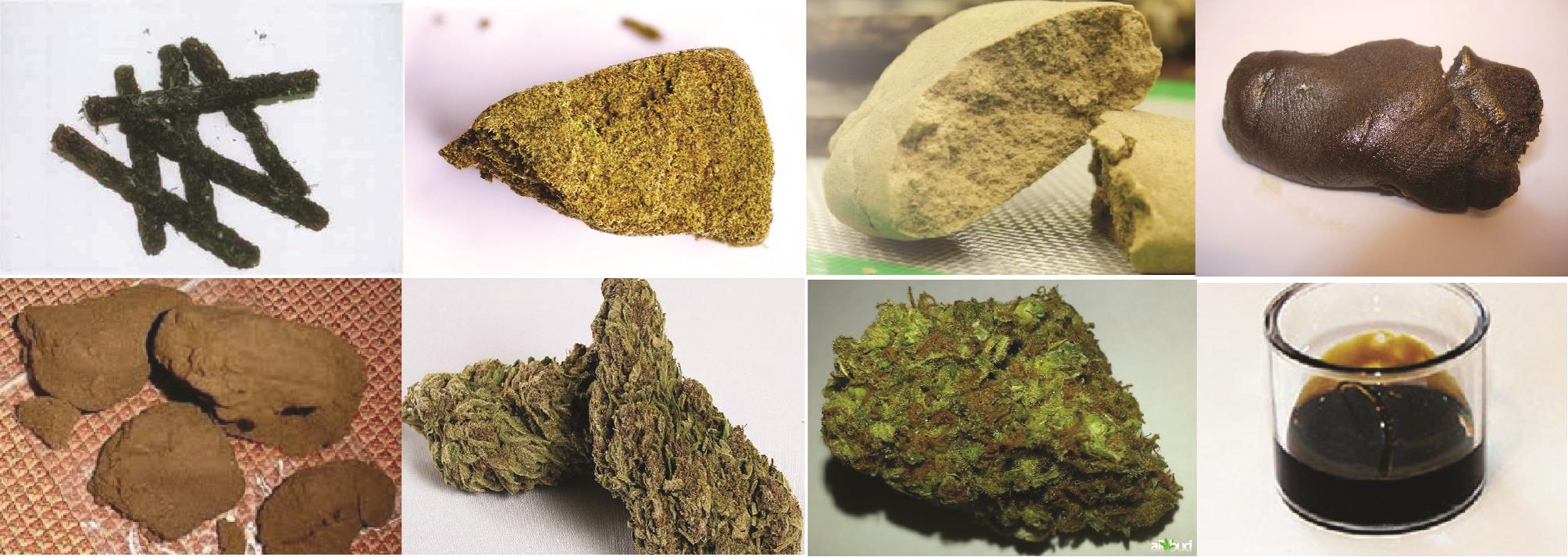 “Cannabis products. First row, left to right: Indian, Lebanese, Turkish and Pakistani hashish. Second row, left to right: Swiss hashish, Zairean marijuana, Swiss marijuana, Moroccan hash oil.”]]>
  “The G protein-coupled receptors 3, 6, and 12 (GPR3, GPR6, and GPR12) comprise a family of closely related orphan receptors with no confirmed endogenous ligands. These receptors are constitutively active and capable of signaling through G protein-mediated and non-G protein-mediated mechanisms. These orphan receptors have previously been reported to play important roles in many normal physiological functions and to be involved in a variety of pathological conditions.
Although they are orphans, GPR3, GPR6, and GPR12 are phylogenetically most closely related to the
“The G protein-coupled receptors 3, 6, and 12 (GPR3, GPR6, and GPR12) comprise a family of closely related orphan receptors with no confirmed endogenous ligands. These receptors are constitutively active and capable of signaling through G protein-mediated and non-G protein-mediated mechanisms. These orphan receptors have previously been reported to play important roles in many normal physiological functions and to be involved in a variety of pathological conditions.
Although they are orphans, GPR3, GPR6, and GPR12 are phylogenetically most closely related to the  “Delta-9-tetrahydrocannabinol (THC)/cannabidiol (CBD) (nabiximols or Sativex®) is an oromucosal spray formulation containing THC and CBD at an approximately 1:1 fixed ratio. Its administration for the treatment of pain in patients with multiple sclerosis (MS) has been established.
MS patients generally complain of different kinds of pain, including spasticity-related and neuropathic pain. In this study, we compared and evaluated pain modulation and thermal/pain threshold of MS patients before and after THC/CBD administration.
Patients reported a significant reduction in pain.
Our results indicate that Sativex® therapy provides pain relief in MS patients and suggest that it might modulate peripheral cold-sensitive TRP channels.”
“Delta-9-tetrahydrocannabinol (THC)/cannabidiol (CBD) (nabiximols or Sativex®) is an oromucosal spray formulation containing THC and CBD at an approximately 1:1 fixed ratio. Its administration for the treatment of pain in patients with multiple sclerosis (MS) has been established.
MS patients generally complain of different kinds of pain, including spasticity-related and neuropathic pain. In this study, we compared and evaluated pain modulation and thermal/pain threshold of MS patients before and after THC/CBD administration.
Patients reported a significant reduction in pain.
Our results indicate that Sativex® therapy provides pain relief in MS patients and suggest that it might modulate peripheral cold-sensitive TRP channels.”