
 “Although studied in a few randomized controlled trials (RCTs), the efficacy of medical cannabis (MC) for chronic pain remains controversial. Using an alternative approach, this multicenter, questionnaire-based prospective cohort was aimed to assess the long-term effects of MC on chronic pain of various etiologies and to identify predictors for MC treatment success.
Results: 1045 patients completed the baseline questionnaires and initiated MC treatment, and 551 completed the 12 month follow-up. At one year, average pain intensity declined from baseline by 20% [-1.97 points (95%CI= -2.13 to -1.81; p<0.001)]. All other parameters improved by 10-30% (p<0.001). A significant decrease of 42% [reduction of 27mg; (95%CI= -34.89 to -18.56, p<0.001)] from baseline in morphine equivalent daily dosage of opioids was also observed. Reported adverse effects were common but mostly non-serious. Presence of normal to long sleep duration, lower body mass index (BMI) and lower depression score predicted relatively higher treatment success, whereas presence of neuropathic pain predicted the opposite.
Conclusions: This prospective study provides further evidence for the effects of MC on chronic pain and related symptoms, demonstrating an overall mild to modest long-term improvement of the tested measures and identifying possible predictors for treatment success.
Significance: This “real world” paper shows that MC mildly to modestly attenuates chronic pain and related symptoms. MC treatment can also cause frequent, but mostly non-serious adverse effects, although central nervous system (CNS)-related AEs that can impair the ability to drive vehicles are not uncommon. This study is novel in identifying possible predictors for treatment success, including normal to long sleep duration, lower BMI and lower depression scores. In contrast to current beliefs the diagnosis of neuropathic pain predicts a less favorable outcome. These findings provide physicians with new data to support decision making on recommendations for MC treatment.”
 “The burden of chronic pain has affected many individuals leading to distress and discomfort, alongside numerous side effects with conventional therapeutic approaches.
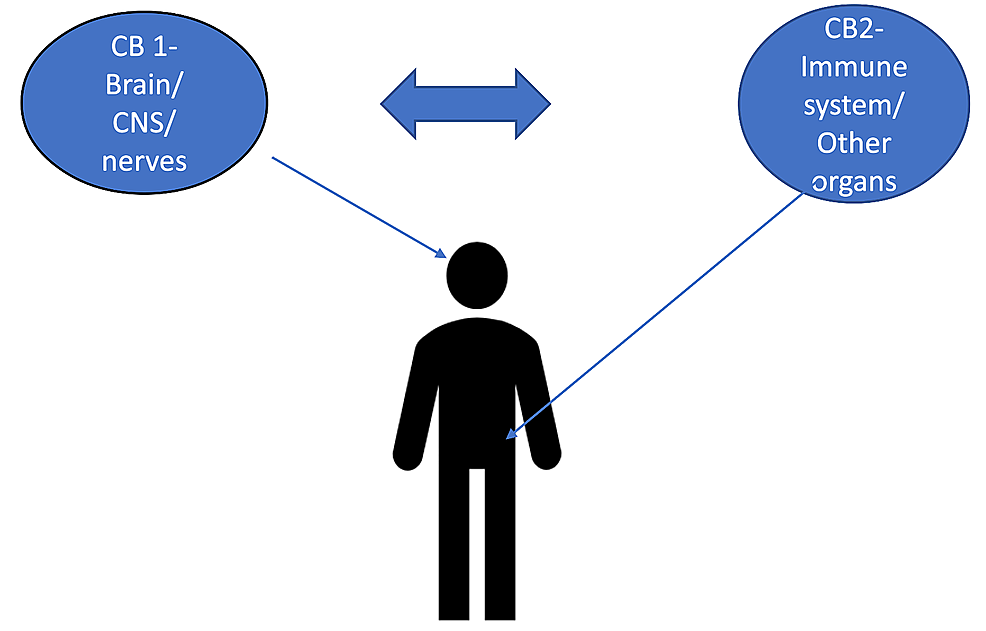
 “The identification of the human cannabinoid receptors and their roles in health and disease, has been one of the most significant biochemical and pharmacological advancements to have occurred in the past few decades. In spite of the major strides made in furthering endocannabinoid research, therapeutic exploitation of the endocannabinoid system has often been a challenging task.
 “This study evaluated the synergistic anti-cancer potential of cannabinoid combinations across the MDA-MB-231 and MCF-7 human breast cancer cell lines. Cannabinoids were combined and their synergistic interactions were evaluated using median effect analysis.
 “Considering lack of target-specific antiviral treatment and vaccination for COVID-19, it is absolutely exigent to have an effective therapeutic modality to reduce hospitalization and mortality rate as well as to improve COVID-19-infected patient outcomes.
 “Epilepsy is a chronic neurological disease characterized by recurrent epileptic seizures. Studies have shown the complexity of epileptogenesis and ictogenesis, in which immunological processes and epigenetic and structural changes in neuronal tissues have been identified as triggering epilepsy.
 “The inflammatory sequence is the first phase of wound healing. Macrophages (MPhs) and mesenchymal stromal cells (MSCs) respond to an inflammatory microenvironment by adapting their functional activity, which polarizes them into the pro-inflammatory phenotypes M1 and MSC1. Prolongation of the inflammatory phase results in the formation of chronic wounds. The endocannabinoid system (ECS) possesses immunomodulatory properties that may impede this cellular phenotypic switch.
 “Graft versus host disease (GVHD) pathophysiology is a complex interplay between cells that comprise the adaptive and innate arms of the immune system. Effective prophylactic strategies are therefore contingent upon approaches that address contributions from both immune cell compartments.
 “Cannabinoids have long been used for their psychotropic and possible medical properties of symptom relief. In the past few years, a vast literature shows that cannabinoids are neuroprotective under different pathological situations.