The endocannabinoid system modulates stress, emotionality, and inflammation.

“The physiological and behavioral effects of stress are well characterized.

Endocannabinoids are produced on demand and function to attenuate many of the physiological effects of the stress response.

The endocannabinoid system is made up of cannabinoid receptors, the fatty acid signaling molecules that bind to and activate these receptors, and the enzymes that synthesize and catabolize these endocannabinoid signaling molecules.

Cannabinoid research has recently grown substantially, due in no small part to the development of genetic research models as well as highly selective pharmaceutical tools.

The purpose of this minireview is to discuss a subset of the many parallels between cannabinoid and behavioral neuroimmunology research, with specific discussion of interactions between the endocannabinoid system and psychological stress, emotionality, and inflammation.”

http://www.ncbi.nlm.nih.gov/pubmed/24953427

Cannibinoids offer novel treatment for pain in sickle cell disease, study suggests

ScienceDaily: Your source for the latest research news

“Researchers have discovered that cannibinoids offer a novel approach to ease the chronic and acute pain caused by sickle cell disease.

“This paper provides proof that we can use other classifications of drugs to treat pain in patients with sickle cell disease,” Gupta said.

“Cannibinoids offer great promise in the treatment of chronic and acute pain, and they’re effective in much lower amounts than opioids — the only currently approved treatment for this disease.”

http://www.sciencedaily.com/releases/2010/07/100722121225.htm

Pain-related behaviors and neurochemical alterations in mice expressing sickle hemoglobin: modulation by cannabinoids… Our observations in these mice suggest that both systemically administered and locally applied cannabinoids may be beneficial in treating pain in SCD.” http://www.ncbi.nlm.nih.gov/pmc/articles/PMC2913454/

Vaporized Cannabis for Chronic Pain Associated With Sickle Cell Disease (Cannabis-SCD) -ClinicalTrials.gov Identifier: NCT01771731

“Cannabinoid-Based Therapy and Approaches to Quantify Pain in Sickle Cell Disease.

Our primary objective is to assess whether inhaling vaporized cannabis ameliorates chronic pain in patients with sickle cell disease (SCD). As these patients will all be on chronic opioid analgesics, the investigators will also assess the possible synergistic affect between inhaled cannabis and opioids.

The investigators will also assess the clinical safety of the concomitant use of cannabinoids and these opioids in patients with SCD by monitoring the short-term side effects associated with combined therapy.

Finally, the investigators will evaluate the short-term effects of inhaled cannabis on markers of inflammation and disease progression in patients with SCD.

Hypotheses are as follows:

  1. Inhaled cannabis will significantly reduce chronic pain in patients with SCD.
  2. Inhaled cannabis will significantly alter the short-term side effects experienced by patients who take opioids for SCD.
  3. Inhaled cannabis will significantly alter markers of inflammation and disease progression in patients with SCD compared to placebo.
Subjects will complete a 5-day pain diary prior to admission to the Clinical Research Center (CRC) to establish a baseline of pain. They will then be assigned to inhale either vaporized cannabis of mixed THC/CBD content (4.7% THC/5.1% CBD) or placebo cannabis (0% THC/0% CBD). Participants and personnel will be blinded as to assignment. Pain will be evaluated during the 5-day inpatient exposure. Participants will be asked to participate in two such 5-day sessions separated by at least a 2-week washout so that each will be exposed to the two experimental conditions.
Detailed Description:

This is a proof-of-principle investigation of the safety and potential effectiveness of inhaled vaporized cannabis when added to a stable analgesic regimen in sickle cell disease (SCD) patients with chronic pain. The study will be comprised of two 5-day intervention periods in the inpatient setting (the Clinical Research Center at SFGH), with completion of a 5-day daily pain diary prior to admission to establish an outpatient baseline. Participants will be randomly assigned, in double-blind fashion, to treatment with (A) vaporized cannabis with an approximately 1:1 ration of delta-9-tetrahydrocannabinol:cannabidiol or (B) vaporized placebo. Those who receive treatment A during the first admission will receive treatment B in the second, and those who receive treatment B during the first admission will receive treatment A in the second. The two admissions will be spaced at least 14 days apart.

On Day 1 of each admission, subjects will provide blood samples for baseline markers of inflammation and SCD disease progression. They will undergo assessments of pain, mood, and quality of life. At 12 pm on Day 1, they will inhale vaporized study agent (equivalent to 1 cannabis/placebo cigarette) using the Volcano® vaporizer; on Days 2-4 they will inhale study agent at 8 am, 2 pm, and 8 pm, and they will inhale their final dose on Day 5 at 8 am. Subjects will continue their pre-study analgesic regimen while in the study. If additional analgesia is required, supplemental therapy will be administered and the dose recorded. Pain measurements by visual analogue scale will be obtained every 2 hours while subjects are awake. On Day 5 a second set of blood samples for inflammation markers and disease progression will be obtained, and subjects will again complete pain, mood, and quality of life assessments.”

http://www.clinicaltrials.gov/ct2/show/study/NCT01771731#contacts

THC Can Manage Sickle Cell Disease

“Cannabinoids, the active ingredients in pot offer a new way to treat chronic and acute pain from sickle cell disease, ScienceDaily reports.

Currently the only treatment for the blood disease is opiods.

“Pain in SCD is described to be more intense than labor pain. The pain starts early in a patient’s life, often during infancy, and increases in severity with age.

[Cannibinoids are] effective in much lower amounts than opioids — the only currently approved treatment for this disease.”

http://www.eastbayexpress.com/LegalizationNation/archives/2010/07/23/daily-roundup-thc-can-manage-sickle-cell-disease-oakland-tweaks-medical-cannabis-taxes

Sickle Cell Pain May be Managed with Cannabis

“Can Medical Cannabis Help to Cure SCD?”

Sickle Cell Disease Pain May Be Managed 2

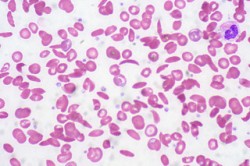
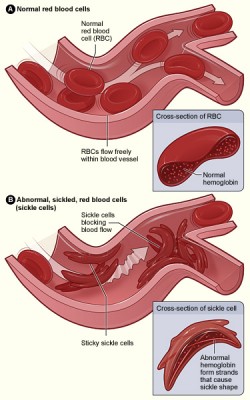
“Sickle cell disease (SCD) is a hereditary condition caused by a mutation in the haemoglobin gene, which leads to symptoms of anaemia, extreme pain, and organ damage if unmanaged.”

Sickle Cell Disease Pain May Be Managed 1

“Individuals suffering from SCD are far more likely to use cannabis than the general population, potentially for its analgesic properties.

In 2010, researchers at the University of Minnesota found that the synthetic THC analogue CP 55,940 was as effective as morphine sulphate in treating SCD-related severe pain in transgenic mice expressing human sickle haemoglobin, and that it was effective at smaller doses than the opioid.

In 2011, a further paper submitted by the same researchers to Blood (the Journal of the American Association of Hematology) indicated that CP 55,940 ameliorated severe pain associated with the hypoxia/reoxygenation cycle. CP 55,940 is a full agonist of both CB receptors, and is thought to act as an antagonist at the GPR55 receptor.

As well as this, cannabis has been repeatedly shown to act as a vasodilator, which could in itself assist in easing the blockages caused by build-up of sickle cells…

SCD is a painful and debilitating disease, and the overall inefficacy of opioid treatments and resultant poor quality of life for many sufferers is an indication that our approach to it is far from perfect.

If cannabis is a good candidate to replace opioids, it should be implemented forthwith to prevent ongoing suffering for existing patients.”

http://sensiseeds.com/en/blog/sickle-cell-pain-may-managed-cannabis/

Medical Marijuana Could Help Treat Sickle Cell Disease

sickle cell marijuana

“People who suffer from sickle cell disease have to deal with a lot of pain.

Patients with sickle cell disease have crescent shaped blood cells, compared to disc shaped blood cells in people who don’t suffer from sickle cell disease. These cells block blood flow, which causes pain, fatigue, and organ damage. I’ve heard people that suffer from sickle cell disease describe the pain as being like nails poking their entire body.

Doctors usually prescribe opiate based pain killers like morphine for sickle cell disease. Opiate prescriptions have a lot of side effects including respiratory issues, damage to organs, and addiction to name a few. Compare that to medical marijuana, which has far less harmful side effects, especially if consumed in food or vapor form. Patients should have the option to choose medical marijuana if they want to. From Minnesota Daily:

School of Dentistry professor and pain expert Donald Simone, who is also working on the research project, said opiates sometimes have “problematic” side effects, such as respiratory depression. And Gupta said patients sometimes receive incorrect dosages of the drugs because their exact amount of pain is unknown.

Medical marijuana is promising for sickle cell patients because it has a pain-relieving effect without as many severe side effects as morphine, Simone said.

Right now researchers in California are teaming up with researchers at the University of Minnesota to find out how medical marijuana can help those suffering from sickle cell disease. Right now, sickle cell patients can get safe access to medical marijuana if they are in California. However, patients in Minnesota will have to wait until the condition is added to the list of approvable conditions in Minnesota, which could take awhile.”

http://www.theweedblog.com/medical-marijuana-could-help-treat-sickle-cell-disease/

Cannabis use in sickle cell disease: a questionnaire study.

“Cannabinoids are increasingly being considered for the management of various painful conditions, and could be considered as an option for treating acute pain in sickle cell disease (SCD).

The objective of this study was to determine the extent of use of cannabis in the community for pain and other symptom relief, and its side effects during self-administration in patients with SCD…

The main reasons for use were to reduce pain in 52%, and to induce relaxation or relieve anxiety and depression in 39%. Symptoms related to sedation and mood effects were reported in 77% of patients. The majority of patients (58%) expressed their willingness to participate in studies of cannabis as a medicine.

We conclude that research in the use of cannabinoids for pain relief in SCD would be both important and acceptable to adult patients.”

http://www.ncbi.nlm.nih.gov/pubmed/16173972

Pain-related behaviors and neurochemical alterations in mice expressing sickle hemoglobin: modulation by cannabinoids

Table 1

“Sickle cell disease (SCD) causes severe pain. We examined pain-related behaviors, correlative neurochemical changes, and analgesic effects of morphine and cannabinoids in transgenic mice expressing human sickle hemoglobin (HbS).

Importantly, cannabinoids attenuate pain in mice expressing HbS.

Cannabinoids offer a novel approach to treat chronic pain and hyperalgesia.

Inhaled or systemically injected cannabinoids are effective in treating pain in HIV/AIDS and multiple sclerosis and breakthrough pain in cancer.

Activation of peripheral cannabinoid receptors attenuates hyperalgesia in inflammation and cancer. Selective pharmacologic activation of peripheral cannabinoid receptors to attenuate pain is particularly appealing because it might avoid side effects associated with activation of cannabinoid receptors in the central nervous system.

Because pain in SCD may have both inflammatory and neuropathic components, we hypothesized that cannabinoids may provide pain relief in SCD…

Our observations in these mice suggest that both systemically administered and locally applied cannabinoids may be beneficial in treating pain in SCD.”

http://www.ncbi.nlm.nih.gov/pmc/articles/PMC2913454/

Cannabis very effective as painkiller after a major sugery

Fight For medical Marijuana

“The very existence of cannabis as a substance with possible medical use is a contentious topic, to say the least. Its status as an illicit substance is hotly debated, with proponents from both sides (for and against legalization) engaged in a decades-long battle.

The status of marijuana in the United States as a Schedule I Substance under the Controlled Substances Act means not only that it is highly illegal to possess, but it is classified along the likes of cocaine, heroine, and crystal meth.

Schedule I substances are those that a) have high potential to be abused; b) have no currently accepted medical use in treatment in the United States; and c) are lacking in accepted safety in use under medical supervision.

All of these qualifiers are potentially important in classifying drugs and substances, but many people argue that marijuana does not belong in Schedule I…

Pain after surgery remains a problem in the medical community, and traditional prescribed painkillers often have unpleasant side effects as well as diminishing benefits.

Cannabis extracts work due to the cannabinoid receptors in the human brain.

Cannabinoids from marijuana help to effectively strengthen the body’s ability to reduce pain sensation.”

http://www.royalqueenseeds.com/blog-cannabis-very-effective-as-painkiller-after-a-major-sugery–n55

Cannabis very effective as painkiller after a major sugery

Cannabinoids Destroy Leukemia Cells, New Study Finds

(Photo: Alternative Medicine Solutions)

“New research from the University of London suggests chemicals in marijuana could be used to fight leukemia.

Published online in Anticancer Research, researchers at the Department of Oncology at St. George’s, University of London studied six different cannabinoids and found each to have anti-cancer action in leukemia cells.

Lead author Wai Liu, Ph.D explained the results of the latest study in Monday’s press release.

These agents are able to interfere with the development of cancerous cells, stopping them in their tracks and preventing them from growing. In some cases, by using specific dosage patterns, they can destroy cancer cells on their own.

The scientists were able to replicate previous findings on the anti-cancer effects of THC – the compound in marijuana responsible for the high.

However, in the latest study, Dr. Liu’s team decided to focus on cannabinoids that lacked psychoactive activity, including cannabidiol (CBD), cannabigerol (CBG) and cannabigevarin (CBGV).

This study is a critical step in unpicking the mysteries of cannabis as a source of medicine. The cannabinoids examined have minimal, if any, hallucinogenic side effects, and their properties as anti-cancer agents are promising.

The non-psychoactive cannabinoids were shown to inhibit growth of leukemia cells at all stages of the cell cycle. Interestingly, the team observed even greater effects when different cannabinoids were administered together.

“These compounds are inexpensive to produce”

Dr. Liu says drugs derived from cannabis are much cheaper to produce than traditional cancer therapies. He also thinks they could be combined with existing treatments to enhance their effects.

Used in combination with existing treatment, we could discover some highly effective strategies for tackling cancer. Significantly, these compounds are inexpensive to produce and making better use of their unique properties could result in much more cost effective anti-cancer drugs in future.

Dr. Liu’s next study will investigate the potential of cannabinoids when combined with existing treatments as well as different treatment schedules that could maximize their anti-cancer activity.”

http://www.leafscience.com/2013/10/14/cannabinoids-destroy-leukemia-cells-new-study-finds/

http://www.thctotalhealthcare.com/category/leukemia/