
 “Hemp (Cannabis sativa L.) seed contains high contents of various nutrients, including fatty acids and proteins.
Cannabidiol (CBD) is a non-psychoactive compound that can be extracted from C. sativa and used for treating epilepsy and pain.
Industrial hemp products, including CBD and hemp seed oils, have become increasingly popular. Some products are marketed without a clear distinction between CBD and hemp seed oils.
Herein, the CBD content and biological activities of commercial CBD and hemp seed oils were examined.
Methods: CBD content was measured by high-performance liquid chromatography. For in vitro antioxidant activity determination, 2,2-diphenyl-1-picrylhydrazyl and 2,2′-azinobis (3-ethylbenzothiazoline-6-sulfonic acid) radical-scavenging assays were performed.
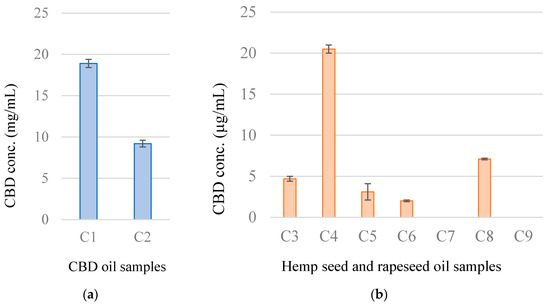
Results: The CBD concentrations in the two CBD oil samples were 18.9 ± 0.5 and 9.2 ± 0.4 mg/mL. Of the seven hemp seed oil samples, six samples contained CBD in concentrations ranging from 2.0 ± 0.1 to 20.5 ± 0.5 µg/mL, but it was not detected in one sample. Antioxidant activity was observed in both CBD oil samples.
Conclusions: The results indicate that (1) CBD content varied by hemp seed oil sample and that (2) antioxidant activity could be a useful landmark for discriminating CBD oils from hemp seed oils.”
https://pubmed.ncbi.nlm.nih.gov/32906708/
https://www.mdpi.com/2305-6320/7/9/57
 “Cannabis is an annual plant with a long history of use as food, feed, fiber, oil, medicine, and narcotics. Despite realizing its true value, it has not yet found its true place. Cannabis has had a long history with many ups and downs, and now it is our turn to promote it.
 “The immune-suppressive effects of cannabidiol (CBD) are attributed to the modulation of essential immunological signaling pathways and receptors. Mechanistic understanding of the pharmacological effects of CBD emphasizes the therapeutic potential of CBD as a novel immune modulator.
 “Autism spectrum disorder (ASD) is a multifactorial, pervasive neurodevelopmental disorder defined by the core symptoms of significant impairment in social interaction and communication as well as restricted, repetitive patterns of behavior. In addition to these core behaviors, persons with ASD frequently have associated noncore behavioral disturbance (ie, self-injury, aggression), as well as several medical comorbidities. Currently, no effective treatment exists for the core symptoms of ASD.
 “Previous preclinical studies have demonstrated that cannabidiol (CBD) and cannabigerol (CBG), two non-psychotomimetic phytocannabinoids from Cannabis sativa, induce neuroprotective effects on toxic and neurodegenerative processes.
 “Cannabidiol (CBD) is considered a non-psychoactive, antioxidant, and anti-inflammatory compound derived from the Cannabis sativa plant.
 “Cannabidiol (CBD) is a non-intoxicating phytocannabinoid from cannabis sativa that has demonstrated anti-inflammatory effects in several inflammatory conditions including arthritis.
 “Keratinocytes, the major cell type of the epidermis, are particularly sensitive to environmental factors including exposure to sunlight and chemical agents. Since oxidative stress may arise as a result of these factors, compounds are actively sought that can act as protective agents.
 “Numerous studies showed that sustained obesity results in accumulation of bioactive lipid derivatives in several tissues, including skeletal muscle, which further contributes to the development of metabolic disturbances and insulin resistance (IR).
 “The aim of this study was to evaluate the efficacy of oral transmucosal (OTM) cannabidiol (CBD), in addition to a multimodal pharmacological treatment for chronic osteoarthritis-related pain in dogs.