“Chronic pain can be recurrent or constant pain that lasts for longer than 3 months and can result in disability, suffering, and a physical disturbance. Related to the complex nature of chronic pain, treatments have a pharmacological and non-pharmacological approach.
Due to the opioid epidemic, alternative therapies have been introduced, and components of the plant Cannabis Sativa, Δ9-tetrahydrocannabinol (THC) and cannabidiol (CBD) have gained recent interest as a choice of treatment.
The current pharmaceutical products for the treatment of chronic pain are known as nabiximols, and they contain a ratio of THC combined with CBD, which has been promising.
This review focuses on the treatment efficacy of CBD, THC: CBD-based treatments for chronic pain and adverse events with each.”
“Fish oil (FO) and phytocannabinoids have received considerable attention for their intestinal anti-inflammatory effects.
We investigated whether the combination of FO with cannabigerol (CBG) and cannabidiol (CBD) or a combination of all three treatments results in a more pronounced intestinal antiinflammatory action compared to the effects achieved separately.
Colitis was induced in mice by 2,4-dinitrobenzenesulfonic acid (DNBS). CBD and CBG levels were detected and quantified by liquid chromatography coupled with time of flight mass spectrometry and ion trap mass spectrometry (LC-MS-IT-TOF). Endocannabinoids and related mediators were assessed by LC-MS. DNBS increased colon weight/colon length ratio, myeloperoxidase activity, interleukin-1β, and intestinal permeability.
CBG, but not CBD, given by oral gavage, ameliorated DNBS-induced colonic inflammation. FO pretreatment (at the inactive dose) increased the antiinflammatory action of CBG and rendered oral CBD effective while reducing endocannabinoid levels. Furthermore, the combination of FO, CBD, and a per se inactive dose of CBG resulted in intestinal anti-inflammatory effects. Finally, FO did not alter phytocannabinoid levels in the serum and in the colon.
By highlighting the apparent additivity between phytocannabinoids and FO, our preclinical data support a novel strategy of combining these substances for the potential development of a treatment of inflammatory bowel disease.”
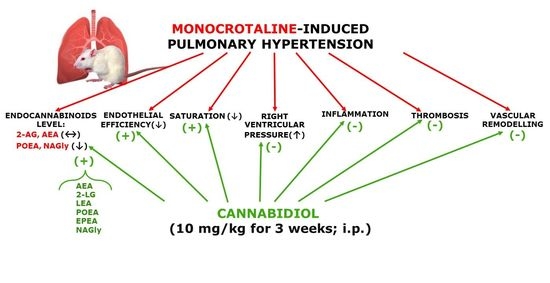
“Cannabidiol (CBD) is known for its vasorelaxant (including in the human pulmonary artery), anti-proliferative and anti-inflammatory properties. The aim of our study was to examine the potential preventive effect of chronic CBD administration (10 mg/kg/day for three weeks) on monocrotaline (MCT)-induced pulmonary hypertension (PH) rats.
PH was connected with elevation of right ventricular systolic pressure; right ventricle hypertrophy; lung edema; pulmonary artery remodeling; enhancement of the vasoconstrictor and decreasing vasodilatory responses; increases in plasma concentrations of tissue plasminogen activator, plasminogen activator inhibitor type 1 and leukocyte count; and a decrease in blood oxygen saturation.
CBD improved all abovementioned changes induced by PH except right ventricle hypertrophy and lung edema. In addition, CBD increased lung levels of some endocannabinoids (anandamide, N-arachidonoyl glycine, linolenoyl ethanolamide, palmitoleoyl ethanolamide and eicosapentaenoyl ethanolamide but not 2-arachidonoylglycerol). CBD did not affect the cardiopulmonary system of control rats or other parameters of blood morphology in PH.
Our data suggest that CBD ameliorates MCT-induced PH in rats by improving endothelial efficiency and function, normalization of hemostatic alterations and reduction of enhanced leukocyte count determined in PH. In conclusion, CBD may be a safe, promising therapeutic or adjuvant therapy agent for the treatment of human pulmonary artery hypertension.”
“Pancreatic cancer (PC) is related to lifestyle risks, chronic inflammation, and germline mutations in BRCA1/2, ATM, MLH1, TP53, or CDKN2A. Surgical resection and adjuvant chemotherapy are the main therapeutic strategies but are less effective in patients with high-grade tumors.
Oxygen-ozone (O2/O3) therapy is an emerging alternative tool for the treatment of several clinical disorders. O2/O3 therapy has been found to ameliorate mechanisms promoting chronic pain and inflammation, including hypoxia, inflammatory mediators, and infection.
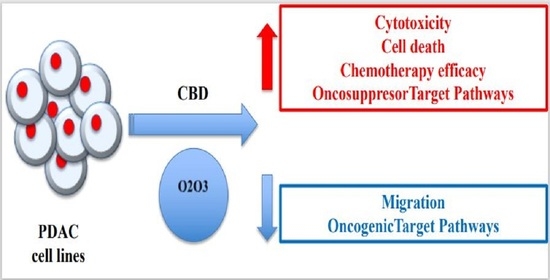
The advantages of using cannabinoids have been evaluated in vitro and in vivo models of several human cancers. Regarding PDAC, activation of cannabinoid receptors was found to induce pancreatic cancer cell apoptosis without affecting the normal pancreas cells.
In a murine model of PDAC, a combination of cannabidiol (CBD) and gemcitabine increased survival length by nearly three times. Herein, we evaluate the anticancer effect of CBD and O2/O3, alone or in combination, on two human PDAC cell lines, PANC-1 and MiaPaCa-2, examining expression profiles of 92 pancreatic adenocarcinoma associated genes, cytotoxicity, migration properties, and cell death. Finally, we assess the combination effects with gemcitabine and paclitaxel.
Summarizing, for the first time the antitumoral effect of combined therapy with CBD and oxygen-ozone therapy in PDAC is evidenced.”
“In recent years there has been a growing appreciation by regulatory authorities that cannabis-based medicines can play a useful role in disease therapy.
Although often conflagrated by proponents of recreational use, the legislative rescheduling of cannabis-derived compounds, such as cannabidiol (CBD), has been associated with the steady increase in the pursuit of use of medicinal cannabis.
One key driver in this interest has been the scientific demonstration of efficacy and safety of CBD in randomised, placebo-controlled clinical trials in children and young adults with difficult-to-treat epilepsies, which has encouraged increasing numbers of human trials of CBD for other indications and in other populations.
The introduction of CBD as the medicine Epidiolex in the US (in 2018) and as Epidyolex in the EU (in 2019) as the first cannabis-derived therapeutic for the treatment for seizures was underpinned by preclinical research performed at the University of Reading.
This work was awarded the British Pharmacological Society Sir James Black Award for Contributions to Drug Discovery 2019 and is discussed in the following review article.”
“Cannabidiol (CBD) is reported to produce pain relief, but the clinically relevant cellular and molecular mechanisms remain uncertain.
The TRPV1 receptor integrates noxious stimuli and plays a key role in pain signaling. Hence, we conducted in vitro studies, to elucidate the efficacy and mechanisms of CBD for inhibiting neuronal hypersensitivity in cultured rat sensory neurons, following activation of TRPV1.
Results: DRG neurons treated with 10 and 50 µMol/L CBD showed calcium influx, but not at lower doses. Neurons treated with capsaicin demonstrated robust calcium influx, which was dose-dependently reduced in the presence of low dose CBD (IC50 = 100 nMol/L). The inhibition or desensitization by CBD was reversed in the presence of forskolin and cyclosporin. Forskolin-stimulated cAMP levels were significantly reduced in CBD treated neurons.
Conclusion: CBD at low doses corresponding to plasma concentrations observed physiologically inhibits or desensitizes neuronal TRPV1 signalling by inhibiting the adenylyl cyclase – cAMP pathway, which is essential for maintaining TRPV1 phosphorylation and sensitization. CBD also facilitated calcineurin-mediated TRPV1 inhibition. These mechanisms may underlie nociceptor desensitization and the therapeutic effect of CBD in animal models and patients with acute and chronic pain.”
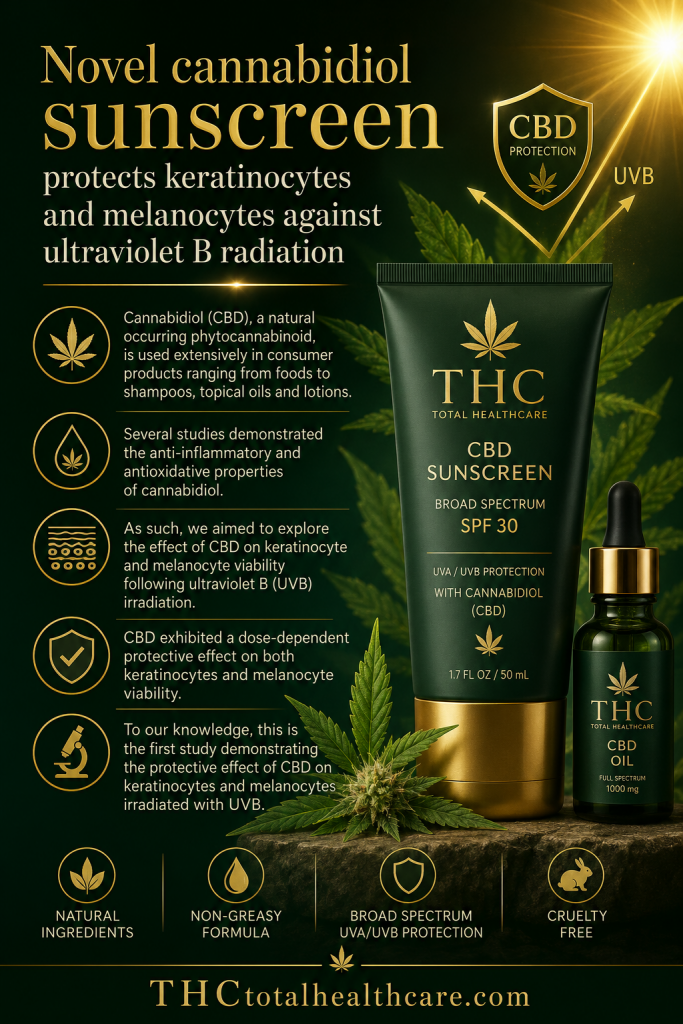
“Cannabidiol (CBD), a natural occurring phytocannabinoid, is used extensively in consumer products ranging from foods to shampoos, topical oils and lotions.
Several studies demonstrated the anti-inflammatory and antioxidative properties of cannabidiol. Nevertheless, the role of cannabidiol use in sunscreens is largely unknown as no studies on its effect on keratinocytes or melanocytes exist. As such, we aimed to explore the effect of CBD on keratinocyte and melanocyte viability following ultraviolet B (UVB) irradiation.
CBD exhibited a dose-dependent protective effect on both keratinocytes and melanocyte viability. Further, since CBD does not demonstrate absorption in the UVB spectra, we speculate that the protective effect is due to reduction in reactive oxygen species.
To our knowledge, this is the first study demonstrating the protective effect of CBD on keratinocytes and melanocytes irradiated with UVB.”
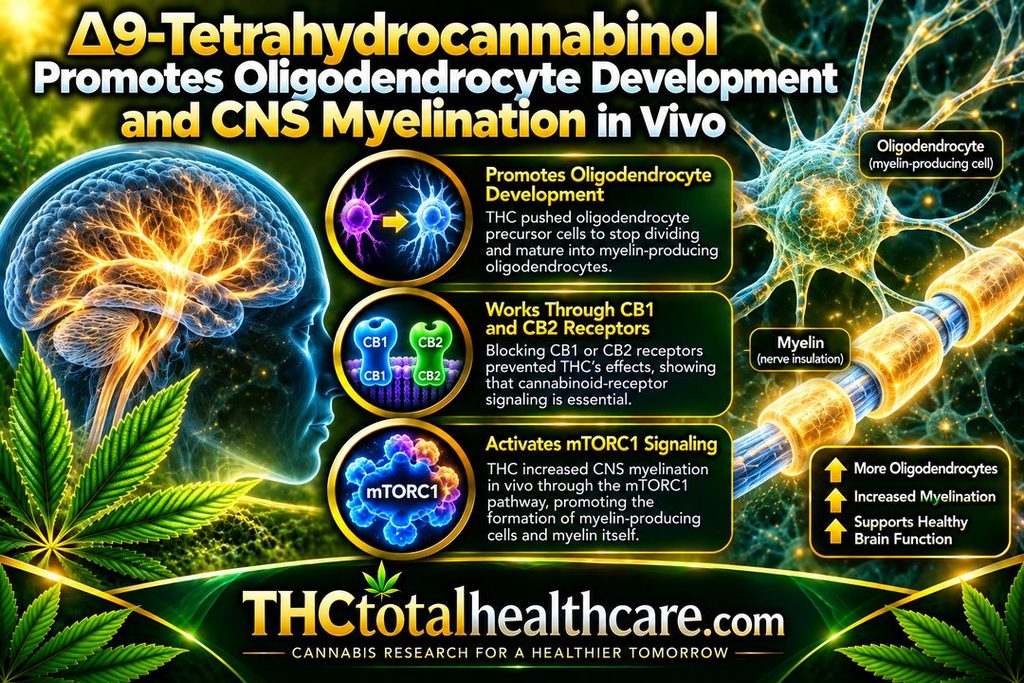
Δ9-THC promoted the development of oligodendrocytes, the cells responsible for producing myelin, and increased central nervous system myelination in young mice. THC pushed oligodendrocyte precursor cells to stop dividing and mature into myelin-producing cells.
The effect depended on both CB1 and CB2 cannabinoid receptors. When researchers blocked those receptors, THC’s effects on oligodendrocyte development and myelination were prevented, showing that cannabinoid-receptor signaling was central to the response.
The study also identified the mTORC1 signaling pathway as an important part of the mechanism. The authors concluded that THC represents a novel pharmacological candidate for enhancing oligodendrocyte development and CNS myelination in vivo.
“Δ9 -Tetrahydrocannabinol (THC), the main bioactive compound found in the plant Cannabis sativa, exerts its effects by activating cannabinoid receptors present in many neural cells.
Cannabinoid receptors are also physiologically engaged by endogenous cannabinoid compounds, the so-called endocannabinoids. Specifically, the endocannabinoid 2-arachidonoylglycerol has been highlighted as an important modulator of oligodendrocyte (OL) development at embryonic stages and in animal models of demyelination. However, the potential impact of THC exposure on OL lineage progression during the critical periods of postnatal myelination has never been explored.
Here, we show that acute THC administration at early postnatal ages in mice enhanced OL development and CNS myelination in the subcortical white matter by promoting oligodendrocyte precursor cell cycle exit and differentiation.
Mechanistically, THC-induced-myelination was mediated by CB1 and CB2 cannabinoid receptors, as demonstrated by the blockade of THC actions by selective receptor antagonists. Moreover, the THC-mediated modulation of oligodendroglial differentiation relied on the activation of the mammalian target of rapamycin complex 1 (mTORC1) signaling pathway, as mTORC1 pharmacological inhibition prevented the THC effects.
Our study identifies THC as an effective pharmacological strategy to enhance oligodendrogenesis and CNS myelination in vivo.”
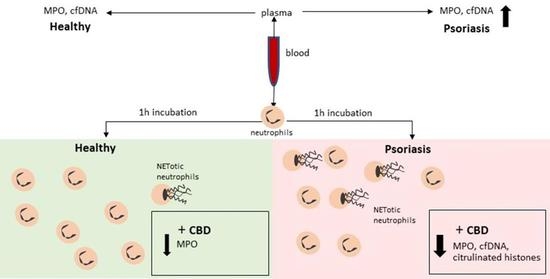
“Psoriasis is associated with increased production of reactive oxygen species which leads to oxidative stress.
As antioxidants can provide protection, the aim of this study was to evaluate the effects of cannabidiol (CBD) on neutrophil extracellular trap (NET) formation in psoriatic and healthy neutrophils.
These results suggest that psoriatic patients neutrophils are at a higher risk of NETosis both in vitro and in vivo.
CBD reduces NETosis, mainly in psoriatic neutrophils, possibly due to its antioxidant properties.
The anti-NET properties of CBD suggest the positive effect of CBD in the treatment of autoimmune diseases.”
“The pharmacological treatment for autism spectrum disorders is often poorly tolerated and has traditionally targeted associated conditions, with limited benefit for the core social deficits.
We describe the novel use of a cannabidiol-based extract that incidentally improved core social deficits and overall functioning in a patient with autism spectrum disorder, at a lower dose than has been previously reported in autism spectrum disorder.
Case presentation: The parents of a 15-year-old boy, of South African descent, with autism spectrum disorder, selective mutism, anxiety, and controlled epilepsy, consulted a medical cannabis physician to trial cannabis extract to replace seizure medications. Incidentally, at a very low cannabidiol-based extract dose, he experienced unanticipated positive effects on behavioral symptoms and core social deficits.
Conclusion: This case report provides evidence that a lower than previously reported dose of a phytocannabinoid in the form of a cannabidiol-based extract may be capable of aiding in autism spectrum disorder-related behavioral symptoms, core social communication abilities, and comorbid anxiety, sleep difficulties, and weight control. Further research is needed to elucidate the clinical role and underlying biological mechanisms of action of cannabidiol-based extract in patients with autism spectrum disorder.”

 “Chronic pain can be recurrent or constant pain that lasts for longer than 3 months and can result in disability, suffering, and a physical disturbance. Related to the complex nature of chronic pain, treatments have a pharmacological and non-pharmacological approach.
 “Fish oil (FO) and phytocannabinoids have received considerable attention for their intestinal anti-inflammatory effects.
 “Cannabidiol (CBD) is known for its vasorelaxant (including in the human pulmonary artery), anti-proliferative and anti-inflammatory properties. The aim of our study was to examine the potential preventive effect of chronic CBD administration (10 mg/kg/day for three weeks) on monocrotaline (MCT)-induced pulmonary hypertension (PH) rats.
 “Pancreatic cancer (PC) is related to lifestyle risks, chronic inflammation, and germline mutations in BRCA1/2, ATM, MLH1, TP53, or CDKN2A. Surgical resection and adjuvant chemotherapy are the main therapeutic strategies but are less effective in patients with high-grade tumors.
 “In recent years there has been a growing appreciation by regulatory authorities that cannabis-based medicines can play a useful role in disease therapy.
 “Cannabidiol (CBD) is reported to produce pain relief, but the clinically relevant cellular and molecular mechanisms remain uncertain.
 “Cannabidiol (CBD), a natural occurring phytocannabinoid, is used extensively in consumer products ranging from foods to shampoos, topical oils and lotions.
 “The pharmacological treatment for autism spectrum disorders is often poorly tolerated and has traditionally targeted associated conditions, with limited benefit for the core social deficits.