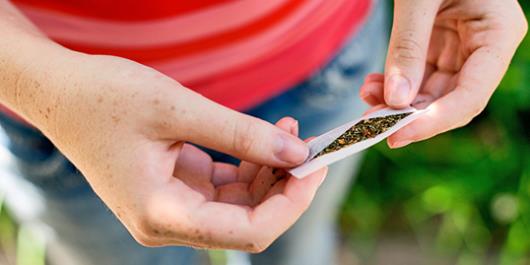
The pot diet

“Never mind the munchies, study finds that pot smokers weigh less than non-smokers.”

“Turns out that in spite of the late-night pizza binges and countless bags of Doritos they consume, the average marijuana user is actually less likely to be obese than the general, non-pot-smoking public.”

 More: http://healthyliving.msn.com/blogs/daily-apple-blog-post?post=5adb2a7c-1969-4a65-8554-1275f46faa94&_p=f178c720-63e5-4a6a-b939-6ba03f0bdc94

Health Benefits of Cannabis Tea

Health Benefits of Cannabis Tea 


“Reduces Chronic Pain

Reduces Anxiety

Reduces Nausea

May Treat Autoimmune Diseases”

“Marijuana-Infused Tea… Mom always said a cup of tea at night makes it easier to sleep.. Kevin Reed, of The Green Cross medical marijuana dispensary in San Francisco, advises patients to add a little milk after brewing to get the full effect of the cannabis.”  http://www.cbsnews.com/2300-204_162-10004358-12.html


“Cannabis Tea… Other names: Pot Tea, Weed Tea…Translations: Kaņepes Tēja, Kanapių arbata, Ceai de canabis, Kanabis Tea, Cần sa trà, Cannabis urządzenia, कैनबिस चाय, Chá de Cannabis, Каннабис чай, Η κάνναβη Τσάι, القنب الشاي, 대마초 차, Cannabis Čaj, Cannabis Teh, 大麻茶, Cannabis para preparar té, Cannabis Čaj, קנאביס תה, Канабис чај, 大麻コーヒー, Cannabis Te, Cannabis per a preparar te, Каннабіс чай, Kannabis Tea, Канабис чай”     http://www.foodista.com/food/3HJ8KNK6/cannabis-tea#

“Cannabis tea revisited: a systematic evaluation of the cannabinoid composition of cannabis tea.”   http://www.ncbi.nlm.nih.gov/pubmed/17604926

25 Benefits to Drinking Green Tea

Study Finds No Link Between Marijuana Use And Lung Cancer – ScienceDaily

“People who smoke marijuana–even heavy, long-term marijuana users–do not appear to be at increased risk of developing lung cancer…

Marijuana smoking also did not appear to increase the risk of head and neck cancers, such as cancer of the tongue, mouth, throat, or esophagus, the study found.

The findings were a surprise to the researchers. “We expected that we would find that a history of heavy marijuana use–more than 500-1,000 uses–would increase the risk of cancer from several years to decades after exposure to marijuana,” said the senior researcher, Donald Tashkin, M.D., Professor of Medicine at the David Geffen School of Medicine at UCLA in Los Angeles.”

More: http://www.sciencedaily.com/releases/2006/05/060526083353.htm

Marijuana Compound Shows Promise In Fighting Breast Cancer

“A compound found in cannabis may prove to be effective at helping stop the spread of breast cancer cells throughout the body.”


“The study, by scientists at the California Pacific Medical Center Research Institute, is raising hope that CBD, a compound found in Cannabis sativa, could be the first non-toxic agent to show promise in treating metastatic forms of breast cancer.”


“Cannabidiol as a novel inhibitor of Id-1 gene expression in aggressive breast cancer cells”  http://mct.aacrjournals.org/content/6/11/2921.full

Marijuana for migraines – USAToday

“Does marijuana have medicinal value for migraine headaches and other maladies?

“There is no question that cannabis is beneficial medicinally,” Bearman says. With migraines, “some people say it makes the pain go completely away or can prevent migraines from coming on. Others say it lessens the pain and allows them to focus on other things to get their work done.”

What cannabis does to alleviate migraines is complicated and not completely understood. “But it works on serotonin and dopamine receptors, and has anti-inflammatory activity,” says Russo, who is just finishing a paper for the Journal of Cannabis Therapeutics.

“Basically, it is a multi-modality agent that works on various aspects of migraine in a way that’s really unique. And it’s not just the THC — tetrahydrocannabinol, the psychoactive chemical — that does it. It appears now that it’s the result of the interaction of a combination of other cannabinoids and also the essential oils in the plant.”

Unlike most headache medications, cannabis is unique in that it works as both a preventive agent and an analgesic. “At any point in the migraine, they could use cannabis by smoking, vaporizer, etc., and about 80% of these people get significant or total relief,” he says. “And, if someone has a chronic migraine, daily use in whatever form will often lead to a complete remission.””

http://usatoday30.usatoday.com/life/health/doctor/lhdoc227.htm

The Use of Marijuana or Synthetic Cannabinoids for the Treatment of Headache – MedScape

“Pharmacological preparations of cannabinoid compounds have a variety of therapeutic uses in medicine, including different pain syndromes, but have not been previously reported as beneficial for cluster headache.We present a patient with cluster headache who was refractory to multiple acute and preventive medications but successfully aborted his attacks with recreational marijuana use; subsequent use of dronabinol provided equally effective pain relief. The beneficial effect may be related to the high concentration of cannabinoid receptors in the hypothalamus, which has been implicated as a site of dysfunction in neuroimaging studies of patients with cluster headache.

The plant Cannabis sativa has a long history of medical use in the treatment of pain and spasms, the promotion of sleep, and the suppression of nausea and vomiting. However, in the early 1970s cannabis was classified in the Narcotic Acts in countries all over the world as having no therapeutic benefit; therefore, it cannot be prescribed by physicians or dispensed by pharmacists. In the light of this contradictory situation, an increasing number of patients practice a self-prescription with cannabis products for relieving a variety of symptoms.

  The majority of patients used natural cannabis products such as marihuana, hashish, and an alcoholic tincture; in just 5 cases dronabinol (Marinol) was taken by prescription…

 …this survey demonstrates a successful use of cannabis products for the treatment of a multitude of various illnesses and symptoms. This use was usually accompanied only by slight and in general acceptable side effects…”

http://www.medscape.com/viewarticle/738529

Cannabinoids and hallucinogens for headache.

“Hallucinogens and most cannabinoids are classified under schedule 1 of the Federal Controlled Substances Act 1970, along with heroin and ecstacy. Hence they cannot be prescribed by physicians, and by implication, have no accepted medical use with a high abuse potential. Despite their legal status, hallucinogens and cannabinoids are used by patients for relief of headache, helped by the growing number of American states that have legalized medical marijuana.

Cannabinoids in particular have a long history of use in the abortive and prophylactic treatment of migraine before prohibition and are still used by patients as a migraine abortive in particular.

 Most practitioners are unaware of the prominence cannabis or “marijuana” once held in medical practice.

Hallucinogens are being increasingly used by cluster headache patients outside of physician recommendation mainly to abort a cluster period and maintain quiescence for which there is considerable anecdotal success.

The legal status of cannabinoids and hallucinogens has for a long time severely inhibited medical research, and there are still no blinded studies on headache subjects, from which we could assess true efficacy.”

http://www.ncbi.nlm.nih.gov/pubmed/23278122

Marijuana May Be Legitimate Treatment for Alzheimer’s Disease, Report Says

“Researchers at the Roskamp Institute in Florida recently published a study in the journal Molecular and Cellular Neuroscience revealing that cannabinoids could delay the effects of Alzheimer’s disease, and could quite plausibly terminate the disease entirely.”

medical marijuana alzheimers Marijuana May Be Legitimate Treatment for Alzheimers Disease, Report Says

“Corbin Bachmeier, Ph.D, lead researcher of the study, declared that Alzheimer’s disease is “the result of impaired Aβ [Amyloid-β protein] clearance from the brain”. According to this particular study, cannabinoids can resolve this problem, which makes it a prospective treatment.

Bachmeier’s examination determined that “modulation of the cannabinoid system was shown to reduce Aβ [Amyloid-β protein] brain levels and improve cognitive behavior in Alzheimer’s disease animal models.”

The study’s abstract states that the objective of the study was to “investigate the role of the cannabinoid system in the clearance of Aβ across the blood–brain barrier (BBB).”

For the first time in recorded history, the study in question establishes that the cannabinoid system does indeed play a role in the transit of Amyloid-β protein across the blood-brain barrier.

Bachmeier concluded that his discoveries “provide insight into the mechanism by which cannabinoid treatment reduces Aβ [Amyloid-β protein] burden in the AD [Alzheimer’s disease] brain and offer additional evidence on the utility of this pathway as a treatment for AD.”

This is good news for individuals suffering with this specific ailment and for their loved ones. Cannabinoids seem to be boundless in respect to the medicinal benefits they have to offer.”

http://ivn.us/2013/07/24/marijuana-may-be-legitimate-treatment-for-alzheimers-disease-report-says/

Marijuana may block Alzheimer’s

“The active ingredient in marijuana may stall decline from Alzheimer’s disease, research suggests.” 

Brain


“Scientists showed a synthetic version of the compound may reduce inflammation associated with Alzheimer’s and thus help to prevent mental decline.

They hope the cannabinoid may be used to develop new drug therapies.”

More: http://news.bbc.co.uk/2/hi/health/4286435.stm

Pot smoking may help relieve symptoms of MS – NBC News

“Smoking marijuana may improve some symptoms of multiple sclerosis, a new study suggests.

Patients with multiple sclerosis in the study had less muscle tightness, also called spasticity, and less pain after they smoked marijuana, compared with after they took a placebo…

More research is needed to confirm the findings and to investigate whether lower doses of marijuana may have similar benefits with fewer adverse effects, said study researcher Dr. Jody Corey-Bloom, professor of neurosciences and director of the Multiple Sclerosis Center at the University of California, San Diego.

The study is published today (May 14) in the Canadian Medical Association Journal.

Improved symptoms

Previous studies have suggested marijuana use may have benefits for MS patients, but most have investigated oral forms of the drug, including mouth sprays and capsules. In addition, most studies have asked patients to report changes in their symptoms, rather than having a researcher objectively assess them…

Participants were randomly assigned to receive treatment with a marijuana cigarette or a placebo cigarette, which did not contain delta-9-tetrahydrocannabinol (THC), the active ingredient of marijuana. Participants smoked a marijuana cigarette once a day for three consecutive days under the supervision of a researcher. Eleven days later, participants repeated the procedure, but this time, they switched treatment groups so that everyone received the marijuana cigarette and placebo at some point in the study. On average, participants smoked four puffs of their cigarettes at each session.

Shortly after each treatment session, the researchers assessed participants with a test specifically designed to measure spasticity.

After smoking marijuana, participants experienced a 30 percent reduction in spasticity, compared with when they smoked the placebo cigarette, Corey-Bloom said.”

More: http://www.nbcnews.com/health/pot-smoking-may-help-relieve-symptoms-ms-771076