“Background: Terpenes form a diverse class of naturally occurring chemicals ascribed various biological activities. Cannabis contains over 400 different terpenes of varying chemical complexity which may add to the known biological activities of phytocannabinoids of relevance to the increasing use of medical cannabis; however, to date have been incompletely characterized. We assessed three terpenes predominant in cannabis: α-bisabolol, myrcene and β-caryophyllene for neuroprotective and anti-aggregative properties in both undifferentiated and differentiated NSC-34 motorneuronal-like cells as a sensitive model for neurotoxicity to oxidative stress and amyloid β (Aβ1-42) protein exposure.
Methods: Cell viability was assessed biochemically using the MTT assay in the presence of either α-bisabolol, myrcene and β-caryophyllene (1-1000 µM) for 48 hr. Sub-toxic threshold test concentrations of each terpene were then applied to cells, alone or with concomitant incubation with the lipid peroxidant tert-butyl hyrdroperoxide (t-BHP) or amyloid β (Aβ1-42; 0-1 µM) to assess neuroprotective effects. Direct effects of each terpene on Aβ fibril formation and aggregation were also evaluated using the Thioflavin T (ThT) fluorometric kinetic assay, circular dichroism and transmission electron microscopy (TEM) to visualise fibril and aggregate morphology.
Results: Terpenes were intrinsically benign to NSC-34 cells up to 100 µM. No significant antioxidant effects were observed following t-BHP administration with myrcene and β-caryophyllene, however α-bisabolol provided a modest but significant increase in cell viability in undifferentiated cells. α-bisabolol also demonstrated a significant neuroprotective effect against amyloid β exposure, with β-caryophyllene also providing a lesser, but significant increase in cell viability. Protective effects of terpenes were more pronounced in undifferentiated versus differentiated cells, attributable more so to an attenuated loss of cell viability in response to Aβ1-42 following NSC-34 cell differentiation. Neuroprotection was associated with a direct inhibition of Aβ1-42 fibril and aggregate density, evidenced by both attenuated ThT fluorescence kinetics and both spectral and microscopic evidence of altered and diminished density of Aβ aggregates. While myrcene and β-caryophyllene also elicited reductions in ThT fluorescence and alterations in Aβ aggregation, these were less well associated with neuroprotective capacity.
Conclusions: These findings highlight a neuroprotective role of α-bisabolol against Aβ-mediated neurotoxicity associated with an inhibition of Aβ fibrillization and modest antioxidant effect against lipid peroxidation, while β-caryophyllene also provided a small but significant measure of protection to Aβ-mediated neurotoxicity. Anti-aggregatory effects were not directly correlated with neuroprotective efficacy. This demonstrates that bioactivity of selected terpenes should be a consideration in the emergent use of medicinal cannabis formulations for the treatment of neurodegenerative diseases.”
 “The concept of neurons as irreplaceable cells does not hold true today. Experiments and evidence of neurogenesis, also, in the adult brain give hope that some compounds or drugs can enhance this process, helping to reverse the outcomes of diseases or traumas that once were thought to be everlasting.
 “Aging is a complex phenomenon associated with a wide spectrum of physical and physiological changes affecting every part of all metazoans, if they escape death prior to reaching maturity. Critical to survival, the immune system evolved as the principal component of response to injury and defense against pathogen invasions. Because how significantly immune system affects and is affected by aging, several neologisms now appear to encapsulate these reciprocal relationships, such as Immunosenescence. The central part of Immunosenescence is Inflammaging -a sustained, low-grade, sterile inflammation occurring after reaching reproductive prime. Once initiated, the impact of Inflammaging and its adverse effects determine the direction and magnitudes of further Inflammaging. In this article, we review the nature of this vicious cycle, we will propose that phytocannabinoids as immune regulators may possess the potential as effective adjunctive therapies to slow and, in certain cases, reverse the pathologic senescence to permit a more healthy aging.”
 “Decline in cognitive performance, an aspect of the normal aging process, is influenced by the endocannabinoid system (ECS). Cannabinoid receptor 1 (CB1) signaling diminishes with advancing age in specific brain regions that regulate learning and memory and abolishing CB1 receptor signaling accelerates cognitive aging in mice.
 “”Medicinal cannabis” is defined as the use of cannabis-based products for the treatment of an illness. Investigations of cannabis compounds in psychiatric and neurological illnesses primarily focus on the major cannabinoids, cannabidiol (CBD) and Δ
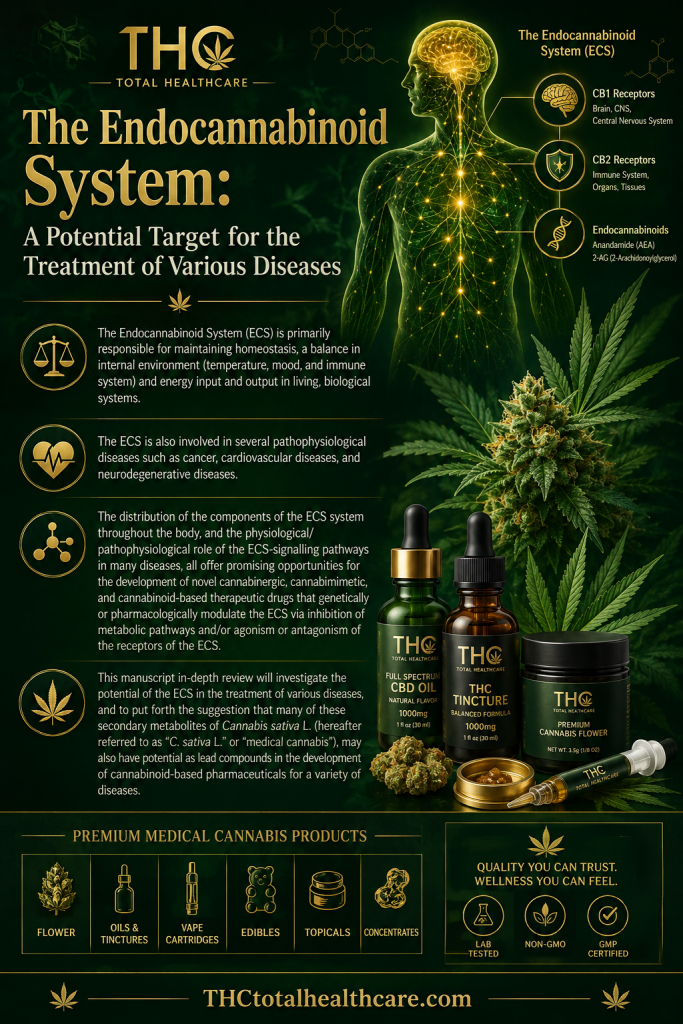
 “The Endocannabinoid System (ECS) is primarily responsible for maintaining homeostasis, a balance in internal environment (temperature, mood, and immune system) and energy input and output in living, biological systems.