
 “Historical relevance: Cannabis sativa L. (C. sativa) is a plant whose use as a therapeutic agent shares its origins with the first Far East’s human societies. Cannabis has been used not only for recreational purposes, but as a food to obtain textile fibers, to produce hemp paper, to treat many physical and mental disorders.
This review aims to provide a complete assessment of the deep knowledge of the cannabis psychoactive effects and medicinal properties in the course of history covering i.) the empirical use of the seeds and the inflorescences to treat many physical ailments by the ancient Oriental physicians ii.) the current use of cannabis as a therapeutic agent after the discovery of its key psychoactive constituent and the human endogenous endocannabinoid system.
Results and conclusion: Through a detailed analysis of the available resources about the origins of C. sativa we found that its use by ancient civilizations as a source of food and textile fibers dates back over 10,000 years, while its therapeutic applications have been improved over the centuries, from the ancient East medicine of the 2nd and 1st millennium B.C. to the more recent introduction in the Western world after the 1st century A.D. In the 20th and 21th centuries, Cannabis and its derivatives have been considered as a menace and banned throughout the world, but nowadays they are still the most widely consumed illicit drugs all over the world. Its legalization in some jurisdictions has been accompanied by new lines of research to investigate its possible applications for medical and therapeutic purposes.”
 “HIV infection affects an estimated 38 million people. Approximately 50% of HIV patients exhibit neurocognitive dysfunction termed HIV-Associated Neurocognitive Disorder (HAND). HAND is a consequence of chronic low-level neuroinflammation due to HIV entry into the brain. Initially, monocytes become activated in circulation and traffic to the brain. Monocytes, when activated, become susceptible to infection by HIV and can then carry the virus across the blood brain barrier. Once in the brain, activated monocytes secrete chemokines, which recruit virus-specific CD8+ T cells into the brain to further promote neuroinflammation. HAND is closely linked to systemic inflammation driven, in part, by HIV but is also due to persistent translocation of microorganisms across the GI tract. Persistent anti-viral responses in the GI tract compromise microbial barrier integrity. Indeed, HIV patients can exhibit remarkably high levels of activated (CD16+) monocytes in circulation.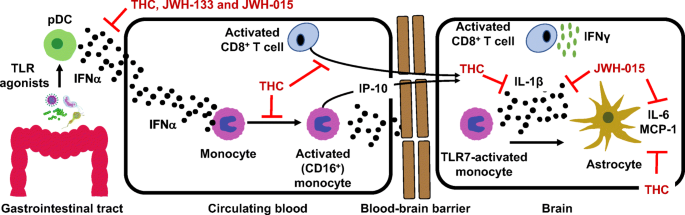
 “Cannabis sativa and its principal components, Δ9-tetrahydrocannabinol (Δ9-THC) and
  “Cannabis sativa is an aromatic annual flowering plant with several botanical varieties, used for different purposes, like the production of fibers, the production of oil from the seeds, and especially for recreational or medical purposes.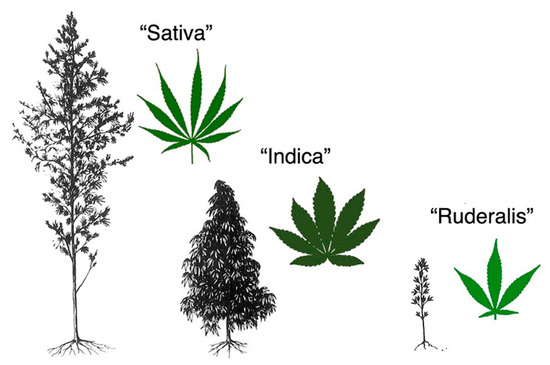
 “Borderline Personality Disorder (BPD) is a chronic debilitating psychiatric disorder characterized mainly by emotional instability, chaotic interpersonal relationships, cognitive disturbance (e.g. dissociation and suicidal thoughts) and maladaptive behaviors. BPD has a high rate of comorbidity with other mental disorders and high burden on society.
 “The pathophysiological relevance of the endocannabinoid system has been widely demonstrated in a variety of diseases including cancer, neurological disorders, and metabolic issues. Therefore, targeting the receptors and the endogenous machinery involved in this system can provide a successful therapeutic outcome.
 “The societal burden of ischemic stroke suggests a need for additional therapeutic categories in stroke prevention.