“Although several lines of evidence support the hypothesis of a dysregulation of serotoninergic neurotransmission in the pathophysiology of obsessive-compulsive disorder (OCD), there is also evidence for an involvement of other pathways such as the GABAergic, glutamatergic, and dopaminergic systems.
Only recently, data obtained from a small number of animal studies alternatively suggested an involvement of the endocannabinoid system in the pathophysiology of OCD reporting beneficial effects in OCD-like behavior after use of substances that stimulate the endocannabinoid system.
In humans, until today, only two case reports are available reporting successful treatment with dronabinol (tetrahydrocannabinol, THC), an agonist at central cannabinoid CB1 receptors, in patients with otherwise treatment refractory OCD. In addition, data obtained from a small open uncontrolled trial using the THC analogue nabilone suggest that the combination of nabilone plus exposure-based psychotherapy is more effective than each treatment alone.
These reports are in line with data from a limited number of case studies and small controlled trials in patients with Tourette syndrome (TS), a chronic motor and vocal tic disorder often associated with comorbid obsessive compulsive behavior (OCB), reporting not only an improvement of tics, but also of comorbid OCB after use of different kinds of cannabis-based medicines including THC, cannabis extracts, and flowers.
Here we present the case of a 22-year-old male patient, who suffered from severe OCD since childhood and significantly improved after treatment with medicinal cannabis with markedly reduced OCD and depression resulting in a considerable improvement of quality of life. In addition, we give a review of current literature on the effects of cannabinoids in animal models and patients with OCD and suggest a cannabinoid hypothesis of OCD.”
https://pubmed.ncbi.nlm.nih.gov/32848902/
https://www.frontiersin.org/articles/10.3389/fpsyt.2020.00681/full
 “Posttraumatic stress disorder (PTSD) may stem from the formation of aberrant and enduring aversive memories. Some PTSD patients have recreationally used Cannabis, probably aiming at relieving their symptomatology.
 “In this study, we investigated the effects of exposition to IC50 dose for 24 h of a new synthetic cannabinoid (CB83) and of phytocannabinoids Δ9-tetrahydrocannabinol (THC) and cannabidiol (CBD) on HT-29 colorectal carcinoma cells. Cell viability and proliferative activity evaluated using the MTT, lactate dehydrogenase (LDH), and CyQUANT assays showed that cell viability was significantly affected when CB83, THC, and CBD were administered to cells.
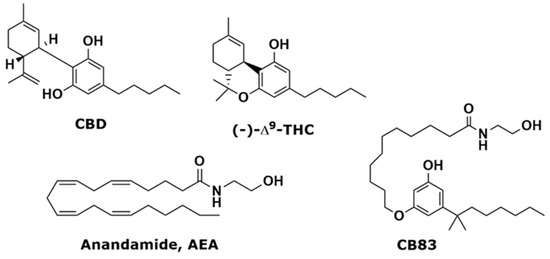
 “Cannabinoid CB2 receptor (CB2) agonists are potential analgesics void of psychotropic effects.
 “Chronic ethanol abuse can lead to harmful consequences for the heart, resulting in systolic dysfunction, variability in the heart rate, arrhythmia, and cardiac remodelling. However, the precise molecular mechanism responsible for ethanol-induced cardiomyopathy is poorly understood. In this regard, the present study aimed to describe the RIP1/RIP3/MLKL-mediated necroptotic cell death that may be involved in ethanol-induced cardiomyopathy and characterize CBR-mediated effects on the signalling pathway and myocardial injury.
 “Cannabinoids (CBs), analgesic drugs used for thousands of years, were first found in Cannabis sativa, and the multiple CBs used medicinally, such as tetrahydrocannabinol (THC), cannabidiol (CBD) and dozens more, have complex structures. In addition to their production by plants, CBs are naturally present in the nerves and immune systems of humans and animals.
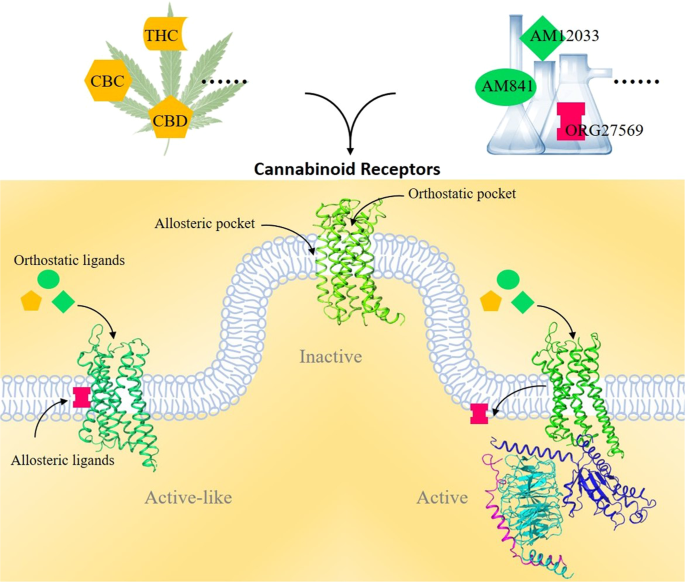
 “In recent years, the role of the endocannabinoid system (ECS) in various cardiovascular conditions has been a subject of great interest. The ECS is composed of cannabinoid receptors, their endogenous ligands, also known as endocannabinoids, and enzymes responsible for the synthesis and degradation of endocannabinoids.
 “During the last decades, researchers have investigated the functional relevance of adult hippocampal neurogenesis in normal brain function as well as in the pathogenesis of diverse psychiatric conditions.
 “Thirty years ago, the discovery of a cannabinoid (CB) receptor that interacts with the psychoactive compound in Cannabis led to the identification of anandamide, an endogenous receptor ligand or endocannabinoid. Research on endocannabinoids has since exploded, and additional receptors along with their lipid mediators and signaling pathways continue to be revealed. Specifically, in humans, the release of endocannabinoids from membrane lipids occurs on demand and the signaling process is rapidly attenuated by the breakdown of the ligand suggesting a tight regulation of the endocannabinoid system (ECS). Additionally, the varying distribution of CB receptors between the central nervous system and other tissues allows for the ECS to participate in a wide range of cognitive and physiological processes. Select plant-derived ‘phyto’cannabinoids such as Δ-9-tetrahydrocannabinol (Δ9-THC) bind to the CB receptors and trigger the ECS, and in the case of Δ9-THC, while it has therapeutic value, can also produce detrimental effects. Current research is aimed at the identification of additional phytocannabinoids with minimal psychotropic effects with potential for therapeutic development. Although decades of research on the ECS and its components have expanded our understanding of the mechanisms and implications of endocannabinoid signaling in mammals, it continues to evolve. Here, we provide a brief overview of the ECS and its overlap with other related lipid-mediated signaling pathways.”