
 “Background: Little is known about medical cannabis (MC)-related care for patients with cancer using MC.
Methods: Semistructured telephone interviews were conducted in a convenience sample of individuals (n = 24) with physician-confirmed oncologic diagnoses and state/district authorization to use MC (Arizona, California, Florida, Illinois, Massachusetts, Oregon, New York, and Washington, DC) from April 2017 to March 2019. Standard qualitative techniques were used to assess the degree of MC-related health care oversight, MC practices, and key information sources.
Results: Among 24 participants (median age, 57 years; range, 30-71 years; 16 women [67%]), MC certifications were typically issued by a professional new to a patient’s care after a brief, perfunctory consultation. Patients disclosed MCuse to their established medical teams but received little medical advice about whether and how to use MC. Patients with cancer used MC products as multipurpose symptom management and as cancer-directed therapy, sometimes in lieu of standard-of-care treatments. Personal experimentation, including methodical self-monitoring, was an important source of MC know-how. Absent formal advice from medical professionals, patients relied on nonmedical sources for MC information.
Conclusions: Patients with cancer used MC with minimal medical oversight. Most received MC certifications through brief meetings with unfamiliar professionals. Participants desired but were often unable to access high-quality clinical information about MC from their established medical teams. Because many patients are committed to using MC, a product sustained by a growing industry, medical providers should familiarize themselves with the existing data for MM and its limitations to address a poorly met clinical need.”
https://pubmed.ncbi.nlm.nih.gov/32986266/
“Notably, oncology patients reported using medical cannabis (MC) for symptom management and as cancer‐directed therapy, sometimes instead of traditional treatments.”
https://acsjournals.onlinelibrary.wiley.com/doi/10.1002/cncr.33202
 “∆ 9 -Tetrahydrocannabinol (∆9 -THC), the active phytocannabinoid in cannabis, is virtually an adjunct to the endogenous endocannabinoid signaling system.
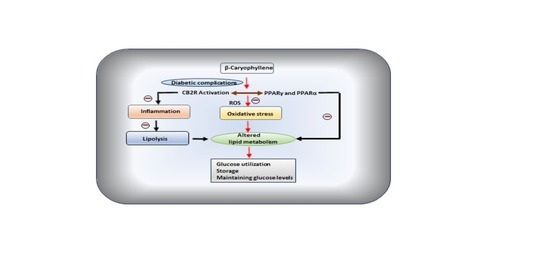
 “Diabetes mellitus (DM), a metabolic disorder is one of the most prevalent chronic diseases worldwide across developed as well as developing nations. Hyperglycemia is the core feature of the type 1 diabetes mellitus (T1DM) and type 2 diabetes mellitus (T2DM), following insulin deficiency and impaired insulin secretion or sensitivity leads insulin resistance (IR), respectively. Genetic and environmental factors attributed to the pathogenesis of DM and various therapeutic strategies are available for the prevention and treatment of T2DM.
 “Studies that have analyzed the association between cannabis use and acute ischemic stroke (AIS) have provided conflicting results.

 “Fibromyalgia is a complex disease process that is as prevalent as it is poorly understood. Research into the pathophysiology is ongoing, and findings will likely assist in identifying new therapeutic options to augment those in existence today that are still insufficient for the care of a large population of patients.
 “Fish oil (FO) and phytocannabinoids have received considerable attention for their intestinal anti-inflammatory effects.
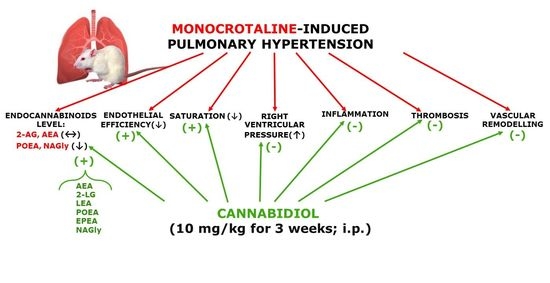
 “Cannabidiol (CBD) is known for its vasorelaxant (including in the human pulmonary artery), anti-proliferative and anti-inflammatory properties. The aim of our study was to examine the potential preventive effect of chronic CBD administration (10 mg/kg/day for three weeks) on monocrotaline (MCT)-induced pulmonary hypertension (PH) rats.
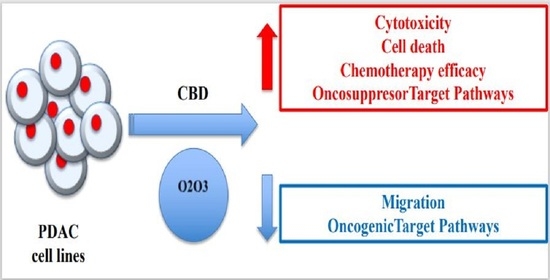
 “Pancreatic cancer (PC) is related to lifestyle risks, chronic inflammation, and germline mutations in BRCA1/2, ATM, MLH1, TP53, or CDKN2A. Surgical resection and adjuvant chemotherapy are the main therapeutic strategies but are less effective in patients with high-grade tumors.
 “In recent years there has been a growing appreciation by regulatory authorities that cannabis-based medicines can play a useful role in disease therapy.