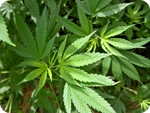
Cognitive damage halted by THC in marijuana, Israeli reseachers discover

“Marijuana is a well-known recreational drug with much of its notoriety and controversy arise from its use as a psychoactive drug, however, scientific research into the therapeutic value has increased within the last 10 years revealing cannabis’ remarkable capability to combat disease.”
 
Medical Marijuana  


Marijuana component can halt brain damage

“Extremely low doses of THC, the psychoactive component of marijuana, protects the brain from long-term cognitive damage in case of injury from hypoxia (lack of oxygen), seizures, or toxic drugs, a new study has claimed.

Medical cannabis is often used by sufferers of chronic ailments, including cancer and post-traumatic stress disorder, to combat pain, insomnia, lack of appetite, and other symptoms.

Now, Professor Yosef Sarne of Tel Aviv University’s Adelson Center for the Biology of Addictive Diseases at the Sackler Faculty of Medicine in US found the drug has neuroprotective qualities as well.

Previous studies focused on injecting high doses of THC within a very short time frame approximately 30 minutes before or after injury.

Sarne’s current research, published in the journals Behavioural Brain Research and Experimental Brain Research, demonstrates that even extremely low doses of THC around 1,000 to 10,000 times less than that in a conventional marijuana cigarette administered over a wide window of 1 to 7 days before or 1 to 3 days after injury can jump start biochemical processes which protect brain cells and preserve cognitive function over time.

This treatment, especially in light of the long time frame for administration and the low dosage, could be applicable to many cases of brain injury and be safer over time, Sarne said.

While performing experiments on the biology of cannabis, researchers found that low doses of the drug had a big impact on cell signalling, preventing cell death and promoting growth factors.

This finding led to a series of experiments designed to test the neuroprotective ability of THC in response to various brain injuries.

In the lab, the researchers injected mice with a single low dose of THC either before or after exposing them to brain trauma. A control group of mice sustained brain injury but did not receive the THC treatment.”

http://www.indianexpress.com/news/marijuana-component-can-halt-brain-damage/1123274/

Low doses of marijuana component can protect brain against injury

Low doses of marijuana component can protect brain against injury


“Though marijuana is a well-known recreational drug, extensive scientific research has been conducted on the therapeutic properties of marijuana in the last decade. Medical cannabis is often used by sufferers of chronic ailments, including cancer and post-traumatic stress disorder, to combat pain, insomnia, lack of appetite, and other symptoms.

Now Prof. Yosef Sarne of Tel Aviv University’s Adelson Center for the Biology of Addictive Diseases at the Sackler Faculty of Medicine says that the drug has neuroprotective qualities as well. He has found that extremely low doses of THC—the psychoactive component of marijuana—protects the brain from long-term cognitive damage in the wake of injury from hypoxia (lack of oxygen), seizures, or toxic drugs. Brain damage can have consequences ranging from mild cognitive deficits to severe neurological damage.

Previous studies focused on injecting high doses of THC within a very short time frame—approximately 30 minutes—before or after injury. Prof. Sarne’s current research, published in the journals Behavioural Brain Research and Experimental Brain Research, demonstrates that even extremely low doses of THC—around 1,000 to 10,000 times less than that in a conventional marijuana cigarette—administered over a wide window of 1 to 7 days before or 1 to 3 days after injury can jumpstart biochemical processes which protect brain cells and preserve cognitive function over time.

This treatment, especially in light of the long time frame for administration and the low dosage, could be applicable to many cases of brain injury and be safer over time…”

More: http://medicalxpress.com/news/2013-05-doses-marijuana-component-brain-injury.html

Marijuana’s THC Can Halt Brain Damage

Cannabis. Image: Hupu2, Wikimedia

“Though marijuana is a well-known recreational drug, extensive scientific research has been conducted on the therapeutic properties of marijuana in the last decade. Medical cannabis is often used by sufferers of chronic ailments, including cancer and post-traumatic stress disorder, to combat pain, insomnia, lack of appetite and other symptoms.

Now Prof. Yosef Sarne of Tel Aviv Univ.’s Adelson Center for the Biology of Addictive Diseases at the Sackler Faculty of Medicine says that the drug has neuroprotective qualities as well. He has found that extremely low doses of THC — the psychoactive component of marijuana — protects the brain from long-term cognitive damage in the wake of injury from hypoxia (lack of oxygen), seizures or toxic drugs. Brain damage can have consequences ranging from mild cognitive deficits to severe neurological damage.

Previous studies focused on injecting high doses of THC within a very short time frame — approximately 30 minutes — before or after injury. Sarne’s current research, published in the journals Behavioural Brain Research and Experimental Brain Research, demonstrates that even extremely low doses of THC — around 1,000 to 10,000 times less than that in a conventional marijuana cigarette — administered over a wide window of one to seven days before or one to three days after injury can jumpstart biochemical processes which protect brain cells and preserve cognitive function over time.

This treatment, especially in light of the long time frame for administration and the low dosage, could be applicable to many cases of brain injury and be safer over time, Sarne says.”

More: http://www.laboratoryequipment.com/news/2013/05/marijuanas-thc-can-halt-brain-damage

Is marijuana bad for you?

“Hasn’t pot always been considered harmful?
Not at all. Marijuana, the dried form of the plant Cannabis sativa, was used as an herbal remedy for centuries in China, the Middle East, and Asia. William O’Shaughnessy, a physician for the East India Tea Company, brought it west in the 1830s as a treatment for rheumatism, tetanus, and rabies. It was commonly prescribed as a pain reliever in the U.S. until the 1930s, when its growing popularity caused such concern that the newly founded Federal Bureau of Narcotics reclassified it as a narcotic. The bureau soon launched a decidedly unscientific campaign claiming that marijuana use provoked insanity, homicidal tendencies, and uncontrollable lust. The marijuana user, the bureau asserted, “becomes a fiend with savage or ‘caveman’ tendencies. His sex desires are aroused, and some of the most horrible crimes result.””

Adolescents who smoked marijuana at least four times a week, lost an average of 8 IQ points between the ages of 13 and 38, according to a study from New Zealand.

“Was there any evidence for such claims?
None; in fact, the American Medical Association argued against marijuana prohibition in the 1930s, citing its therapeutic potential. But the bureau made its case that marijuana was “dangerous for the mind and the body,” and the federal government outlawed its use in 1937. It wasn’t until the 1970s that a campaign began to restore marijuana’s therapeutic reputation, and in 1996 California became the first state to legalize cannabis for medicinal purposes. Psychiatrist Tod Mikuriya, a founding father in the medical marijuana movement, claimed that cannabis has none of the adverse side effects of opiates. “In fact,” he said, “it really enhances both quality of life and rehabilitation.””

More: http://theweek.com/article/index/236671/is-marijuana-bad-for-you

Marijuana Vaporizer Provides Same Level Of THC, Fewer Toxins, Study Shows

“A smokeless cannabis-vaporizing device delivers the same level of active therapeutic chemical and produces the same biological effect as smoking cannabis…

…smoked cannabis can alleviate the chronic pain caused by HIV-related neuropathy, but a concern was expressed that smoking cannabis was not safe. This study demonstrates an alternative method that gives patients the same effects and allows controlled dosing but without inhalation of the toxic products in smoke,” said study lead author Donald I. Abrams, MD, UCSF professor of clinical medicine.

…pills tend to provide patients with more THC than they need for optimal therapeutic effect and increase side effects.

Patients rated the “high” they experienced from both smoking and vaporization and there was no difference between the two methods by patient self-report of the effect, according to study findings. In addition, patients were asked which method they preferred.

“By a significant majority, patients preferred vaporization to smoking, choosing the route of delivery with the fewest side effects and greatest efficiency,” said Benowitz.”

Read more: http://www.sciencedaily.com/releases/2007/05/070515151145.htm

Bogarting that joint might decrease oral hpv among cannabis users

Logo of curroncol

“The development of oral cancer is not a result of smoking cannabis per se; rather, it is hypothesized to be a result of contracting hpv through various forms of sharing and passing joints and other smoking apparatuses. Therefore, it is hypothesized that bogarting (and not passing) joints might decrease oral hpv among cannabis smokers.

It certainly may not be the cannabis smoke that causes oral cancers in heavy cannabis users. Most people who have ever smoked cannabis have most likely done so by sharing a rolled cigarette or pipe in a group setting. The sharing and passing of these smoking devices from an oral hpv-infected individual to an uninfected individual could easily provide a route of transmission for the virus between users. Frequency and setting should therefore be considered two major factors that might contribute to the likelihood of acquiring oral hpv.

Thus, the relationship between cannabis and various cancer types might not be from cannabis use itself, but rather from contracting high-risk types of oral hpv that lead to cancer in later life.”

http://www.ncbi.nlm.nih.gov/pmc/articles/PMC2794675/

Bladder Cancer Risk Lower in Pot Smokers – Renal & Urology News

“For the first time, a study has found that cannabis use may be associated with a decreased risk of bladder cancer,  researchers reported at the American Urological Association 2013 annual meeting.

In a study of nearly 82,000 men, bladder cancer developed in 279 over an 11-year period. Subjects who smoked marijuana, but not tobacco, had a significant 45% decreased risk of bladder cancer compared with those who did not, after adjusting for age, body mass index, and race and ethnicity, according to lead investigator Anil A. Thomas, MD, a researcher with Southern California Permanent Medical Group in Los Angeles. Men who smoked tobacco, but not marijuana, had a significant 52% increased risk, a finding that is consistent with numerous previous studies. Men who smoked both had a 28% increased risk.

Of the 82,000 men, 41% reported ever using marijuana and 57% reported tobacco use; 27% reported used both tobacco and marijuana.”

http://www.renalandurologynews.com/bladder-cancer-risk-lower-in-pot-smokers/article/292174/#

“Association Between Cannabis Use and the Risk of Bladder Cancer: Results From the California Men’s Health Study.”  http://www.ncbi.nlm.nih.gov/pubmed/25623697

http://www.thctotalhealthcare.com/category/bladder-cancer/

Cannabis smokers show greater lung capacity and lower cancer levels than non-smokers

“For many years, the demonizing claims being made against cannabis have been crumbling as research slowly dispels them. Fifty years ago people earnestly believed that the consumption of cannabis was directly linked to the development of an array of mental illnesses, and violent and hypersexual behavior.”
 
cannabis
 

 “Rewriting the medical records

The results of a new government-run research program are now forcing medical authorities to overturn these beliefs. The study has been ongoing for the past twenty years, following the smoking habits of over 5000 people.
 
 Researchers found that, contrary to popular belief, smoking cannabis, does not interfere with lung function or capacity. This holds true for ongoing regular -even including daily- and long term consumption.
 
 Curiously, as a general rule, cannabis smokers had better lung function than nonsmokers, which researchers attribute to the smoking action itself, rather than the cannabis. Pot smokers inhale deeply and hold those breaths to make the most of their supply, expanding the lung’s capacity.Dr. Tashkin found that, in almost all instances, cannabis consumers had rates of cancer that were no different from those who didn’t smoke cannabis. The one exception to this rule was between cannabis smokers and individuals who didn’t smoke anything (including tobacco), in which marijuana smokers actually had lower levels of lung cancer.” 


Marijuana habit not linked to lung cancer – The Oncology Report

“Regular cannabis smokers are no more likely to develop lung cancer than are people who indulge occasionally.

The finding of no significant increased risk held true whether the smokers imbibed once or twice – or more – each day, and regardless of how many years they had smoked, Dr. Li Rita Zhang reported at the annual meeting of the American Association of Cancer Research.

The study included data from six case-control studies conducted from 1999 to 2012 in the United States, Canada, the United Kingdom, and New Zealand, with a subject pool of 2,159 lung cancer cases and 2,985 controls. All of the studies were part of the International Lung Cancer Consortium (ILCCO), an international group of lung cancer researchers with the aim of sharing comparable data from ongoing and recently completed lung cancer studies from different geographical areas and ethnicities.

More: http://www.oncologypractice.com/oncologyreport/news/top-news/single-view/marijuana-habit-not-linked-to-lung-cancer/73840afd2cca226b9e6a9ddc7cb0d039.html