
Chronic treatment with cannabidiolic acid (CBDA) reduces thermal pain sensitivity in male mice and rescues the hyperalgesia in a mouse model of Rett syndrome

Neuroscience “Rett syndrome (RTT) is a rare neurologic disorder, characterized by severe behavioural and physiological symptoms. RTT is caused by mutations in the MECP2 gene in about 95% of cases and to date no cure is available.

Recent evidence suggests that non-euphoric phytocannabinoids (pCBs) extracted from Cannabis sativa may represent innovative therapeutic molecules for RTT, with the cannabinoid cannabidivarin having beneficial effects on behavioural and brain molecular alterations in RTT mouse models.

The present study evaluated the potential therapeutic efficacy for RTT of cannabidiolic acid (CBDA; 0.2, 2, 20 mg/kg through intraperitoneal injections for 14 days), a pCB that has proved to be effective for the treatment of nausea and anxiety in rodents.

This study demonstrates that systemic treatment with the low dose of CBDA has anti-nociceptive effects and reduces the thermal hyperalgesia in 8-month old MeCP2-308 male mice, a validated RTT mouse model. CBDA did not affect other behavioural or molecular parameters.

These results provide support to the antinociceptive effects of CBDA and stress the need for further studies aimed at clarifying the mechanisms underlying the abnormal pain perception in RTT.”

https://pubmed.ncbi.nlm.nih.gov/33010341/

“Chronic treatment with CBDA reduces pain sensitivity in wild type mice.”

https://www.sciencedirect.com/science/article/abs/pii/S0306452220306254?via%3Dihub

An Agathokakological tale of ∆9 -THC: Exploration of Possible Biological Targets

“∆ 9 -Tetrahydrocannabinol (∆9 -THC), the active phytocannabinoid in cannabis, is virtually an adjunct to the endogenous endocannabinoid signaling system.

By interacting with G-protein-coupled receptors CB1 and CB2, ∆9 -THC affects peripheral and central circulation by lowering sympathetic activity, altering gene expression, cell proliferation, and differentiation, decreasing leukocyte migration, modulating neurotransmitter release thereby modulating cardiovascular functioning, tumorigenesis, immune responses, behavioral and locomotory activities respectively.

∆ 9 -THC is effective in suppressing chemotherapy-induced vomiting, retards malignant tumor growth, inhibits metastasis, and promotes apoptosis. Other mechanisms involved are targeting cell cycle at the G2-M phase in human breast cancer, downregulation of E2F transcription factor 1 (E2F1) in human glioblastoma multiforme, and stimulation of ER stress-induced autophagy.

∆ 9 -THC also plays a role in ameliorating neuroinflammation, excitotoxicity, neuroplasticity, trauma, and stroke and is associated with reliving childhood epilepsy, brain trauma, and neurodegenerative diseases.

∆9 -THC via CB1 receptors affects nociception, emotion, memory, and reduces neuronal excitability and excitotoxicity in epilepsy. It also increases renal blood flow, reduces intraocular pressure via a sympathetic pathway, and modulates hormonal release, thereby decreasing the reproductive function and increasing glucose metabolism.

Versatile medical marijuana has stimulated abundant research demonstrating substantial therapeutic promise, suggesting the possibilities of first-in-class drugs in diverse therapeutic segments. In this review, we represent the current pharmacological status of the phytocannabinoid, ∆ 9 -THC, and synthetic analogs in cancer, cardiovascular, and neurodegenerative disorders.”

https://pubmed.ncbi.nlm.nih.gov/33001012/

https://www.eurekaselect.com/186455/article

Efficacy of combined therapy with fish oil and phytocannabinoids in murine intestinal inflammation

Phytotherapy Research“Fish oil (FO) and phytocannabinoids have received considerable attention for their intestinal anti-inflammatory effects.
We investigated whether the combination of FO with cannabigerol (CBG) and cannabidiol (CBD) or a combination of all three treatments results in a more pronounced intestinal antiinflammatory action compared to the effects achieved separately.

Colitis was induced in mice by 2,4-dinitrobenzenesulfonic acid (DNBS). CBD and CBG levels were detected and quantified by liquid chromatography coupled with time of flight mass spectrometry and ion trap mass spectrometry (LC-MS-IT-TOF). Endocannabinoids and related mediators were assessed by LC-MS. DNBS increased colon weight/colon length ratio, myeloperoxidase activity, interleukin-1β, and intestinal permeability.

CBG, but not CBD, given by oral gavage, ameliorated DNBS-induced colonic inflammation. FO pretreatment (at the inactive dose) increased the antiinflammatory action of CBG and rendered oral CBD effective while reducing endocannabinoid levels. Furthermore, the combination of FO, CBD, and a per se inactive dose of CBG resulted in intestinal anti-inflammatory effects. Finally, FO did not alter phytocannabinoid levels in the serum and in the colon.

By highlighting the apparent additivity between phytocannabinoids and FO, our preclinical data support a novel strategy of combining these substances for the potential development of a treatment of inflammatory bowel disease.”

https://pubmed.ncbi.nlm.nih.gov/32996187/

https://onlinelibrary.wiley.com/doi/10.1002/ptr.6831

Novel cannabidiol sunscreen protects keratinocytes and melanocytes against ultraviolet B radiation

“Cannabidiol (CBD), a natural occurring phytocannabinoid, is used extensively in consumer products ranging from foods to shampoos, topical oils and lotions.
Several studies demonstrated the anti-inflammatory and antioxidative properties of cannabidiol. Nevertheless, the role of cannabidiol use in sunscreens is largely unknown as no studies on its effect on keratinocytes or melanocytes exist. As such, we aimed to explore the effect of CBD on keratinocyte and melanocyte viability following ultraviolet B (UVB) irradiation.

CBD exhibited a dose-dependent protective effect on both keratinocytes and melanocyte viability. Further, since CBD does not demonstrate absorption in the UVB spectra, we speculate that the protective effect is due to reduction in reactive oxygen species.

To our knowledge, this is the first study demonstrating the protective effect of CBD on keratinocytes and melanocytes irradiated with UVB.”

https://pubmed.ncbi.nlm.nih.gov/32964699/

https://onlinelibrary.wiley.com/doi/10.1111/jocd.13693

A pediatric patient with autism spectrum disorder and epilepsy using cannabinoid extracts as complementary therapy: a case report

 Journal of Medical Case Reports | Home page“The pharmacological treatment for autism spectrum disorders is often poorly tolerated and has traditionally targeted associated conditions, with limited benefit for the core social deficits.

We describe the novel use of a cannabidiol-based extract that incidentally improved core social deficits and overall functioning in a patient with autism spectrum disorder, at a lower dose than has been previously reported in autism spectrum disorder.

Case presentation: The parents of a 15-year-old boy, of South African descent, with autism spectrum disorder, selective mutism, anxiety, and controlled epilepsy, consulted a medical cannabis physician to trial cannabis extract to replace seizure medications. Incidentally, at a very low cannabidiol-based extract dose, he experienced unanticipated positive effects on behavioral symptoms and core social deficits.

Conclusion: This case report provides evidence that a lower than previously reported dose of a phytocannabinoid in the form of a cannabidiol-based extract may be capable of aiding in autism spectrum disorder-related behavioral symptoms, core social communication abilities, and comorbid anxiety, sleep difficulties, and weight control. Further research is needed to elucidate the clinical role and underlying biological mechanisms of action of cannabidiol-based extract in patients with autism spectrum disorder.”

https://pubmed.ncbi.nlm.nih.gov/32958062/

https://jmedicalcasereports.biomedcentral.com/articles/10.1186/s13256-020-02478-7

Cannabidiol-Mediated Changes to the Phospholipid Profile of UVB-Irradiated Keratinocytes from Psoriatic Patients

ijms-logo“UVB phototherapy is treatment for psoriasis, which increases phospholipid oxidative modifications in the cell membrane of the skin. Therefore, we carried out lipidomic analysis on the keratinocytes of healthy individuals and patients with psoriasis irradiated with UVB and treated with cannabidiol (CBD), phytocannabinoid with antioxidant and anti-inflammatory properties.
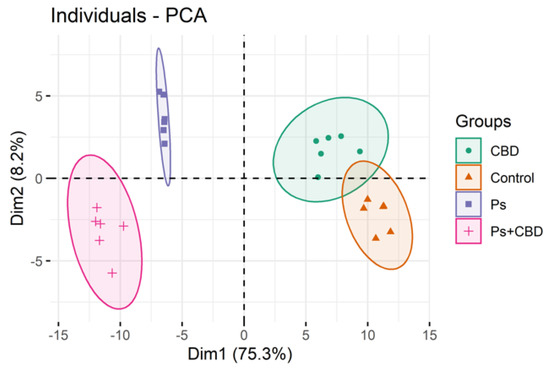

Our results showed that, in psoriatic keratinocytes phosphatidylcholine (PC), phosphatidylinositol (PI), phosphatidylserine (PS), and ether-linked phosphoethanolamine (PEo), were downregulated, while SM (d41:2) was upregulated. These changes were accompanied by an increase in negative zeta potential, which indicates translocation of PS to the outer layer of the membrane.

CBD treatment of psoriatic keratinocytes led to downregulation of PC, PS, and upregulation of certain PEo and an SM species, SM (d42:2), and the zeta potential. However, UVB irradiation of psoriatic keratinocytes resulted in upregulation of PC, PC plasmalogens (PCp), PEo, and a decrease in the negative zeta potential. The exposure of UVB-irradiated cells to CBD led to a decrease in the level of SM (d42:2).

Our results suggest that CBD induces pro-apoptotic mechanisms in psoriatic keratinocytes while simultaneously improving the antioxidant properties and preventing the loss of transepidermal water of keratinocytes of patients irradiated with UVB. Thus, CBD has potential therapeutic value in the treatment of psoriasis.”

https://pubmed.ncbi.nlm.nih.gov/32916896/

https://www.mdpi.com/1422-0067/21/18/6592

It Is Our Turn to Get Cannabis High: Put Cannabinoids in Food and Health Baskets

molecules-logo“Cannabis is an annual plant with a long history of use as food, feed, fiber, oil, medicine, and narcotics. Despite realizing its true value, it has not yet found its true place. Cannabis has had a long history with many ups and downs, and now it is our turn to promote it.
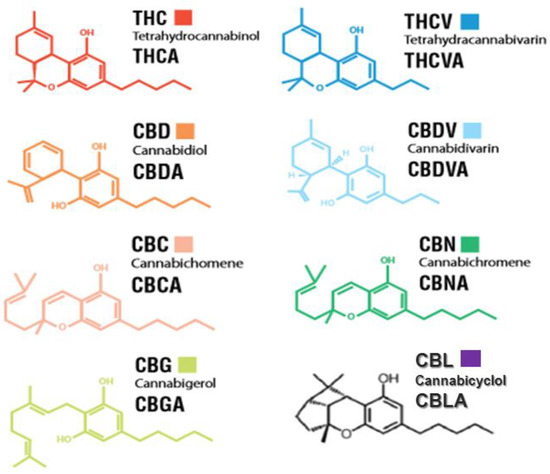
Cannabis contains approximately 600 identified and many yet unidentified potentially useful compounds. Cannabinoids, phenolic compounds, terpenoids, and alkaloids are some of the secondary metabolites present in cannabis. However, among a plethora of unique chemical compounds found in this plant, the most important ones are phytocannabinoids (PCs).

Over hundreds of 21-22-carbon compounds exclusively produce in cannabis glandular hairs through either polyketide and or deoxyxylulose phosphate/methylerythritol phosphate (DOXP/MEP) pathways. Trans-Δ9-tetrahydrocannabinol (Δ9-THC) and cannabidiol (CBD) are those that first come to mind while talking about cannabis. Nevertheless, despite the low concentration, cannabinol (CBN), cannabigerol (CBG), cannabichromene (CBC), tetrahydrocannabivarin (THCV), cannabidivarin (CBDV), cannabinodiol (CBND), and cannabinidiol (CBDL) may have potentially some medical effects.

PCs and endocannabinoids (ECs) mediate their effects mainly through CB1 and CB2 receptors. Despite all concerns regarding cannabis, nobody can ignore the use of cannabinoids as promising tonic, analgesic, antipyretic, antiemetic, anti-inflammatory, anti-epileptic, anticancer agents, which are effective for pain relief, depression, anxiety, sleep disorders, nausea and vomiting, multiple sclerosis, cardiovascular disorders, and appetite stimulation.

The scientific community and public society have now increasingly accepted cannabis specifically hemp as much more than a recreational drug. There are growing demands for cannabinoids, mainly CBD, with many diverse therapeutic and nutritional properties in veterinary or human medicine. The main objective of this review article is to historically summarize findings concerning cannabinoids, mainly THC and CBD, towards putting these valuable compounds into food, feed and health baskets and current and future trends in the consumption of products derived from cannabis.”

https://pubmed.ncbi.nlm.nih.gov/32899626/

https://www.mdpi.com/1420-3049/25/18/4036

A Comparative In Vitro Study of the Neuroprotective Effect Induced by Cannabidiol, Cannabigerol, and Their Respective Acid Forms: Relevance of the 5-HT 1A Receptors

 SpringerLink“Previous preclinical studies have demonstrated that cannabidiol (CBD) and cannabigerol (CBG), two non-psychotomimetic phytocannabinoids from Cannabis sativa, induce neuroprotective effects on toxic and neurodegenerative processes.

Our results contribute to the understanding of the neuroprotective effect of CBD and CBG, showing differences with their acid forms, and also highlight the role of 5-HT1A receptors in the mechanisms of action of CBG.”

https://pubmed.ncbi.nlm.nih.gov/32886342/

https://link.springer.com/article/10.1007%2Fs12640-020-00277-y

Cannabidiol (CBD): a killer for inflammatory rheumatoid arthritis synovial fibroblasts

 Cell Death & Disease“Cannabidiol (CBD) is a non-intoxicating phytocannabinoid from cannabis sativa that has demonstrated anti-inflammatory effects in several inflammatory conditions including arthritis.

In this study, we show that CBD increases intracellular calcium levels, reduces cell viability and IL-6/IL-8/MMP-3 production of rheumatoid arthritis synovial fibroblasts (RASF).

CBD reduced cell viability, proliferation, and IL-6/IL-8 production of RASF. Moreover, CBD increased intracellular calcium and uptake of the cationic viability dye PoPo3 in RASF, which was enhanced by pre-treatment with TNF.

Thus, CBD possesses anti-arthritic activity and might ameliorate arthritis via targeting synovial fibroblasts under inflammatory conditions.”

https://pubmed.ncbi.nlm.nih.gov/32873774/

“In conclusion, CBD might be beneficial as an adjuvant treatment in rheumatoid arthritis that might support the action of currently used disease-modifying anti-rheumatic drugs.”

https://www.nature.com/articles/s41419-020-02892-1

Coronavirus Disease-2019 Treatment Strategies Targeting Interleukin-6 Signaling and Herbal Medicine

View details for OMICS: A Journal of Integrative Biology cover image“Coronavirus disease-2019 (COVID-19) pandemic caused by the severe acute respiratory syndrome coronavirus-2 (SARS-CoV-2) is evolving across the world and new treatments are urgently needed as with vaccines to prevent the illness and stem the contagion. The virus affects not only the lungs but also other tissues, thus lending support to the idea that COVID-19 is a systemic disease. The current vaccine and treatment development strategies ought to consider such systems medicine perspectives rather than a narrower focus on the lung infection only.

COVID-19 is associated with elevated levels of the inflammatory cytokines such as interleukin-6 (IL-6), IL-10, and interferon-gamma (IFN-γ). Elevated levels of cytokines and the cytokine storm have been linked to fatal disease. This suggests new therapeutic strategies through blocking the cytokine storm. IL-6 is one of the major cytokines associated with the cytokine storm. IL-6 is also known to display pleiotropic/diverse pathophysiological effects. We suggest the blockage of IL-6 signaling and its downstream mediators such as Janus kinases (JAKs), and signal transducer and activators of transcription (STATs) offer potential hope for the treatment of severe cases of COVID-19. Thus, repurposing of already approved IL-6-JAK-STAT signaling inhibitors as well as other anti-inflammatory drugs, including dexamethasone, is under development for severe COVID-19 cases.

We conclude this expert review by highlighting the potential role of precision herbal medicines, for example, the Cannabis sativa, provided that omics technologies can be utilized to build a robust scientific evidence base on their clinical safety and efficacy. Precision herbal medicine buttressed by omics systems science would also help identify new molecular targets for drug discovery against COVID-19.”

https://pubmed.ncbi.nlm.nih.gov/32857671/

“Cannabis sativa is a plant known to contain anti-inflammatory compounds such as cannabinoid cannabidiol. In addition to other compounds such as terpenes, these compounds have been suggested to have potential anticancer properties. Like other herbal plants, we suggest C. sativa warrants further mechanistic research in relationship to putative effects in COVID-19.”

https://www.liebertpub.com/doi/10.1089/omi.2020.0122