
Add-on cannabidiol significantly decreases seizures in 3 patients with SYNGAP1 developmental and epileptic encephalopathy

“Mutations in SYNGAP1 are associated with developmental delay, epilepsy, and autism spectrum disorder (ASD). Epilepsy is often drug-resistant in this syndrome with frequent drop attacks.

In a prospective study of add-on cannabidiol (CBD), we identified three patients with SYNGAP1 mutations: two boys and one girl. Seizure onset was at 3.5, 8, and 18 months (M), respectively, with numerous atypical absences per day associated with eyelid myoclonia (2/3 patients), upper limb myoclonic jerks (2/3 patients), and drop attacks (all patients). Seizures were resistant to at least 5 antiepileptic drugs (AEDs).

After CBD introduction, two patients were responders since M2 and achieve a seizure reduction of 90% and 80%, respectively, at M9 with disappearance of drop attacks. EEGs showed an improvement regarding background activity and interictal anomalies. The last patient showed a late response at M7 of treatment with an 80% decrease in seizure frequency. Caregiver in all three evaluated as much improved the status of their children. Treatment was well-tolerated in all, and no major adverse events (AEs) were reported.

CBD showed efficacy in patients with drug-resistant epilepsy due to SYNGAP1 mutations. Other patients with rare genetic developmental and epileptic encephalopathies with drug-resistant epilepsies might benefit from CBD.”

https://pubmed.ncbi.nlm.nih.gov/32913957/

“CBD add‐on therapy in patients with SYNGAP1 encephalopathy showed a good response in three patients with a good safety profile and a late response in one patient. This therapy should be included in the treatment algorithm of patients with SYNGAP1 mutations presenting drug resistance epilepsy and might be expanded to other rare genetic epilepsies that might not be included in formal trials.”

https://onlinelibrary.wiley.com/doi/full/10.1002/epi4.12411

Preliminary data on the antimicrobial effect of Cannabis sativa L. variety Futura 75 against food-borne pathogens in vitro as well as against naturally occurring microbial populations on minced meat during storage

 Archive of "Italian Journal of Food Safety".“In the present study, the antimicrobial effect of Cannabis sativa Futura 75 was evaluated both in vitro against foodborne bacterial pathogens, and on food against naturally occurring microbial groups of minced meat stored for 8 days at 4°C.

Ethanol extraction was performed on the grind of the inflorescence. After extraction, ethanol was completely evaporated and substituted by water. Serial dilutions of the extract, the grind and cannabidiol 99% were added to Nutrient Agar and spotted with Listeria monocytogenesSalmonella Typhimurium, Escherichia coli and Staphylococcus spp. Regarding the evaluation on food, 50 mL of extract, characterised by CBD at concentration of 322,70 μg/mL, were added to 2.5 kg of minced beef meat. Meat was divided into aliquots and stored for 8 days at 4°C. At 0, 1, 2, 3, 4, 7, and 8 days, aerobic bacteria, enterobacteria, coliforms and E. coli were enumerated.

All tested products were efficient against Gram +. In particular, extract corresponding to CBD concentration of 0.017 and 0.3 mg/mL were effective against L. monocytogenes and Staphylococcus spp. respectively. After 8 days of storage at 4°C, treated minced meat showed a bright red colour in comparison to a brownish control meat. Moreover, Enterobacteriaceae and coliforms were significantly reduced of 2.3 log CFU/g and 1.6 log CFU/g respectively in treated meat in comparison to the control.

Although preliminary, the present study suggests the antimicrobial properties of the extract of Cannabis sativa both in vitro and in minced meat.”

https://pubmed.ncbi.nlm.nih.gov/32913724/

https://www.pagepressjournals.org/index.php/ijfs/article/view/8581

Cannabidiol Content and In Vitro Biological Activities of Commercial Cannabidiol Oils and Hemp Seed Oils

medicines-logo“Hemp (Cannabis sativa L.) seed contains high contents of various nutrients, including fatty acids and proteins.
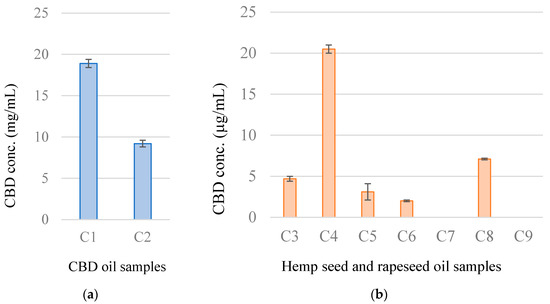

Cannabidiol (CBD) is a non-psychoactive compound that can be extracted from C. sativa and used for treating epilepsy and pain.

Industrial hemp products, including CBD and hemp seed oils, have become increasingly popular. Some products are marketed without a clear distinction between CBD and hemp seed oils.

Herein, the CBD content and biological activities of commercial CBD and hemp seed oils were examined.

Methods: CBD content was measured by high-performance liquid chromatography. For in vitro antioxidant activity determination, 2,2-diphenyl-1-picrylhydrazyl and 2,2′-azinobis (3-ethylbenzothiazoline-6-sulfonic acid) radical-scavenging assays were performed.

Results: The CBD concentrations in the two CBD oil samples were 18.9 ± 0.5 and 9.2 ± 0.4 mg/mL. Of the seven hemp seed oil samples, six samples contained CBD in concentrations ranging from 2.0 ± 0.1 to 20.5 ± 0.5 µg/mL, but it was not detected in one sample. Antioxidant activity was observed in both CBD oil samples.

Conclusions: The results indicate that (1) CBD content varied by hemp seed oil sample and that (2) antioxidant activity could be a useful landmark for discriminating CBD oils from hemp seed oils.”

https://pubmed.ncbi.nlm.nih.gov/32906708/

https://www.mdpi.com/2305-6320/7/9/57

Activation of Cannabinoid Receptor 2 Prevents Colitis-Associated Colon Cancer through Myeloid Cell De-activation Upstream of IL-22 Production

iScience journal (@iScience_CP) | Twitter
” Here we show that delta-9-tetrahydrocannabinol (THC) attenuates colitis-associated colon cancer and colitis induced by anti-CD40.
 THC can prevent the development of colitis-associated colon cancer in mice.”

“Study reveals how cannabinoids may be useful to prevent colon cancer”   https://medicalxpress.com/news/2020-09-reveals-cannabinoids-colon-cancer.html

“Key cannabis chemical may help prevent colon cancer, researchers say”   https://www.heraldmailmedia.com/news/nation/key-cannabis-chemical-may-help-prevent-colon-cancer-researchers-say/article_7afd0a72-eead-57f0-a1d3-006be62b7469.html

“Treatment with a cannabinoid prevented the development of colon cancers in mice” https://www.news-medical.net/news/20200915/Treatment-with-a-cannabinoid-prevented-the-development-of-colon-cancers-in-mice.aspx

Figure thumbnail fx1

No Evidence of Altered Reactivity to Experimentally Induced Pain Among Regular Cannabis Users

Clinical Journal of Pain,Philadelphia - Gainbuzz“Recent years have seen an increase in the adoption of cannabinoid medicines, which have demonstrated effectiveness for the treatment of chronic pain.
However, the extent to which frequent cannabis use (CU) influences sensitivity to acute pain has not been systematically examined. Such a determination is clinically relevant in light of hypersensitivity to pain associated with prolonged use of other analgesics such as opioids, and reports of increased pain sensitivity to experimentally induced pain during acute cannabis intoxication.

This study explored differences in measures of pain intensity and tolerance. The authors hypothesized that individuals who report frequent CU would demonstrate greater experimental pain sensitivity.

Results: Frequent CU was not associated with hyperalgesia as cannabis users and nonusers did not exhibit differences on measures of pain tolerance (t (78)=-0.05; P=0.96), sensitivity (t (78)=-0.83; P=0.41), or intensity (t (78)=0.36; P=0.72).

Discussion: Frequent cannabis users did not demonstrate hyperalgesia. This finding should help to inform evaluations of the relative harms and benefits of cannabis analgesic therapies.”

https://pubmed.ncbi.nlm.nih.gov/32433075/

https://journals.lww.com/clinicalpain/Abstract/2020/08000/No_Evidence_of_Altered_Reactivity_to.4.aspx

“Pain tolerance among cannabis users. Unlike opioids, long-term cannabis use does not increase sensitivity to pain. “This study should come as good news to patients who are already using cannabis to treat pain,” says co-author Zach Walsh, who leads the UBC Therapeutic Recreational and Problematic Substance Use Lab which hosted the study. “Increases in pain sensitivity with opioids can really complicate an already tough situation; given increasing uptake of cannabis-based pain medications it’s a relief that we didn’t identify a similar pattern with cannabinoids.”

https://www.sciencedaily.com/releases/2020/09/200910120105.htm

Cannabis use is associated with greater total sleep time in middle-aged and older adults with and without HIV: A preliminary report utilizing digital health technologies

“Current literature on the effect of cannabis use on sleep quality is mixed, and few studies have used objectively-measured sleep measures or real-time sampling of cannabis use to examine this relationship.

The prevalence of cannabis use among older adults and persons living with HIV has increased in recent years, and poor sleep quality is elevated in these populations as well. However, research examining cannabis-sleep relationships in these populations is lacking. Thus, we aimed to examine the relationship between daily cannabis use and subsequent objectively-measured sleep quality in middle-aged and older adults with and without HIV.

In this pilot study, seventeen (11 HIV+, 6 HIV-) adults aged 50-70 who consumed cannabis completed four daily smartphone-based surveys for 14 days, in which they reported their cannabis use (yes/no) since the last survey. Participants also wore actigraphy watches during the 14-day period to objectively assess sleep quality (i.e., efficiency, total sleep time, and sleep fragmentation).

In linear mixed-effects models, cannabis use was significantly associated with greater subsequent total sleep time (β=0.56; p=0.046). Cannabis use was not related to a change in sleep efficiency (β=1.50; p=0.46) nor sleep fragmentation (β=0.846, p=0.756) on days with cannabis use versus days without cannabis use.

These preliminary results indicate cannabis use may have a positive effect on sleep duration in middle-aged and older adults. However, future studies with larger sample sizes that assess cannabis use in more detail (e.g., route of administration, dose, reason for use) are needed to further understand this relationship.”

https://pubmed.ncbi.nlm.nih.gov/32905460/

https://publications.sciences.ucf.edu/cannabis/index.php/Cannabis/article/view/59

Medicinal Cannabis and Synthetic Cannabinoid Use

medicina-logo“Cannabis products have been used for centuries by humans for recreational and medical purposes. Resent research, proposed the promising therapeutic potential of cannabis and related cannabinoids for a wide range of medical conditions, including psychiatric and neurological diseases.
This Special Issue presents the latest updates on medicinal cannabis and synthetic cannabinoids pharmacology, toxicology and new analytical methods to identify and quantify these compounds in conventional and non-conventional biological matrices. Moreover, it provides current data regarding their adverse effects, safety, application for medical purposes and their harmful effects.”

https://pubmed.ncbi.nlm.nih.gov/32906770/

https://www.mdpi.com/1010-660X/56/9/453

Druggable Targets in Endocannabinoid Signaling

 “Cannabis and cannabinoid-based extracts have long been utilized for their perceived therapeutic value, and support for the legalization of cannabis for medicinal purposes continues to increase worldwide.

Since the discovery of Δ9-tetrahydrocannabinol (THC) as the primary psychoactive component of cannabis over 50 years ago, substantial effort has been directed toward detection of endogenous mediators of cannabinoid activity. The discovery of anandamide and 2-arachidonoylglycerol as two endogenous lipid mediators of cannabinoid-like effects (endocannabinoids) has inspired exponential growth in our understanding of this essential pathway, as well as the pathological conditions that result from dysregulated endocannabinoid signaling.

This review examines current knowledge of the endocannabinoid system including metabolic enzymes involved in biosynthesis and degradation and their receptors, and evaluates potential druggable targets for therapeutic intervention.”

https://pubmed.ncbi.nlm.nih.gov/32894511/

https://link.springer.com/chapter/10.1007%2F978-3-030-50621-6_8

Industrial Hemp ( Cannabis sativa subsp. sativa) as an Emerging Source for Value-Added Functional Food Ingredients and Nutraceuticals

molecules-logo“Industrial hemp (Cannabis sativa L., Cannabaceae) is an ancient cultivated plant originating from Central Asia and historically has been a multi-use crop valued for its fiber, food, and medicinal uses. Various oriental and Asian cultures kept records of its production and numerous uses.
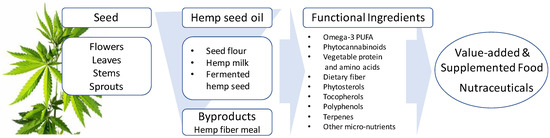
Due to the similarities between industrial hemp (fiber and grain) and the narcotic/medical type of Cannabis, the production of industrial hemp was prohibited in most countries, wiping out centuries of learning and genetic resources. In the past two decades, most countries have legalized industrial hemp production, prompting a significant amount of research on the health benefits of hemp and hemp products.

Current research is yet to verify the various health claims of the numerous commercially available hemp products. Hence, this review aims to compile recent advances in the science of industrial hemp, with respect to its use as value-added functional food ingredients/nutraceuticals and health benefits, while also highlighting gaps in our current knowledge and avenues of future research on this high-value multi-use plant for the global food chain.”

https://pubmed.ncbi.nlm.nih.gov/32906622/

https://www.mdpi.com/1420-3049/25/18/4078

It Is Our Turn to Get Cannabis High: Put Cannabinoids in Food and Health Baskets

molecules-logo“Cannabis is an annual plant with a long history of use as food, feed, fiber, oil, medicine, and narcotics. Despite realizing its true value, it has not yet found its true place. Cannabis has had a long history with many ups and downs, and now it is our turn to promote it.

Cannabis contains approximately 600 identified and many yet unidentified potentially useful compounds. Cannabinoids, phenolic compounds, terpenoids, and alkaloids are some of the secondary metabolites present in cannabis. However, among a plethora of unique chemical compounds found in this plant, the most important ones are phytocannabinoids (PCs).

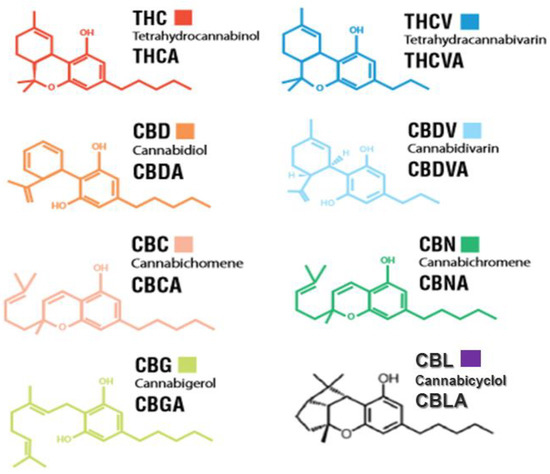
Over hundreds of 21-22-carbon compounds exclusively produce in cannabis glandular hairs through either polyketide and or deoxyxylulose phosphate/methylerythritol phosphate (DOXP/MEP) pathways. Trans-Δ9-tetrahydrocannabinol (Δ9-THC) and cannabidiol (CBD) are those that first come to mind while talking about cannabis. Nevertheless, despite the low concentration, cannabinol (CBN), cannabigerol (CBG), cannabichromene (CBC), tetrahydrocannabivarin (THCV), cannabidivarin (CBDV), cannabinodiol (CBND), and cannabinidiol (CBDL) may have potentially some medical effects.

PCs and endocannabinoids (ECs) mediate their effects mainly through CB1 and CB2 receptors. Despite all concerns regarding cannabis, nobody can ignore the use of cannabinoids as promising tonic, analgesic, antipyretic, antiemetic, anti-inflammatory, anti-epileptic, anticancer agents, which are effective for pain relief, depression, anxiety, sleep disorders, nausea and vomiting, multiple sclerosis, cardiovascular disorders, and appetite stimulation.

The scientific community and public society have now increasingly accepted cannabis specifically hemp as much more than a recreational drug. There are growing demands for cannabinoids, mainly CBD, with many diverse therapeutic and nutritional properties in veterinary or human medicine. The main objective of this review article is to historically summarize findings concerning cannabinoids, mainly THC and CBD, towards putting these valuable compounds into food, feed and health baskets and current and future trends in the consumption of products derived from cannabis.”

https://pubmed.ncbi.nlm.nih.gov/32899626/

https://www.mdpi.com/1420-3049/25/18/4036