

Cannabidiol as a Novel Therapeutic for Immune Modulation

 “The immune-suppressive effects of cannabidiol (CBD) are attributed to the modulation of essential immunological signaling pathways and receptors. Mechanistic understanding of the pharmacological effects of CBD emphasizes the therapeutic potential of CBD as a novel immune modulator.

Studies have observed that the antagonists of CB1 and CB2 receptors and transient receptor potential vanilloid 1 reverse the immunomodulatory effects of CBD. CBD also inhibits critical activators of the Janus kinase/signal transducer and activator of transcription signaling pathway, as well as the nucleotide-binding oligomerization domain-like receptor signaling pathway, in turn decreasing pro-inflammatory cytokine production. Furthermore, CBD protects against cellular damage incurred during immune responses by modulating adenosine signaling.

Ultimately, the data overwhelmingly support the immunosuppressive effects of CBD and this timely review draws attention to the prospective development of CBD as an effective immune modulatory therapeutic.”

https://pubmed.ncbi.nlm.nih.gov/32903924/

https://www.dovepress.com/cannabidiol-as-a-novel-therapeutic-for-immune-modulation-peer-reviewed-article-ITT

Autism Spectrum Disorder and Medical Cannabis: Review and Clinical Experience

Seminars in Pediatric Neurology “Autism spectrum disorder (ASD) is a multifactorial, pervasive neurodevelopmental disorder defined by the core symptoms of significant impairment in social interaction and communication as well as restricted, repetitive patterns of behavior. In addition to these core behaviors, persons with ASD frequently have associated noncore behavioral disturbance (ie, self-injury, aggression), as well as several medical comorbidities. Currently, no effective treatment exists for the core symptoms of ASD.

This review reports the available preclinical and clinical data regarding the use of cannabis and cannabidiol in the treatment of core symptoms, noncore symptoms and comorbidities associated with ASD. Additionally, we describe our clinical experience working with children and young adults with ASD who have used cannabis or cannabidiol.

At present, preclinical and clinical data suggest a potential for therapeutic benefit among some persons with ASD and that it is overall well tolerated.

Further research is required to better identify patients who may benefit from treatment without adverse effects.”

https://pubmed.ncbi.nlm.nih.gov/32892960/

https://www.sciencedirect.com/science/article/abs/pii/S1071909120300449?via%3Dihub

Topical cannabis-based medicines – A novel paradigm and treatment for non-uremic calciphylaxis leg ulcers: An open label trial

“Non-Uremic Calciphylaxis (NUC) is a rare condition that often manifests as intractable and painful integumentary wounds, afflicting patients with a high burden of co-morbidity.

The Endocannabinoid System (ECS) is a ubiquitous signalling system that is theorised to be dysregulated within wound beds and associated peri-wound tissues.

Preclinical research has shown that the dominant chemical classes derived from the cannabis plant, cannabinoids, terpenes, and flavonoids, interact with the integumentary ECS to promote wound closure and analgesia.

This is a prospective open label cohort study involving two elderly Caucasian females with recalcitrant NUC leg ulcers of greater than 6 months duration.

Topical Cannabis-Based Medicines (TCBM) composed of cannabinoids, terpenes, and flavonoids were applied daily to both the wound bed and peri-wound tissues until complete wound closure was achieved.

Wounds were photographed regularly, and the digital images were subjected to planimetric analysis to objectively quantify the degree of granulation and epithelization. Analgesic utilisation, as a surrogate/proxy for pain scores, was also tracked. The cohort had a mean M3 multimorbidity index score of 3.31. Complete wound closure was achieved in a mean of 76.3 days. Additionally, no analgesics were required after a mean of 63 days.

The treatments were well tolerated with no adverse reactions. The positive results demonstrated in very challenging wounds such as NUC, among highly complex patients, suggest that TCBM may have an even broader role within integumentary and wound management.

This treatment paradigm warrants being trialled in other wound types and classes, and ultimately should be subjected to randomised controlled trials.”

https://pubmed.ncbi.nlm.nih.gov/32875692/

“Topical Cannabis‐Based Medicines, applied to both wound beds and peri‐wound tissues, represent a promising novel, non‐invasive, and safe treatment option for NUC leg ulcers.”

https://onlinelibrary.wiley.com/doi/full/10.1111/iwj.13484

image

Cannabinoids and Prostate Cancer: A Systematic Review of Animal Studies

ijms-logo“Prostate cancer is a major cause of death among men worldwide.
Recent preclinical evidence implicates cannabinoids as powerful regulators of cell growth and differentiation, as well as potential anti-cancer agents.

The aim of this review was to evaluate the effect of cannabinoids on in vivo prostate cancer models.

We identified six studies that were all found to be based on in vivo/xenograft animal models.

All studies have reported that the treatment of prostate cancers in in vivo/xenograft models with various cannabinoids decreased the size of the tumor, the outcomes of which depended on the dose and length of treatment.

Within the limitation of these identified studies, cannabinoids were shown to reduce the size of prostate cancer tumors in animal models.”

https://pubmed.ncbi.nlm.nih.gov/32872551/

https://www.mdpi.com/1422-0067/21/17/6265

Endocannabinoid-Epigenetic Cross-Talk: A Bridge toward Stress Coping

ijms-logo“There is no argument with regard to the physical and psychological stress-related nature of neuropsychiatric disorders. Yet, the mechanisms that facilitate disease onset starting from molecular stress responses are elusive.

Environmental stress challenges individuals’ equilibrium, enhancing homeostatic request in the attempt to steer down arousal-instrumental molecular pathways that underlie hypervigilance and anxiety.

A relevant homeostatic pathway is the endocannabinoid system (ECS).

In this review, we summarize recent discoveries unambiguously listing ECS as a stress coping mechanism.

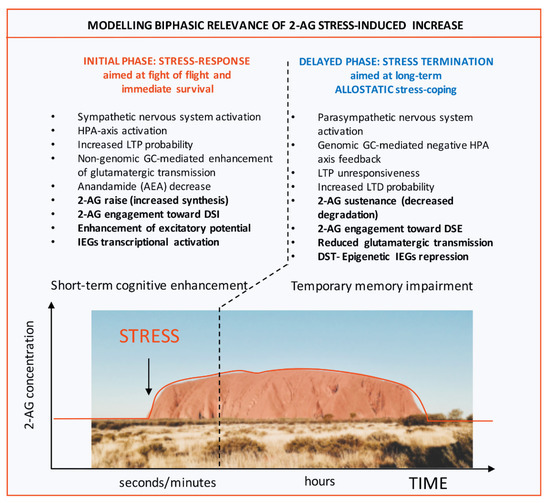
As stress evokes huge excitatory responses in emotional-relevant limbic areas, the ECS limits glutamate release via 2-arachydonilglycerol (2-AG) stress-induced synthesis and retrograde cannabinoid 1 (CB1)-receptor activation at the synapse. However, ECS shows intrinsic vulnerability as 2-AG overstimulation by chronic stress rapidly leads to CB1-receptor desensitization.

In this review, we emphasize the protective role of 2-AG in stress-response termination and stress resiliency. Interestingly, we discuss ECS regulation with a further nuclear homeostatic system whose nature is exquisitely epigenetic, orchestrated by Lysine Specific Demethylase 1.

We here emphasize a remarkable example of stress-coping network where transcriptional homeostasis subserves synaptic and behavioral adaptation, aiming at reducing psychiatric effects of traumatic experiences.”

https://pubmed.ncbi.nlm.nih.gov/32872402/

https://www.mdpi.com/1422-0067/21/17/6252

Distinctive Evidence Involved in the Role of Endocannabinoid Signalling in Parkinson’s Disease: A Perspective on Associated Therapeutic Interventions

ijms-logo“Current pharmacotherapy of Parkinson’s disease (PD) is symptomatic and palliative, with levodopa/carbidopa therapy remaining the prime treatment, and nevertheless, being unable to modulate the progression of the neurodegeneration. No available treatment for PD can enhance the patient’s life-quality by regressing this diseased state.

Various studies have encouraged the enrichment of treatment possibilities by discovering the association of the effects of the endocannabinoid system (ECS) in PD.

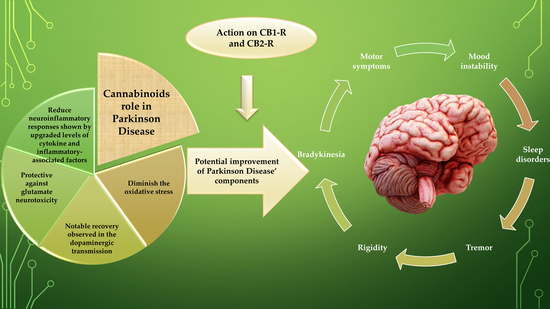
These reviews delineate the reported evidence from the literature on the neuromodulatory role of the endocannabinoid system and expression of cannabinoid receptors in symptomatology, cause, and treatment of PD progression, wherein cannabinoid (CB) signalling experiences alterations of biphasic pattern during PD progression.

Endocannabinoids regulate the basal ganglia neuronal circuit pathways, synaptic plasticity, and motor functions via communication with dopaminergic, glutamatergic, and GABAergic signalling systems bidirectionally in PD.

Further, gripping preclinical and clinical studies demonstrate the context regarding the cannabinoid compounds, which is supported by various evidence (neuroprotection, suppression of excitotoxicity, oxidative stress, glial activation, and additional benefits) provided by cannabinoid-like compounds (much research addresses the direct regulation of cannabinoids with dopamine transmission and other signalling pathways in PD).

More data related to endocannabinoids efficacy, safety, and pharmacokinetic profiles need to be explored, providing better insights into their potential to ameliorate or even regress PD.”

https://pubmed.ncbi.nlm.nih.gov/32872273/

https://www.mdpi.com/1422-0067/21/17/6235

A Comparative In Vitro Study of the Neuroprotective Effect Induced by Cannabidiol, Cannabigerol, and Their Respective Acid Forms: Relevance of the 5-HT 1A Receptors

 SpringerLink“Previous preclinical studies have demonstrated that cannabidiol (CBD) and cannabigerol (CBG), two non-psychotomimetic phytocannabinoids from Cannabis sativa, induce neuroprotective effects on toxic and neurodegenerative processes.

Our results contribute to the understanding of the neuroprotective effect of CBD and CBG, showing differences with their acid forms, and also highlight the role of 5-HT1A receptors in the mechanisms of action of CBG.”

https://pubmed.ncbi.nlm.nih.gov/32886342/

https://link.springer.com/article/10.1007%2Fs12640-020-00277-y

A molecular basis for the anti-inflammatory and anti-fibrosis properties of cannabidiol

“Cannabidiol (CBD) is considered a non-psychoactive, antioxidant, and anti-inflammatory compound derived from the Cannabis sativa plant.

There are various reports on the versatile function of CBD, including ameliorating chronic inflammation and fibrosis formation in several tissue types.

This review focused on the anti-inflammation and anti-fibrotic effects of CBD based on modulating the associated chemokines/cytokines and receptor-mediated pathways.

This review thus recommends the continued study of CBD’s molecular mechanism in treating established and emerging inflammatory and fibrosis-related diseases.”

https://pubmed.ncbi.nlm.nih.gov/32885502/

“In all, CBD shows immense promise as a possible treatment for chronic inflammation and the progression or development of fibrosis.”

https://faseb.onlinelibrary.wiley.com/doi/full/10.1096/fj.202000975R

Cannabidiol (CBD): a killer for inflammatory rheumatoid arthritis synovial fibroblasts

 Cell Death & Disease“Cannabidiol (CBD) is a non-intoxicating phytocannabinoid from cannabis sativa that has demonstrated anti-inflammatory effects in several inflammatory conditions including arthritis.

In this study, we show that CBD increases intracellular calcium levels, reduces cell viability and IL-6/IL-8/MMP-3 production of rheumatoid arthritis synovial fibroblasts (RASF).

CBD reduced cell viability, proliferation, and IL-6/IL-8 production of RASF. Moreover, CBD increased intracellular calcium and uptake of the cationic viability dye PoPo3 in RASF, which was enhanced by pre-treatment with TNF.

Thus, CBD possesses anti-arthritic activity and might ameliorate arthritis via targeting synovial fibroblasts under inflammatory conditions.”

https://pubmed.ncbi.nlm.nih.gov/32873774/

“In conclusion, CBD might be beneficial as an adjuvant treatment in rheumatoid arthritis that might support the action of currently used disease-modifying anti-rheumatic drugs.”

https://www.nature.com/articles/s41419-020-02892-1

Δ9 Tetrahydrocannabinol attenuates Staphylococcal enterotoxin B-induced inflammatory lung injury and prevents mortality in mice by modulation of miR-17-92 cluster and induction of T-regulatory cells

Logo of brjpharm“Staphylococcal enterotoxin B (SEB) is a potent activator of Vβ8+T-cells resulting in the clonal expansion of ∼30% of the T-cell pool. Consequently, this leads to the release of inflammatory cytokines, toxic shock, and eventually death.

In the current study, we investigated if Δ9tetrahydrocannabinol (THC), a cannabinoid known for its anti-inflammatory properties, could prevent SEB-induced mortality and alleviate symptoms of toxic shock.

Key Results

Exposure to SEB resulted in acute mortality, while THC treatment led to 100% survival of mice. SEB induced the miRNA-17-92 cluster, specifically miRNA-18a, which targeted Pten (phosphatase and tensin homologue), an inhibitor of the PI3K/Akt signalling pathway, thereby suppressing T-regulatory cells. In contrast, THC treatment inhibited the individual miRNAs in the cluster, reversing the effects of SEB.

Conclusions and Implications

We report, for the first time a role for the miRNA 17–92 cluster in SEB-mediated inflammation. Furthermore, our results suggest that THC is a potent anti-inflammatory compound that may serve as a novel therapeutic to suppress SEB-induced pulmonary inflammation by modulating critical miRNA involved in SEB-induced toxicity and death.

Δ9-Tetrahydrocannabinol (THC) is a marijuana plant-derived cannabinoid known for its robust anti-inflammatory and immunosuppressive properties. The anti-inflammatory and immunosuppressive effects of THC are diverse and function effectively to abrogate a number of inflammatory processes.

Taken together, our data demonstrate that THC is a strong anti-inflammatory agent capable of rescuing mice from SEB-mediated toxicity and death.”

https://www.ncbi.nlm.nih.gov/pmc/articles/PMC4376457/