
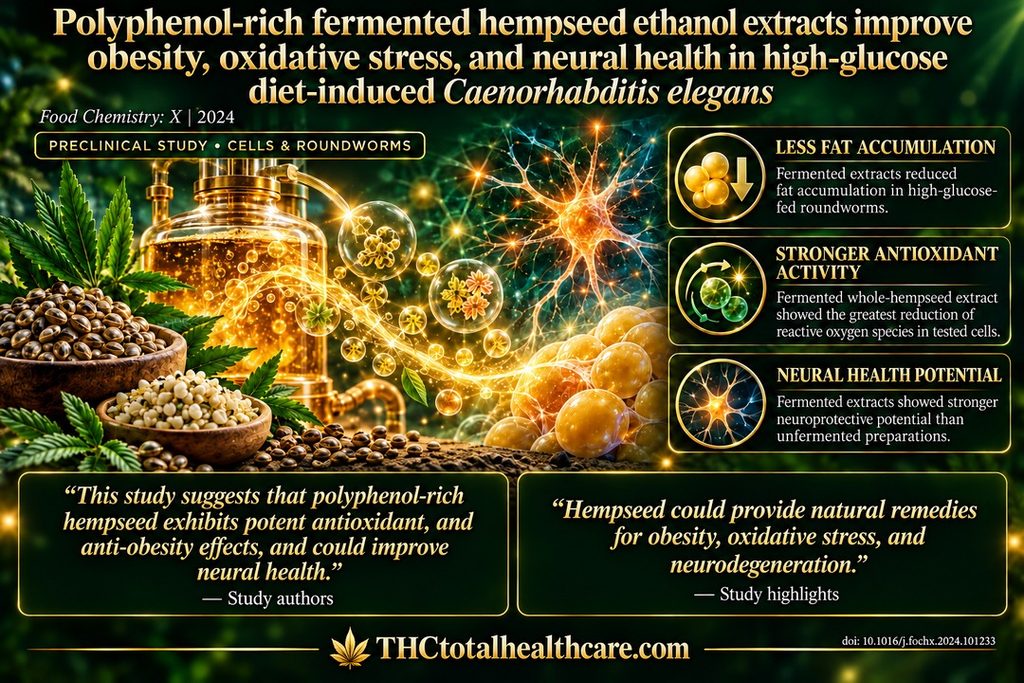
Fermented hempseed extracts reduced fat accumulation and oxidative stress and showed neuroprotective effects in a high-glucose-fed roundworm model. Researchers compared extracts from whole and hulled hemp seeds before and after fermentation, finding that fermented preparations generally produced stronger biological benefits.
Fermented whole-hempseed extract inhibited pancreatic lipase, an enzyme that breaks down dietary fats, by 70.80% and acetylcholinesterase, which breaks down the nerve-signaling chemical acetylcholine, by 78.94% in laboratory assays. It also showed the strongest reduction in reactive oxygen species in tested cells, supporting its antioxidant activity.
The researchers identified diverse seed polyphenols, including flavonoids, phenolic acids, lignanamides, and phenylamides. These preclinical findings highlight fermented hempseed as a promising source of bioactive compounds for research into obesity, oxidative stress, and neural health.
“Whole hempseed (WHS), fermented whole hempseed (FWHS), dehulled hempseed (DHS), and fermented dehulled hempseed (FDHS) ethanol extracts were tested for their toxicity and physiological benefits in relation to their phenolic profiles.
The safety of all samples was confirmed by the absence of toxic effects on HepG2 cells. FWHS exhibited the highest capacity to inhibit lipase activity (70.80%) and acetylcholinesterase (AChE) (78.94%) in vitro. Similarly, in HepG2 cells, FWHS revealed the greatest ability to reduce the accumulation of reactive oxygen species (ROS).
Fermented hempseed demonstrated superior antioxidant, neuroprotective and anti-fat potential, counteracting ageing in high glucose diet-induced C. elegans than unfermented. HPLC and UHPLC-Q-TOF-MS/MS2 phenolic identification revealed the presence of diverse flavonoids, phenolic acids, lignanamides, and phenylamides in hempseed extracts. Among these polyphenols, quercetin, gallic acid, and kaempferol exhibited excellent antioxidant potential, whereas N-trans-feruloyl tyramine displayed the highest anti-lipase potential.
This study suggests that polyphenol-rich hempseed exhibits potent antioxidant, and anti-obesity effects, and could improve neural health.”
https://pubmed.ncbi.nlm.nih.gov/38426074
“Fermented hempseeds demonstrated superior anti-obesity and antioxidant capabilities.”
“Hempseed could provide natural remedies for obesity, oxidative stress, and neurodegeneration.”
https://www.sciencedirect.com/science/article/pii/S2590157524001202?via%3Dihub