
 “Neurological disorders such as neurodegenerative diseases or traumatic brain injury are associated with cognitive, motor and behavioural changes that influence the quality of life of the patients. Although different therapeutic strategies have been developed and tried until now to decrease the neurological decline, no treatment has been found to cure these pathologies.
In the last decades, the implication of the endocannabinoid system in the neurological function has been extensively studied, and the cannabinoids have been tried as a new promising potential treatment. In this study, we aimed to overview the recent available literature regarding in vivo potential of natural and synthetic cannabinoids with underlying mechanisms of action for protecting against cognitive decline and motor impairments.
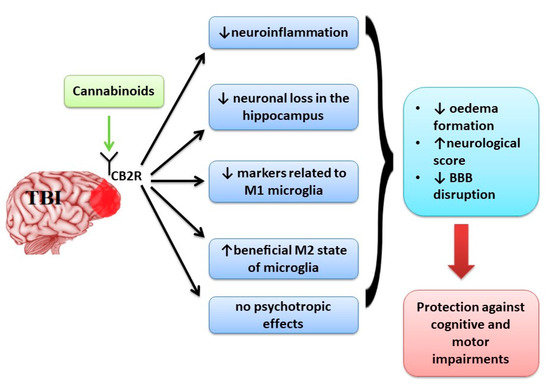
The results of studies on animal models showed that cannabinoids in traumatic brain injury increase neurobehavioral function, working memory performance, and decrease the neurological deficit and ameliorate motor deficit through down-regulation of pro-inflammatory markers, oedema formation and blood-brain barrier permeability, preventing neuronal cell loss and up-regulating the levels of adherence junction proteins.
In neurodegenerative diseases, the cannabinoids showed beneficial effects in decreasing the motor disability and disease progression by a complex mechanism targeting more signalling pathways further than classical receptors of the endocannabinoid system. In light of these results, the use of cannabinoids could be beneficial in traumatic brain injuries and multiple sclerosis treatment, especially in those patients who display resistance to conventional treatment.”
https://pubmed.ncbi.nlm.nih.gov/32726998/
https://www.mdpi.com/2077-0383/9/8/2395
 “Few studies to date have measured the real-time effects of consumption of common and commercially available Cannabis products for the treatment of headache and migraine under naturalistic conditions. This study examines, for the first time, the effectiveness of using dried Cannabis flower, the most widely used type of Cannabis product in the United States, in actual time for treatment of headache- and migraine-related pain and the associations between different product characteristics and changes in symptom intensity following Cannabis use.
 “In recent years, and even more since its legalization in several jurisdictions, cannabis and the endocannabinoid system have received an increasing amount of interest related to their potential exploitation in clinical settings. Cannabinoids have been suggested and shown to be effective in the treatment of various conditions. In cancer, the endocannabinoid system is altered in numerous types of tumours and can relate to cancer prognosis and disease outcome. Additionally, cannabinoids display anticancer effects in several models by suppressing the proliferation, migration and/or invasion of cancer cells, as well as tumour angiogenesis. However, the therapeutic use of cannabinoids is currently limited to the treatment of symptoms and pain associated with chemotherapy, while their potential use as cytotoxic drugs in chemotherapy still requires validation in patients. Along with cannabinoids, cannabis contains several other compounds that have also been shown to exert anti-tumorigenic actions. The potential anti-cancer effects of cannabinoids, terpenes and flavonoids, present in cannabis, are explored in this literature review.”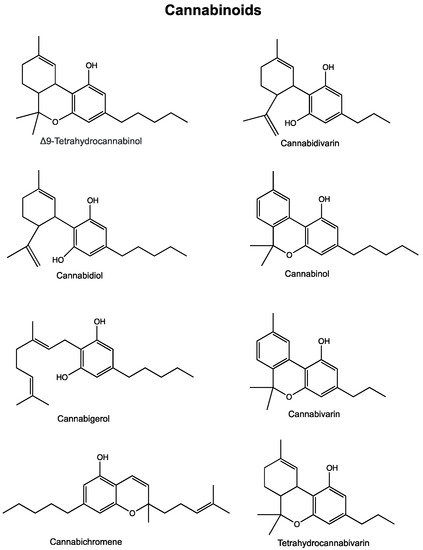
 “Cannabinoid CB2 receptor (CB2) agonists are potential analgesics void of psychotropic effects.
 “Chronic ethanol abuse can lead to harmful consequences for the heart, resulting in systolic dysfunction, variability in the heart rate, arrhythmia, and cardiac remodelling. However, the precise molecular mechanism responsible for ethanol-induced cardiomyopathy is poorly understood. In this regard, the present study aimed to describe the RIP1/RIP3/MLKL-mediated necroptotic cell death that may be involved in ethanol-induced cardiomyopathy and characterize CBR-mediated effects on the signalling pathway and myocardial injury.
 “Cannabinoids (CBs), analgesic drugs used for thousands of years, were first found in Cannabis sativa, and the multiple CBs used medicinally, such as tetrahydrocannabinol (THC), cannabidiol (CBD) and dozens more, have complex structures. In addition to their production by plants, CBs are naturally present in the nerves and immune systems of humans and animals.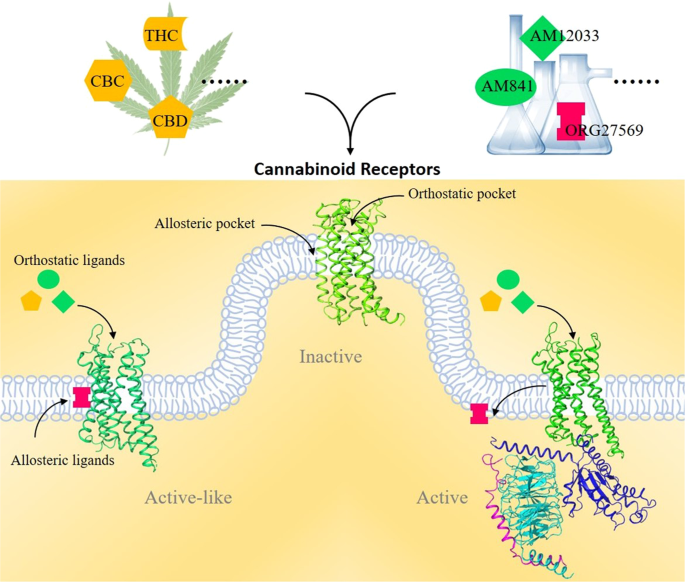
 “HIV is associated with disruptions in cognition and brain function.
 “In the last few years research into Cannabis and its constituent phytocannabinoids has burgeoned, particularly in the potential application of novel cannabis phytochemicals for the treatment of diverse illnesses related to neurodegeneration and dementia, including Alzheimer’s (AD), Parkinson’s (PD) and Huntington’s disease (HD). To date, these neurological diseases have mostly relied on symptomatological management. However, with an aging population globally, the search for more efficient and disease-modifying treatments that could delay or mitigate disease progression is imperative. In this context, this review aims to present a state of art in the research with cannabinoids and novel cannabinoid-based drug candidates that have been emerged as novel promising alternatives for drug development and innovation in the therapeutics of a number of diseases, especially those related to CNS-disturbance and impairment.”
 “We observed that cannabidiol supplements were highly effective in treating an infant boy with drug-resistant early infantile epileptic encephalopathy, eliminating his intractable tonic seizures.
 “Diet and lifestyle-induced dysregulated lipid metabolism have been implicated in fatty liver disease. Chronic redox modulation and hepatic inflammation are key pathological mediators and hallmarks of fatty liver disease associated liver steatosis and steatohepatitis.