“The aim of this cross-sectional questionnaire-based study was to identify associations between the doses of cannabinoids and terpenes administered, and symptoms of attention deficit hyperactivity disorder (ADHD).
CONCLUSION:
These findings reveal that the higher-dose consumption of medical cannabis (MC) components (phyto-cannabinoids and terpenes) is associated with ADHD medication reduction.
In addition, high dosage of CBN was associated with a lower ASRS score.
However, more studies are needed in order to fully understand if cannabis and its constituents can be used for management of ADHD.”
“In the last decade, we have observed an increased public and scientific interest in the clinical applications of medical cannabis.
Currently, the application of cannabinoids in cancer patients is mainly due to their analgesic and anti-emetic effects.
The direct effects of phyto-cannabinoids on cancer cells are under intensive research, and the data remain somewhat inconsistent. Although anti-proliferative properties were observed in vitro, conclusive data from animal models and clinical trials are lacking.
Since immunotherapy of malignant diseases and bone marrow transplantation are integral approaches in hemato-oncology, the immuno-modulatory characteristic of cannabinoids is a fundamental aspect for consideration. The effect of cannabinoids on the immune system is presently under investigation, and some evidence for its immuno-regulatory properties has been shown.
In addition, the interaction of cannabinoids and classical cytotoxic agents is a subject for further investigation. Here we discuss the current knowledge of cannabinoid-based treatments in preclinical models and the limited data in oncological patients. Particularly, we address the possible contradiction between the direct anti-tumor and the immune-modulatory effects of cannabinoids.
Better understanding of the mechanism of cannabinoids influence is essential to design therapies that will allow cannabinoids to be incorporated into the clinic.”
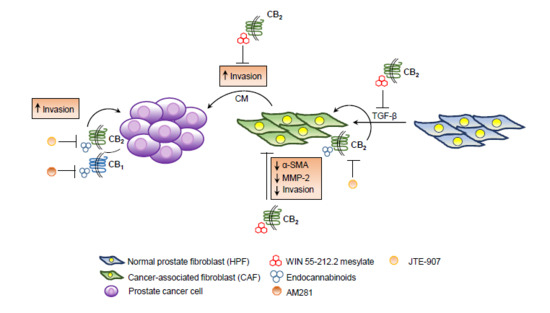
“Endo-, phyto- and synthetic cannabinoids have been proposed as promising anti-cancer agents able to impair cancer cells’ behavior without affecting their non-transformed counterparts.
However, cancer outcome depends not only on cancer cells’ activity, but also on the stromal cells, which coevolve with cancer cells to sustain tumor progression.
Here, we show for the first time that cannabinoid treatment impairs the activation and the reactivity of cancer-associated fibroblasts (CAFs), the most represented stromal component of prostate tumor microenvironment.
Overall, our data strongly support the use of cannabinoids as anti-tumor agents in prostate cancer, since they are able to simultaneously strike both cancer and stromal cells.”
“γ-Aminobutyric acid type A receptors (GABAARs) are the main inhibitory mediators in the central nervous system (CNS). GABAARs are pentameric ligand gated ion channels, and the main subunit composition is usually 2α2βγ, with various isotypes assembled within a set of 19 different subunits. The inhibitory function is mediated by chloride ion movement across the GABAARs, activated by synaptic GABA release, reducing neuronal excitability in the adult CNS. Several studies highlighted the importance of GABA-mediated transmission during neuro-development, and its involvement in different neurological and neurodevelopmental diseases, from anxiety to epilepsy. However, while it is well known how different classes of drugs are able to modulate the GABAARs function (benzodiazepines, barbiturates, neurosteroids, alcohol), up to now little is known about GABAARs and cannabinoids interaction in the CNS. Endocannabinoids and phytocannabinoids are lately emerging as a new class of promising drugs for a wide range of neurological conditions, but their safety as medication, and their mechanisms of action are still to be fully elucidated. In this review, we will focus our attention on two of the most promising molecules (Δ9-tetrahydrocannabinol; Δ9-THC and cannabidiol; CBD) of this new class of drugs and their possible mechanism of action on GABAARs.”
“Epilepsy is a neurological disorder characterized by the presence of seizures and neuropsychiatric comorbidities. Despite the number of antiepileptic drugs, one-third of patients did not have their seizures under control, leading to pharmacoresistance epilepsy.
Cannabis sativa has been used since ancient times in Medicine for the treatment of many diseases, including convulsive seizures.
In this context, Cannabidiol (CBD), a non-psychoactive phytocannabinoid present in Cannabis, has been a promising compound for treating epilepsies due to its anticonvulsant properties in animal models and humans, especially in pharmacoresistant patients. In this review, we summarize evidence of the CBD anticonvulsant activities present in a great diversity of animal models. Special attention was given to behavioral CBD effects and its translation to human epilepsies.
CBD anticonvulsant effects are associated with a great variety of mechanisms of action such as endocannabinoid and calcium signaling. CBD has shown effectiveness in the clinical scenario for epilepsies, but its effects on epilepsy-related comorbidities are scarce even in basic research. More detailed and complex behavioral evaluation about CBD effects on seizures and epilepsy-related comorbidities are required.”
“CBD presents anticonvulsant behavioral effects in animal models of epilepsy. CBD induces neuroprotection in animal models of epileptic seizures. Multiple mechanisms of action are associated to CBD anticonvulsant effects. Animal models support CBD therapeutic use for epilepsies treatment.”
“Cannabis sativa L. is an ancient medicinal plant wherefrom over 120 cannabinoids are extracted. In the past two decades, there has been increasing interest in the therapeutic potential of cannabis-based treatments for neurological disorders such as epilepsy, and there is now evidence for the medical use of cannabis and its effectiveness for a wide range of diseases.
Cannabinoid treatments for pain and spasticity in patients with multiple sclerosis (Nabiximols) have been approved in several countries. Cannabidiol (CBD), in contrast to tetra-hydro-cannabidiol (THC), is not a controlled substance in the European Union, and over the years there has been increasing use of CBD-enriched extracts and pure CBD for seizure disorders, particularly in children. No analytical controls are mandatory for CBD-based products and a pronounced variability in CBD concentrations in commercialized CBD oil preparations has been identified.
Randomized controlled trials of plant-derived CBD for treatment of Lennox-Gastaut syndrome (LGS) and Dravet syndrome (DS) have provided evidence of anti-seizure effects, and in June 2018, CBD was approved by the Food and Drug Administration as an add-on antiepileptic drug for patients two years of age and older with LGS or DS. Medical cannabis, with various ratios of CBD and THC and in different galenic preparations, is licensed in many European countries for several indications, and in July 2019, the European Medicines Agency also granted marketing authorisation for CBD in association with clobazam, for the treatment of seizures associated with LGS or DS.
The purpose of this article is to review the availability of cannabis-based products and cannabinoid-based medicines, together with current regulations regarding indications in Europe (as of July 2019). The lack of approval by the central agencies, as well as social and political influences, have led to significant variation in usage between countries.”
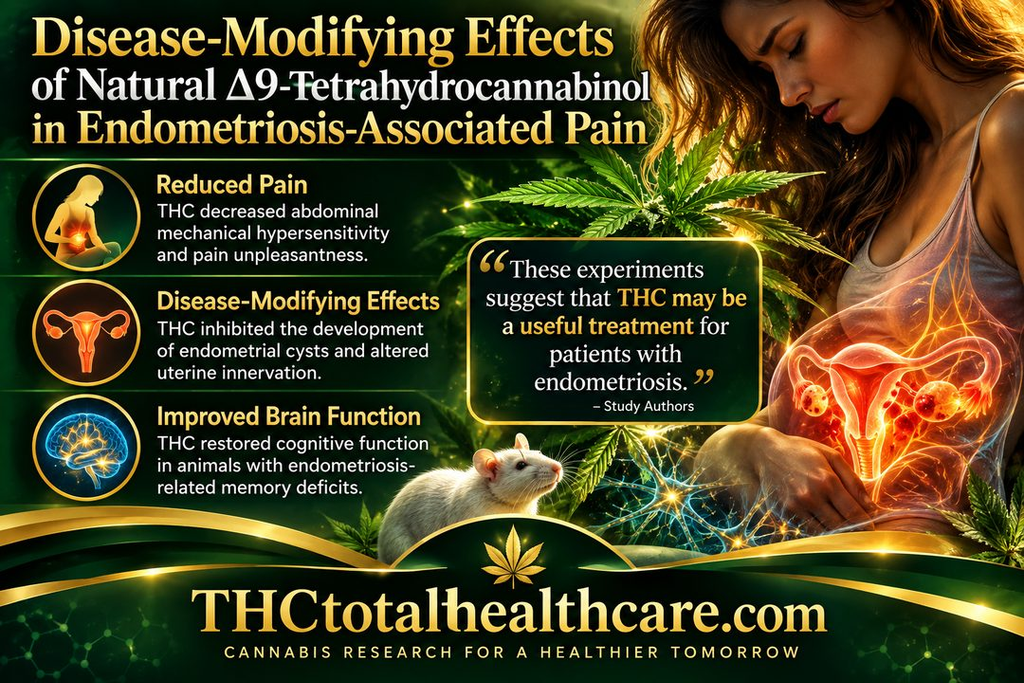
In a mouse model of endometriosis, daily treatment with Δ9-THC reduced abdominal mechanical hypersensitivity and the unpleasantness associated with pain. THC also restored cognitive function in animals that had developed substantial memory deficits associated with endometriosis.
The effects went beyond pain relief. THC altered uterine innervation and, most notably, inhibited the development of endometrial cysts, suggesting a potential disease-modifying effect rather than simply masking symptoms.
These findings are important because endometriosis is a chronic condition in which pain, abnormal tissue growth, and neurological effects can all contribute to disease burden. The researchers concluded that the results support clinical investigation of THC as a potential treatment for women with endometriosis.
“Endometriosis is a chronic painful disease highly prevalent in women that is defined by growth of endometrial tissue outside the uterine cavity and lacks adequate treatment.
Medical use of cannabis derivatives is a current hot topic and it is unknown whether phytocannabinoids may modify endometriosis symptoms and development.
Here we evaluate the effects of repeated exposure to Δ9-tetrahydrocannabinol (THC) in a mouse model of surgically-induced endometriosis.
In this model, female mice develop mechanical hypersensitivity in the caudal abdomen, mild anxiety-like behavior and substantial memory deficits associated with the presence of extrauterine endometrial cysts.
Interestingly, daily treatments with THC (2 mg/kg) alleviate mechanical hypersensitivity and pain unpleasantness, modify uterine innervation and restore cognitive function without altering the anxiogenic phenotype. Strikingly, THC also inhibits the development of endometrial cysts.
These data highlight the interest of scheduled clinical trials designed to investigate possible benefits of THC for women with endometriosis.”
“Cannabinoids are compounds that are structurally and/or functionally related to the primary psychoactive constituent of Cannabis sativa, [INCREMENT]-tetrahydrocannabinol (THC). Cannabinoids can be divided into three broad categories: endogenous cannabinoids, plant-derived cannabinoids, and synthetic cannabinoids (SCs).
Recently, there has been an unprecedented surge of interest into the pharmacological and medicinal properties of cannabinoids for the treatment of epilepsies. This surge has been stimulated by an ongoing shift in societal opinions about cannabinoid-based medicines and evidence that cannabidiol, a nonintoxicating plant cannabinoid, has demonstrable anticonvulsant activity in children with treatment-refractory epilepsy.
The major receptors of the endogenous cannabinoid system (ECS)-the type 1 and 2 cannabinoid receptors (CB1R, CB2R)-have critical roles in the modulation of neurotransmitter release and inflammation, respectively; so, it is not surprising therefore that the ECS is being considered as a target for the treatment of epilepsy.
SCs were developed as potential new drug candidates and tool compounds for studying the ECS. Beyond the plant cannabinoids, an extensive research effort is underway to determine whether SCs that directly target CB1R, CB2R, or the enzymes that breakdown endogenous cannabinoids have anticonvulsant effects in preclinical rodent models of epilepsy and seizure.
This research demonstrates that many SCs do reduce seizure severity in rodent models and may have both positive and negative pharmacodynamic and pharmacokinetic interactions with clinically used antiepilepsy drugs. Here, we provide a comprehensive review of the preclinical evidence for and against SC modulation of seizure and discuss the important questions that need to be addressed in future studies.”
“Neuropathic pain associated with nucleoside reverse transcriptase inhibitors (NRTIs), therapeutic agents for human immunodeficiency virus (HIV), responds poorly to available drugs.
Smoked cannabis was reported to relieve HIV-associated neuropathic pain in clinical trials. Some constituents of cannabis (Cannabis sativa) activate cannabinoid type 1 (CB1) and cannabinoid type 2 (CB2) receptors. However, activation of the CB1 receptor is associated with side effects such as psychosis and physical dependence.
Therefore, we investigated the effect of β-caryophyllene (BCP), a CB2-selective phytocannabinoid, in a model of NRTI-induced neuropathic pain.
BCP prevents NRTI-induced mechanical allodynia, possibly via reducing the inflammatory response, and attenuates mechanical allodynia through CB2 receptor activation. Therefore, BCP could be useful for prevention and treatment of antiretroviral-induced neuropathic pain.”
“β-caryophyllene (BCP) is a common constitute of the essential oils of numerous spice, food plants and major component in Cannabis.” http://www.ncbi.nlm.nih.gov/pubmed/23138934
“(-)-Trans-Δ9-tetrahydrocannabinol (Δ9-THC) is the main compound responsible for the intoxicant activity of Cannabis sativa L. The length of the side alkyl chain influences the biological activity of this cannabinoid. In particular, synthetic analogues of Δ9-THC with a longer side chain have shown cannabimimetic properties far higher than Δ9-THC itself. In the attempt to define the phytocannabinoids profile that characterizes a medicinal cannabis variety, a new phytocannabinoid with the same structure of Δ9-THC but with a seven-term alkyl side chain was identified. The natural compound was isolated and fully characterized and its stereochemical configuration was assigned by match with the same compound obtained by a stereoselective synthesis. This new phytocannabinoid has been called (-)-trans-Δ9-tetrahydrocannabiphorol (Δ9-THCP). Along with Δ9-THCP, the corresponding cannabidiol (CBD) homolog with seven-term side alkyl chain (CBDP) was also isolated and unambiguously identified by match with its synthetic counterpart. The binding activity of Δ9-THCP against human CB1 receptor in vitro (Ki = 1.2 nM) resulted similar to that of CP55940 (Ki = 0.9 nM), a potent full CB1 agonist. In the cannabinoid tetrad pharmacological test, Δ9-THCP induced hypomotility, analgesia, catalepsy and decreased rectal temperature indicating a THC-like cannabimimetic activity. The presence of this new phytocannabinoid could account for the pharmacological properties of some cannabis varieties difficult to explain by the presence of the sole Δ9-THC.”

 “The aim of this cross-sectional questionnaire-based study was to identify associations between the doses of cannabinoids and terpenes administered, and symptoms of attention deficit hyperactivity disorder (ADHD).
 “Endo-, phyto- and synthetic cannabinoids have been proposed as promising anti-cancer agents able to impair cancer cells’ behavior without affecting their non-transformed counterparts.
 “Epilepsy is a neurological disorder characterized by the presence of seizures and neuropsychiatric comorbidities. Despite the number of antiepileptic drugs, one-third of patients did not have their seizures under control, leading to pharmacoresistance epilepsy.
 “Cannabis sativa L. is an ancient medicinal plant wherefrom over 120 cannabinoids are extracted. In the past two decades, there has been increasing interest in the therapeutic potential of cannabis-based treatments for neurological disorders such as epilepsy, and there is now evidence for the medical use of cannabis and its effectiveness for a wide range of diseases.
 “Neuropathic pain associated with nucleoside reverse transcriptase inhibitors (NRTIs), therapeutic agents for human immunodeficiency virus (HIV), responds poorly to available drugs.
 “(-)-Trans-Δ9-tetrahydrocannabinol (Δ9-THC) is the main compound responsible for the intoxicant activity of Cannabis sativa L. The length of the side alkyl chain influences the biological activity of this cannabinoid. In particular, synthetic analogues of Δ9-THC with a longer side chain have shown cannabimimetic properties far higher than Δ9-THC itself. In the attempt to define the phytocannabinoids profile that characterizes a medicinal cannabis variety, a new phytocannabinoid with the same structure of Δ9-THC but with a seven-term alkyl side chain was identified. The natural compound was isolated and fully characterized and its stereochemical configuration was assigned by match with the same compound obtained by a stereoselective synthesis. This new phytocannabinoid has been called (-)-trans-Δ9-tetrahydrocannabiphorol (Δ9-THCP). Along with Δ9-THCP, the corresponding