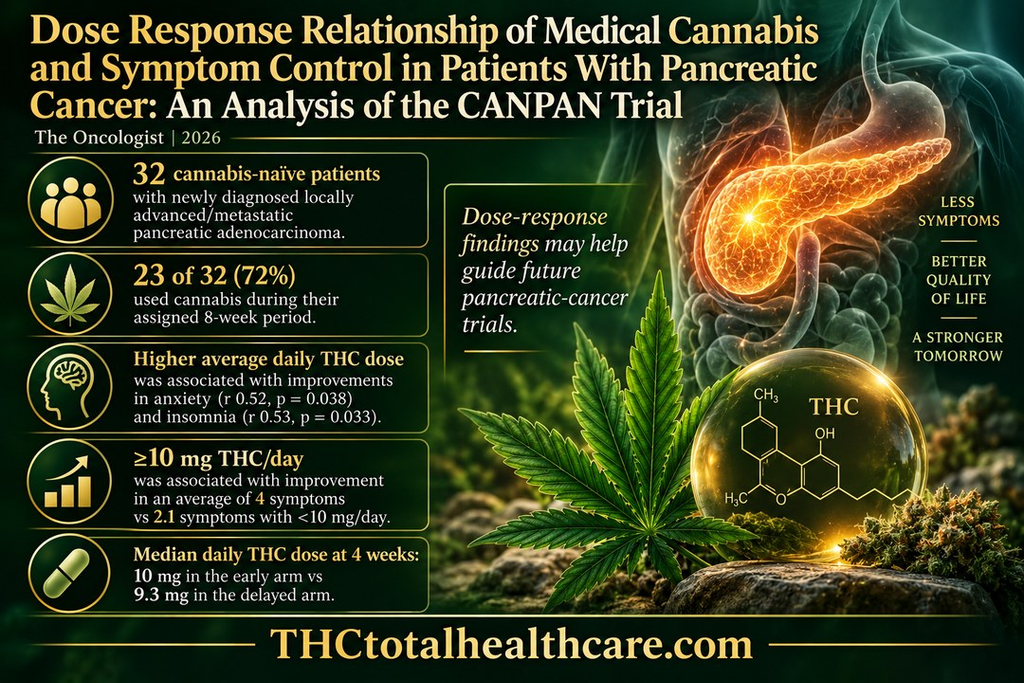
A new analysis of the CANPAN trial found a clear dose-response relationship between THC and symptom improvement in patients with pancreatic cancer. The trial enrolled 32 cannabis-naïve patients with newly diagnosed locally advanced or metastatic pancreatic adenocarcinoma, and 23 used medical cannabis during their assigned eight-week treatment period.
Higher average daily THC doses were significantly associated with greater improvements in anxiety and insomnia. Patients receiving at least 10 mg of THC per day improved in an average of four symptoms, compared with 2.1 symptoms among patients receiving less than 10 mg per day.
The authors say these findings provide important dose-response information for future pancreatic-cancer trials, particularly for psychological symptoms and multi-symptom control. The results add to evidence from the CANPAN trial that personalized medical cannabis may have a role in managing symptoms experienced by people undergoing treatment for pancreatic cancer.
“Background: In a pilot waitlist-control randomized trial, a personalized medical cannabis intervention improved certain symptoms among patients with pancreatic cancer over 8 weeks. Longer-term and dose-response data can guide future trial design.
Methods: CANPAN enrolled 32 cannabis-naïve patients with newly diagnosed locally advanced/metastatic pancreatic adenocarcinoma (NCT06605430). Patients were randomized to early (0-8 weeks) or delayed (9-16 weeks) cannabis intervention. Primary efficacy results over the first 8 weeks were previously reported. We investigated cannabis use and patient-reported outcome (PRO) completion over 9-16 weeks, and the relationship between tetrahydrocannabinol (THC) dose and symptom efficacy.
Results: Among 32 participants, 23 (72%) used cannabis during their assigned 8-week period (12/16 in early arm and 11/16 in delayed arm). Of these, 16 (50%) had both pre-cannabis and 8-week post-cannabis initiation PRO data available. At the end of the 16-week study period, PRO data were available for 16 (50%) participants (9/16 early arm, 7/16 delayed arm). Median daily THC dose 4 weeks after starting cannabis was similar in early vs delayed arms (10 mg vs 9.3 mg). A higher average daily THC dose was associated with improvements in anxiety (r 0.52, p = 0.038) and insomnia (r 0.53, p = 0.033). A ≥ 10 mg daily THC dose (vs < 10 mg) was associated with mean improvement in 4 vs 2.1 symptoms.
Conclusions: The 50% complete data availability at 16 weeks, dose-response relationship with psychological symptoms, and threshold dose for multi-symptom efficacy will guide future trials. Similar cannabis use patterns across arms raise confidence in the waitlist-control design.”
https://pubmed.ncbi.nlm.nih.gov/42767994
https://academic.oup.com/oncolo/advance-article/doi/10.1093/oncolo/oyag374/8826188