
“Despite current therapeutic strategies for immunomodulation and relief of symptoms in multiple sclerosis (MS), remyelination falls short due to dynamic neuropathologic deterioration and relapses, leading to accrual of disability and associated patient dissatisfaction. The potential of cannabinoids includes add-on immunosuppressive, analgesic, neuroprotective, and remyelinative effects. This study evaluates the efficacy of medical marijuana in MS and its experimental animal models. A systematic review was conducted by a literature search through PubMed, ProQuest, and EBSCO electronic databases for studies reported since 2007 on the use of cannabidiol (CBD) and delta-9-tetrahydrocannabinol (THC) in MS and in experimental autoimmune encephalomyelitis (EAE), Theiler’s murine encephalomyelitis virus-induced demyelinating disease (TMEV-IDD), and toxin-induced demyelination models. Study selection and data extraction were performed by 3 reviewers, and 28 studies were selected for inclusion. The certainty of evidence was appraised using the Cochrane GRADE approach. In clinical studies, there was low- and moderate-quality evidence that treatment with ~1:1 CBD/THC mixtures as a nabiximols (Sativex®) oromucosal spray reduced numerical rating scale (NRS) scores for spasticity, pain, and sleep disturbance, diminished bladder overactivity, and decreased proinflammatory cytokine and transcription factor expression levels. Preclinical studies demonstrated decreases in disease severity, hindlimb stiffness, motor function, neuroinflammation, and demyelination. Other experimental systems showed the capacity of cannabinoids to promote remyelination in vitro and by electron microscopy. Modest short-term benefits were realized in MS responders to adjunctive therapy with CBD/THC mixtures. Future studies are recommended to investigate the cellular and molecular mechanisms of cannabinoid effects on MS lesions and to evaluate whether medical marijuana can accelerate remyelination and retard the accrual of disability over the long term.”
Category Archives: Autoimmune Disease
Δ 9 -Tetrahydrocannabinol promotes functional remyelination in the mouse brain
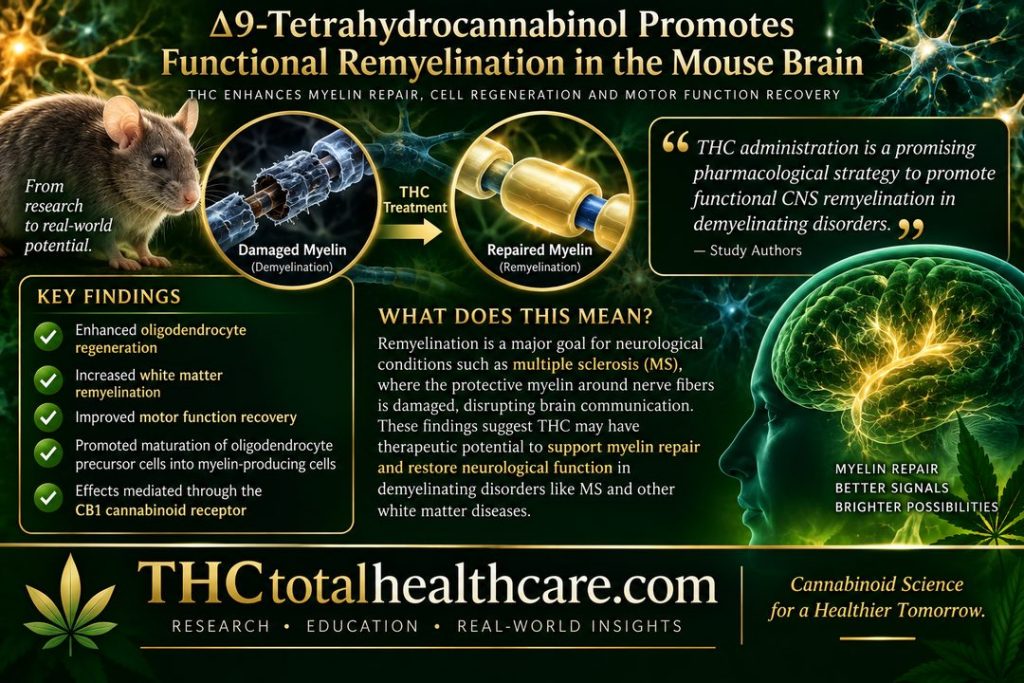
Myelin is the protective coating that surrounds nerve fibers and helps electrical signals move efficiently through the brain and spinal cord. Damage to myelin is a major feature of neurological disorders involving demyelination, making the repair of this protective layer an important therapeutic target.
In this mouse study, Δ9-THC promoted the regeneration of oligodendrocytes, the cells responsible for producing myelin, and enhanced remyelination in damaged white matter. THC treatment was also associated with improved recovery of motor function.
The researchers found that these effects involved activation of the CB1 cannabinoid receptor and the maturation of oligodendrocyte precursor cells into myelin-producing cells. The findings suggest that THC may have potential as a compound capable of supporting functional repair after myelin damage.
“Background and purpose: Research on demyelinating disorders aims to find novel molecules that are able to induce oligodendrocyte precursor cell differentiation to promote central nervous system remyelination and functional recovery. Δ9 -Tetrahydrocannabinol (THC), the most prominent active constituent of the hemp plant Cannabis sativa, confers neuroprotection in animal models of demyelination. However, the possible effect of THC on myelin repair has never been studied.
Experimental approach: By using oligodendroglia-specific reporter mouse lines in combination with two models of toxin-induced demyelination, we analysed the effect of THC on the processes of oligodendrocyte regeneration and functional remyelination.
Key results: We show that THC administration enhanced oligodendrocyte regeneration, white matter remyelination and motor function recovery. THC also promoted axonal remyelination in organotypic cerebellar cultures. THC remyelinating action relied on the induction of oligodendrocyte precursor differentiation upon cell cycle exit and via CB1 cannabinoid receptor activation.
Conclusions and implications: Overall, our study identifies THC administration as a promising pharmacological strategy aimed to promote functional CNS remyelination in demyelinating disorders.”
https://pubmed.ncbi.nlm.nih.gov/34216154/
“THC administration following cuprizone-induced demyelination enhanced oligodendrocyte regeneration, white matter remyelination and motor function recovery.”
“THC administration is a promising pharmacological strategy to promote functional CNS remyelination in demyelinating disorders.”
“Our study provides a novel therapeutic advantage of THC-based interventions in multiple sclerosis by promoting remyelination and functional recovery. New clinical trials with improved designs on cannabinoids in people with multiple sclerosis are needed now, considering these compounds as potential remyelinating/disease-modifying drugs to try to overcome previous failures. Our work also suggests that at least part of the neuroprotective action of phytocannabinoids in multiple sclerosis animal models and potentially in patients as well may be due to an enhanced CNS remyelination. Finally, this study also identifies THC as a potent inductor of oligodendrocyte progenitor cell differentiation under demyelination in mice, opening the possibility for this molecule to become a candidate drug to promote oligodendrocyte regeneration and remyelination in the treatment of demyelinating disorders.”
https://bpspubs.onlinelibrary.wiley.com/doi/10.1111/bph.15608
Need this THC study explained? thcXplained.com
Cannabinoids induce functional Tregs by promoting tolerogenic DCs via autophagy and metabolic reprograming
 “The generation of functional regulatory T cells (Tregs) is essential to keep tissue homeostasis and restore healthy immune responses in many biological and inflammatory contexts.
Cannabinoids have been pointed out as potential therapeutic tools for several diseases.
Dendritic cells (DCs) express the endocannabinoid system, including the cannabinoid receptors CB1 and CB2. However, how cannabinoids might regulate functional properties of DCs is not completely understood.
We uncover that the triggering of cannabinoid receptors promote human tolerogenic DCs that are able to prime functional FOXP3+ Tregs in the context of different inflammatory diseases. Mechanistically, cannabinoids imprint tolerogenicity in human DCs by inhibiting NF-κB, MAPK and mTOR signalling pathways while inducing AMPK and functional autophagy flux via CB1- and PPARα-mediated activation, which drives metabolic rewiring towards increased mitochondrial activity and oxidative phosphorylation.
Cannabinoids exhibit in vivo protective and anti-inflammatory effects in LPS-induced sepsis and also promote the generation of FOXP3+ Tregs. In addition, immediate anaphylactic reactions are decreased in peanut allergic mice and the generation of allergen-specific FOXP3+ Tregs are promoted, demonstrating that these immunomodulatory effects take place in both type 1- and type 2-mediated inflammatory diseases.
Our findings might open new avenues for novel cannabinoid-based interventions in different inflammatory and immune-mediated diseases.”
“Cannabinoids have been pointed out as potential therapeutic tools for several diseases. Our results might well contribute to pave the way for the future development of novel cannabinoid-based strategies for different inflammatory and immune-mediated diseases.”
The Endocannabinoid System: A Potential Target for the Treatment of Various Diseases

 “The Endocannabinoid System (ECS) is primarily responsible for maintaining homeostasis, a balance in internal environment (temperature, mood, and immune system) and energy input and output in living, biological systems.
In addition to regulating physiological processes, the ECS directly influences anxiety, feeding behaviour/appetite, emotional behaviour, depression, nervous functions, neurogenesis, neuroprotection, reward, cognition, learning, memory, pain sensation, fertility, pregnancy, and pre-and post-natal development.
The ECS is also involved in several pathophysiological diseases such as cancer, cardiovascular diseases, and neurodegenerative diseases. In recent years, genetic and pharmacological manipulation of the ECS has gained significant interest in medicine, research, and drug discovery and development.
The distribution of the components of the ECS system throughout the body, and the physiological/pathophysiological role of the ECS-signalling pathways in many diseases, all offer promising opportunities for the development of novel cannabinergic, cannabimimetic, and cannabinoid-based therapeutic drugs that genetically or pharmacologically modulate the ECS via inhibition of metabolic pathways and/or agonism or antagonism of the receptors of the ECS. This modulation results in the differential expression/activity of the components of the ECS that may be beneficial in the treatment of a number of diseases.
This manuscript in-depth review will investigate the potential of the ECS in the treatment of various diseases, and to put forth the suggestion that many of these secondary metabolites of Cannabis sativa L. (hereafter referred to as “C. sativa L.” or “medical cannabis”), may also have potential as lead compounds in the development of cannabinoid-based pharmaceuticals for a variety of diseases.”
https://www.mdpi.com/1422-0067/22/17/9472

“Cannabis sativa L. as a Natural Drug Meeting the Criteria of a Multitarget Approach to Treatment”
Δ 9 -Tetrahydrocannabinol promotes functional remyelination in the mouse brain
 “Background and purpose: Research on demyelinating disorders aims to find novel molecules that are able to induce oligodendrocyte precursor cell differentiation to promote central nervous system remyelination and functional recovery.
Δ9 -Tetrahydrocannabinol (THC), the most prominent active constituent of the hemp plant Cannabis sativa, confers neuroprotection in animal models of demyelination. However, the possible effect of THC on myelin repair has never been studied.
Experimental approach: By using oligodendroglia-specific reporter mouse lines in combination with two models of toxin-induced demyelination, we analysed the effect of THC on the processes of oligodendrocyte regeneration and functional remyelination.
Key results: We show that THC administration enhanced oligodendrocyte regeneration, white matter remyelination and motor function recovery. THC also promoted axonal remyelination in organotypic cerebellar cultures. THC remyelinating action relied on the induction of oligodendrocyte precursor differentiation upon cell cycle exit and via CB1 cannabinoid receptor activation.
Conclusions and implications: Overall, our study identifies THC administration as a promising pharmacological strategy aimed to promote functional CNS remyelination in demyelinating disorders.”
“Our study provides a novel therapeutic advantage of THC-based interventions in multiple sclerosis by promoting remyelination and functional recovery. New clinical trials with improved designs on cannabinoids in people with multiple sclerosis are needed now, considering these compounds as potential remyelinating/disease-modifying drugs to try to overcome previous failures. Our work also suggests that at least part of the neuroprotective action of phytocannabinoids in multiple sclerosis animal models and potentially in patients as well may be due to an enhanced CNS remyelination. Finally, this study also identifies THC as a potent inductor of oligodendrocyte progenitor cell differentiation under demyelination in mice, opening the possibility for this molecule to become a candidate drug to promote oligodendrocyte regeneration and remyelination in the treatment of demyelinating disorders.”
https://bpspubs.onlinelibrary.wiley.com/doi/10.1111/bph.15608
Therapeutic Attributes of Endocannabinoid System against Neuro-Inflammatory Autoimmune Disorders
 “In humans, various sites like cannabinoid receptors (CBR) having a binding affinity with cannabinoids are distributed on the surface of different cell types, where endocannabinoids (ECs) and derivatives of fatty acid can bind. The binding of these substance(s) triggers the activation of specific receptors required for various physiological functions, including pain sensation, memory, and appetite.
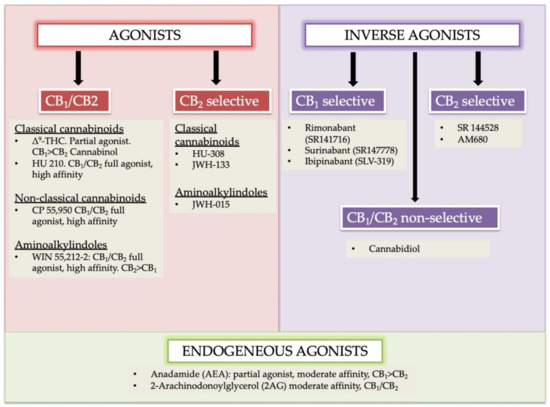
The ECs and CBR perform multiple functions via the cannabinoid receptor 1 (CB1); cannabinoid receptor 2 (CB2), having a key effect in restraining neurotransmitters and the arrangement of cytokines. The role of cannabinoids in the immune system is illustrated because of their immunosuppressive characteristics. These characteristics include inhibition of leucocyte proliferation, T cells apoptosis, and induction of macrophages along with reduced pro-inflammatory cytokines secretion.
The review seeks to discuss the functional relationship between the endocannabinoid system (ECS) and anti-tumor characteristics of cannabinoids in various cancers.
The therapeutic potential of cannabinoids for cancer-both in vivo and in vitro clinical trials-has also been highlighted and reported to be effective in mice models in arthritis for the inflammation reduction, neuropathic pain, positive effect in multiple sclerosis and type-1 diabetes mellitus, and found beneficial for treating in various cancers.
In human models, such studies are limited; thereby, further research is indispensable in this field to get a conclusive outcome. Therefore, in autoimmune disorders, therapeutic cannabinoids can serve as promising immunosuppressive and anti-fibrotic agents.”
https://pubmed.ncbi.nlm.nih.gov/34205169/
https://www.mdpi.com/1420-3049/26/11/3389
Epigenetic Regulation of Cannabinoid-Mediated Attenuation of Inflammation and Its Impact on the Use of Cannabinoids to Treat Autoimmune Diseases
“Chronic inflammation is considered to be a silent killer because it is the underlying cause of a wide range of clinical disorders, from cardiovascular to neurological diseases, and from cancer to obesity. In addition, there are over 80 different types of debilitating autoimmune diseases for which there are no cure. Currently, the drugs that are available to suppress chronic inflammation are either ineffective or overtly suppress the inflammation, thereby causing increased susceptibility to infections and cancer. Thus, the development of a new class of drugs that can suppress chronic inflammation is imperative.
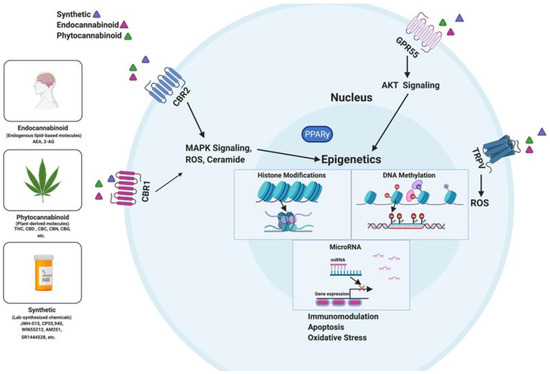
Cannabinoids are a group of compounds produced in the body (endocannabinoids) or found in cannabis (phytocannabinoids) that act through cannabinoid receptors and various other receptors expressed widely in the brain and immune system. In the last decade, cannabinoids have been well established experimentally to mediate anti-inflammatory properties. Research has shown that they suppress inflammation through multiple pathways, including apoptosis and inducing immunosuppressive T regulatory cells (Tregs) and myeloid-derived suppressor cells (MDSCs).
Interestingly, cannabinoids also mediate epigenetic alterations in genes that regulate inflammation. In the current review, we highlight how the epigenetic modulations caused by cannabinoids lead to the suppression of inflammation and help identify novel pathways that can be used to target autoimmune diseases.”
https://www.mdpi.com/1422-0067/22/14/7302
Therapeutic Prospects of Cannabinoids in the Immunomodulation of Prevalent Autoimmune Diseases
 “Cannabinoids such as ▵-9-THC and CBD can downregulate the immune response by modulating the endocannabinoid system. This modulation is relevant for the treatment of prevalent autoimmune diseases (ADs), such as multiple sclerosis (MS), systemic lupus erythematosus (SLE), diabetes mellitus type 1 (DMT1), and rheumatoid arthritis (RA). These conditions require new therapeutic options with fewer side effects for the control of the autoimmune response. Objective: to conduct a literature review of preclinical scientific evidence that supports further clinical investigations for the use of cannabinoids (natural or synthetic) as potential immunomodulators of the immune response in ADs.
Methodology: A systematic search was carried out in different databases using different MeSH terms, such as Cannabis sativa L., cannabinoids, immunomodulation, and ADs. Initially, 677 journal articles were found. After filtering by publication date (from 2000 to 2020 for SLE, DMT1, and RA; and 2010 to 2020 for MS) and removing the duplicate items, 200 articles were selected and analyzed by title and summary associated with the use of cannabinoids as immunomodulatory treatment for those diseases.
Results: Evidence of the immunomodulatory effect of cannabinoids in the diseases previously mentioned, but SLE that did not meet the search criteria, was summarized from 24 journal articles. CBD was found to be one of the main modulators of the immune response. This molecule decreased the number of Th1 and Th17 proinflammatory cells and the production of the proinflammatory cytokines, interleukin (IL)-1, IL-12, IL-17, interferon (IFN)-γ, and tumor necrosis factor alpha, in mouse models of MS and DMT1. Additionally, new synthetic cannabinoid-like molecules, with agonist or antagonist activity on CB1, CB2, TRPV1, PPAR-α, and PPAR-γ receptors, have shown anti-inflammatory properties in MS, DMT1, and RA.
Conclusion: Data from experimental animal models of AD showed that natural and synthetic cannabinoids downregulate inflammatory responses mediated by immune cells responsible for AD chronicity and progression. Although synthetic cannabinoid-like molecules were evaluated in just two clinical trials, they corroborated the potential use of cannabinoids to treat some ADs. Notwithstanding, new cannabinoid-based approaches are required to provide alternative treatments to patients affected by the large group of ADs.”
https://pubmed.ncbi.nlm.nih.gov/34030476/
https://www.liebertpub.com/doi/10.1089/can.2020.0183
A Critical Review of the Role of the Cannabinoid Compounds Δ 9-Tetrahydrocannabinol (Δ 9-THC) and Cannabidiol (CBD) and their Combination in Multiple Sclerosis Treatment
“Many people with MS (pwMS) use unregulated cannabis or cannabis products to treat the symptoms associated with the disease. In line with this, Sativex, a synthetic combination of cannabidiol (CBD) and Δ9-tetrahydrocannabinol (Δ9-THC) has been approved to treat symptoms of spasticity.
In animals, CBD is effective in reducing the amounts of T-cell infiltrates in the spinal cord, suggesting CBD has anti-inflammatory properties. By doing this, CBD has shown to delay symptom onset in animal models of multiple sclerosis and slow disease progression. Importantly, combinations of CBD and Δ9-THC appear more effective in treating animal models of multiple sclerosis.
While CBD reduces the amounts of cell infiltrates in the spinal cord, Δ9-THC reduces scores of spasticity. In human studies, the results are less encouraging and conflict with the findings in animals. Drugs which deliver a combination of Δ9-THC and CBD in a 1:1 ratio appear to be only moderately effective in reducing spasticity scores, but appear to be almost as effective as current front-line treatments and cause less severe side effects than other treatments, such as baclofen (a GABA-B receptor agonist) and tizanidine (an α2 adrenergic receptor agonist).
The findings of the studies reviewed suggest that cannabinoids may help treat neuropathic pain in pwMS as an add-on therapy to already established pain treatments.
Long term double-blind placebo studies are greatly needed to further our understanding of the role of cannabinoids in multiple sclerosis treatment.”
https://pubmed.ncbi.nlm.nih.gov/33113776/
https://www.mdpi.com/1420-3049/25/21/4930
Δ 9 -Tetrahydrocannabinol promotes oligodendrocyte development and CNS myelination in vivo

Δ9-THC promoted the development of oligodendrocytes, the cells responsible for producing myelin, and increased central nervous system myelination in young mice. THC pushed oligodendrocyte precursor cells to stop dividing and mature into myelin-producing cells.
The effect depended on both CB1 and CB2 cannabinoid receptors. When researchers blocked those receptors, THC’s effects on oligodendrocyte development and myelination were prevented, showing that cannabinoid-receptor signaling was central to the response.
The study also identified the mTORC1 signaling pathway as an important part of the mechanism. The authors concluded that THC represents a novel pharmacological candidate for enhancing oligodendrocyte development and CNS myelination in vivo.
“Δ9 -Tetrahydrocannabinol (THC), the main bioactive compound found in the plant Cannabis sativa, exerts its effects by activating cannabinoid receptors present in many neural cells.
Cannabinoid receptors are also physiologically engaged by endogenous cannabinoid compounds, the so-called endocannabinoids. Specifically, the endocannabinoid 2-arachidonoylglycerol has been highlighted as an important modulator of oligodendrocyte (OL) development at embryonic stages and in animal models of demyelination. However, the potential impact of THC exposure on OL lineage progression during the critical periods of postnatal myelination has never been explored.
Here, we show that acute THC administration at early postnatal ages in mice enhanced OL development and CNS myelination in the subcortical white matter by promoting oligodendrocyte precursor cell cycle exit and differentiation.
Mechanistically, THC-induced-myelination was mediated by CB1 and CB2 cannabinoid receptors, as demonstrated by the blockade of THC actions by selective receptor antagonists. Moreover, the THC-mediated modulation of oligodendroglial differentiation relied on the activation of the mammalian target of rapamycin complex 1 (mTORC1) signaling pathway, as mTORC1 pharmacological inhibition prevented the THC effects.
Our study identifies THC as an effective pharmacological strategy to enhance oligodendrogenesis and CNS myelination in vivo.”
https://pubmed.ncbi.nlm.nih.gov/32956517
“In summary, our findings identify THC as a novel pharmacological candidate to enhance OL development and CNS myelination in vivo.”
https://onlinelibrary.wiley.com/doi/10.1002/glia.23911
Need this THC study explained? thcXplained.com