Marijuana Use for Symptom Control in Inflammatory Bowel Disease: Patients’ Perceptions and Patterns of Use

Many people with inflammatory bowel disease use cannabis to manage symptoms that remain difficult to control. In this survey of 108 patients with IBD, frequent marijuana use was associated with reported relief of nausea and vomiting, joint pain, and insomnia, while 87.6% of participants said it improved their quality of life and 59.3% believed it reduced their opioid use.

Introduction: Many patients with inflammatory bowel disease (IBD) use marijuana for disease-related symptoms. Data regarding reasons for usage, impact, and perceptions on its effects is lacking. Our study aimed to understand patterns of marijuana use, underlying symptom response, and beliefs about marijuana in patients with IBD.

Methods: An anonymous REDCap survey comprised of 39 questions on demographics, disease features, patterns of marijuana use, symptoms, quality of life, and true/false statements about marijuana was administered to 108 participants recruited from University of Florida (UF) IBD clinic.

Results: Participants were 47.2% male and 51.9% female. While a significant percentage of subjects reported co-morbid depression/anxiety (61.1%), the percentages for PTSD and ADHD are both 19.4%. Patient characteristics are compared among three reasons of marijuana use (Recreational, Medical and Combination). There was a notable shift in reasons for use with both age (p = 0.0074) and duration of IBD diagnosis (p = 0.006): recreational use is more common among younger patients and those with a shorter duration of IBD diagnosis, medical use becomes predominant in middle-aged patients and those with an intermediate duration of diagnosis, and combination use increases among older patients and those with the longest duration of IBD diagnosis. Comparisons are also conducted based on the frequency of marijuana usage. Associations were found between marijuana use frequency and symptom relief. Daily or near-daily marijuana use was associated with self-reported relief of nausea/vomiting (82.1%; p = 0.003), arthralgias (81%; p = 0.013), and insomnia (80%; p = 0.02). Additionally, marijuana use was linked to an improved ability to live independently (p = 0.0075) and current employment (p = 0.04). Patients with a history of bowel surgery were more likely to report marijuana use lasting longer than 5 years (OR 21.94, CI [2.91, 250.18], p = 0.0059) and using marijuana at least once weekly (OR 11.13, CI [1.78, 97.69], p = 0.0163). Notably, 59.3% of respondents believed marijuana use had reduced their opioid consumption. Marijuana users with a history of IBD-related hospitalization had higher odds of reporting depression/anxiety (OR 14.3, CI [2.34, 143.2], p = 0.009) and diarrhea symptoms (OR 13.3, CI [2.2, 128.9], p = 0.01). When asked how marijuana use affected their ability to live independently, 61.3% of participants reported “improved.” Similarly, 87.6% respondents reported improvement in their quality of life with marijuana use.

Conclusions: Marijuana can be helpful for symptom control, reducing reliance on opioid pharmaceuticals, and may improve quality of life in patients with IBD. Participants demonstrated good insight regarding the role of marijuana in the management of their disease.”

https://pubmed.ncbi.nlm.nih.gov/42592634

“Inflammatory bowel disease is an autoimmune condition causing inflammation in the small intestines and colon. It can often lead to chronic pain, hospitalization, surgery, and poor quality of life. Data regarding marijuana use among patients with inflammatory bowel disease is lacking. We conducted an anonymous survey of 108 participants with inflammatory bowel disease who use marijuana. Most participants reported improvement in symptoms, decreased opioid usage, and accurate perceptions on marijuana effects in their disease process.”

https://karger.com/mca/article/9/1/211/951948/Marijuana-Use-for-Symptom-Control-in-Inflammatory

Stability of Cannabinoids in Cannabis: Plant Material, Extracts, Oil Formulations, and Isolates (CBD and Δ9-THC) Under Different Storage Conditions

Cannabinoid products can lose potency or change chemically over time depending on how they are stored. This study compared the stability of CBD and Δ9-THC in cannabis plant material, extracts, oil formulations, and purified isolates under different storage conditions, showing that temperature, light, formulation, and storage duration can significantly influence cannabinoid stability.

Background: The chemical stability of cannabinoids in Cannabis sativa plant material and formulated products is a critical factor for quality control, therapeutic efficacy, and regulatory compliance. Cannabinoids such as THC are prone to degradation over time, which is heavily influenced by storage conditions and the product matrix. Despite its importance, comprehensive long-term stability data comparing different plant chemovars (high THC, high cannabidiol [CBD], and intermediate) alongside processed products like extracts and isolates remains limited. This study aims to evaluate the stability of cannabinoids in plant material, extracts, oil formulations, and isolates (CBD and Δ9-THC) under distinct environmental temperatures to optimize storage guidelines.

Methods: Cannabis plant material representing three distinct chemovars-high THC, high CBD, and intermediate (balanced THC/CBD), extracts, pure isolates (THC and CBD) and CBD extract as oil formulation were subjected to extended stability testing over a prolonged period under three controlled temperature environments: room temperature, refrigeration, and freezing. Quantitative analysis of cannabinoid content was performed at regular intervals using gas chromatography (GC/FID) to track degradation and potency over time.

Results: The stability profiles varied depending on the cannabinoid profile, temperature, and matrix type. For the majority of cannabis-derived products, exposure to room temperature accelerated the degradation of THC into cannabinol (CBN), whereas storage at -20°C preserved cannabinoid integrity over the extended timeline. Notably, a distinct divergence was observed between the compounds: CBD-only products demonstrated robust long-term stability even when maintained at room temperature. Conversely, THC-rich matrices were highly susceptible to ambient degradation but exhibited the highest stability when formulated as ethanolic solutions and stored in the freezer (-20°C).

Conclusion: To maximize cannabinoid shelf-life and prevent degradation, storage temperatures must match product composition. While CBD-dominant products can tolerate room-temperature storage, THC-rich products require cold chain management, ideally stored in a freezer at -20°C for optimal long-term potency.”

https://pubmed.ncbi.nlm.nih.gov/42576671

https://journals.sagepub.com/doi/10.1177/25785125261478275

Cannabis-Based Medicinal Products for Endometriosis: A 2-Year Prospective Analysis From the UK Medical Cannabis Registry

Endometriosis can cause persistent pelvic pain, sleep disturbance, and reduced quality of life despite conventional treatment. In this prospective registry study, patients prescribed cannabis-based medicinal products reported sustained improvements in pain, sleep, anxiety, and overall quality of life over two years, with adverse effects generally mild to moderate.

Background: Endometriosis affects up to 10% of biological females of reproductive age. Current treatment options are limited and often unsuitable for prolonged use. Cannabis-based medicinal products (CBMPs) have emerged as an alternative for pain management.

Aims: To analyse changes in patient-reported outcome measures (PrOMs), prescribed opioid burden, and the prevalence of adverse events (AEs) in patients prescribed CBMPs for endometriosis-associated pain.

Materials and methods: This was an observational analysis of prospectively collected data from the UK Medical Cannabis Registry. Biological females (≥ 18 years) with a primary diagnosis of endometriosis, enrolled ≥ 2 years prior to data extraction on 06/01/2025, were included. PrOMs and prescribed oral morphine equivalents (OME) were assessed between baseline and 1, 3, 6, 12, 18, and 24 months. Changes from baseline were assessed by repeated-measures ANOVA and Bonferroni-adjusted post hoc pairwise t-tests. p < 0.050 was considered statistically significant.

Results: One hundred and one patients were included. Improvements from baseline were observed in BPI Severity, BPI Interference, SF-MPQ-2 Total, Pain VAS, EQ-5D-5L Index, GAD-7, and SQS at all follow-ups (p < 0.001). Mean prescribed OME decreased from 19.9 ± 17.2 mg/day at baseline to 14.8 ± 15.9 mg/day at 24 months. Eighteen participants (17.8%) reported 165 AEs, of which 84 (50.9%) were mild. The most frequent were fatigue (n = 16; 15.8%), lethargy (n = 15; 14.9%), and headache (n = 13; 12.9%).

Conclusion: CBMP treatment was associated with sustained improvements in pain, health-related quality of life, sleep, and anxiety at 24 months, with a favourable AE profile. Randomised controlled trials are required to establish efficacy and safety.”

https://pubmed.ncbi.nlm.nih.gov/42576801

“Cannabis-based medicinal products (CBMPs) have emerged as an alternative for managing endometriosis-associated chronic pain.

CBMPs include phytocannabinoids such as cannabidiol (CBD) and Δ9-tetrahydrocannabinol (THC), which interact with the endocannabinoid system through cannabinoid receptor type 1 (CB1) and type 2 (CB2).

Anandamide, an endogenous cannabinoid, binds to these receptors to modulate pain. THC is a partial agonist of CB1 and CB2, while CBD increases anandamide by inhibiting its breakdown.”

https://obgyn.onlinelibrary.wiley.com/doi/10.1111/ajo.70173

Efficacy of cannabinoids for insomnia and sleep disturbance: A systematic review and meta-analysis of randomized controlled trials

Cannabinoids may offer a meaningful alternative for adults struggling with insomnia and poor sleep quality. In a meta-analysis of 10 randomized controlled trials involving 2,134 participants, cannabinoids significantly reduced insomnia severity, improved sleep quality, increased total sleep time by about 34 minutes, and modestly shortened the time needed to fall asleep.

Background: Insomnia is a common sleep disorder that presents with difficulty falling asleep or staying asleep. Standard hypnotics often lead to tolerance and dependency, prompting interest in cannabinoids as alternative sleep aids. This study evaluated the efficacy and safety of cannabinoids in improving sleep among adults with insomnia or poor sleep quality.

Methods: PubMed, EMBASE, Cochrane Library, Scopus, and Web of Science were searched from inception to January 2025 for randomized controlled trials (RCTs) comparing cannabinoids with placebo or melatonin. Primary outcomes were changes in Insomnia Severity Index (ISI) and Pittsburgh Sleep Quality Index (PSQI). Pooled mean differences (MD) or risk ratios (RR) with 95% confidence intervals (CI) were calculated using random-effects models.

Results: Ten RCTs involving 2134 participants were included. Cannabinoids significantly reduced insomnia severity (MD -3.73; 95% CI -5.04 to -2.42; p < 0.001) and improved sleep quality (MD -3.94; 95% CI -5.47 to -2.40; p < 0.001). Total sleep time increased by 33.99 min (95% CI 20.39 to 47.60), and sleep efficiency improved by 4.31% (95% CI 3.00 to 5.62). Sleep onset latency was modestly reduced (MD -12.0 min; 95% CI -22.6 to -1.4; p = 0.03). Adverse events, mostly mild dizziness and dry mouth, were more frequent with cannabinoids (RR 3.96; 95% CI 1.75 to 9.00), but no serious harms were observed.

Conclusion: Cannabinoids improve sleep quality and duration with acceptable safety, offering a potential alternative for managing insomnia. Larger, long-term trials are warranted to define optimal dosing and sustained efficacy.”

https://pubmed.ncbi.nlm.nih.gov/42574897

“Cannabinoids significantly improved insomnia symptoms and overall sleep quality compared with control treatments.”

“Participants receiving cannabinoids experienced longer sleep duration and better sleep efficiency.”

“Cannabinoid use was associated with faster sleep initiation and improved nighttime sleep continuity.”

https://www.sciencedirect.com/science/article/abs/pii/S1389945726004326?via%3Dihub

Delta-9-Tetrahydrocannabinol (∆9-THC) Induce Neurogenesis and Improve Cognitive Performances of Male Sprague Dawley Rats

THC is often associated with impaired memory, but its effects on the brain may depend heavily on dose and context. In this rat study, Δ9-THC enhanced markers involved in multiple stages of hippocampal neurogenesis and improved learning and memory performance, with the 1.5 mg/kg dose producing particularly strong effects on both neurogenesis and cognitive function.

“Neurogenesis is influenced by various external factors such as enriched environments. Some researchers had postulated that neurogenesis has contributed to the hippocampal learning and memory.

This project was designed to observe the effect of Delta-9-tetrahydrocannabinol (∆9-THC) in cognitive performance that influenced by the neurogenesis.

Different doses of ∆9-THC were used for observing the neurogenesis mechanism occurs in the hippocampus of rats. The brains were stained with antibodies, namely BrdU, glial fibrillary acidic protein (GFAP), nestin, doublecortin (DCX) and class III β-tubulin (TuJ-1). The cognitive test was used novel-object discrimination test (NOD) while the proteins involved, DCX and brain-derived neurotrophic factor (BDNF), were measured.

Throughout this study, ∆9-THC enhanced the markers involved in all stages of neurogenesis mechanism. Simultaneously, the cognitive behaviour of rat also showed improvement in learning and memory functions observed in behavioural test and molecular perspective.

Administration of ∆9-THC was observed to enhance the neurogenesis in the brain, especially in hippocampus thus improved the cognitive function of rats.”

https://pubmed.ncbi.nlm.nih.gov/28933048

“The treatment of 1.5 mg/kg of ∆9-THC has increase all the markers for neurogenesis and cognition function while improve the cognitive performance.”

https://link.springer.com/article/10.1007/s12640-017-9806-x

“Neurogenesis is the scientific term for the birth and growth of new brain cells.”


Δ9-Tetrahydrocannabinol Modulates Hippocampal Neurogenesis in Female Wistar Rats: Interaction with Estradiol

THC may influence the female brain through both neurogenic and anti-inflammatory mechanisms. In ovariectomized female rats, Δ9-THC significantly increased hippocampal cell proliferation, showed evidence of enhanced neurogenesis, and reduced the inflammatory markers COX-2 and TNF-α. The effects also interacted with estradiol, highlighting the importance of hormonal status in determining THC’s actions in the brain.

“The endocannabinoid system (ECS) plays a key role in regulating neurogenesis and inflammatory processes in the brain.

The increasing prevalence of Cannabis use among women highlights the importance of understanding sex-specific effects of cannabinoids, particularly in the context of hormonal interactions.

This study aimed to investigate the effects of delta-9-tetrahydrocannabinol (THC) and estradiol benzoate (EB) on adult hippocampal neurogenesis (AHN) and inflammation in ovariectomized female Wistar rats.

Sixteen rats were allocated to four experimental groups receiving THC, EB, both treatments, and vehicle. Immunohistochemical analyses were conducted to evaluate markers of proliferation (Ki-67), neurogenesis (doublecortin and PSA-NCAM), cannabinoid receptor expression (CB1), and inflammation (COX-2 and TNF-α) in the hippocampal formation.

The administration of THC significantly increased Ki-67 immunoreactivity, suggesting enhanced cell proliferation. A trend toward increased doublecortin expression was observed, particularly in EB-treated animals. THC also modulated CB1 receptor expression, with significant increases in the dentate gyrus and hilus following combined THC and EB treatment. Furthermore, THC reduced inflammatory markers, with region-dependent decreases in COX-2 and TNF-α expression.

These findings indicate that THC influences markers associated with hippocampal cell proliferation, neurogenesis, cannabinoid signaling and inflammation in female rats, and that some of these effects depend on estradiol status.

The interaction between cannabinoids and gonadal hormones may represent an important mechanism underlying sex-specific neurobiological responses and suggests potential targets for therapeutic intervention in neuropsychiatric disorders.”

https://pubmed.ncbi.nlm.nih.gov/42570151

https://link.springer.com/article/10.1007/s11064-026-04857-w


Real-world quality of life and sleep outcomes in patients treated with THC- and CBD-rich Cannabis oil: a cross-sectional study

Patients using THC- and CBD-rich cannabis oil reported meaningful improvements in both sleep and overall quality of life in this real-world study. The findings suggest that cannabinoid-rich oil formulations may help address multiple symptom domains at once, particularly in patients dealing with persistent sleep disturbance and reduced day-to-day well-being.

“The endocannabinoid system plays an important role in the modulation of pain, mood, sleep, and subjective wellbeing. Despite the growing clinical use of medicinal Cannabis, real-world data simultaneously evaluating quality of life and sleep-related outcomes in heterogeneous clinical populations remain limited.

This study aimed to assess quality of life and sleep satisfaction in patients using medical Cannabis oil under supervised clinical follow-up. This cross-sectional observational study included patients treated with full-spectrum medical Cannabis oil rich in tetrahydrocannabinol (THC) and cannabidiol (CBD) in a real-world clinical setting.

Quality of life was assessed using the World Health Organization Quality of Life-BREF (WHOQOL-BREF), and sleep quality was evaluated using the Pittsburgh Sleep Quality Index (PSQI). Sociodemographic, clinical, and treatment-related data were collected via an electronic questionnaire. Nonparametric analyses, Spearman correlation, and ordinal logistic regression models were performed. Seventy-one participants were included, predominantly female, with diverse clinical conditions.

Participants reported generally favorable perceptions regarding quality of life and sleep satisfaction, with median scores concentrated in the higher response categories. Positive correlations were observed between the psychological domains of quality of life and sleep satisfaction.

Higher Cannabis oil concentrations and longer treatment duration were associated with higher odds of better outcomes.

In a real-world clinical context, supervised use of full-spectrum medical Cannabis oil was associated with favorable patient-reported perceptions of quality of life and sleep, consistent with perceived effectiveness.

These findings highlight the need for longitudinal studies with pre-treatment baseline assessment.”

https://pubmed.ncbi.nlm.nih.gov/42558508

Cannabis sativa L. [Cannabaceae] has a documented history of medicinal use spanning thousands of years across diverse cultural and geographic contexts, with traditional applications encompassing pain relief, mood modulation, sleep induction, and the management of inflammatory and neurological conditions.”

“The growing integration of Cannabis into contemporary clinical practice reflects both the long-standing ethnopharmacological tradition associated with this species and the expanding body of evidence supporting the pharmacological activity of its principal phytocannabinoid metabolites, tetrahydrocannabinol (THC) and cannabidiol (CBD).”

“In summary, the results suggest that, in supervised clinical practice, patients using full-spectrum THC and CBD rich oil reported favorable perceived quality of life and sleep satisfaction.”

https://www.frontiersin.org/journals/pharmacology/articles/10.3389/fphar.2026.1862725/full


Δ8-THC Protects against Amyloid Beta Toxicity Modulating ER Stress In Vitro: A Transcriptomic Analysis

Amyloid-beta toxicity is a major driver of neuronal stress and degeneration in Alzheimer’s disease. In this laboratory study, Δ8-THC protected cells against amyloid-beta-induced damage and altered gene-expression pathways involved in endoplasmic reticulum stress. The results demonstrated that Δ8-THC might represent a new neuroprotective agent in Alzheimer’s disease.

“Alzheimer’s disease (AD) represents the most common form of dementia, characterized by amyloid β (Aβ) plaques and neurofibrillary tangles (NFTs). It is characterized by neuroinflammation, the accumulation of misfolded protein, ER stress and neuronal apoptosis. It is of main importance to find new therapeutic strategies because AD prevalence is increasing worldwide.

Cannabinoids are arising as promising neuroprotective phytocompounds.

In this study, we evaluated the neuroprotective potential of Δ8-THC pretreatment in an in vitro model of AD through transcriptomic analysis.

We found that Δ8-THC pretreatment restored the loss of cell viability in retinoic acid-differentiated neuroblastoma SH-SY5Y cells treated with Aβ1-42. Moreover, the transcriptomic analysis provided evidence that the enriched biological processes of gene ontology were related to ER functions and proteostasis. In particular, Aβ1-42 upregulated genes involved in ER stress and unfolded protein response, leading to apoptosis as demonstrated by the increase in Bax and the decrease in Bcl-2 both at gene and protein expression levels. Moreover, genes involved in protein folding and degradation were also deregulated. On the contrary, Δ8-THC pretreatment reduced ER stress and, as a consequence, neuronal apoptosis.

Then, the results demonstrated that Δ8-THC might represent a new neuroprotective agent in AD.”

https://pubmed.ncbi.nlm.nih.gov/37047608

“The results suggested that Δ8-THC may represent a novel neuroprotective agent in AD but also in other neurodegenerative diseases characterized by the accumulation of misfolded proteins.”

https://www.mdpi.com/1422-0067/24/7/6598

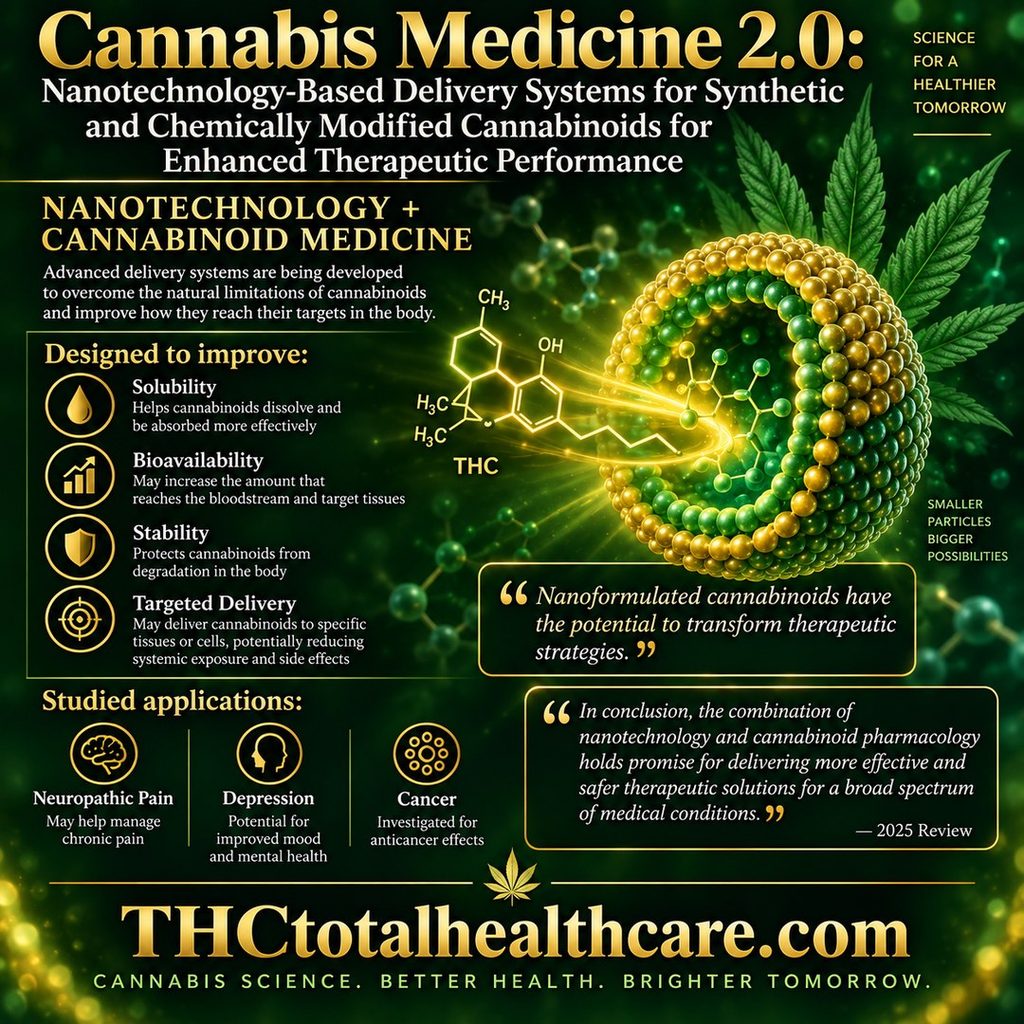
Cannabis-Based Nanolipid Formulations for Pain Management

Cannabinoids such as CBD and THC show promising analgesic effects, but poor stability and bioavailability can limit their therapeutic performance. This review found that nanoencapsulation may improve cannabinoid stability, delivery, and pain-relieving potential across acute, chronic, and neuropathic pain models. The authors concluded that cannabinoid nanoformulations could help support the development of more stable, safe, effective, and accessible therapies, particularly for chronic and neuropathic pain.

“Medicinal cannabis has gained increasing attention from both the scientific community and clinical practice, due to the therapeutic potential of its major phytocannabinoids, particularly cannabidiol (CBD) and Δ9-tetrahydrocannabinol (THC), for pain management.

This review compiled and analyzed the available evidence regarding the antinociceptive effects of nanoencapsulated cannabinoids compared to free compounds. The published works have explored some pharmaceutical formulations and administration routes on different acute, chronic and neuropathic pain experimental models.

The findings indicated that cannabinoids exhibited promising analgesic effects, while nanoencapsulation could enhance its stability and bioavailability.

Despite these advances, the number of reports investigating nanostructured cannabinoid-based systems remains limited, with a predominance of preclinical research. A recurrent lack of structural information and quality control data for such works was also noted. Furthermore, there were not identified any research regarding the nanoencapsulation of full-spectrum cannabis oils or whole cannabis extracts, highlighting a significant gap in the current literature.

Overall, nanoencapsulation emerges as a versatile strategy to overcome the intrinsic limitations of cannabinoids and expand its clinical applicability for pain treatment. Nevertheless, further efforts are required to determine standardized methodologies, facilitating the translation of preclinical findings into clinical practice, in order to provide stable, safe, effective and more accessible cannabinoid-based therapies.”

https://pubmed.ncbi.nlm.nih.gov/42514922

“Overall, advances in the nanoencapsulation of cannabinoids and other cannabis-derived products can significantly contribute to the development of stable, safe, effective and cost-effective pain therapies, particularly for chronic and neuropathic pain conditions.”

https://www.mdpi.com/1999-4923/18/7/844


Lower Pain Intensity Is Associated with the Use of Recreational Edible Cannabis Products Containing Delta-9-Tetrahydrocannabinol: A Secondary Analysis in Adults Self-Managing Their Chronic Low Back Pain

Adults using edible cannabis products to self-manage chronic low-back pain reported lower pain intensity on days they used products containing THC. Over 14 days, pain also declined among participants using products with relatively equal amounts of THC and CBD, with 36.6% achieving at least a 30% reduction in pain intensity. The researchers concluded that lower daily pain was associated specifically with THC-containing products, while higher CBD doses may attenuate some of THC’s pain-relieving association.

Background/Objectives: Current literature regarding the efficacy of cannabis to reduce chronic pain intensity is mixed. Despite growing accessibility throughout the U.S., it is still unclear if the naturalistic use of recreational cannabis edible products is associated with decreases in pain intensity on days of use or longitudinally, and if these associations are dependent on the doses of delta-9-tetrahydrocannabinol (THC) and cannabidiol (CBD) being consumed. 

Methods: The trial (NCT03522324) from which these data were pulled was pre-registered in April 2018. Participants (N = 243; 56% female; mean age = 46 ± 12 years) with self-reported chronic low-back pain selected a recreational edible cannabis product to use exclusively, ad libitum, for 14 days. Labeled THC and CBD potency were used to determine product group: CBD-dominant (n = 97), THC + CBD (n = 112), or THC-dominant (n = 34). Participants completed daily surveys indicating current pain intensity (PROMIS; 0-10 scale), use or non-use of their product, and cannabinoid dose (THC and CBD). 

Results: Linear mixed effects showed a significant use × group interaction (p = 0.002), indicating that pain intensity was significantly lower on days of use in THC-dominant (b = -0.66, 95% CI [-0.94,-0.37]) and THC + CBD (b = -0.41, 95% CI [-0.57,-0.25]) groups compared to days when cannabis was not used. A significant group × time interaction (p = 0.02) indicated that pain intensity significantly decreased from day 1 to day 14 in those using THC + CBD products (b = -0.05, 95% CI [-0.07,-0.03]), with 36.6% of participants in the THC + CBD group experiencing ≥30% reduction in pain intensity from day 1 to day 14. Increasing doses of THC (b = -0.02, 95% CI [-0.04, -0.01]), not CBD (b = 0.003, 95% CI [-0.03, 0.01]), were associated with significantly lower pain intensity on days following product use, with increasing doses of CBD diminishing the impact of THC dose (b = 0.02, 95% CI [0.01, 0.04]). 

Conclusions: These findings indicate a complex relationship between THC, CBD, and pain intensity associated with the naturalistic use of recreational cannabis edible products. Lower daily pain intensity was associated with the use of products containing THC; however, dose models indicate that this association may be attenuated at higher doses of CBD. Additionally, only products containing relatively equal amounts of THC and CBD were associated with lower pain intensity after 14 days of observation.”

https://pubmed.ncbi.nlm.nih.gov/42512114

“Daily data collected over 14 days of naturalistic cannabis use demonstrated that reductions in participants’ current pain intensity were associated with the use of cannabis edible products, but only in products that contained THC. More frequent use of these products in the previous 24 h was associated with improved reductions in pain intensity.”

https://www.mdpi.com/2227-9059/14/7/1642