The differential effects of CBD and CBDA on viability and mRNA expression in colorectal cancer cells

Background: Cannabinoids have attracted significant attention for their potential therapeutic application in cancer research. However, recent studies have reported antitumor activity of cannabidiolic acid (CBDA)-the acidic precursor of CBD-in breast cancer cells, involving modulation of cyclooxygenase signaling. To our knowledge, no investigations have examined the effects of CBDA on RNA expression and signaling pathways in colorectal cancer (CRC) cells. Therefore, we aimed to investigate the effects of CBD, CBDA, and a CBDA-rich Cannabis sativa (C.s). extract on the growth and gene expression in CRC cell lines.

Methods: We assessed cell viability and clonogenic growth of the CRC cell lines HCT116 and DLD1 following treatment with pure CBD, pure CBDA, a CBDA-rich C.s. extract (CBDA/CBD ratio 20:1), and a corresponding mixture of pure CBDA/CBD. RNA sequencing was performed to analyze differentially expressed genes (DEGs) and the cell signaling pathways affected by these treatments.

Results: Of all tested compounds, CBD exhibited the strongest cytotoxic effect in both cell lines, whereas CBDA demonstrated minimal toxicity, particularly in HCT116 cells. Furthermore, we observed a greater inhibitory effect of the CBDA-rich C.s. extract on HCT116 cell growth compared to the CBDA/CBD mixture. RNA sequencing analysis revealed that CBD had the most pronounced impact on gene expression, while CBDA had the least. Notably, treatment with the C.s. extract resulted in a higher number of DEGs than the CBDA/CBD mixture in HCT116. Gene expression analysis indicated an upregulation of the Wnt and Hippo signaling pathways following CBD treatment. Additionally, CBDA, CBD/CBDA (1:20), and the C.s. extract primarily induced metabolic processes in DLD1 cells, suggesting a distinct metabolic response.

Conclusion: Our findings showed that CBD exerts stronger effects on cell survival and gene expression in CRC cells than CBDA, which showed only limited activity. Moreover, the CBDA-rich C.s. extract exhibited greater efficacy than the CBDA/CBD mixture. More research is needed to further elucidate the impact of cannabinoids on CRC cell biology and signaling pathways.”

https://pubmed.ncbi.nlm.nih.gov/41546069

https://link.springer.com/article/10.1186/s42238-026-00391-2
Stability and Degradation-based Proteome Profiling Reveals Cannabidiol as a Promising CDC123-eIF2γ Inhibitor for Colorectal Cancer Therapy

“Natural products (NPs) have long been foundational in drug discovery, offering unparalleled molecular diversity and complex mechanisms of action. However, identifying molecular targets for NPs remains a significant challenge.

This study introduces stability- and degradation-based proteome profiling (SDPP), which integrates orthogonal principles of thermal stability and degradation activity to enhance target identification precision and expand the NP target landscape, mediating dual regulation of protein stability: extracellularly through small-molecule-binding-induced thermodynamic stabilization and intracellularly via ligand-triggered proteolytic degradation.

Using SDPP, cannabidiol (CBD) is identified as a novel protein-protein interaction (PPI) inhibitor targeting the CDC123-eIF2γ complex, leading to sustained activation of the integrated stress response and apoptosis in colorectal cancer (CRC) cells.

Disruption of the CDC123-eIF2γ complex by CBD offers a selective therapeutic strategy for CRC. Importantly, CDC123 is recognized as an oncogenic driver in CRC, with elevated expression correlating with poor patient prognosis.

These findings establish SDPP as a robust framework for NP target identification and position CBD as a first-in-class natural PPI inhibitor with a promising therapeutic potential.”

https://pubmed.ncbi.nlm.nih.gov/41518300

https://pubs.acs.org/doi/10.1021/jacs.5c20040

Cannabidiol suppresses emergency MDSCs generation by disturbing EEF1B2-mediated C/EBP β protein synthesis in colorectal adenomas

Background: Colorectal cancer often develops from adenomas over years, necessitating early intervention. Myeloid-derived suppressor cells (MDSCs) are major immune suppressive cell types in colon cancer development from adenomas through early inflammation-induced emergency myelopoiesis. Cannabidiol (CBD) is reported to function in psychosis, coronavirus infection and some cancers through immune regulation. However, its target and underlying mechanisms in colorectal adenomas are unknown.

Methods: The antitumor effect of CBD was validated in two classical colorectal adenomas models including azoxymethane (AOM)/dextran sulfate sodium salt (DSS) induced mice model and high-fat fed Apcmin/+ mice model. Single-cell RNA sequencing was used to identified the immune environment change after CBD treatment in mice colorectal adenomas. Target responsive accessibility profiling was used to find the target of CBD in MDSCs. Subsequently, multiple immunology assays and molecular biology experiment were employed to explore the adenomas prevention mechanisms of CBD.

Results: Here, we found that CBD prevented the incidence of colorectal adenomas in AOM/DSS model and high-fat diet fed Apcmin/+ mice model. Our single-cell RNA sequencing data and the results of immunofluorescence revealed that CBD treatment significantly decreased the number of MDSCs in both two colon adenomas models. Mechanistically, CBD bound to the guanine nucleotide exchange factor domain of EEF1B2, inhibiting its function in translational elongation and subsequent C/EBPβ synthesis. This disruption suppressed the differentiation and generation of MDSCs, leading to enhanced T-cell activation and prevention of colorectal adenoma progression.

Conclusion: Our findings reveal EEF1B2-mediated C/EBPβ protein synthesis as a crucial pathway in MDSC generation and highlight the potential of CBD as an early intervention strategy for colorectal adenomas.”

https://pubmed.ncbi.nlm.nih.gov/41485775

“In this study, we found that CBD prevented the progression of colorectal adenomas via targeting inhibition the function of EEF1B2 to suppress the generation of MDSC from bone marrow in the condition of adenomas induced systemic inflammation. The underlying mechanism was that EEF1B2 inhibition prevented MDSC differentiation and generation through disturbing the protein synthesis of the key transcription factor C/EBPβ.”

“This study implies that CBD may be a potential compound for clinical translation for colorectal adenomas in clinical use, which makes significant therapeutic implications in the early medical intervention for colorectal adenomas and is an effective strategy to inhibit MDSCs generation and relieve immune suppressive environment in MDSCs involved diseases.”

https://jitc.bmj.com/content/14/1/e013081

Targeting Human Cancer Cells with Cannabidiol (CBD): Apoptotic Cytotoxicity in HeLa, MDA-MB-231, and CaCo-2 Lines

“Cannabidiol (CBD), a phytocannabinoid derived from Cannabis sativa, has demonstrated therapeutic potential across various diseases, including cancer.

This study evaluates the cytotoxic effects of CBD on three human cancer cell lines (HeLa, MDA-MB-231, and CaCo-2) and two non-cancerous cell lines (HaCaT and HUVEC) used as a control. Cells were treated with CBD at concentrations of 5, 10, and 20 µM for 24, 48, 72, and 96 h. Cytotoxicity was assessed using MTT assays, nuclear morphology was evaluated via DAPI staining, and cell death mechanisms were analyzed through flow cytometry with apoptosis/necrosis markers. The LC50 values at 24 h were determined as follows: HeLa (9.4 µM), MDA-MB-231 (10.3 µM), and CaCo-2 (4.3 µM).

CBD treatment induced morphological changes characteristic of cell stress and death in cancer cells, observed by optical microscopy after 24, 48, 72, and 96 h of exposure. These findings highlight the potential of CBD as an adjunctive therapeutic agent for cancer treatment versus non-malignant cells.”

https://pubmed.ncbi.nlm.nih.gov/41465562

“The findings of this study confirm the potential of CBD as a cytotoxic agent with pro-apoptotic activity in cancer cells.”

“CBD appears to exert a multifaceted mechanism of action on tumor cells, involving both the endocannabinoid system and receptor-independent pathways.”

“In the present study, we demonstrated that CBD induces apoptosis in human cancer cells (HeLa, MDA-MB-231, and CaCo-2) while delaying apoptotic processes in non-malignant control cells (HaCaT and HUVEC). These findings underscore the potential of CBD as an adjunctive therapeutic agent for cancer treatment, highlighting its selective cytotoxic effects on malignant cells with limited impact on non-malignant cells.”

“These results underscore the potential of CBD as an adjunctive therapy in cancer treatment, particularly for colorectal adenocarcinoma, where it exhibited greater efficacy.”

https://www.mdpi.com/1422-0067/26/24/12136


Antioxidant and Antiproliferative Activities of Hemp Seed Proteins (Cannabis sativa L.), Protein Hydrolysate, and Its Fractions in Caco-2 and THP-1 Cells

“This study evaluated the in vitro antioxidant and antiproliferative activity of hemp seed (Cannabis sativa L.) protein isolate, protein hydrolysate, and its fractions. The protein hydrolysate was obtained through sequential enzymatic digestion using pepsin and pancreatin, achieving a degree of hydrolysis of 48.11%. The hydrolysate was then fractionated by ultrafiltration.

Assays conducted on Caco-2 (colorectal cancer) and THP-1 (leukemia) cell lines revealed that the higher-molecular-weight fraction of (>10 kDa) exhibited the strongest, concentration-dependent antiproliferative effect, as determined by the neutral red uptake (NRU) assay for Caco-2 cells and the MTT assay for THP-1 cells. Furthermore, a significant intracellular antioxidant activity was observed, particularly in the whole hydrolysate and its low-molecular-weight fractions, as measured by the DCFH-DA assay in Caco-2 cells.

The results suggest the potential application of hemp seed protein hydrolysate and its fractions as antioxidant and chemoprotective supplements in oncologic therapies.”

https://pubmed.ncbi.nlm.nih.gov/41373886

“This study establishes that hemp seed protein hydrolysate (HSH) and its ultrafiltration fractions possess significant and dual biological activities. The principal finding is the identification of a potent, dose-dependent, and selective antiproliferative effect against colorectal adenocarcinoma (Caco-2) and monocytic leukemia (THP-1) cell lines, with the high-molecular-weight fraction (F1 > 10 kDa) demonstrating the greatest efficacy.

Collectively, these findings underscore the dual potential of hemp seed peptides as a reduction in cell viability agents and potent antioxidants, positioning them as promising candidates for development as functional food ingredients for chemoprevention and as adjuvants in oncological therapies.”

https://www.mdpi.com/1422-0067/26/23/11741

Aromatisation-based extract engineering of Cannabis sativa L. Unveils rare cannabinoids with anticancer potential

“Cancer remains a major global health challenge, necessitating new, effective therapies. Phytocannabinoids from Cannabis sativa L. show significant anticancer potential, yet their natural scarcity limits research and development.

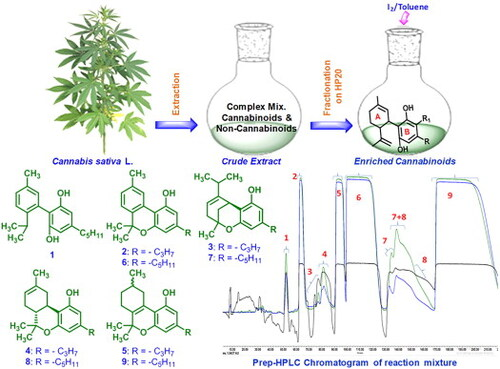
This study presents an innovative extract engineering approach to generate rare varin-type cannabinoids from abundant precursors. Through this strategy, nine cannabinoid analogues were synthesised, including four rare varin-type compounds, and screened against five human cancer cell lines.

Among them, cannabinovarin (CBNV) and Δ6a,10a-THCV exhibited potent cytotoxicity against breast (MCF-7) and colon (HCT-116) cancer cells, with IC50 values of 15-30 µM. Mechanistic investigations revealed apoptosis induction via mitochondrial membrane disruption and reactive oxygen species generation.

These findings establish extract engineering as a rapid and efficient route to access rare cannabinoids, highlighting CBNV and Δ6a,10a-THCV as promising anticancer leads for further mechanistic and in vivo evaluation.”

https://pubmed.ncbi.nlm.nih.gov/41355760

https://www.tandfonline.com/doi/full/10.1080/14786419.2025.2595528

TRPA1 activation prompts lysosome-mediated Nrf2 degradation enhancing the killing of colorectal cancer cells

“Redox homeostasis is crucial for cancer cell survival and resistance to therapy.

The transcription factor NRF2, a master regulator of antioxidant and metabolic genes, is often upregulated in tumors to mitigate oxidative stress. Although NRF2 stability is canonically governed by KEAP1-CUL3-proteasome degradation, emerging evidence implicates lysosomal and autophagic pathways in non-canonical NRF2 turnover. The mechanisms by which these alternative pathways are engaged during chronic oxidative signaling remain unclear.

We investigated whether sustained activation of the redox-sensitive ion channel TRPA1 by cannabidiol (CBD) disrupts redox homeostasis and promotes NRF2 degradation in colorectal cancer models.

Using five independent CRC cell lines (RKO, HCT116, HT29, SW480, and MC38), we assessed reactive oxygen species (ROS), mitochondrial function, autophagy, and NRF2 protein dynamics through biochemical assays, lysosomal fractionation, and imaging. Xenograft models were used for in vivo validation.

Chronic TRPA1 activation induced a biphasic ROS response, characterized by an early increase linked to mitochondrial Ca2+ influx and a delayed ROS surge associated with mitochondrial dysfunction. This oxidative trajectory initially stabilized but subsequently led to its degradation after 24 h via a KEAP1-independent, autophagy-lysosome pathway. Proteasome inhibition failed to rescue NRF2, whereas bafilomycin A1 restored its levels and blocked co-localization with lysosomal markers (e.g., LAMP2A).

Importantly, CBD-induced TRPA1 activation sensitized CRC cells to oxaliplatin, triggering apoptotic-not senescent-cell death. These effects were dose-dependent and consistent across all tested cell lines.

Our findings reveal a non-canonical bioelectric-lysosomal axis that links TRPA1 activity to NRF2 destabilization in colorectal cancer. This work expands the understanding of NRF2 proteostasis under sustained oxidative stress and highlights TRPA1 as a tractable redox-modulating target for overcoming chemoresistance.”

https://pubmed.ncbi.nlm.nih.gov/41330216

https://www.sciencedirect.com/science/article/pii/S2213231725004550?via%3Dihub

“In simple terms, this mechanism describes a way to disarm the cancer cells’ defense shield (Nrf2) by using TRPA1 activation, thereby making them easier to kill, potentially in combination with standard chemotherapies like oxaliplatin.”


Cannabidiol Reprograms Glucose Metabolism in Colorectal Adenocarcinoma by Targeting HIF-1α/LDHA Pathway

“Colon adenocarcinoma (COAD) is characterized by the metabolic reprogramming, such as the Warburg effect, which drives tumor progression and immunosuppression. Hypoxia-inducible factor 1 (HIF-1) and lactate dehydrogenase A (LDHA) are critical regulators of this metabolic shift, but existing therapies are insufficiently specific to it.

This study investigates the antitumor mechanisms of cannabidiol, a non-psychoactive phytocannabinoid, by using integrative multi-omics and functional validation.

Single-cell transcriptomics revealed that cannabidiol reduced tumor cell proportions and suppressed glycolytic activity in COAD.

Network pharmacology identified PTGS2 as a central target, with proteomic data confirming its overexpression in COAD tissues and association with poor prognosis. In vitro, cannabidiol inhibited COAD cell proliferation, migration, and colony formation while downregulating HIF-1[Formula: see text], LDHA, and GLUT1 expression.

Metabolic assays demonstrated associated dose-dependent reductions in ATP production, glucose uptake, and lactate levels. Rescue experiments using the HIF-1agonist DMOG partially reversed cannabidiol’s antiglycolytic and antitumor effects, and thus confirmed pathway dependency. Synergy with the glycolysis inhibitor 2-DG enhanced therapeutic efficacy, which highlighted cannabidiol’s potential to overcome metabolic resistance.

These findings establish cannabidiol as a novel inhibitor of HIF-1/LDHA-driven glycolysis, and thus provide a translational strategy for metabolic vulnerability in COAD.”

https://pubmed.ncbi.nlm.nih.gov/41219135/

https://www.worldscientific.com/doi/10.1142/S0192415X25500958

“The phrase “Cannabidiol Reprograms Glucose Metabolism in Colorectal Adenocarcinoma by Targeting HIF-1α/LDHA Pathway” means that cannabidiol (CBD) helps fight colon cancer cells by altering how they use glucose (sugar) for energy, specifically by interfering with a key biological pathway involving the proteins HIF-1α and LDHA.”

“In summary, the study found that CBD acts as a novel inhibitor of the HIF-1α/LDHA pathway, suppressing the abnormal glucose metabolism essential for colorectal cancer growth and providing a potential therapeutic strategy for treatment.”

UHPLC-Q-TOF-MS profiling and multifaceted antioxidant, antihyperglycemic and anticancer potential of Cannabis sativa sugar leaves: An unexplored source of cannabidiol, terpenes and polyphenols

“Cannabis sativa is one of the most extensively researched plant species that holds promising therapeutic and ethnomedicinal significance.

Various parts of the species including fan leaves, flowers and trichomes are well documented for their richness in cannabidiol (CBD) and tetrahydrocannabidiol (THC) contents. However, an overlooked part of C. sativa, the sugar leaves, which are wasted during harvesting has plethora of CBD and THC and yet to investigated.

In this study we investigated the ethanol extract of sugar leaves of C. sativa (CSLE) for chemical composition through UHPLC-Q-TOF-MS analysis and pharmacological potential by using various in vitro antioxidant, antidiabeticnitric oxide inhibition and anticancer studies. Furthermore, in silicomolecular docking analysis was performed for 10 selected compounds against α-glucosidase and α-amylase.

The UHPLC-Q-TOF-MS profiling of CSLE revealed the tentative identification of 37 compounds including CBD, THC, terpenes and flavonoids. The cytotoxicity studies presented highest activity against breast cancer cell lines (MDA-MB-231, IC50= 18.12 ± 1.13 µg/mL) followed by lung, liver and colorectal cancer cell lines.

Similarly, CSLE showed significant antidiabetic activity by inhibiting α-glucosidase (IC50= 3.13 ± 2.78 µg/mL) and α-amylase. The in vitro antioxidant assays gave highest activity in ABTS followed by DPPH method as well as potentially inhibited nitric oxide (NO) formation. The computational analysis revealed good docking interaction of CBD, THC, selected terpene and flavonoids against α-glucosidase and α-amylase.

Overall, the findings present the sugar leaves of C. sativa as the undisputed rich source of CBD, THC, terpenes and flavonoids with multifaceted therapeutic potential in diabetes, inflammation and different types of cancers. However, there is need of further investigations on toxicity profile and in-depth pharmacological evaluation through in vivo disease bearing animal models.”

https://www.sciencedirect.com/science/article/abs/pii/S2950199725001429

“The research titled “UHPLC-Q-TOF-MS profiling and multifaceted antioxidant, antihyperglycemic and anticancer potential of Cannabis sativa sugar leaves: An unexplored source of cannabidiol, terpenes and polyphenols” identifies sugar leaves of Cannabis sativa as a potential source for multiple therapeutic compounds, including cannabidiol, terpenes, and polyphenols. Through UHPLC-Q-TOF-MS analysis, the study found that these sugar leaf extracts exhibit antioxidant, antihyperglycemic (anti-diabetic), and anticancer activities against various cancer cell lines. The specific compounds present in the sugar leaves, when combined with other plant compounds like terpenes and flavonoids, demonstrate a phenomenon known as the entourage effect, which could enhance their therapeutic potential.”

Synergistic Anticancer Effects of Fibroblast Growth Factor Receptor Inhibitor and Cannabidiol in Colorectal Cancer

pubmed logo

“Background/objectives: Colorectal cancer (CRC) remains a significant global health concern, with limited treatment options for metastatic stage 4 CRC. Fibroblast Growth Factor Receptor (FGFR) is a promising therapeutic target in CRC, while cannabidiol (CBD) has shown potential for inducing cell death and overcoming drug resistance. This study evaluates the efficacy of FGFR inhibitors and explores the synergistic effects of combining FGFR inhibitors with CBD in inducing apoptosis in CRC cells.

Methods: Cannabidiol and FGFR inhibitors were applied, and protein expression was analyzed via Western blot. Cell viability was assessed using the WST-1 assay, while apoptosis was measured through flow cytometry using Annexin V-FITC/PI staining. CHOP-specific siRNA transfection was performed to study gene silencing effects, followed by RNA sequencing for differential expression and pathway analysis. Statistical significance was determined using ANOVA and t-tests, with p < 0.05.

Results: FGFR expression patterns were confirmed in various cancer cell lines, with NCI-H716 showing high FGFR2 expression. Treatment with CBD (4 µM) and AZD4547 (10 nM) resulted in significant cell death, especially when used in combination, indicating the effectiveness of this combined therapy. Increased apoptosis in NCI-H716 cells was confirmed with the combined treatment. RNA sequencing and heatmap analysis suggested that ER stress might be related to the observed synergistic effect. The role of ER stress in the combination-induced apoptosis of NCI-H716 cells was further validated.

Conclusions: The combination of FGFR inhibitors and cannabidiol exhibited a synergistic effect in inducing cell death in colorectal cancer cells, likely through the ER stress pathway. This study supports the potential of combined FGFR inhibitor and CBD therapy as a promising strategy for enhancing anticancer effects in CRC.”

https://pubmed.ncbi.nlm.nih.gov/40871637/

“In conclusion, the data from this preclinical study indicate that the combination of cannabidiol (CBD) and FGFR inhibitors such as AZD4547 represents a potential therapeutic approach for metastatic colorectal cancer (CRC). This synergistic effect could help address resistance mechanisms that currently limit the efficacy of anticancer drugs. Our findings also suggest that ER stress-mediated apoptosis may be an important mechanism underlying this synergy. While these results are encouraging, further validation in appropriate preclinical animal models and, ultimately, clinical studies will be essential to confirm efficacy, assess safety, and determine the translational applicability of this combination strategy.”

https://www.mdpi.com/2072-6643/17/16/2609