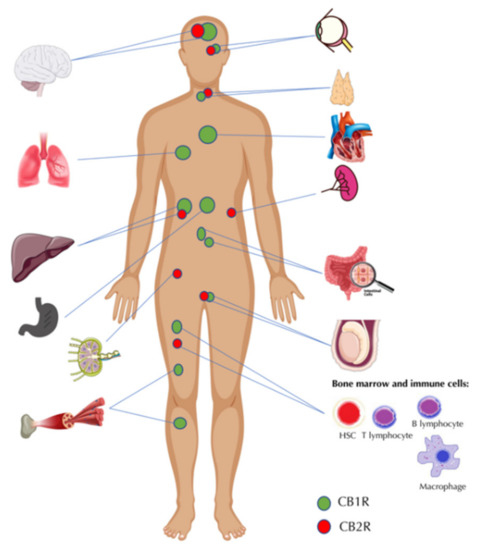
“Purpose of the review: The endocannabinoid system (ENS) has emerged as an important factor in food intake and may have implications for nutrition research. The objective of the current report is to summarise the available evidence on the ENS and eating behaviour from both animal and human studies.
Recent findings: The literature reviewed demonstrates a clear link between the ENS and eating behaviours. Overall, studies indicate that 2-arachidonoylglycerol (2-AG) and N-arachidonoylethanolamine (AEA) via cannabinoid receptor-1 (CNR1) binding may stimulate hunger and food intake while oleylethanolamide (OEA) may inhibit hunger. Mechanisms of these associations are not yet well understood, although the evidence suggests that there may be interactions with other physiological systems to consider. Most studies have been conducted in animal models, with few human studies available. Additional research is warranted among human populations into the ENS and eating behaviour. Evaluation of relationships between variation in ENS genes and dietary outcomes is an important area for investigation.”
“Acute lymphoblastic leukemia type B (B-ALL) is the most common kind of pediatric leukemia, characterized by the clonal proliferation of type B lymphoid stem cells. Important progress in ALL treatments led to improvements in long-term survival; nevertheless, many adverse long-term consequences still concern the medical community. Molecular and cellular target therapies, together with immunotherapy, are promising strategies to overcome these concerns.
Cannabinoids, enzymes involved in their metabolism, and cannabinoid receptors type 1 (CB1) and type 2 (CB2) constitute the endocannabinoid system, involved in inflammation, immune response, and cancer. CB2 receptor stimulation exerts anti-proliferative and anti-invasive effects in many tumors.
In this study, we evaluated the effects of CB2 stimulation on B-ALL cell lines, SUP-B15, by RNA sequencing, Western blotting, and ELISA. We observe a lower expression of CB2 in SUP-B15 cells compared to lymphocytes from healthy subjects, hypothesizing its involvement in B-ALL pathogenesis. CB2 stimulation reduces the expression of CD9, SEC61G, TBX21, and TMSB4X genes involved in tumor growth and progression, and also negatively affects downstream intracellular pathways.
Our findings suggest an antitumor role of CB2 stimulation in B-ALL, and highlight a functional correlation between CB2 receptors and specific anti-tumoral pathways, even though further investigations are needed.”
“The antineoplastic role of cannabinoids in malignancy of the immune system, as well as in many other tumors, i.e., osteosarcoma, is well documented. Cannabinoids derive from the Cannabis plant, and interact with the cannabinoid receptors CB1 and CB2, principally expressed in the central nervous system and in peripheral and immune cells, respectively. These receptors, together with their specific ligands (endocannabinoids) and the enzymes involved in their own synthesis and degradation, constitute the endocannabinoid system (ECS). ECS is involved in many biological functions, such as pain management, regulation of appetite, control of bone metabolism, and, noteworthily, it modulates both inflammatory processes and immune response. Several authors proposed ECS as anticancer target for different neoplasms; in particular, a proper stimulation of CB2 receptors is responsible for counteracting tumor growth and progression. We demonstrate the involvement of ECS in this neoplasm and highlight the possibility to target it to arrest growth and progression of B-ALL
Our findings describe the involvement of CB2 receptors in the pathogenesis of B-ALL, and also propose its stimulation as an innovative and effective anticancer strategy. In particular, this approach is a “molecular target therapy approach”, since the selective triggering of cannabinoid modulates both gene and protein expression. We identified a specific anti-tumoral signature playing a key role in the development and maintenance of tumors, speculating a protective effect of CB2 selective stimulation. Certainly, further investigations are needed to better understand the molecular and biochemical mechanisms underlying the observed interactions, but our study seems to already highlight a good and beneficial therapeutic perspective to ameliorate the outcome for high-risk B-ALL patients.”
“Antiepileptic drugs have been successfully treating epilepsy and providing individuals sustained seizure freedom. However, about 30% of the patients with epilepsy present drug resistance, which means they are not responsive to the pharmacological treatment.
Considering this, it becomes extremely relevant to pursue alternative therapeutic approaches, in order to provide appropriate treatment for those patients and also improve their quality of life.
In the light of that, this review aims to discuss some innovative options for the treatment of epilepsy, which are currently under investigation, addressing strategies that go from therapeutic compounds to clinical procedures. For instance, peptides derived from animal venoms, such as wasps, spiders, and scorpions, demonstrate to be promising antiepileptic molecules, acting on a variety of targets.
Other options are cannabinoids and compounds that modulate the endocannabinoid system, since it is now known that this network is involved in the pathophysiology of epilepsy.
Furthermore, neurostimulation is another strategy, being an alternative clinical procedure for drug-resistant patients who are not eligible for palliative surgeries.”
“Modulation of the endogenous cannabinoid system has been suggested as a potential anticancer strategy.
In the search for novel and less toxic therapeutic options, structural modifications of the endocannabinoid anandamide and the synthetic derivative of oleic acid, Minerval (HU-600), were done to obtain 2-hydroxy oleic acid ethanolamide (HU-585), which is an HU-600 derivative with the anandamide side chain.
We showed that treatment of SK-N-SH neuroblastoma cells with HU-585 induced a better anti-tumorigenic effect in comparison to HU-600 as evidenced by 3-[4,5-dimethylthiazole-2-yl]-2,5-diphenyltetrazolium bromide assay, colony-forming assay, and migration assay. Moreover, HU-585 demonstrated pro-apoptotic properties shown by increased levels of activated caspase-3 following treatment and a better senescence induction effect in comparison to HU-600, as demonstrated by increased activity of lysosomal β-galactosidase. Finally, we observed that combined treatment of HU-585 with the senolytic drugs ABT-263 in vitro, and ABT-737 in vivo resulted in enhanced anti-proliferative effects and reduced neuroblastoma xenograft growth in comparison to treatment with HU-585 alone.
Based on these results, we suggest that HU-585 is a pro-apoptotic and senescence-inducing compound, better than HU-600. Hence, it may be a beneficial option for the treatment of resistant neuroblastoma especially when combined with senolytic drugs that enhance its anti-tumorigenic effects.”
“The cannabinoids are a group of more than 100 chemically related compounds found in the marijuana plant Cannabis sativa, that have been found to possess diverse pharmacological activities in cancer, including cytostatic, apoptotic, and antiangiogenic effects. Tetrahydrocannabinol (THC), the main psychoactive constituent in Cannabis sativa, acts mainly through the activation of specific cannabinoid receptors CB1 and CB2 and thus mimics the binding of the animal endogenous cannabinoids (named endocannabinoids).”
“Pharmacological synergism is a current strategy for the treatment of pain. However, few studies have been explored to provide evidence of the possible synergism between a non-steroidal anti-inflammatory drug (NSAID) and a cannabinoid agonist, in order to establish which combinations might be effective to manage pain.
The aim of this study was to explore the synergism between ibuprofen (IBU) and the synthetic cannabinoid WIN 55,212-2 (WIN) to improve pain relief by analyzing the degree of participation of the CB1 and CB2 cannabinoid receptors in the possible antinociceptive synergism using an experimental model of pain in Wistar rats.
First, the effective dose thirty (ED30) of IBU (10, 40, 80, and 160 mg/kg, subcutaneous) and WIN (3, 10, and 30 µg/p, intraplantar) were evaluated in the formalin test. Then, the constant ratio method was used to calculate the doses of IBU and WIN to be administered in combination (COMB) to determine the possible synergism using the isobolographic method. The participation of the CB1 and CB2 receptors was explored in the presence of the antagonists AM281 and AM630, respectively.
The combination of these drugs produced a supra-additive response with an interaction index of 0.13. In addition, AM281 and AM630 antagonists reversed the synergistic effect in 45% and 76%, respectively, suggesting that both cannabinoid receptors are involved in this synergism, with peripheral receptors playing a relevant role.
In conclusion, the combination of IBU + WIN synergism is mainly mediated by the participation of the CB2 receptor, which can be a good option for the better management of pain relief.”
“Phytocannabinoids possess a wide range of immune regulatory properties, mediated by the endocannabinoid system.
Monocyte/macrophage innate immune cells express endocannabinoid receptors. Dysregulation of macrophage function is involved in the pathogenesis of different inflammatory diseases, including inflammatory bowel disease.
In our research, we aimed to evaluate the effects of the phytocannabinoids D9 tetrahydrocannabinol (THC) and cannabidiol (CBD) on macrophage activation.
Macrophages from young and aged C57BL/6 mice were activated in vitro in the presence of pure cannabinoids or cannabis extracts. The phenotype of the cells, nitric oxide (NO•) secretion, and cytokine secretion were examined. In addition, these treatments were administered to murine colitis model. The clinical statuses of mice, levels of colon infiltrating macrophages, and inflammatory cytokines in the blood, were evaluated.
We demonstrated inhibition of macrophage NO• and cytokine secretion and significant effects on expression of cell surface molecules. In the murine model, clinical scores were improved and macrophage colon infiltration reduced following treatment. We identified higher activity of cannabis extracts as compared with pure cannabinoids. Each treatment had a unique effect on cytokine composition.
Overall, our results establish that the effects of cannabinoid treatments differ. A better understanding of the reciprocal relationship between cannabinoids and immunity is essential to design targeted treatment strategies.”
“Overall, our results indicate both similarities and differences between the impact of CBD- and THC-based drugs. Although all the tested treatments had an anti-inflammatory effect, their specific effects (for example, on phenotype of the cells and on cytokine production) differed. These differences may influence the clinical outcome of the treatment. We were surprised to find very similar anti-inflammatory results for the two cannabis extracts, which had diverse content of THC and CBD. This could suggest that THC/CBD content may not be the best indicator for anti-inflammatory properties of a cannabis-based drug. These results highlight the need to expand the research on the interplay between cannabinoids and other phytochemicals in the cannabis extracts. A better understanding of the effects of each molecule and the synergism between these molecules on the immune response will assist physicians to provide the best possible individually targeted treatment for their patients and will allow the design of new treatments.”
“Rapidly increasing worldwide prevalence of obesity and related pathologies encompassing coronary heart disease, hypertension, metabolic syndrome, or type 2 diabetes constitute serious threats to global health and are associated with a significantly elevated risk of premature death. Considering the enormous burden of these pathologies, novel therapeutic and preventive patterns are indispensable.
Dysregulation of one of the most complex biological systems in the human body namely, the endocannabinoid system (ECS) may result in metabolic imbalance and development of insulin resistance, type 2 diabetes, or non-alcoholic fatty liver disease. Furthermore, many studies showed that physical exercises, depending on their type, intensity, and frequency, exert various alterations within the ECS.
Emerging evidence suggests that targeting the ECS via physical activity may produce robust beneficial effects on the course of metabolic pathologies. However, the data showing a direct correlation between the ECS and physical activity in the aspect of metabolic health are very scarce. Therefore, the aim of this review was to provide the most up-to-date state of knowledge about the interplay between the ECS activity and physical exercises in the novel therapeutic and preventive approach toward metabolic pathologies.
We believe that this paper, at least in part, will fulfill the existing gap in knowledge and encourage researchers to further explore this very complex yet interesting link between the ECS, its action in physical activity, and subsequent positive outcomes for metabolic health.”
“To the best of our knowledge, this is the first review directly and comprehensively discussing the uncharted link between physical activity and its influence on the endocannabinoid signaling in the aspect of beneficial effects in the management of metabolic disorders. Considering the very alarming worldwide prevalence of these diseases as well as the unexplored potential of the topic, we believe that this paper, at least in part, will encourage researchers toward investigating this interesting, yet very complicated interplay. ECS and physical activity constitute robust and valuable therapeutic and preventive approaches that may significantly contribute to the decreased socioeconomic burden and the reduced annual number of patients suffering from obesity and other metabolic disorders. The future investigation should primarily encompass further discovery of the link between physical activity, alterations within endocannabinoid signaling and subsequently improved metabolic status of overweight, obese, and diabetic individuals.”
“The study was evaluated the impact of cannabidiol (CBD) on thyroid hormones by modulation cannabinoid receptor-2 (CB2) and vitamin D receptor (VDR) in rats fed with vitamin D3 deficiency diet (VDD).
CB2-receptors were analyzed by RT-PCR method and others biomarkers by ELISA. The relative expression of CB2 (thyroid ~ 4 folds), VDR protein (liver, 151.72%), and (kidney, 66%) was significantly increased in CBD-60 compared to VDD. Vitamin D3 metabolites were significantly increased serum (189.42%), kidney (73.84%), and liver (58.11%) in CBD-60 than VDD. Increased thyroxine (59.9%) and calcitonin (213.59%); while decreased thyroid-stimulating hormone (36.15%) and parathyroid hormone (38.64%) was observed CBD treatment in VDD rats.
In conclusion, CBD treatment improves CB2 and VDR expression and the level of vitamin D3 metabolites, along with improved thyroid hormones, including calcitonin. This is the first report with an improved CB2 and VDR expression after CBD treatment in VDD induced animals.
Thus, CBD can be considered to use in hypothyroidism conditions and to maintain bone health.”
“Introduction/background and purpose: Studies with Cannabis Sativa plant extracts and endogenous agonists of cannabinoid receptors have demonstrated anti-inflammatory, bronchodilator, and antitussive properties in the airways of allergic and non-allergic animals. However, the potential therapeutic use of cannabis and cannabinoids for the treatment of respiratory diseases has not been widely investigated, in part because of local irritation of airways by needing to smoke the cannabis, poor bioavailability when administered orally due to the lipophilic nature of cannabinoids, and the psychoactive effects of Δ9-Tetrahydrocannabinol (Δ9-THC) found in cannabis. The primary purpose of this study was to investigate the anti-inflammatory effects of two of the non-psychotropic cannabinoids, cannabidiol (CBD) and cannabigerol (CBG) alone and in combination, in a model of pulmonary inflammation induced by bacterial lipopolysaccharide (LPS). The second purpose was to explore the effects of two different cannabinoid formulations administered orally (PO) and intraperitoneally (IP). Medium-chain triglyceride (MCT) oil was used as the sole solvent for one formulation, whereas the second formulation consisted of a Cremophor® EL (polyoxyl 35 castor oil, CrEL)-based micellar solution.
Results: Exposure of guinea pigs to LPS induced a 97 ± 7% and 98 ± 3% increase in neutrophils found in bronchoalveolar lavage fluid (BAL) at 4 h and 24 h, respectively. Administration of CBD and CBG formulated with MCT oil did not show any significant effects on the LPS-induced neutrophilia measured in the BAL fluid when compared with the vehicle-treated groups. Conversely, the administration of either cannabinoid formulated with CrEL induced a significant attenuation of the LPS induced recruitment of neutrophils into the lung following both intraperitoneal (IP) and oral (PO) administration routes, with a 55-65% and 50-55% decrease in neutrophil cell recruitment with the highest doses of CBD and CBG respectively. A combination of CBD and CBG (CBD:CBG = 1:1) formulated in CrEL and administered orally was also tested to determine possible interactions between the cannabinoids. However, a mixture of CBD and CBG did not show a significant change in LPS-induced neutrophilia. Surfactants, such as CrEL, improves the dissolution of lipophilic drugs in an aqueous medium by forming micelles and entrapping the drug molecules within them, consequently increasing the drug dissolution rate. Additionally, surfactants increase permeability and absorption by disrupting the structural organisation of the cellular lipid bilayer.
Conclusion: In conclusion, this study has provided evidence that CBD and CBG formulated appropriately exhibit anti-inflammatory activity. Our observations suggest that these non-psychoactive cannabinoids may have beneficial effects in treating diseases characterised by airway inflammation.”
“The discovery of the endocannabinoid system (ECS) has enabled the growth of scientific evidence supporting the use of cannabis and cannabinoids as therapeutic agents for various diseases.
Various studies have suggested the use of cannabinoids as possible treatments for inflammatory diseases”
“Cyclophosphamide is an anticancer and immunosuppressive agent used in the treatment of various malignancies but causing gastrointestinal distress.
Cannabis sativa (C. sativa) and its derivatives have been used for the treatment of human gastrointestinal disorders. A purpose of this study was to investigate the effect of C. sativa on nausea induced by cyclophosphamide in rats.
Results showed that C. sativa ameliorates cyclophosphamide-induced emesis by increasing in body weight and normal diet intake with a decrease in kaolin diet intake after 7 days. Moreover, C. sativa significantly decreases (serotonin) 5HT, dopamine and noradrenaline, as well as, decreasing oxidative stress and inflammation. Administration of C. sativa significantly increased the expression of CB1R in intestinal homogenate. Treatment with C. sativa, also, improved the histological feature of an intestinal tissue.
These results suggested that C. sativa possess antiemetic, antioxidant and anti-inflammatory effects in chemotherapy-induced nausea in rats by activating CB1R.”