Evaluation of cannabinoid receptors type 1-2 in periodontitis patients

“Background: As effective immune modulators, Endocannabinoids may suppress the inflammatory responses in periodontitis. This study assessed the expression of cannabinoid receptors in gingiva and the impact on periodontitis.

Methods: A cross-sectional study on 20 patients with more than stage II and Grade A periodontitis and a control group consisting of 19 healthy individuals was performed. The gingival biopsies were assessed for the expression of CB1 and CB2 using the quantitative reverse transcription polymerase chain reaction, TaqMan method.

Results: The study sample consisted of 39 subjects, 31 females (79.5%) and 8 males (20.5%), including 20 periodontitis subjects (80% female and 20% male), and control groups (78.9% female and 21.1% male). The mean ages of cases and controls were 33.3 ± 4.7 and 35.7 ± 5.1 years, respectively. The gene expression of CB2 in periodontitis was 27.62 ± 7.96 and in healthy subjects was 78.15 ± 23.07. The CB2 was significantly lower than the control group (p = .008). In comparison, the gene expression index of CB1 in the periodontal group (9.42 ± 3.03) was higher than the control group (6.62 ± 1.13) but did not meet a significant value (p = .671).

Conclusion: The lower expression of CB2 receptors in the periodontitis group may be due to the reduced protective effect of anti-inflammatory agents. These elements include cannabinoids and the imbalance leading to the predominance of pro-inflammatory effects. Therefore, the local effects of cannabinoids as an immunomodulator could be useful for oral inflammatory diseases such as periodontitis.”

https://pubmed.ncbi.nlm.nih.gov/35719011/

“In conclusion, as CB2 receptors are expressed in gingival tissues, particularly immune cells and fibroblasts, they involve in tissue and wound repair. The lower expression of these receptors in periodontitis, could be related to the inflammatory reactions and interrupts wound repair. Therefore, it seems that the use of cannabinoid CB2 agonists in the form of mouth wash contributes to the healing of periodontitis.”

https://onlinelibrary.wiley.com/doi/10.1002/cre2.608

Chronic Pain and the Endocannabinoid System: Smart Lipids – A Novel Therapeutic Option?

Karger Publishers Further Expands into Open Access and Open Science | STM  Publishing News

“The development of a high-end cannabinoid-based therapy is the result of intense translational research, aiming to convert recent discoveries in the laboratory into better treatments for patients. Novel compounds and new regimes for drug treatment are emerging. Given that previously unreported signaling mechanisms for cannabinoids have been uncovered, clinical studies detailing their high therapeutic potential are mandatory. The advent of novel genomic, optogenetic, and viral tracing and imaging techniques will help to further detail therapeutically relevant functional and structural features. An evolutionarily highly conserved group of neuromodulatory lipids, their receptors, and anabolic and catabolic enzymes are involved in a remarkable variety of physiological and pathological processes and has been termed the endocannabinoid system (ECS). A large body of data has emerged in recent years, pointing to a crucial role of this system in the regulation of the behavioral domains of acquired fear, anxiety, and stress-coping. Besides neurons, also glia cells and components of the immune system can differentially fine-tune patterns of neuronal activity. Dysregulation of ECS signaling can lead to a lowering of stress resilience and increased incidence of psychiatric disorders. Chronic pain may be understood as a disease process evoked by fear-conditioned nociceptive input and appears as the dark side of neuronal plasticity. By taking a toll on every part of your life, this abnormal persistent memory of an aversive state can be more damaging than its initial experience. All strategies for the treatment of chronic pain conditions must consider stress-related comorbid conditions since cognitive factors such as beliefs, expectations, and prior experience (memory of pain) are key modulators of the perception of pain. The anxiolytic and anti-stress effects of medical cannabinoids can substantially modulate the efficacy and tolerability of therapeutic interventions and will help to pave the way to a successful multimodal therapy. Why some individuals are more susceptible to the effects of stress remains to be uncovered. The development of personalized prevention or treatment strategies for anxiety and depression related to chronic pain must also consider gender differences. An emotional basis of chronic pain opens a new horizon of opportunities for developing treatment strategies beyond the repeated sole use of acutely acting analgesics. A phase I trial to determine the pharmacokinetics, psychotropic effects, and safety profile of a novel nanoparticle-based cannabinoid spray for oromucosal delivery highlights a remarkable innovation in galenic technology and urges clinical studies further detailing the huge therapeutic potential of medical cannabis (Lorenzl et al.; this issue).”

https://pubmed.ncbi.nlm.nih.gov/35702403/

“The evidence that full-spectrum cannabis preparations have medical benefits with less unwanted central effects stimulated the development of an oromucosal spray containing full-spectrum water-soluble cannabis. This remarkable innovation in galenic technology advocates clinical studies further and enables the realization of the very promising therapeutic potentials. Medicinal cannabis has a favorable safety and tolerability profile”

https://www.karger.com/Article/FullText/522432

Cross-Talk between the (Endo)Cannabinoid and Renin-Angiotensin Systems: Basic Evidence and Potential Therapeutic Significance

ijms-logo

“This review is dedicated to the cross-talk between the (endo)cannabinoid and renin angiotensin systems (RAS). Activation of AT1 receptors (AT1Rs) by angiotensin II (Ang II) can release endocannabinoids that, by acting at cannabinoid CB1 receptors (CB1Rs), modify the response to AT1R stimulation.

CB1R blockade may enhance AT1R-mediated responses (mainly vasoconstrictor effects) or reduce them (mainly central nervous system-mediated effects). The final effects depend on whether stimulation of CB1Rs and AT1Rs induces opposite or the same effects. Second, CB1R blockade may diminish AT1R levels. Third, phytocannabinoids modulate angiotensin-converting enzyme-2. Additional studies are required to clarify (1) the existence of a cross-talk between the protective axis of the RAS (Ang II-AT2 receptor system or angiotensin 1-7-Mas receptor system) with components of the endocannabinoid system, (2) the influence of Ang II on constituents of the endocannabinoid system and (3) the (patho)physiological significance of AT1R-CB1R heteromerization.

As a therapeutic consequence, CB1R antagonists may influence effects elicited by the activation or blockade of the RAS; phytocannabinoids may be useful as adjuvant therapy against COVID-19; single drugs acting on the (endo)cannabinoid system (cannabidiol) and the RAS (telmisartan) may show pharmacokinetic interactions since they are substrates of the same metabolizing enzyme of the transport mechanism.”

https://pubmed.ncbi.nlm.nih.gov/35683028/

https://www.mdpi.com/1422-0067/23/11/6350


Role of cannabinoids and the endocannabinoid system in modulation of diabetic cardiomyopathy

“Diabetic complications, chiefly seen in long-term situations, are persistently deleterious to a large extent, requiring multi-factorial risk reduction strategies beyond glycemic control. Diabetic cardiomyopathy is one of the most common deleterious diabetic complications, being the leading cause of mortality among diabetic patients. The mechanisms of diabetic cardiomyopathy are multi-factorial, involving increased oxidative stress, accumulation of advanced glycation end products (AGEs), activation of various pro-inflammatory and cell death signaling pathways, and changes in the composition of extracellular matrix with enhanced cardiac fibrosis. The novel lipid signaling system, the endocannabinoid system, has been implicated in the pathogenesis of diabetes and its complications through its two main receptors: Cannabinoid receptor type 1 and cannabinoid receptor type 2, alongside other components. However, the role of the endocannabinoid system in diabetic cardiomyopathy has not been fully investigated. This review aims to elucidate the possible mechanisms through which cannabinoids and the endocannabinoid system could interact with the pathogenesis and the development of diabetic cardiomyopathy. These mechanisms include oxidative/ nitrative stress, inflammation, accumulation of AGEs, cardiac remodeling, and autophagy. A better understanding of the role of cannabinoids and the endocannabinoid system in diabetic cardiomyopathy may provide novel strategies to manipulate such a serious diabetic complication.”

https://pubmed.ncbi.nlm.nih.gov/35664549/

“Diabetes-induced cardiomyopathy is a deleterious complication of the cardiovascular system characterized by structural and functional changes in the myocardium that ultimately lead to cardiac failure. The mechanisms underlying the development of diabetic cardiomyopathy are complex and involve several pathogenic pathways. A great body of evidence supported a special role of oxidative/nitrative stress and inflammation in the pathogenesis of diabetic cardiomyopathy. The endocannabinoid system has been implicated in the development of several pathological conditions including cardiovascular disorders. Several mechanisms have been proposed as targets by which cannabinoids and the endocannabinoid system could modulate cardiovascular disorders and recent evidence suggested the involvement of this system in the pathogenesis of diabetic cardiomyopathy. Indeed, the manipulation of the endocannabinoid system could represent a promising therapeutic approach for diabetic cardiomyopathy, and several mechanisms have been proposed for this role including its effects on oxidative/nitrative stress, inflammatory pathways, and autophagy together with possible effects on cardiac remodeling. However, more research is needed to define the exact mechanisms of the intervention of the different components of this system in diabetic cardiomyopathy.”

https://www.wjgnet.com/1948-9358/full/v13/i5/387.htm


Involvement of the cannabinoid system in chronic inflammatory intestinal diseases: opportunities for new therapies

Intestinal Research

“The components of the endogenous cannabinoid system are widely expressed in the gastrointestinal tract contributing to local homeostasis. In general, cannabinoids exert inhibitory actions in the gastrointestinal tract, inducing anti-inflammatory, antiemetic, antisecretory, and antiproliferative effects. Therefore, cannabinoids are interesting pharmacological compounds for the treatment of several acute intestinal disorders, such as dysmotility, emesis, and abdominal pain. Likewise, the role of cannabinoids in the treatment of chronic intestinal diseases, such as irritable bowel syndrome and inflammatory bowel disease, is also under investigation. Patients with chronic intestinal inflammatory diseases present impaired quality of life, and mental health issues are commonly associated with long-term chronic diseases. The complex pathophysiology of these diseases contributes to difficulties in diagnosis and, therefore, in the choice of a satisfactory treatment. Thus, this article reviews the involvement of the cannabinoid system in chronic inflammatory diseases that affect the gastrointestinal tract and highlights possible therapeutic approaches related to the use of cannabinoids.”

https://pubmed.ncbi.nlm.nih.gov/35645322/

https://www.irjournal.org/journal/view.php?doi=10.5217/ir.2021.00160

Cannabinoid CB 2 Receptors Modulate Microglia Function and Amyloid Dynamics in a Mouse Model of Alzheimer’s Disease

Frontiers in Pharmacology welcomes new Field Chief Editor – Science &  research news | Frontiers

“The distribution and roles of the cannabinoid CB2 receptor in the CNS are still a matter of debate. Recent data suggest that, in addition to its presence in microglial cells, the CB2 receptor may be also expressed at low levels, yet biologically relevant, in other cell types such as neurons. It is accepted that the expression of CB2 receptors in the CNS is low under physiological conditions and is significantly elevated in chronic neuroinflammatory states associated with neurodegenerative diseases such as Alzheimer’s disease. By using a novel mouse model (CB2 EGFP/f/f), we studied the distribution of cannabinoid CB2 receptors in the 5xFAD mouse model of Alzheimer’s disease (by generating 5xFAD/CB2 EGFP/f/f mice) and explored the roles of CB2 receptors in microglial function. We used a novel selective and brain penetrant CB2 receptor agonist (RO6866945) as well as mice lacking the CB2 receptor (5xFAD/CB2 -/-) for these studies. We found that CB2 receptors are expressed in dystrophic neurite-associated microglia and that their modulation modifies the number and activity of microglial cells as well as the metabolism of the insoluble form of the amyloid peptide. These results support microglial CB2 receptors as potential targets for the development of amyloid-modulating therapies.”

https://pubmed.ncbi.nlm.nih.gov/35645832/

“These data thus suggest a role for microglial cannabinoid CB2 receptors in the initiation, maintenance and removal of plaques and open new venues for the microglia-based therapeutic approaches in AD.”

https://www.frontiersin.org/articles/10.3389/fphar.2022.841766/full

Exploration of Multiverse Activities of Endocannabinoids in Biological Systems

ijms-logo

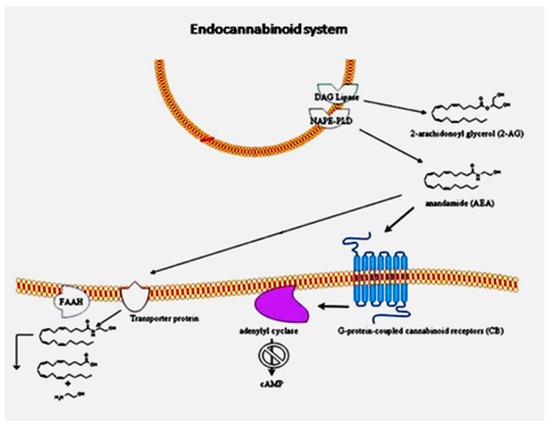
“Over the last 25 years, the human endocannabinoid system (ECS) has come into the limelight as an imperative neuro-modulatory system. It is mainly comprised of endogenous cannabinoid (endocannabinoid), cannabinoid receptors and the associated enzymes accountable for its synthesis and deterioration. The ECS plays a proven role in the management of several neurological, cardiovascular, immunological, and other relevant chronic conditions. Endocannabinoid or endogenous cannabinoid are endogenous lipid molecules which connect with cannabinoid receptors and impose a fashionable impact on the behavior and physiological processes of the individual. Arachidonoyl ethanolamide or Anandamide and 2-arachidonoyl glycerol or 2-AG were the endocannabinoid molecules that were first characterized and discovered. The presence of lipid membranes in the precursor molecules is the characteristic feature of endocannabinoids. The endocannabinoids are released upon rapid enzymatic reactions into the extracellular space via activation through G-protein coupled receptors, which is contradictory to other neurotransmitter that are synthesized beforehand, and stock up into the synaptic vesicles. The current review highlights the functioning, synthesis, and degradation of endocannabinoid, and explains its functioning in biological systems.”

https://pubmed.ncbi.nlm.nih.gov/35628545/

https://www.mdpi.com/1422-0067/23/10/5734


Modulation of Endocannabinoid System Components in Depression: Pre-Clinical and Clinical Evidence

ijms-logo

“Depression is characterized by continuous low mood and loss of interest or pleasure in enjoyable activities. First-line medications for mood disorders mostly target the monoaminergic system; however, many patients do not find relief with these medications, and those who do suffer from negative side effects and a discouragingly low rate of remission.

Studies suggest that the endocannabinoid system (ECS) may be involved in the etiology of depression and that targeting the ECS has the potential to alleviate depression.

ECS components (such as receptors, endocannabinoid ligands, and degrading enzymes) are key neuromodulators in motivation and cognition as well as in the regulation of stress and emotions. Studies in depressed patients and in animal models for depression have reported deficits in ECS components, which is motivating researchers to identify potential diagnostic and therapeutic biomarkers within the ECS. By understanding the effects of cannabinoids on ECS components in depression, we enhance our understanding of which brain targets they hit, what biological processes they alter, and eventually how to use this information to design better therapeutic options.

In this article, we discuss the literature on the effects of cannabinoids on ECS components of specific depression-like behaviors and phenotypes in rodents and then describe the findings in depressed patients. A better understanding of the effects of cannabinoids on ECS components in depression may direct future research efforts to enhance diagnosis and treatment.”

https://pubmed.ncbi.nlm.nih.gov/35628337/

https://www.mdpi.com/1422-0067/23/10/5526

Comparative study of CNR1 and CNR2 cannabinoid receptors expression levels in COVID-19 patients with and without diabetes mellitus: Recommendations for future research targets

Diabetes & Metabolic Syndrome: Clinical Research & Reviews

“Background and aims: The COVID-19 pandemic has prompted researchers to look for effective therapeutic targets. The effect of endocannabinoid system against infectious diseases is investigated for several years. In this study, we evaluated the expression level of CNR1 and CNR2 genes in patients with COVID-19 with and without diabetes to provide new insights regarding these receptors and their potential effect in COVID-19 disease.

Methods: In this study, peripheral blood monocytes cells (PBMCs) were isolated from eight different groups including COVID-19 patients, diabetic patients, and healthy individuals. RNA were extracted to evaluate the expression level of CNR1 and CNR2 genes using real-time PCR. The correlation between the expression levels of these genes in different groups were assessed.

Results: A total of 80 samples were divided into 8 groups, with each group consisting of ten samples. When comparing severe and moderate COVID-19 groups to healthy control group, the expression levels of the CNR1 and CNR2 genes were significantly higher in the severe and moderate COVID-19 groups. There were no significant differences between the mild COVID-19 group and the healthy control group. It was found that the expression levels of these genes in patients with diabetes who were infected with SARS-COV-2 did not differ across COVID-19 groups with varying severity, but they were significantly higher when compared to healthy controls.

Conclusion: Our study suggests the possible role of endocannabinoid system during SARS-COV-2 pathogenicity as the expression of CNR1 and CNR2 were elevated during the disease.”

https://pubmed.ncbi.nlm.nih.gov/35580523/

“In conclusion, the outcomes of this research supports the possible role of endocannabinoid system during SARS-COV-2 pathogenicity as the expression of CNR1 and CNR2 were elevated during the disease. Moreover, despite their limitations due to psychiatric side effects, the regulated use of cannabinoids should be examined by researchers to identify their potential effectiveness as a therapeutic target in COVID-19 disease.”

https://www.sciencedirect.com/science/article/pii/S1871402122001138?via%3Dihub

Synthesis and In Vitro Characterization of Selective Cannabinoid CB2 Receptor Agonists: Biological Evaluation against Neuroblastoma Cancer Cells

molecules-logo

“1,8-naphthyridine-3-carboxamide structures were previously identified as a promising scaffold from which to obtain CB2R agonists with anticancer and anti-inflammatory activity. This work describes the synthesis and functional characterization of new 1,8-naphthyridin-2(1H)-one-3-carboxamides with high affinity and selectivity for CB2R. The new compounds were able to pharmacologically modulate the cAMP response without modulating CB2R-dependent β-arrestin2 recruitment. These structures were also evaluated for their anti-cancer activity against SH-SY5Y and SK-N-BE cells. They were able to reduce the cell viability of both neuroblastoma cancer cell lines with micromolar potency (IC50 of FG158a = 11.8 μM and FG160a = 13.2 μM in SH-SY5Y cells) by a CB2R-mediated mechanism. Finally, in SH-SY5Y cells one of the newly synthesized compounds, FG158a, was able to modulate ERK1/2 expression by a CB2R-mediated effect, thus suggesting that this signaling pathway might be involved in its potential anti-cancer effect.”

https://pubmed.ncbi.nlm.nih.gov/35566369/

https://www.mdpi.com/1420-3049/27/9/3019