The Role of Nutritional Status, Gastrointestinal Peptides, and Endocannabinoids in the Prognosis and Treatment of Children with Cancer

ijms-logo

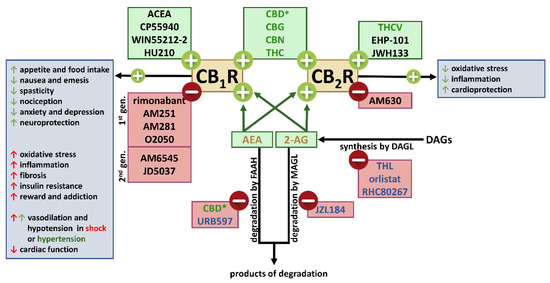
“Neoplastic diseases in children are the second most frequent cause of death among the young. It is estimated that 400,000 children worldwide will be diagnosed with cancer each year. The nutritional status at diagnosis is a prognostic indicator and influences the treatment tolerance. Both malnutrition and obesity increase the risk of mortality and complications during treatment. It is necessary to constantly search for new factors that impair the nutritional status.

The endocannabinoid system (ECS) is a signaling system whose best-known function is regulating energy balance and food intake, but it also plays a role in pain control, embryogenesis, neurogenesis, learning, and the regulation of lipid and glucose metabolism. Its action is multidirectional, and its role is being discovered in an increasing number of diseases.

In adults, cannabinoids have been shown to have anti-cancer properties against breast and pancreatic cancer, melanoma, lymphoma, and brain tumors. Data on the importance of both the endocannabinoid system and synthetic cannabinoids are lacking in children with cancer.

This review highlights the role of nutritional status in the oncological treatment process, and describes the role of ECS and gastrointestinal peptides in regulating appetite. We also point to the need for research to evaluate the role of the endocannabinoid system in children with cancer, together with a prospective assessment of nutritional status during oncological treatment.”

https://pubmed.ncbi.nlm.nih.gov/35563548/

https://www.mdpi.com/1422-0067/23/9/5159


Efficacy of Δ9 -Tetrahydrocannabinol (THC) Alone or in Combination With a 1:1 Ratio of Cannabidiol (CBD) in Reversing the Spatial Learning Deficits in Old Mice

Logo of frontagineuro

“Decline in cognitive performance, an aspect of the normal aging process, is influenced by the endocannabinoid system (ECS). Cannabinoid receptor 1 (CB1) signaling diminishes with advancing age in specific brain regions that regulate learning and memory and abolishing CB1 receptor signaling accelerates cognitive aging in mice. We recently demonstrated that prolonged exposure to low dose (3 mg/kg/day) Δ9-tetrahydrocannabinol (THC) improved the cognitive performances in old mice on par with young untreated mice. Here we investigated the potential influence of cannabidiol (CBD) on this THC effect, because preclinical and clinical studies indicate that the combination of THC and CBD often exhibits an enhanced therapeutic effect compared to THC alone. We first tested the effectiveness of a lower dose (1 mg/kg/day) THC, and then the efficacy of the combination of THC and CBD in 1:1 ratio, same as in the clinically approved medicine Sativex®. Our findings reveal that a 1 mg/kg/day THC dose still effectively improved spatial learning in aged mice. However, a 1:1 combination of THC and CBD failed to do so. The presence of CBD induced temporal changes in THC metabolism ensuing in a transient elevation of blood THC levels. However, as CBD metabolizes, the inhibitory effect on THC metabolism was alleviated, causing a rapid clearance of THC. Thus, the beneficial effects of THC seemed to wane off more swiftly in the presence of CBD, due to these metabolic effects. The findings indicate that THC-treatment alone is more efficient to improve spatial learning in aged mice than the 1:1 combination of THC and CBD.”

https://www.ncbi.nlm.nih.gov/pmc/articles/PMC8435893/

“In conclusion, our observations indicate that 1 mg/kg/day THC dose is still effective in improving the spatial learning in aged mice. With regard to the efficacy, THC-alone has proved to be more efficient in improving spatial learning in aged mice than its 1:1 combination with CBD. However, the possibility of THC/CBD being efficient in other ratios or at the earliest time-points, like immediately after the treatment cease, cannot be negated. Possibly, reducing the dose of CBD may improve the efficacy of the THC/CBD combination.”

https://www.frontiersin.org/articles/10.3389/fnagi.2021.718850/full

Activation of cannabinoid receptors in breast cancer cells improves osteoblast viability in cancer-bone interaction model while reducing breast cancer cell survival and migration

Scientific Reports

“The endocannabinoid system has been postulated to help restrict cancer progression and maintain osteoblastic function during bone metastasis. Herein, the effects of cannabinoid receptor (CB) type 1 and 2 activation on breast cancer cell and osteoblast interaction were investigated by using ACEA and GW405833 as CB1 and CB2 agonists, respectively. Our results showed that breast cancer cell (MDA-MB-231)-derived conditioned media markedly decreased osteoblast-like UMR-106 cell viability. In contrast, media from MDA-MB-231 cells pre-treated with GW405833 improved UMR-106 cell viability. MDA-MB-231 cells were apparently more susceptible to both CB agonists than UMR-106 cells. Thereafter, we sought to answer the question as to how CB agonists reduced MDA-MB-231 cell virulence. Present data showed that co-activation of CB1 and CB2 exerted cytotoxic effects on MDA-MB-231 cells by increasing apoptotic cell death through suppression of the NF-κB signaling pathway in an ROS-independent mechanism. ACEA or GW405833 alone or in combination also inhibited MDA-MB-231 cell migration. Thus, it can be concluded that the endocannabinoid system is able to provide protection during breast cancer bone metastasis by interfering cancer and bone cell interaction as well as by the direct suppression of cancer cell growth and migration.”

https://pubmed.ncbi.nlm.nih.gov/35513484/

“In conclusions, we have demonstrated that the ECS—which was present in bone microenvironment—provided a protection against breast cancer bone metastasis and its negative consequence on bone cell survival. Specifically, CB agonists, especially CB2 agonist, was able to prevent breast cancer-induced osteoblast suppression. Each of the two CB agonists or a combination of both could reduce breast cancer cell survival and migration through the NF-κB-dependent pathway. “

https://www.nature.com/articles/s41598-022-11116-9


Cannabinoid Therapeutics in Chronic Neuropathic Pain: From Animal Research to Human Treatment

Frontiers Logo

“Despite the importance of pain as a warning physiological system, chronic neuropathic pain is frequently caused by damage in the nervous system, followed by persistence over a long period, even in the absence of dangerous stimuli or after healing of injuries. Chronic neuropathic pain affects hundreds of millions of adults worldwide, creating a direct impact on quality of life. This pathology has been extensively characterized concerning its cellular and molecular mechanisms, and the endocannabinoid system (eCS) is widely recognized as pivotal in the development of chronic neuropathic pain. Scientific evidence has supported that phyto-, synthetic and endocannabinoids are efficient for pain management, while strong data arise from the therapeutic use of Cannabis-derived products. The use of medicinal Cannabis products is directed toward not only relieving symptoms of chronic pain, but also improving several aspects of patients’ welfare. Here, we review the involvement of eCS, along with other cellular and molecular elements, in chronic neuropathic pain pathology and how this system can be targeted for pain management.”

https://pubmed.ncbi.nlm.nih.gov/34916962/

“The role of eCS as a pharmacological target and the advantages of using medicinal Cannabis sp. to treat pain is remarkable, as described in this review.”

https://www.frontiersin.org/articles/10.3389/fphys.2021.785176/full


Neuroprotection by Cannabinoids in Neurodegenerative Diseases

“The cannabinoids are found to have particular application as neuroprotectants for mental and motor dysfuction in neurodegenerative diseases. The neuroprotective properties of cannabinoids suggest their therapeutic use for limiting neurological damage. The cannabinoids treatments should not only aim to alleviate specific symptoms but also attempt to delay/arrest disease progression and to repair the damaged structures. The author conducted a review of studies published between 1974 and 2011. The search was performed using the following PubMed search terms: “Cannabinoids” and “Neurodegenerative Diseases” and 287 papers were detected. The articles were examined and the overlapping or insufficiently clear works were excluded. Finally we chose 117 articles regarding the latest international guidelines, the pathophysiology of neurodegenerative diseases and the various therapeutic choices. The studies reported in the present review support the view that the cannabinoid signalling system is a key modulatory element in the activity of the basal ganglia. This idea is supported by different anatomical, electrophysiological, pharmacological and biochemical data. Furthermore, these studies indicate that the cannabinoid system is impaired in different neurological disorders that directly or indirectly affect the basal ganglia, which supports the idea of developing novel pharmacotherapies with compounds that selectively target specific elements of the cannabinoid system.”

https://www.oatext.com/neuroprotection-by-cannabinoids-in-neurodegenerative-diseases.php#Article


Role and Function of Endocannabinoid System in Major Depressive Disease

“The endocannabinoid system (ECS) is a neuromodulator system with a crucial role in CNS and the reaction to endogenous and exogenous compounds and inflammation. Cannabidiol (CBD) is a basic part of the ECS which is the overwhelming causative and/or protective factor of major depressive disease (MDD). CBD interacts with brain-derived neurotropic factor (BDNF) that responds to inflammation, dysregulations of the hypothalamic-pituitary-adrenal (HPA) axis, and many more imbalances in MDD patients for which the ECS is a vital part to analyze, diagnose, and reflect the treatment. The ECS and MDD appear to have strong connections and interactions, so interest in ECS and CBD use in MDD patients is developing as a rescue resort.”

https://pubmed.ncbi.nlm.nih.gov/34676346/

Vasoprotective Endothelial Effects of Chronic Cannabidiol Treatment and Its Influence on the Endocannabinoid System in Rats with Primary and Secondary Hypertension

“Our study aimed to examine the endothelium (vascular)-protecting effects of chronic cannabidiol (CBD) administration (10 mg/kg once daily for 2 weeks) in aortas and small mesenteric (G3) arteries isolated from deoxycorticosterone-induced hypertensive (DOCA-salt) rats and spontaneously hypertensive rats (SHR). CBD reduced hypertrophy and improved the endothelium-dependent vasodilation in response to acetylcholine in the aortas and G3 of DOCA-salt rats and SHR. The enhancement of vasorelaxation was prevented by the inhibition of nitric oxide (NO) with L-NAME and/or the inhibition of cyclooxygenase (COX) with indomethacin in the aortas and G3 of DOCA-salt and SHR, respectively. The mechanism of the CBD-mediated improvement of endothelial function in hypertensive vessels depends on the vessel diameter and may be associated with its NO-, the intermediate-conductance calcium-activated potassium channel- or NO-, COX-, the intermediate and the small-conductance calcium-activated potassium channels-dependent effect in aortas and G3, respectively. CBD increased the vascular expression of the cannabinoid CB1 and CB2 receptors and aortic levels of endocannabinoids with vasorelaxant properties e.g., anandamide, 2-arachidonoylglycerol and palmitoyl ethanolamide in aortas of DOCA-salt and/or SHR. In conclusion, CBD treatment has vasoprotective effects in hypertensive rats, in a vessel-size- and hypertension-model-independent manner, at least partly via inducing local vascular changes in the endocannabinoid system.”

https://pubmed.ncbi.nlm.nih.gov/34832902/

Clinical Data on Canabinoids: Translational Research in the Treatment of Autism Spectrum Disorders

“Translational research made with Cannabis sativa L. and its biocompounds provides data for some targeted diseases, as also symptoms associated with Autism Spectrum Disorders (ASDs). The main compounds ∆9-tetrahydrocannabinol (THC) and cannabidiol (CBD), are capable of modulating the endocannabinoid system since its dysregulation interferes with the pathophysiology of ASDs there are clinical evidence for its potential use in the treatment of the disease. Conventional therapy still has limitations, as it does not always treat the central symptoms, and there are many patients who do not respond to treatment, which demands more research on new therapies. Through the analysis of published literature on this topic, it is verified that cannabinoids, in particular CBD, improves symptoms associated with common comorbidities in ASDs. Some studies also demonstrate the therapeutic potential of these compounds in the treatment of central symptoms of autism. In addition, cannabinoid therapy to ASDs is associated with low adverse effects and a reduction in concomitant medication. Although it appears to be promising, it is essential to do the translation of this data into clinical research and some of its potential and critical gaps are discussed in this review pointing to large-scale and long-term clinical trials that should include more patients and homogeneous samples.”

https://pubmed.ncbi.nlm.nih.gov/35453548/

Cannabinoids as New Drug Candidates for the Treatment of Glaucoma

“Glaucoma is a blinding eye disease that affects about 70 million patients globally today. The cannabinoid receptors and the endocannabinoid system have found attention for new drug concepts. This review will analyze the potential of cannabinoids, primarily tetrahydrocannabinol, THCVS, and cannabinol, as drug candidates and the role of CB1/CB2 receptors with regard to the pathophysiology of glaucoma. The mode of action of cannabinoids as innovative drug candidates and recent formulations for topical delivery will be discussed. Cannabinoid receptors with associated TRPV channels will be evaluated for their potential as drug targets. Especially the role of the endocannabinoid system (fatty acid amide hydrolase, monoacylglycerol lipase) impacting the prostaglandin network (cyclooxygenase, PGE, PGF) and neuroprotection by inhibition of nitric oxide radical formation is in the focus of this review. Delivery systems, including recent clinical trials, will be analyzed to evaluate the potential for innovative future ophthalmological drugs.”

https://pubmed.ncbi.nlm.nih.gov/35299275/

Rapid treatments for depression: Endocannabinoid system as a therapeutic target

“Current first-line treatments for major depressive disorder (MDD), i.e., antidepressant drugs and psychotherapy, show delayed onset of therapeutic effect as late as 2-3 weeks or more. In the clinic, the speed of beginning of the actions of antidepressant drugs or other interventions is vital for many reasons. Late-onset means that depression, its related disability, and the potential danger of suicide remain a threat for some patients. There are some rapid-acting antidepressant interventions, such as sleep deprivation, ketamine, acute exercise, which induce a significant response, ranging from a few hours to maximally one week, and most of them share a common characteristic that is the activation of the endocannabinoid (eCB) system. Activation of this system, i.e., augmentation of eCB signaling, appears to have anti-depressant-like actions. This article puts the idea forward that the activation of eCB signaling represents a critical mechanism of rapid-acting therapeutic interventions in MDD, and this system might contribute to the development of novel rapid-acting treatments for MDD.”

https://pubmed.ncbi.nlm.nih.gov/35351488/