A Longitudinal Assessment of Endometriosis Patients Prescribed Cannabis-Based Medicinal Products: A Case Series From the UK Medical Cannabis Registry

pubmed logo

Background: Although there is growing evidence supporting the use of cannabis-based medicinal products (CBMPs) for the management of chronic pain, there is a paucity of data on their effect on endometriosis-associated chronic pain.

Aims: This study aimed to perform an analysis of pain-specific and general health-related quality of life (HRQoL) outcomes for patients with endometriosis-associated chronic pain treated with CBMPs.

Materials and methods: Primary outcomes included changes in patient-reported outcome measures (PrOMs) from baseline to 1, 3, 6, 12 and 18 months. A repeated measures ANOVA was applied to assess changes in PrOMs at 1 to 18 months from baseline. Secondary outcomes included incidence and frequency of adverse events (AEs).

Results: Sixty-three patients met inclusion criteria. Initiation of CBMPs was associated with improvements in all pain-specific PrOMs from baseline to 18 months (p < 0.050). EQ-5D-5L index value showed improvements between baseline and all months (p < 0.050). Anxiety and sleep quality PrOMs showed improvements from baseline to 18 months (p < 0.050). Minimal clinically significant differences (11%-37%), moderately important improvements (5%-22%) and substantial improvements (0%-11%) were observed in the Brief Pain Inventory (BPI) and pain severity visual analogue scale. Sixty-two adverse events were reported by 16 (25.40%) participants.

Conclusions: This study observed an association between CBMP treatment and improvements in pain and HRQoL in patients with endometriosis. Causality cannot be inferred due to the nature of this observational study; however, these findings provide complementary evidence for the development of randomised controlled trials to assess the efficacy of CBMPs for endometriosis-associated chronic pain.”

https://pubmed.ncbi.nlm.nih.gov/41305963

“Cannabis-based medicinal products (CBMPs) that contain phytocannabinoids, such as (−)-trans-Δ9-tetrahydrocannabinol (Δ9-THC) and cannabidiol (CBD), have been identified with potential to manage endometriosis-related pain.”

“Overall, these results provide a signal towards improvement in short-term pain severity and interference for endometriosis patients after the initiation of CMBP treatment, although there was diversity at different pain intervals.”

https://obgyn.onlinelibrary.wiley.com/doi/10.1111/ajo.70078

Cannabidiol and ∆9-Tetrahydrocannabinol in Endometriosis: A Literature Review on Therapeutic Applications and Mechanisms

pubmed logo

“Endometriosis is a chronic, inflammatory, and multifactorial disease characterized by the presence of endometrial tissue outside the uterine cavity, often associated with debilitating symptoms. It affects approximately 10% of women of reproductive age and is also related to infertility. Endometriosis can be classified as peritoneal, ovarian, or deep endometriosis, with primary symptoms including chronic pelvic pain, dysmenorrhea, and dyspareunia. Diagnosis and treatment are challenging, with laparoscopy and biopsy of ectopic tissue being the gold standard.

Cannabidiol (CBD) and ∆9-tetrahydrocannabinol (THC) are two major cannabinoids found in the Cannabis sativa plant, widely known for their medicinal properties.

An experimental study conducted in rats demonstrated the anti-inflammatory, antioxidant, and antiangiogenic effects of intraperitoneal CBD use in the treatment of endometriosis. The objective of the present study was to conduct a literature review on the therapeutic potential of Cannabidiol (CBD) and ∆9-Tetrahydrocannabinol (THC) in the signs and symptoms of endometriosis. Research on PubMed, Embase, and Scopus platforms was conducted to determine the reproducibility and safety of treatment in humans, including dosage and administration route, as the current use is off-label.”

https://pubmed.ncbi.nlm.nih.gov/41248202


Should cannabis be used in the management of endometriosis?

pubmed logo

“Introduction: Endometriosis is a chronic inflammatory condition that affects around 1 in 7 women of reproductive age. Current medical treatments tend to be sub-optimal to manage the range of symptoms, with low levels of patient satisfaction. Cross-sectional and retrospective data suggests that people with endometriosis are consuming cannabis to help manage their symptoms.

Areas covered: This review discusses the evidence for consumption of medicinal cannabis to help manage endometriosis symptoms, including potential mechanisms of action from both animal models and human studies, usage in the community, the current evidence from clinical trials and observational studies, and the safety and potential drug interactions.

Expert opinion: While there is a lack of high-quality clinical trial evidence, significant self-reported evidence from cross-sectional surveys and retrospective observational data suggests that those consuming medicinal cannabis report reductions in endometriosis symptoms such as pelvic pain, dysmenorrhea and gastrointestinal symptoms, and improve mental health and sleep. Given the low levels of satisfaction with current treatment options, consideration should be given to trialing medicinal cannabis as part of the interdisciplinary management of endometriosis in those who express interest and who do not demonstrate any significant contraindications.”

https://pubmed.ncbi.nlm.nih.gov/41070712/

  • “Less than 25% of women with endometriosis report satisfaction with current conventional treatments with high discontinuation rates due to ineffectiveness and side effects.
  • Dysregulation of the endocannabinoid system in endometriosis, including reduced CB₁ receptors and elevated endocannabinoid levels, provides biological plausibility for therapeutic intervention through TRPV1 modulation and PPARγ activation.
  • Cannabis consumption is associated with self-reported reductions in pain, gastrointestinal symptoms and nausea, and improvements in sleep quality and mental health.
  • Cannabis consumption is associated with reductions in potentially addictive medications such as opioids and benzodiazepines; however these reductions should be done under the guidance of a physician.
  • Despite promising preclinical data and substantial observational evidence, robust randomized controlled trial data in humans remains lacking, preventing recommendation of more widespread adoption as a treatment.”

https://www.tandfonline.com/doi/full/10.1080/17446651.2025.2572339

Endocannabinoids and their receptors modulate endometriosis pathogenesis and immune response

pubmed logo

“Endometriosis (EM), characterized by the presence of endometrial-like tissue outside the uterus, is the leading cause of chronic pelvic pain and infertility in females of reproductive age. Despite its high prevalence, the molecular mechanisms underlying EM pathogenesis remain poorly understood.

The endocannabinoid system (ECS) is known to influence several cardinal features of this complex disease including pain, vascularization, and overall lesion survival, but the exact mechanisms are not known. Utilizing CNR1 knockout (k/o), CNR2 k/o, and wild-type (WT) mouse models of EM, we reveal contributions of ECS and these receptors in disease initiation, progression, and immune modulation. Particularly, we identified EM-specific T cell dysfunction in the CNR2 k/o mouse model of EM. We also demonstrate the impact of decidualization-induced changes on ECS components, and the unique disease-associated transcriptional landscape of ECS components in EM. Imaging mass cytometry (IMC) analysis revealed distinct features of the microenvironment between CNR1, CNR2, and WT genotypes in the presence or absence of decidualization.

This study, for the first time, provides an in-depth analysis of the involvement of the ECS in EM pathogenesis and lays the foundation for the development of novel therapeutic interventions to alleviate the burden of this debilitating condition.”

https://pubmed.ncbi.nlm.nih.gov/39120997/

“In conclusion, our study offers evidence for the involvement of CNR1 and CNR2 dysregulation in EM pathogenesis. Through an integrative analysis of transcriptomic profiles, immune cell dynamics, and spatial relationships within EM lesions from mice, we unveil the intricate interactions between ECS, immune responses, and cellular changes in EM. By identifying potential mechanisms through which ECS disruption could impact EM, our research provides a foundation for the development of targeted therapies addressing the ECS’s influence on EM. These findings will advance our understanding of EM and lead to innovative therapeutic strategies to manage this complex disorder.”

https://elifesciences.org/articles/96523

Cannabidiol as a possible treatment for endometriosis through suppression of inflammation and angiogenesis

pubmed logo

“Background: Endometriosis is associated with a wide variety of signs and symptoms and can lead to infertility, embryo death, and even miscarriage. Although the exact pathogenesis and etiology of endometriosis is still unclear, it has been shown that it has a chronic inflammatory nature and angiogenesis is also involved in it.

Objective: This review aims to explore the role of inflammation and angiogenesis in endometriosis and suggest a potential treatment targeting these pathways.

Findings: Among the pro-inflammatory cytokines, studies have shown solid roles for interleukin 1β (IL-β), IL-6, and tumor necrosis factor α (TNF-α) in the pathogenesis of this condition. Other than inflammation, angiogenesis, the formation of new blood vessels from pre-existing capillaries, is also involved in the pathogenesis of endometriosis. Among angiogenic factors, vascular endothelial growth factor (VEGF), hypoxia-inducible factor 1α (HIF-1α), transforming growth factor β1 (TGF-β1), and matrix metalloproteinases (MMPs) are more essential in the pathogenesis of endometriosis. Interestingly, it has been shown that inflammation and angiogenesis share some similar pathways with each other that could be potentially targeted for treatment of diseases caused by these two processes. Cannabidiol (CBD) is a non-psychoactive member of cannabinoids which has well-known and notable anti-inflammatory and antiangiogenic properties. This agent has been shown to decrease IL-1β, IL-6, TNF-α, VEGF, TGFβ, and MMPs in different animal models of diseases.

Conclusion: It seems that CBD could be a possible treatment for endometriosis due to its anti-inflammatory and antiangiogenic activity, however, further studies are needed.”

https://pubmed.ncbi.nlm.nih.gov/39110084/

“So far, the exact mechanism of endometriosis is not fully understood. However, this phenomenon is known as a chronic inflammatory condition accompanied with angiogenesis. Herein, we reviewed the inflammatory aspects of this disease with an eye on angiogenesis. As we showed, the molecular pathways of angiogenesis and inflammation have a lot in common. Thus, it seems that targeting inflammation could be considered hitting two birds with one stone. Considering the potent anti-inflammatory and antiangiogenic effects of CBD under various other conditions, authors suggest in vitro and in vivo studies on CBD and endometriosis.”

https://onlinelibrary.wiley.com/doi/10.1002/iid3.1370

Cannabis and Endometriosis: The Roles of the Gut Microbiota and the Endocannabinoid System

pubmed logo

“Endometriosis, a chronic condition affecting around 10-14% of women, is challenging to manage, due to its complex pathogenesis and limited treatment options. Research has suggested a potential role of the gut microbiota and the endocannabinoid system in the development and progression of endometriosis. This narrative review aims to explore the role of, and any potential interactions between, the endocannabinoid system (ECS) and the gut microbiota in endometriosis. This review found that both the ECS and microbiota influence endometriosis, with the former regulating inflammation and pain perception and the latter influencing immune responses and hormonal balance. There is evidence that a dysregulation of the endocannabinoid system and the gut microbiota influence endometriosis symptoms and progression via changes in CB1 receptor expression and increased circulating levels of endocannabinoids. Microbial imbalances in the gut, such as increases in Prevotella, have been directly correlated to increased bloating, a common endometriosis symptom, while increases in E. coli have supported the bacterial contamination hypothesis as a potential pathway for endometriosis pathogenesis. These microbial imbalances have been correlated with increases in inflammatory markers such as TNF-α and IL-6, both often raised in those with endometriosis. Protective effects of the ECS on the gut were observed by increases in endocannabinoids, including 2-AG, resulting in decreased inflammation and improved gut permeability. Given these findings, both the ECS and the gut microbiota may be targets for therapeutic interventions for endometriosis; however, clinical studies are required to determine effectiveness.”

https://pubmed.ncbi.nlm.nih.gov/38002684/

https://www.mdpi.com/2077-0383/12/22/7071

The Place of Cannabinoids in the Treatment of Gynecological Pain

pubmed logo

“Cannabis sativa (L), a plant with an extensive history of medicinal usage across numerous cultures, has received increased attention over recent years for its therapeutic potential for gynecological disorders such as endometriosis, chronic pelvic pain, and primary dysmenorrhea, due at least in part to shortcomings with current management options. Despite this growing interest, cannabis inhabits an unusual position in the modern medical pharmacopoeia, being a legal medicine, legal recreational drug, and an illicit drug, depending on jurisdiction. To date, the majority of studies investigating cannabis use have found that most people are using illicit cannabis, with numerous obstacles to medical cannabis adoption having been identified, including outdated drug-driving laws, workplace drug testing policies, the cost of quality-assured medical cannabis products, a lack of cannabis education for healthcare professionals, and significant and persistent stigma. Although currently lacking robust clinical trial data, a growing evidence base of retrospective data, cohort studies, and surveys does support potential use in gynecological pain conditions, with most evidence focusing on endometriosis. Cannabis consumers report substantial reductions in pelvic pain, as well as common comorbid symptoms such as gastrointestinal disturbances, mood disorders such as anxiety and depression, and poor sleep. Substitution effects were reported, with >50% reduction or cessation in opioid and/or non-opioid analgesics being the most common. However, a substantial minority report not disclosing cannabis consumption to their health professional. Therefore, while such deprescribing trends are potentially beneficial, the importance of medical supervision during this process is paramount given the possibility for withdrawal symptoms.”

https://pubmed.ncbi.nlm.nih.gov/37831340/

“Cannabis, whether purchased illicitly, or obtained through legal means, is commonly used by those with chronic pelvic pain, especially people with endometriosis. People report several benefits from using cannabis, including being able to reduce their normal medications including opioid based painkillers, but often don’t tell their health professional about this. This could lead to issues with withdrawal symptoms, so clinicians should be aware of the high prevalence of use of cannabis in this population.”

https://link.springer.com/article/10.1007/s40265-023-01951-z

Development, Characterization and Evidence of Anti-Endometriotic Activity of Phytocannabinoid-Rich Nanoemulsions

International Journal of Pharmaceutics

“During the last decades, the cannabinoid research for therapeutic purposes has been rapidly advancing, with an ever-growing body of evidence of beneficial effects for a wide sort of conditions, including those related to mucosal and epithelial homeostasis, inflammatory processes, immune responses, nociception, and modulating cell differentiation. β-caryophyllene (BCP) is a lipophilic volatile sesquiterpene, known as non-cannabis-derived phytocannabinoid, with documented anti-inflammatory, anti-proliferative and analgesic effects in both in vitro and in vivo models. Copaiba oil (COPA) is an oil-resin, mainly composed of BCP and other lipophilic and volatile components. COPA is reported to show several therapeutic effects, including anti-endometriotic properties and its use is widespread throughout the Amazonian folk medicine. COPA was nanoencapsulated into nanoemulsions (NE), then evaluated regarding the potential for transvaginal drug delivery and providing endometrial stromal cell proliferation in vitro. Transmission electron microscopy (TEM) showed that spherical NE were obtained with COPA concentration that varied from 5 to 7 wt%, while surfactant was maintained at 7.75 wt%. Dynamic light scattering (DLS) measurements showed droplet sizes of 30.03 ± 1.18, 35.47 ± 2.02, 43.98 ± 4.23 and PdI of 0.189, 0.175 and 0.182, respectively, with stability against coalescence and Ostwald ripening during 90 days. Physicochemical characterization results suggest that NE were able to both improve solubility and loading capacity, and increase thermal stability of COPA volatile components. Moreover, they showed slow and sustained release for up to eight hours, following the Higuchi kinetic model. Endometrial stromal cells from non-endometriotic lesions and ectopic endometrium were treated with different concentrations of COPA-loaded NE for 48h to evaluate its effect on cell viability and morphology. The results suggested significant decrease in cell viability and morphological modifications in concentrations higher than 150 μg/ml of COPA-loaded NE, but not when cells were treated with the vehicle (without COPA). Given the relevance of Copaifera spp. species in folk medicine and their bio economical importance in the Amazon, the development of novel formulations to overcome the technological limitations related to BCP and COPA, is promising. Our results showed that COPA-loaded NE can lead to a novel, uterus-targeting, more effective and promising natural alternative treatment of endometriosis.”

https://pubmed.ncbi.nlm.nih.gov/37196880/

https://www.sciencedirect.com/science/article/abs/pii/S0378517323004696?via%3Dihub

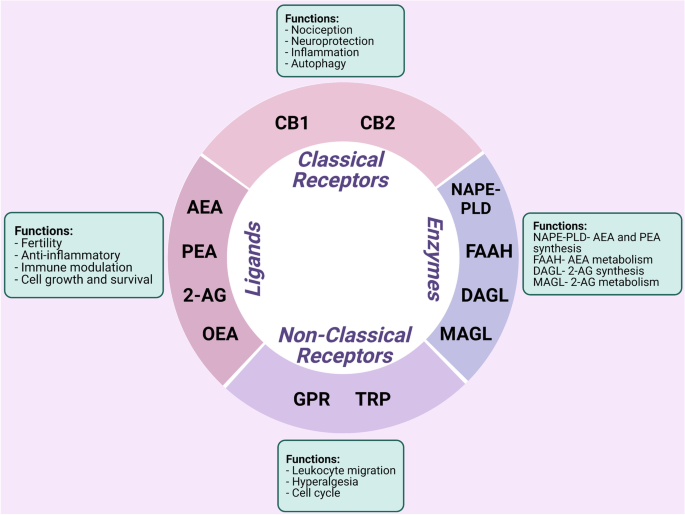
Role of the endocannabinoid system in the pathophysiology of endometriosis and therapeutic implications

figure 1

“Endometriosis patients experience debilitating chronic pain, and the first-line treatment is ineffective at managing symptoms. Although surgical removal of the lesions provides temporary relief, more than 50% of the patients experience disease recurrence. Despite being a leading cause of hysterectomy, endometriosis lacks satisfactory treatments and a cure. Another challenge is the poor understanding of disease pathophysiology which adds to the delays in diagnosis and overall compromised quality of life. Endometriosis patients are in dire need of an effective therapeutic strategy that is both economical and effective in managing symptoms, while fertility is unaffected.

Endocannabinoids and phytocannabinoids possess anti-inflammatory, anti-nociceptive, and anti-proliferative properties that may prove beneficial for endometriosis management, given that inflammation, vascularization, and pain are hallmark features of endometriosis.

Endocannabinoids are a complex network of molecules that play a central role in physiological processes including homeostasis and tissue repair, but endocannabinoids have also been associated in the pathophysiology of several chronic inflammatory diseases including endometriosis and cancers. The lack of satisfactory treatment options combined with the recent legalization of recreational cannabinoids in some parts of the world has led to a rise in self-management strategies including the use of cannabinoids for endometriosis-related pain and other symptoms.

In this review, we provide a comprehensive overview of endocannabinoids with a focus on their potential roles in the pathophysiology of endometriosis. We further provide evidence-driven perspectives on the current state of knowledge on endometriosis-associated pain, inflammation, and therapeutic avenues exploiting the endocannabinoid system for its management.”

https://pubmed.ncbi.nlm.nih.gov/36207747/

https://jcannabisresearch.biomedcentral.com/articles/10.1186/s42238-022-00163-8

Detection of Cannabinoid Receptor Expression by Endometriotic Lesions in Women with Endometriosis as an Alternative to Opioid-Based Pain Medication

The Journal of Immunology

“Emerging information suggests a potential role of medicinal cannabis in pain medication in addition to enhancing immune functions.

Endometriosis is a disease of women of reproductive age associated with infertility and reproductive failure as well as chronic pain of varying degrees depending on the stage of the disease. Currently, opioids are being preferred over nonsteroidal anti-inflammatory drugs (NSAID) due to the latter’s side effects. However, as the opioids are becoming a source of addiction, additional pain medication is urgently needed.

Cannabis offers an alternative therapy for treating the pain associated with endometriosis.

Information on the use and effectiveness of cannabis against endometriotic pain is lacking. Moreover, expression of receptors for endocannabinoids by the ovarian endometriotic lesions is not known. The goal of this study was to examine whether cannabinoid receptors 1 and 2 (CB1 and CB2) are expressed by ovarian endometriotic lesions.

Archived normal ovarian tissues, ovaries with endometriotic lesions, and normal endometrial tissues were examined for the presence of endometrial stromal cells using CD10 (a marker of endometrial stromal cells). Expression of CB1 and CB2 were determined by immunohistochemistry, immunoblotting, and gene expression studies.

Intense expression for CB1 and CB2 was detected in the epithelial cells in ovarian endometriotic lesions. Compared with stroma in ovaries with endometriotic lesions, the expression of CB1 and CB2 was significantly higher in the epithelial cells in endometriotic lesions in the ovary (P < 0.0001 and P < 0.05, respectively). Immunoblotting and gene expression assays showed similar patterns for CB1 and CB2 protein and CNR1 (gene encoding CB1) and CNR2 (gene encoding CB2) gene expression.

These results suggest that ovarian endometriotic lesions express CB1 and CB2 receptors, and these lesions may respond to cannabinoids as pain medication. These results will form a foundation for a clinical study with larger cohorts.”

https://pubmed.ncbi.nlm.nih.gov/35692500/

“Cannabinoids are compounds found in cannabis.”

https://www.hindawi.com/journals/jir/2022/4323259/