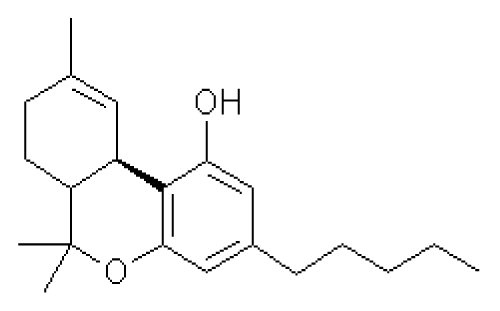
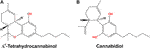
“Cannabidiol (CBD) is an abundant non-psychoactive phytocannabinoid in cannabis extracts which has high affinity on a series of receptors, including Type 1 cannabinoid receptor (CB1), Type 2 cannabinoid receptor (CB2), GPR55, transient receptor potential vanilloid (TRPV) and peroxisome proliferator-activated receptor gamma (PPARγ). By modulating the activities of these receptors, CBD exhibits multiple therapeutic effects, including neuroprotective, antiepileptic, anxiolytic, antipsychotic, anti-inflammatory, analgesic and anticancer properties. CBD could also be applied to treat or prevent COVID-19 and its complications. Here, we provide a narrative review of CBD’s applications in human diseases: from mechanism of action to clinical trials.”
“The herbal use of Cannabis sativa plant extract (also known as cannabis, hemp or marijuana) can be tracked back to ancient China, around 2900 BC. Cannabidiol (CBD) is one of the most abundant extracts from C. sativa; it has multiple bioactivities and wide health benefits without psychoactive properties. In this review, we summarized the molecular mechanisms and clinical experience in support of CBD as a potential therapeutic compound for various diseases.”
“The cannabinoids are found to have particular application as neuroprotectants for mental and motor dysfuction in neurodegenerative diseases. The neuroprotective properties of cannabinoids suggest their therapeutic use for limiting neurological damage. The cannabinoids treatments should not only aim to alleviate specific symptoms but also attempt to delay/arrest disease progression and to repair the damaged structures. The author conducted a review of studies published between 1974 and 2011. The search was performed using the following PubMed search terms: “Cannabinoids” and “Neurodegenerative Diseases” and 287 papers were detected. The articles were examined and the overlapping or insufficiently clear works were excluded. Finally we chose 117 articles regarding the latest international guidelines, the pathophysiology of neurodegenerative diseases and the various therapeutic choices. The studies reported in the present review support the view that the cannabinoid signalling system is a key modulatory element in the activity of the basal ganglia. This idea is supported by different anatomical, electrophysiological, pharmacological and biochemical data. Furthermore, these studies indicate that the cannabinoid system is impaired in different neurological disorders that directly or indirectly affect the basal ganglia, which supports the idea of developing novel pharmacotherapies with compounds that selectively target specific elements of the cannabinoid system.”
“Three prevalent neurodegenerative diseases, Parkinson’s, Alzheimer’s, and Huntington’s are in need of symptomatic relief of slowing disease progression or both. This chapter focuses on the potential of cannabinoids to afford neuroprotection, i.e. avoid or retard neuronal death. The neuroprotective potential of cannabinoids is known from the work in animal models and is mediated by the two cannabinoid receptors (CB1/CB2) and eventually, by their heteromers, GPR55, orphan receptors (GPR3/GPR6/GPR12/GPR18), or PPARγ. Now, there is the time to translate the findings into patients. The chapter takes primarily into account advances since 2016 and addresses the issue of proving neuroprotection in humans. One recent discovery is the existence of activated microglia with neuroprotective phenotype; cannabinoids are good candidates to skew phenotype, especially via glial CB2 receptors (CB2R), whose targeting has, a priori, less side effects those targeting the CBs1 receptor (CB1R), which are expressed in both neurons and glia. The fact that a cannabis extract (SativexTM) is approved for human therapy, such that cannabis use will likely be legalized in many countries and different possibilities that cannabinoid pharmacology suggests a successful route of cannabinoids (natural or synthetic) all the way to be approved and used in the treatment of neurodegeneration.”
“The phytocannabinoids of Cannabis sativa L. have, since ancient times, been proposed as a pharmacological alternative for treating various central nervous system (CNS) disorders. Interestingly, cannabinoid receptors (CBRs) are highly expressed in the basal ganglia (BG) circuit of both animals and humans. The BG are subcortical structures that regulate the initiation, execution, and orientation of movement. CBRs regulate dopaminergic transmission in the nigro-striatal pathway and, thus, the BG circuit also. The functioning of the BG is affected in pathologies related to movement disorders, especially those occurring in Parkinson’s disease (PD), which produces motor and non-motor symptoms that involving GABAergic, glutamatergic, and dopaminergic neural networks. To date, the most effective medication for PD is levodopa (l-DOPA); however, long-term levodopa treatment causes a type of long-term dyskinesias, l-DOPA-induced dyskinesias (LIDs). With neuromodulation offering a novel treatment strategy for PD patients, research has focused on the endocannabinoid system (ECS), as it participates in the physiological neuromodulation of the BG in order to control movement. CBRs have been shown to inhibit neurotransmitter release, while endocannabinoids (eCBs) play a key role in the synaptic regulation of the BG. In the past decade, cannabidiol (CBD), a non-psychotropic phytocannabinoid, has been shown to have compensatory effects both on the ECS and as a neuromodulator and neuroprotector in models such as 6-hydroxydopamine (6-OHDA), 1-methyl-4-phenyl-1,2,3,6-tetrahydropyridine (MPTP), and reserpine, as well as other PD models. Although the CBD-induced neuroprotection observed in animal models of PD has been attributed to the activation of the CB1 receptor, recent research conducted at a molecular level has proposed that CBD is capable of activating other receptors, such as CB2 and the TRPV-1 receptor, both of which are expressed in the dopaminergic neurons of the nigro-striatal pathway. These findings open new lines of scientific inquiry into the effects of CBD at the level of neural communication. Cannabidiol activates the PPARγ, GPR55, GPR3, GPR6, GPR12, and GPR18 receptors, causing a variety of biochemical, molecular, and behavioral effects due to the broad range of receptors it activates in the CNS. Given the low number of pharmacological treatment alternatives for PD currently available, the search for molecules with the therapeutic potential to improve neuronal communication is crucial. Therefore, the investigation of CBD and the mechanisms involved in its function is required in order to ascertain whether receptor activation could be a treatment alternative for both PD and LID.”
“Given that neuronal degeneration in Alzheimer’s disease (AD) is caused by the combination of multiple neurotoxic insults, current directions in the research of novel therapies to treat this disease attempts to design multitarget strategies that could be more effective than the simply use of acetylcholinesterase inhibitors; currently, the most used therapy for AD. One option, explored recently, is the synthesis of new analogues of cannabinoids that could competitively inhibit the acetylcholinesterase (AChE) enzyme and showing the classic neuroprotective profile of cannabinoid compounds. In this work, molecular docking has been used to design some cannabinoid analogues with such multitarget properties, based on the similarities of donepezil and Δ9-tetrahydrocannabinol. The analogues synthesized, compounds 1 and 2, demonstrated to have two interesting characteristics in different in vitro assays: competitive inhibition of AChE and competitive antagonism at the CB1/CB2 receptors. They are highly lipophilic, highlighting that they could easily reach the CNS, and apparently presented a low toxicity. These results open the door to the synthesis of new compounds for a more effective treatment of AD.”
“Background: Cannabis and its extracts are now being explored due to their huge health benefits. Although, the effect they elicit, whether on humans or rodents, may vary based on the age of the animal/subject and or the time in which the extract is administered. However, several debates exist concerning the various medical applications of these compounds. Nonetheless, their applicability as therapeutics should not be clouded based on their perceived negative biological actions.
Methods: Articles from reliable databases such as Science Direct, PubMed, Google Scholar, Scopus, and Ovid were searched. Specific search methods were employed using multiple keywords: ”Medicinal Cannabis; endocannabinoid system; cannabinoids receptors; cannabinoids and cognition; brain disorders; neurodegenerative diseases”. For the inclusion/exclusion criteria, only relevant articles related to medicinal Cannabis and its various compounds were considered.
Results: The current review highlights the role, effects, and involvement of Cannabis, cannabinoids, and endocannabinoids in preventing selected neurodegenerative diseases and possible amelioration of cognitive impairments. Furthermore, it also focuses on Cannabis utilization in many disease conditions such as Alzheimer’s and Parkinson’s disease among others.
Conclusion: In conclusion, the usage of Cannabis should be further explored as accumulating evidence suggests that it could be effective and somewhat safe, especially when adhered to the recommended dosage. Furthermore, in-depth studies should be conducted in order to unravel the specific mechanism underpinning the involvement of cannabinoids at the cellular level and their therapeutic applications.”
“Alzheimer’s Disease (AD) is one of the most common neurodegenerative diseases with chronic, progressive, and irreversible characteristics, affecting nearly 50 million older adults worldwide. The pathogenesis of AD includes the formation of senile plaques, the abnormal aggregation of tau protein and the gradual degeneration and death of cerebral cortical cells. The main symptoms are memory loss, cognitive decline and behavioral disorders. Studies indicate that cannabidiol (CBD) possesses various pharmacological activities, including anti-inflammatory, anti-oxidation and neuroprotective activities. It has been suggested as a potential multi-target medicine for the treatment of AD. In this review, we aim to summarize the underlying mechanisms and protective effects of CBD on signaling pathways and central receptors involved in the pathogenesis of AD, including the endocannabinoid system (eCBs), the Transient receptor potential vanilloid type 1(TRPV1) receptor, and the Peroxisome Proliferator-Activated Receptor (PPAR) receptor.”
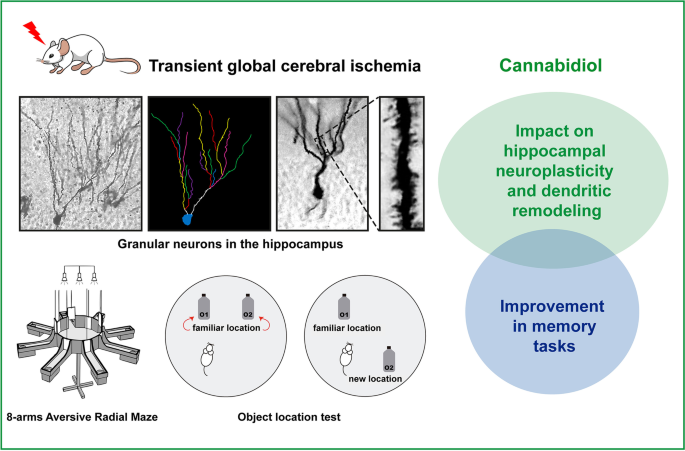
“Evidence for the clinical use of neuroprotective drugs for the treatment of cerebral ischemia (CI) is still greatly limited. Spatial/temporal disorientation and cognitive dysfunction are among the most prominent long-term sequelae of CI. Cannabidiol (CBD) is a non-psychotomimetic constituent of Cannabis sativa that exerts neuroprotective effects against experimental CI. The present study investigated possible neuroprotective mechanisms of action of CBD on spatial memory impairments that are caused by transient global cerebral ischemia (TGCI) in rats. Hippocampal synaptic plasticity is a fundamental mechanism of learning and memory. Thus, we also evaluated the impact of CBD on neuroplastic changes in the hippocampus after TGCI. Wistar rats were trained to learn an eight-arm aversive radial maze (AvRM) task and underwent either sham or TGCI surgery. The animals received vehicle or 10 mg/kg CBD (i.p.) 30 min before surgery, 3 h after surgery, and then once daily for 14 days. On days 7 and 14, we performed a retention memory test. Another group of rats that received the same pharmacological treatment was tested in the object location test (OLT). Brains were removed and processed to assess neuronal degeneration, synaptic protein levels, and dendritic remodeling in the hippocampus. Cannabidiol treatment attenuated ischemia-induced memory deficits. In rats that were subjected to TGCI, CBD attenuated hippocampal CA1 neurodegeneration and increased brain-derived neurotrophic factor levels. Additionally, CBD protected neurons against the deleterious effects of TGCI on dendritic spine number and the length of dendritic arborization. These results suggest that the neuroprotective effects of CBD against TGCI-induced memory impairments involve changes in synaptic plasticity in the hippocampus.”
“An early and persistent sign of Alzheimer’s disease (AD) is glucose hypometabolism, which can be evaluated by positron emission tomography (PET) with 18F-2-fluoro-2-deoxy-D-glucose ([18F]FDG). Cannabidiol has demonstrated neuroprotective and anti-inflammatory properties but has not been evaluated by PET imaging in an AD model. Intracerebroventricular (icv) injection of streptozotocin (STZ) is a validated model for hypometabolism observed in AD. This proof-of-concept study evaluated the effect of cannabidiol treatment in the brain glucose metabolism of an icv-STZ AD model by PET imaging. Wistar male rats received 3 mg/kg of STZ and [18F]FDG PET images were acquired before and 7 days after STZ injection. Animals were treated with intraperitoneal cannabidiol (20 mg/kg-STZ-cannabidiol) or saline (STZ-saline) for one week. Novel object recognition was performed to evaluate short-term and long-term memory. [18F]FDG uptake in the whole brain was significantly lower in the STZ-saline group. Voxel-based analysis revealed a hypometabolism cluster close to the lateral ventricle, which was smaller in STZ-cannabidiol animals. The brain regions with more evident hypometabolism were the striatum, motor cortex, hippocampus, and thalamus, which was not observed in STZ-cannabidiol animals. In addition, STZ-cannabidiol animals revealed no changes in memory index. Thus, this study suggests that cannabidiol could be an early treatment for the neurodegenerative process observed in AD.”
“Parkinson’s disease (PD) is a common neurodegenerative disease characterized by a disorder of the dopaminergic system in the midbrain, causing classical PD motor symptoms. The therapeutic effect of cannabidiol (CBD) on PD has been a research frontier in recent years. However, the pathogenesis of PD and the therapeutic mechanism of cannabinoid remain unclear. To further study the causes of PD and the effect of CBD on PD, we exposed the PD transgenic mouse model to CBD and then estimated the motorial and postural coordination through a modified swim test. Afterwards, the mechanism was investigated via the histopathology of substantia nigra and the gut-brain metabolic analysis in the approach of UHPLC-TOF-MS. The results showed that CBD significantly improved motor deficits of PD model and protected the substantia nigra area. The metabolic function of fatty acid biosynthesis, arginine biosynthesis/metabolism, butanoate (ketone body) metabolism, β-alanine metabolism, and pantothenate/CoA biosynthesis was highlighted in the pathological and therapeutic process along the gut-brain axis. In conclusion, CBD could attenuate PD via the neuroprotective effect on the midbrain. The attenuation of the central nervous system in turn improved motor performance of PD, which might be partially induced by the metabolic interaction between the gut-brain. In view of gut-brain metabolomics, the mechanism of PD pathogenesis and the effect of CBD on PD are highly related to the biosynthesis and metabolism of energy and essential substance.”