
Effect of Preoperative Cannabis Use on Postoperative Pain and Outcomes Following Cardiothoracic Surgery

pubmed logo

“Cannabis use has grown both recreationally and medicinally in the United States over the past decades, alongside increased legalization and social acceptance. However, there remains little research investigating the effects of preoperative cannabis use on postoperative pain in patients undergoing surgery.

We conducted a single-center prospective study in adults undergoing cardiac surgery via sternotomy. Patients seen for preoperative consultation in clinic were asked a standardized survey about cannabis use. Clinical data was collected via chart review. Primary outcomes were morphine equivalents in the first 48 hours postoperatively and Visual Analog Scale (VAS) scores. Secondary outcomes were time to extubation, postoperative nausea/vomiting, ICU length of stay (LOS), reoperation, and in-hospital mortality. The non-cannabis user group had 50 patients, and the cannabis user group had 23 patients.

Average morphine equivalents in the first 48 hours were similar between cannabis users and non-users (60.98 vs 59.90; P = 0.93), as were VAS scores at 24 hours (5.52 vs 4.84; P = 0.414) and 48 hours (4.74 vs 3.90; P = 0.23). Average time to extubation (minutes) was nearly identical between cannabis users and non-users (718.41 vs 718.67; P = 0.99). There was also no significant difference in average LOS (days) between cannabis users and non-users (2.91 vs 3.48; P = 0.26). There were no differences in postoperative nausea/vomiting, reoperation, or in-hospital mortality.

In patients undergoing cardiac surgery via sternotomy, there was no effect of cannabis use on any outcomes, including morphine equivalents, Visual Analog Scale scores, time to extubation, ICU length of stay, postoperative nausea or vomiting, reoperation, or in-hospital mortality.”
https://pubmed.ncbi.nlm.nih.gov/40905360/

https://journals.sagepub.com/doi/10.1177/10892532251374952

Exploring therapeutic potential of Cannabis based therapy in autoimmune and rheumatic disorders

pubmed logo

“The medical use of cannabis is expanding across many countries, with some legalizing its use outright and others implementing medical licensure systems to approve treatment for eligible patients.

Despite this growing interest and utilization, there remains a lack of solid scientific evidence supporting its medical use, even though cannabis has been used therapeutically for thousands of years.

The goal of the following communication is to present updated data on the potential roles of cannabis-based treatments in various autoimmune and rheumatic conditions.

The information highlights that incorporating cannabis into the therapeutic armamentarium may offer benefits.

However, in many cases, despite encouraging perspectives and outcomes, the supporting evidence remains insufficient and requires further validation.

Due to social and legal barriers, the conduct of such rigorous clinical trials has been hindered, limiting the availability of high-quality evidence to guide medical practice.”

https://pubmed.ncbi.nlm.nih.gov/40907777/

https://www.sciencedirect.com/science/article/abs/pii/S1568997225001867?via%3Dihub

Cannabidiol dampens propagation of hippocampal hyperactivity and differentially modulates feedforward and feedback inhibition

pubmed logo

“Cannabidiol (CBD) decreases seizures in patients with severe pediatric-onset epilepsies including Dravet, Lennox-Gastaut, and Tuberous Sclerosis syndromes. However, the effects of CBD on neuronal activity and circuits remain obscure.

In the mouse hippocampus, we found that CBD causes a GPR55-independent decrease in CA1 pyramidal neuron firing frequency and a GPR55-dependent reduction in CA3 to CA1 hippocampal activity propagation. CBD-mediated decrease in high-frequency activity was mimicked by GPR55 antagonism and prevented by GPR55 deletion and blockade of GABAergic transmission. Dampening high-frequency activity was accompanied by increased recruitment of parvalbumin+ (PV)-INs and reduced recruitment of somatostatin+ (SST)-INs, leveraging the inhibitory subcircuit to limit propagation of hyperactivity. CBD-induced attenuation of high frequency spike propagation was mimicked by pharmacological enhancement and optogenetic engagement of PV-INs. Such increased on-demand recruitment of PV-INs dampened propagation of high-frequency activity to hippocampal CA1 similarly to CBD.

We predict that CBD potentially curbs propagation and perpetuation of seizure activity via these mechanisms.”

https://pubmed.ncbi.nlm.nih.gov/40909733/

https://www.biorxiv.org/content/10.1101/2025.08.26.672420v1

Dietary Cannabidiol Supplementation on Growth Performance, Behavior, Blood Profile, Metabolomic Analysis, and Fatty Acid Composition in Rabbits: A Multi-Disciplinary Approach to Improve Welfare and Productivity

pubmed logo

“This study evaluated the effects of dietary cannabidiol (CBD) supplementation on behavior, blood parameters, oxidative status, metabolomic profile, and the fatty acid composition of meat and liver in rabbits.

A total of 42 New Zealand White × California rabbits (60 days old; 1:1 sex ratio; average weight 1621.3 ± 46.2 g) were randomly assigned to two groups (a control group, CTRL, and a CBD group, n = 21 each). Both groups received the same commercial diet, with the CBD group additionally supplemented with 0.1 mL of cannabis extract in coconut oil, corresponding to 10 mg CBD/animal/day. At 92 days of age, rabbits were slaughtered, and samples were collected for analyses.

Results showed that CBD supplementation significantly improved body weight gain, reduced plasma triglyceride levels, and enhanced oxidative status.

Behavioral observations indicated increased motor and grooming activities in CBD-supplemented animals, suggesting enhanced psychological well-being. The fatty acid profile of meat and liver was not significantly altered by CBD supplementation.

Overall, dietary CBD demonstrated the potential to positively influence physiological and behavioral responses, representing a promising strategy to enhance animal welfare and productivity in rabbit farming. Although no adverse effects on lipid profiles were observed, further studies are warranted to explore CBD’s role in lipid metabolism and cholesterol regulation.”

https://pubmed.ncbi.nlm.nih.gov/40905739/

“Animal health and welfare are essential for ethical farming and high-quality food production. This study evaluated the effects of dietary cannabidiol (CBD) supplementation on behavior, some blood parameters, and fatty acid composition in meat and liver of rabbits. CBD is gaining attention for its pharmacological properties and its role in the endocannabinoid system. The results suggest that CBD supplementation can influence behavioral and physiological responses in rabbits, offering potential benefits for both animal welfare and meat quality.”

https://www.mdpi.com/2306-7381/12/8/759

Synergistic Anticancer Effects of Fibroblast Growth Factor Receptor Inhibitor and Cannabidiol in Colorectal Cancer

pubmed logo

“Background/objectives: Colorectal cancer (CRC) remains a significant global health concern, with limited treatment options for metastatic stage 4 CRC. Fibroblast Growth Factor Receptor (FGFR) is a promising therapeutic target in CRC, while cannabidiol (CBD) has shown potential for inducing cell death and overcoming drug resistance. This study evaluates the efficacy of FGFR inhibitors and explores the synergistic effects of combining FGFR inhibitors with CBD in inducing apoptosis in CRC cells.

Methods: Cannabidiol and FGFR inhibitors were applied, and protein expression was analyzed via Western blot. Cell viability was assessed using the WST-1 assay, while apoptosis was measured through flow cytometry using Annexin V-FITC/PI staining. CHOP-specific siRNA transfection was performed to study gene silencing effects, followed by RNA sequencing for differential expression and pathway analysis. Statistical significance was determined using ANOVA and t-tests, with p < 0.05.

Results: FGFR expression patterns were confirmed in various cancer cell lines, with NCI-H716 showing high FGFR2 expression. Treatment with CBD (4 µM) and AZD4547 (10 nM) resulted in significant cell death, especially when used in combination, indicating the effectiveness of this combined therapy. Increased apoptosis in NCI-H716 cells was confirmed with the combined treatment. RNA sequencing and heatmap analysis suggested that ER stress might be related to the observed synergistic effect. The role of ER stress in the combination-induced apoptosis of NCI-H716 cells was further validated.

Conclusions: The combination of FGFR inhibitors and cannabidiol exhibited a synergistic effect in inducing cell death in colorectal cancer cells, likely through the ER stress pathway. This study supports the potential of combined FGFR inhibitor and CBD therapy as a promising strategy for enhancing anticancer effects in CRC.”

https://pubmed.ncbi.nlm.nih.gov/40871637/

“In conclusion, the data from this preclinical study indicate that the combination of cannabidiol (CBD) and FGFR inhibitors such as AZD4547 represents a potential therapeutic approach for metastatic colorectal cancer (CRC). This synergistic effect could help address resistance mechanisms that currently limit the efficacy of anticancer drugs. Our findings also suggest that ER stress-mediated apoptosis may be an important mechanism underlying this synergy. While these results are encouraging, further validation in appropriate preclinical animal models and, ultimately, clinical studies will be essential to confirm efficacy, assess safety, and determine the translational applicability of this combination strategy.”

https://www.mdpi.com/2072-6643/17/16/2609

The Effect of Cannabidiol in Conjunction with Radiation Therapy on Canine Glioma Cell Line Transplanted in Immunodeficient Mice

pubmed logo

“Glioma is a type of neoplasia that spontaneously arises from the glial cells of the brain in humans and dogs, and its prognosis is grave. Current treatment options for glioma include surgery, radiation therapy, chemotherapy, or symptomatic treatment.

Evidence has shown that cannabidiol (CBD) may have anticancer, anti-angiogenic, and anti-inflammatory properties in both in vitro and in vivo studies.

In this in vivo murine experiment, the canine glioma cell line J3TBG was injected into the frontoparietal cortex of immunodeficient mice using xenogeneic tissue transplantation. A total of 20 mice were randomly assigned to one of four treatment groups-Control group (C), CBD group (CBD), Radiation Therapy group (RT), and CBD plus Radiation Therapy group (CBD + RT). After transplantation of J3TBG, a single fraction of 5.5 Gy RT was administered to the RT and CBD + RT groups, and CBD was administered daily to the CBD and CBD + RT groups. Necropsies were performed to collect blood and brain tissue. Although there was not a statistically significant difference, the survival time among mice were longer in the CBD + RT group than the RT group.

These results indicate that CBD may be used as an adjunctive therapy to enhance RT treatment. Larger cohort studies are required to substantiate the hypothesis.”

https://pubmed.ncbi.nlm.nih.gov/40872686/

“These results indicate that CBD may be used as an adjunctive therapy to enhance the effect of radiation treatment.”

https://www.mdpi.com/2306-7381/12/8/735

[Low Abuse Potential of Plant-Derived Highly Purified Cannabidiol: A Narrative Review]

pubmed logo

“Cannabidiol (CBD) is an abundant phytocannabinoid extracted from Cannabis sativa L., along with delta-9-tetrahydrocannabinol.

Plant-derived, highly purified CBD oral solution (100 mg/mL) is approved as Epidiolex® in the United States and as Epidyolex® in Europe for the treatment of seizures associated with Lennox-Gastaut syndrome, Dravet syndrome, or tuberous sclerosis complex with country-specific labels.

CBD appears to reduce the neuronal hyperexcitability through a multimodal mechanism of action, although the precise mechanism remains unknown. Notably, unlike delta-9-tetrahydrocannabinol, CBD has low affinity for the euphoria-inducing cannabinoid receptor type 1 therefore lacks euphoric effects.

Preclinical and clinical studies have demonstrated a low abuse and dependence potential, as well as an absence of withdrawal syndrome of CBD.

Despite the lack of abuse potential for CBD, there are concerns related to cannabis and consequently cannabis-derived pharmaceutical products in Japan. Plant-derived, highly purified CBD is currently under investigation for the treatment of drug-resistant seizures in Japanese patients with early-onset epilepsies (jRCT2031220041).

This narrative review aims to update healthcare professionals in Japan with results from preclinical and clinical studies evaluating the abuse and dependence potentials of CBD.”

https://pubmed.ncbi.nlm.nih.gov/40887246/

https://www.jstage.jst.go.jp/article/yakushi/145/9/145_25-00086/_article/-char/ja/

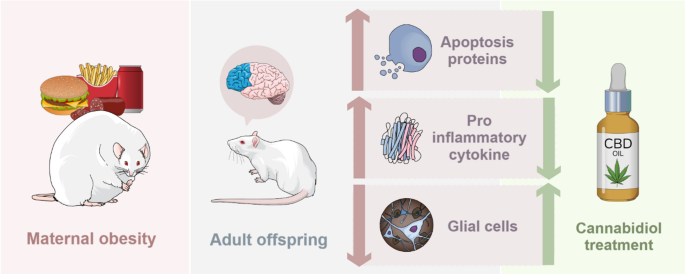
Cannabidiol regulates apoptosis and glial cells homeostasis in the prefrontal cortex of offspring from obese rat mothers

pubmed logo

“Maternal obesity during pregnancy poses significant health risks for both mother and progeny, including long-term impacts on brain function. In previous studies, we demonstrated that cafeteria diet (CAF) consumption during gestation induces neuroinflammation and behavioral deficits in the offspring, which are reversed by cannabidiol (CBD) treatment. However, the effects of CBD on apoptosis-related pathways in this context remain unclear.

Here, we investigated whether CBD treatment can modulate pro-apoptotic signaling and glial cells morphology in adult offspring of obese mothers.

Wistar rats were fed a CAF for 12 weeks before mating, during pregnancy, and lactation. Offspring received oral CBD (50 mg/kg) for 3 weeks starting at postnatal day 70. In the prefrontal cortex, we assessed apoptosis-related proteins, TNFα gene expression, and astrocytes and microglia morphology.

Male and female offspring of CAF-fed dams showed increased levels of BAD, which were mitigated by CBD treatment. JNK was also elevated in female offspring of obese mothers, and CBD reduced this increase. In females, CBD treatment led to a decrease in AKT concentrations. TNFα expression was elevated in the prefrontal cortex of male offspring of obese mothers. Additionally, a reduction in GFAP- and IBA-1-positive cells in the prefrontal cortex was observed in male offspring of obese dams, which was reversed by CBD.

These findings suggest that maternal obesity promotes a pro-apoptotic and inflammatory brain environment, and CBD may counteract these effects via modulation of glial activity and apoptotic pathways.”

https://pubmed.ncbi.nlm.nih.gov/40892197/

https://link.springer.com/article/10.1007/s11011-025-01687-7

UK Medical Cannabis Registry: A Clinical Outcomes Analysis for Complex Regional Pain Syndrome

pubmed logo

“Background: Complex regional pain syndrome is characterized by severe, persistent pain. Emerging evidence suggests that cannabis-based medicinal products may represent a new therapeutic option. However, to date, no clinical studies have evaluated the effects of cannabis-based medicinal products in individuals with complex regional pain syndrome. The aim of this study is to assess changes in patient-reported outcome measures and the prevalence of adverse events associated with cannabis-based medicinal products prescribed for complex regional pain syndrome.

Methods: This case series assessed changes in patient-reported outcome measures over 6 months in complex regional pain syndrome patients enrolled in the UK Medical Cannabis Registry. Adverse events were measured and graded using the Common Terminology Criteria for Adverse Events version 4.0.

Results: A total of 64 patients were identified for inclusion. At baseline, pain severity measured by the Brief Pain Inventory Short Form was 6.69 ± 1.42. This improved at 1 (5.85 ± 1.73), 3 (5.91 ± 1.82), and 6 months (6.05 ± 1.72; p < 0.050). Participants also reported improvements in severity as measured by the Short Form-McGill Pain Questionnaire-2 and pain visual analogue scale at the same time points (p < 0.050). Participants also reported improvements in anxiety symptoms, sleep quality, and general health-related quality of life (p < 0.050), as measured by validated measures. Five patients (7.81%) reported 50 (78.13%) adverse events.

Discussion: This study represents the outcomes in individuals with complex regional pain syndrome prescribed cannabis-based medicinal products. These suggest initiation of cannabis-based medicinal products is associated with improvements in patient-reported outcome measures. While these findings are consistent with the literature, they must be interpreted with caution, considering the limitations of this study.

Conclusion: Cannabis-based medicinal products were associated with improvements in pain severity and interference. Participants also reported improvements in important metrics of health-related quality of life. This supports further research through high-quality randomized controlled trials to ascertain the efficacy of cannabis-based medicinal products in improving complex regional pain syndrome symptoms.”

https://pubmed.ncbi.nlm.nih.gov/40898690/

“In conclusion, the results imply that initiation of CBMPs was associated with improved pain relief and health-related quality of life in complex regional pain syndrome patients.”

https://onlinelibrary.wiley.com/doi/10.1002/brb3.70823

Supplementing HIV-ART with cannabinoids increases serotonin, BHB, and Ahr signaling while reducing secondary bile acids and acylcholines

pubmed logo

“Despite effective antiretroviral therapy (ART), people with HIV (PWH) experience persistent inflammation and metabolic dysfunction, increasing their risk for non-AIDS comorbidities. Accordingly, we evaluated the effects of long-term/low-dose Δ9-tetrahydrocannabinol (THC) supplementation in simian immunodeficiency virus (SIV)-infected, ART-treated rhesus macaques (RMs).

THC significantly increased plasma/jejunum serotonin and indole-3-propionate, enhancing gut-brain communication through up-regulation of serotonin receptors (HTR4/HTR7) and aryl hydrocarbon receptor (Ahr) signaling via a cannabinoid receptor (CBR)-2-mediated mechanism. Furthermore, THC enriched cholesterol-metabolizing Oscillibacter and reduced plasma cholesterol and toxic secondary bile acids (SBAs), thus improving cholesterol and SBA homeostasis.

Furthermore, THC increased β-hydroxybutyrate (BHB) levels via a CBR1-mediated mechanism, suggesting enhanced hepatic fatty acid oxidation for metabolic and cardiovascular health. THC restored ART/SIV-induced elevation of pro-inflammatory and cardiotoxic long-chain acylcholines to preinfection levels. THC-treated RMs maintained viral suppression despite reduced plasma ART levels, suggesting diminished ART-related toxicity.

Our findings demonstrate phytocannabinoids to be a safe adjunct therapy alongside ART to mitigate chronic inflammation and metabolic dysfunction in PWH.”

https://pubmed.ncbi.nlm.nih.gov/40901952/

“Taken as a whole, our findings uncover numerous hitherto unknown mechanisms of cannabinoid action and provide multiple lines of evidence for its utility as an effective and relatively safe adjunct therapy to ART.”

https://www.science.org/doi/10.1126/sciadv.adw4021