

“Rationale: Autism spectrum disorder (ASD) is defined as a group of neurodevelopmental disorders whose symptoms include impaired communication and social interaction, restricted and repetitive patterns of behavior, and varying levels of intellectual disability. ASD is observed in early childhood and is one of the most severe chronic childhood disorders in prevalence, morbidity, and impact on society. It is usually accompanied by attention deficit hyperactivity disorder, anxiety, depression, sleep disorders, and epilepsy. The treatment of ASD has low efficacy, possibly because it has a heterogeneous nature, and its neurobiological basis is not clearly understood.
Drugs such as risperidone and aripiprazole are the only two drugs available that are recognized by the Food and Drug Administration, primarily for treating the behavioral symptoms of this disorder. These drugs have limited efficacy and a high potential for inducing undesirable effects, compromising treatment adherence. Therefore, there is great interest in exploring the endocannabinoid system, which modulates the activity of other neurotransmitters, has actions in social behavior and seems to be altered in patients with ASD. Thus, cannabidiol (CBD) emerges as a possible strategy for treating ASD symptoms since it has relevant pharmacological actions on the endocannabinoid system and shows promising results in studies related to disorders in the central nervous system.
Objectives: Review the preclinical and clinical data supporting CBD’s potential as a treatment for the symptoms and comorbidities associated with ASD, as well as discuss and provide information with the purpose of not trivializing the use of this drug.”
https://pubmed.ncbi.nlm.nih.gov/35904579/
https://link.springer.com/article/10.1007/s00213-022-06196-4



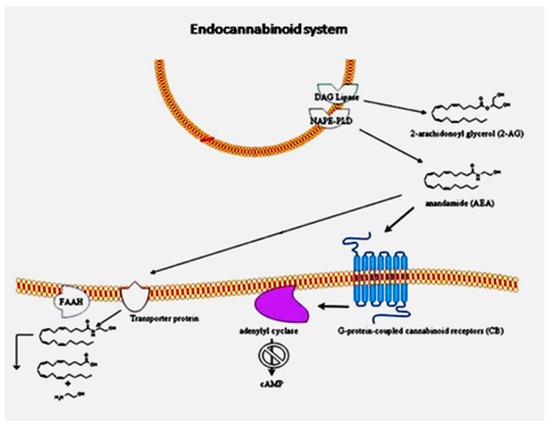
 “The Endocannabinoid System (ECS) is primarily responsible for maintaining homeostasis, a balance in internal environment (temperature, mood, and immune system) and energy input and output in living, biological systems.
  “
“ “Autism spectrum disorder (ASD) is a complex neurodevelopmental disorder with a multifactorial etiology. Latest researches are raising the hypothesis of a link between the onset of the main behavioral symptoms of ASD and the chronic neuroinflammatory condition of the autistic brain; increasing evidence of this connection is shedding light on new possible players in the pathogenesis of ASD.