Potential Anticancer Effect of Cannabis sativa L. Dichloromethane Extract Through Oxidative Stress-Related Pathways and the Inhibition of the Migration and Invasiveness of Human Breast Cancer Cells (MDA-MB-231 and MCF-7)

“Breast cancer remains a leading cause of cancer-related morbidity and mortality globally, highlighting the urgent need for novel therapeutic strategies.

This study investigates the molecular mechanisms underlying the anti-proliferative potential of Cannabis sativa dichloromethane extract (C. sativa DCM) on oxidative stress, apoptosis, and invasion in human breast cancer cells.

Key biomarkers, such as antioxidant enzymes (Superoxide Dismutase (SOD) and Glutathione (GSH)), the transcription factor Nrf2, apoptotic proteins (p53, caspase-8 and 9), metalloproteinase (MMP-1 and MMP-9), and Transforming Growth Factor Beta (TGF-β) were examined. Cytotoxicity was assessed using an MTT assay in the MDA-MB-231 and MCF-7 breast cancer cell lines, with comparisons to normal skin fibroblasts (HS27). Oxidative stress biomarkers were quantified using enzymatic assays and ELISA kits, while apoptotic and anti-metastatic factors were determined by Western blotting.

Results demonstrated that C. sativa DCM extract induced significant cell death in a concentration-dependent manner, with IC50 values of 75.46 ± 0.132 μg/mL for MDA-MB-231 and 78.68 ± 0.50 μg/mL for MCF-7 cells. The extract decreased SOD and GSH levels while increasing p53 and caspase activity, confirming apoptosis activation. Additionally, C. sativa DCM inhibited migration and invasion by downregulating MMP-1, MMP-9, and TGF-β. The anti-proliferative potential of C. sativa DCM in breast cancer cells is mediated through a continuous biological pathway involving oxidative stress modulation, apoptotic signaling, and anti-invasive effects. Phytochemical analysis revealed terpenoids and steroids, including compounds like cannabidiol and tetrahydrocannabinol acid.

These findings suggest that C. sativa DCM extract holds potential as an anti-breast cancer therapeutic and warrants further preclinical and clinical investigations.”

https://pubmed.ncbi.nlm.nih.gov/41516029

Cannabis sativa L., known in many slang languages as marijuana, bhang, ganja, for instance, is an herbaceous species originating from Central Asia and widely distributed around the world. It has been used as a source of fiber, food, oil, and for its multiple curative properties, including anti-parasitic, antipyretic, antibacterial, antitumor, vermifuge, dermatic, and pain-killing properties for centuries. Phytocannabinoids, derived from cannabis, have shown anti-cancer activity in cell lines”

“Based on these research findings, we concluded that C. sativa DCM extract possesses the potential to inhibit the proliferation of breast cancer cells (MCF-7 and MDA-MB-231), while exhibiting minimal cytotoxic effect on normal skin cells Hs27.”

“Given these conclusive findings, the presence of bioactive phytochemicals in C. sativa DCM can be considered as a potential source of anti-cancer agents.”

https://www.mdpi.com/1422-0067/27/1/152


Aromatisation-based extract engineering of Cannabis sativa L. Unveils rare cannabinoids with anticancer potential

“Cancer remains a major global health challenge, necessitating new, effective therapies. Phytocannabinoids from Cannabis sativa L. show significant anticancer potential, yet their natural scarcity limits research and development.

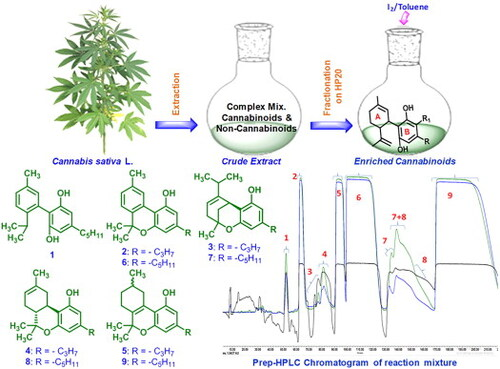
This study presents an innovative extract engineering approach to generate rare varin-type cannabinoids from abundant precursors. Through this strategy, nine cannabinoid analogues were synthesised, including four rare varin-type compounds, and screened against five human cancer cell lines.

Among them, cannabinovarin (CBNV) and Δ6a,10a-THCV exhibited potent cytotoxicity against breast (MCF-7) and colon (HCT-116) cancer cells, with IC50 values of 15-30 µM. Mechanistic investigations revealed apoptosis induction via mitochondrial membrane disruption and reactive oxygen species generation.

These findings establish extract engineering as a rapid and efficient route to access rare cannabinoids, highlighting CBNV and Δ6a,10a-THCV as promising anticancer leads for further mechanistic and in vivo evaluation.”

https://pubmed.ncbi.nlm.nih.gov/41355760

https://www.tandfonline.com/doi/full/10.1080/14786419.2025.2595528

The use of cannabis in supportive care and treatment of brain tumor

“Cannabinoids are multitarget substances. Currently available are dronabinol (synthetic delta-9-tetrahydrocannabinol, THC), synthetic cannabidiol (CBD) the respective substances isolated and purified from cannabis, a refined extract, nabiximols (THC:CBD = 1.08:1.00); and nabilone, which is also synthetic and has properties that are very similar to those of THC.

Cannabinoids have a role in the treatment of cancer as palliative interventions against nausea, vomiting, pain, anxiety, and sleep disturbances. THC and nabilone are also used for anorexia and weight loss, whereas CBD has no orexigenic effect. The psychotropic effects of THC and nabilone, although often undesirable, can improve mood when administered in low doses. CBD has no psychotropic effects; it is anxiolytic and antidepressive.

Of particular interest are glioma studies in animals where relatively high doses of CBD and THC demonstrated significant regression of tumor volumes (approximately 50% to 95% and even complete eradication in rare cases). Concomitant treatment with X-rays or temozolomide enhanced activity further.

Similarly, a combination of THC with CBD showed synergistic effects. Although many questions, such as on optimized treatment schedules, are still unresolved, today’s scientific results suggest that cannabinoids could play an important role in palliative care of brain tumor patients.”

https://pubmed.ncbi.nlm.nih.gov/31385997

“For medicinal use, evidence goes back 5000 years to the Chinese emperor Chen Nung. Archeological findings suggest that palliative cancer treatment with cannabis was already in use 2500 years ago.”

“Cannabinoids Can be Used in Palliative Care for a Wide Range of Symptoms.”

“Cannabinoids Reduce Nausea and Vomiting.”

“Increase of Appetite and Weight is Only Seen with CB1 Agonists such as THC.”

“Cannabinoids Moderately but Consistently Improve Chronic Pain.”

“Cannabinoids Demonstrate Antitumor Effects on Glioma Cells.”

“Cannabinoids are Highly Effective in Animal Glioma Models.”

“Anticancer Effects of Cannabinoids may be able to Prolong Life.”

“Funded by the National Institutes of Health to find evidence that marijuana damages the immune system, the study found instead that THC slowed the growth of 3 kinds of cancer in mice—lung and breast cancer, and a virus-induced leukemia. The US Drug Enforcement Agency quickly shut down the Virginia study and all further cannabis/tumor research even though the researchers demonstrated remarkable antitumor effects.”

https://academic.oup.com/nop/article/4/3/151/2918616?login=false

Cannabidiol sensitizes triple-negative breast cancer cells to NK cell-mediated killing via EGFR inhibition and FAS upregulation

“Background: Triple-negative breast cancer (TNBC) is a highly aggressive subtype lacking targeted therapies, presenting a significant clinical challenge. The epidermal growth factor receptor (EGFR) plays a crucial role in TNBC progression, making it a promising target for therapeutic intervention. This study investigated the potential of cannabidiol (CBD) as a therapeutic agent that targets EGFR and associated signaling pathways in TNBC.

Methods: The TNBC cell lines MDA-MB-468 and MDA-MB-231 were treated with CBD in the presence or absence of epidermal growth factor (EGF). Cell proliferation, FAS protein expression, and activation of the EGFR signaling pathway were assessed. The cytotoxic effects of CBD on TNBC cells and natural killer (NK) cells were also evaluated.

Results: CBD significantly elevated FAS protein expression in MDA-MB-468 cells compared to EGF treatment alone (125.29 ± 5.87% vs. 83.07 ± 1.30%, p < 0.0001). Further molecular analysis revealed that CBD inhibited EGFR signaling by downregulating key oncogenic proteins, including KRAS, PI3K, and AKT. Moreover, CBD enhanced the cytotoxic effects of NK-92 cells, reducing the viability of MDA-MB-468 cells more effectively than EGF alone did (52.12 ± 1.28% vs. 113.69 ± 1.68%, p < 0.0001).

Conclusions: These findings suggest that CBD holds promise as a potential anticancer agent in TNBC by disrupting EGFR signaling and promoting apoptosis. However, further studies are necessary to optimize its therapeutic window and minimize adverse effects, particularly regarding its potential cytotoxicity to immune cells.”

https://pubmed.ncbi.nlm.nih.gov/41188939/

“Our findings underscore the therapeutic potential of CBD in TNBC by targeting EGFR-driven pathways, modulating FAS expression, and enhancing immune-mediated killing. This study offers renewed hope for patients facing this challenging disease, positioning CBD as a potentially potent and multifaceted therapeutic agent.”

https://jcannabisresearch.biomedcentral.com/articles/10.1186/s42238-025-00340-5

Appraising the “entourage effect”: Antitumor action of a pure cannabinoid versus a botanical drug preparation in preclinical models of breast cancer

Biochemical Pharmacology

“Breast cancer is the second leading cause of death among women. Although early diagnosis and development of new treatments have improved their prognosis, many patients present innate or acquired resistance to current therapies. New therapeutic approaches are therefore warranted for the management of this disease.

Extensive preclinical research has demonstrated that cannabinoids, the active ingredients of Cannabis sativa, trigger antitumor responses in different models of cancer.

Most of these studies have been conducted with pure compounds, mainly Δ9-tetrahydrocannabinol (THC). The cannabis plant, however, produces hundreds of other compounds with their own therapeutic potential and the capability to induce synergic responses when combined, the so-called “entourage effect”.

Here, we compared the antitumor efficacy of pure THC with that of a botanical drug preparation (BDP).

The BDP was more potent than pure THC in producing antitumor responses in cell culture and animal models of ER+/PR+, HER2+ and triple-negative breast cancer. This increased potency was not due to the presence of the 5 most abundant terpenes in the preparation. While pure THC acted by activating cannabinoid CB2 receptors and generating reactive oxygen species, the BDP modulated different targets and mechanisms of action. The combination of cannabinoids with estrogen receptor- or HER2-targeted therapies (tamoxifen and lapatinib, respectively) or with cisplatin, produced additive antiproliferative responses in cell cultures. Combinations of these treatments in vivo showed no interactions, either positive or negative.

Together, our results suggest that standardized cannabis drug preparations, rather than pure cannabinoids, could be considered as part of the therapeutic armamentarium to manage breast cancer.”

“It is well documented that cannabinoids, the active ingredients of the hemp plant Cannabis sativa, produce antitumor responses in preclinical models of cancer, by tackling different stages of cancer progression such as uncontrolled cancer cell proliferation and survival, angiogenesis and metastasis. The vast majority of these studies has been performed with pure compounds, mainly Δ9-tetrahydrocannabinol (THC). The cannabis plant, however, produces hundreds of additional compounds (other cannabinoids, terpenoids, flavonoids, polyphenols, etc.) that have been much less studied but show promising therapeutic properties (anti-proliferative, anti-inflammatory, immune-stimulant, etc.), and/or the potential capability of enhancing some THC actions, the so-called “entourage effect”.

https://www.sciencedirect.com/science/article/abs/pii/S0006295218302387

UHPLC-Q-TOF-MS profiling and multifaceted antioxidant, antihyperglycemic and anticancer potential of Cannabis sativa sugar leaves: An unexplored source of cannabidiol, terpenes and polyphenols

“Cannabis sativa is one of the most extensively researched plant species that holds promising therapeutic and ethnomedicinal significance.

Various parts of the species including fan leaves, flowers and trichomes are well documented for their richness in cannabidiol (CBD) and tetrahydrocannabidiol (THC) contents. However, an overlooked part of C. sativa, the sugar leaves, which are wasted during harvesting has plethora of CBD and THC and yet to investigated.

In this study we investigated the ethanol extract of sugar leaves of C. sativa (CSLE) for chemical composition through UHPLC-Q-TOF-MS analysis and pharmacological potential by using various in vitro antioxidant, antidiabeticnitric oxide inhibition and anticancer studies. Furthermore, in silicomolecular docking analysis was performed for 10 selected compounds against α-glucosidase and α-amylase.

The UHPLC-Q-TOF-MS profiling of CSLE revealed the tentative identification of 37 compounds including CBD, THC, terpenes and flavonoids. The cytotoxicity studies presented highest activity against breast cancer cell lines (MDA-MB-231, IC50= 18.12 ± 1.13 µg/mL) followed by lung, liver and colorectal cancer cell lines.

Similarly, CSLE showed significant antidiabetic activity by inhibiting α-glucosidase (IC50= 3.13 ± 2.78 µg/mL) and α-amylase. The in vitro antioxidant assays gave highest activity in ABTS followed by DPPH method as well as potentially inhibited nitric oxide (NO) formation. The computational analysis revealed good docking interaction of CBD, THC, selected terpene and flavonoids against α-glucosidase and α-amylase.

Overall, the findings present the sugar leaves of C. sativa as the undisputed rich source of CBD, THC, terpenes and flavonoids with multifaceted therapeutic potential in diabetes, inflammation and different types of cancers. However, there is need of further investigations on toxicity profile and in-depth pharmacological evaluation through in vivo disease bearing animal models.”

https://www.sciencedirect.com/science/article/abs/pii/S2950199725001429

“The research titled “UHPLC-Q-TOF-MS profiling and multifaceted antioxidant, antihyperglycemic and anticancer potential of Cannabis sativa sugar leaves: An unexplored source of cannabidiol, terpenes and polyphenols” identifies sugar leaves of Cannabis sativa as a potential source for multiple therapeutic compounds, including cannabidiol, terpenes, and polyphenols. Through UHPLC-Q-TOF-MS analysis, the study found that these sugar leaf extracts exhibit antioxidant, antihyperglycemic (anti-diabetic), and anticancer activities against various cancer cell lines. The specific compounds present in the sugar leaves, when combined with other plant compounds like terpenes and flavonoids, demonstrate a phenomenon known as the entourage effect, which could enhance their therapeutic potential.”

Folate-chitosan nanoparticle delivery of cannabidiol for targeted triple-negative breast cancer therapy

“Objectives: Triple-negative breast cancer (TNBC) is an aggressive subtype of breast cancer with limited treatment options. Cannabidiol (CBD) has demonstrated anticancer potential, but its clinical application is hindered by poor solubility and nonspecific distribution. This study aimed to develop a folic acid-modified chitosan (FA-CS) nanoparticle system to enhance the targeted delivery and therapeutic efficacy of CBD against TNBC.

Methods: FA-CS@CBD nanoparticles were synthesized and characterized for morphology, size distribution, zeta potential, and stability. Their in vitro anticancer effects were evaluated through cytotoxicity, cellular uptake, apoptosis, and reactive oxygen species (ROS) assays in 4T1 breast cancer cells. The in vivo antitumour efficacy and systemic toxicity were assessed using a TNBC mouse model.

Key findings: FA-CS@CBD nanoparticles exhibited uniform morphology, stable physicochemical properties, and efficient cellular uptake. Compared to free CBD, the nanoparticles significantly enhanced ROS production, induced apoptosis, and inhibited migration in 4T1 cells. In vivo studies demonstrated strong tumour-targeting capability and a tumour inhibition rate of 68.07%, with minimal systemic toxicity.

Conclusions: The FA-CS@CBD nanoparticle system improved the targeted delivery and therapeutic effects of CBD against TNBC while maintaining favorable biocompatibility. These findings highlight the potential of FA-CS-based nanocarriers for enhancing CBD clinical application in breast cancer therapy.”

https://pubmed.ncbi.nlm.nih.gov/40838692/

https://academic.oup.com/jpp/advance-article-abstract/doi/10.1093/jpp/rgaf072/8239116?redirectedFrom=fulltext&login=false

Transient CB2 receptor activation triggers irreversible luminal differentiation via chromatin remodeling in breast cancer

bioRxiv

“Cellular plasticity enables cancer cells to escape therapy by adopting stem-like or alternate lineage states. Here, we identify a mechanism by which cannabinoid receptor 2 (CB2R) activation promotes irreversible lineage commitment in breast cancer. Using patient-derived and murine organoids, we show that brief, low-dose exposure to CB2R agonists—either phytogenic or synthetic—induces a basal-to-luminal transition, accompanied by reduced self-renewal, invasiveness, and tumor-initiating potential. These changes are retained under conditions that normally promote dedifferentiation, including fibroblast co-culture, immune pressure, and mechanical shear stress.

Mechanistically, CB2R engagement initiates a transient chromatin remodeling program, marked by early expression of pluripotency-associated genes followed by silencing and differentiation commitment. This epigenetically stabilized state renders tumor cells more responsive to tamoxifen and limits the emergence of resistant clones.

Our findings uncover a previously unrecognized role for CB2R in modulating cancer cell identity and suggest new opportunities to constrain tumor plasticity by directing differentiation through a drug-responsive pathway.”

https://www.biorxiv.org/content/10.1101/2025.07.29.667375v2

CB2R-induced differentiation epigenetically restrains cancer plasticity enabling adaptive therapy

“Tumor adaptability relies on the ability of cancer cells to dedifferentiate and acquire stem-like features, fueling therapeutic resistance and metastasis. Differentiation therapy aims to reprogram tumor cells into more mature, less aggressive states to counteract this plasticity.

Here, we identify cannabinoid receptor 2 (CB2R) as a novel therapeutic target that promotes sustained differentiation in breast cancer. Using tumor-derived organoids from both mouse models and patient biopsies, we show that brief, low-dose exposure to phytogenic or synthetic CB2R ligands induces a basal-to-luminal switch, suppresses stemness, and reduces invasiveness and self-renewal. These phenotypic changes are associated with decreased tumor initiation and aggressiveness in vivo .

Transcriptomic profiling reveals that CB2R activation initiates transient chromatin remodeling and epigenetic reprogramming, resulting in a stably differentiated state. Importantly, CB2R-driven differentiation sensitizes tumor cells to tamoxifen, enabling lower therapeutic doses with improved efficacy-supporting the principles of adaptive therapy aimed at long-term disease control.

Our findings position CB2R modulation as a promising non-cytotoxic strategy to restrict cancer plasticity and enhance the effectiveness of existing breast cancer treatments.”

https://pubmed.ncbi.nlm.nih.gov/40766353/

Pilot Study of Cannabidiol for Treatment of Aromatase Inhibitor-Associated Musculoskeletal Symptoms in Breast Cancer

“Introduction: Aromatase inhibitor (AI) therapy reduces breast cancer recurrence risk. However, some patients stop treatment early because of AI-associated musculoskeletal symptoms (AIMSS). AIMSS is due in part to systemic inflammation. Cannabidiol (CBD) has anti-nociceptive and anti-inflammatory properties, making it a potential treatment option for AIMSS.

Methods: Women with stage 0-3 hormone receptor-positive breast cancer experiencing AIMSS enrolled in this phase 2 clinical trial. Patients received CBD (Epidiolex), titrated over 4 weeks to 100 mg BID, for a total of 15 weeks. Patient-reported outcomes were collected serially. The primary endpoint was the number of patients with at least a 2-point reduction in worst pain from baseline to 15 weeks. Statistical analysis was completed using paired t-tests and linear mixed models.

Results: Of 39 eligible patients, 28 completed protocol-directed study treatment. Eleven discontinued treatment due to toxicity (n = 5) or per patient preference (n = 6). Seventeen of 39 patients met the primary endpoint (43.6%, 95% CI [28%, 60%]). Worst pain improved 0.13 per week of treatment (p < 0.001) for all patients; average improvement in worst pain was 1.95 points at the end of 15 weeks. Of the 28 patients who completed the study, average reduction in worst pain was 2.36 points (95% CI [-3.22, -1.49]) between baseline and Week 15.

Conclusion: Treatment with CBD was safe, tolerable, and associated with improvement in joint pain for a subset of patients. Additional studies are needed to further understand the impact of CBD on AIMSS and which patients are most likely to benefit from CBD treatment.”

https://pubmed.ncbi.nlm.nih.gov/40751295/

“Treatment with CBD was associated with an improvement in AIMSS for a subset of patients. Use of CBD was safe and tolerable for women with hormone receptor-positive breast cancer.”

https://onlinelibrary.wiley.com/doi/10.1002/cam4.71117