Cannabis use does not cause schizophrenia

“According to a new report by a British government advisory body, the regular use of cannabis though it can have real and significant mental health effects it is unlikely to cause schizophrenia.

The Advisory Council on the Misuse of Drugs says that based on current evidence smoking cannabis was likely to increase the chances of developing schizophrenia by just one per cent.”

More: http://www.news-medical.net/news/2006/01/24/15577.aspx

Marijuana’s Link to Schizophrenia Debated – American News report

“With the growing use of medical marijuana to treat chronic pain and other health problems, the debate over the medical effects of the drug on the human mind continue to make their way through the medical community.

The latest salvo comes from researchers in Australia and England.  At the center of the debate is the possible relationship between marijuana (cannabis) and mental illnesses such as schizophrenia.

Castle cites one study that indicated people with schizophrenia had a lifetime rate of cannabis exposure of 97 percent – meaning almost all of them have tried the drug.  Yet, he also notes that most people who use cannabis do not develop schizophrenia, and that many people diagnosed with schizophrenia have never used cannabis.

“Therefore, it is likely that cannabis exposure is a ‘component cause’ that interacts with other factors to ‘cause’ schizophrenia or other psychotic disorders, but is neither necessary nor sufficient to do so alone,” Castle wrote.

However, the authors of the accompanying article are not as convinced that the prevailing scientific evidence proves a relationship exists between pot use and schizophrenia.”

More: http://americannewsreport.com/marijuanas-link-to-schizophrenia-debated-8817482

A false link between marijuana and mental illness

“The article published today in “Health News” makes the claim that smoking marijuana is “linked” to early onset of mental illness.

However, although the article implies some sort of cause and effect, that conclusion has no scientific basis. In fact, the authors of the study don’t even bother investigating whether marijuana use causes mental illness or if people with mental illness have a higher rate of smoking marijuana than the general public.

If marijuana caused mental illness, then cultures that have a higher rate of marijuana smoking than the U.S. should have a higher rate of mental illness. But in fact, the opposite is true. Cultures with higher rates of marijuana consumption have lower rates of mental illness than the United States. This would indicate that rather than marijuana causing mental illness, as your article implies, it is people with mental illness who are self medicating with marijuana in order to alleviate their symptoms.

This (more correct) reading of the data, however, does not fit the narrative being presented by the politicians who are making their careers by “getting tough” on marijuana smokers, nor does it fit the narrative of the manufacturers of the currently legal psychotropic drugs, like Prozac and Zoloft, who stand to lose billions of dollars if medical marijuana is legalized, and who funnel millions of dollars to those politicians who present their dubious science as fact.

Had your newspaper even taken the time to Google the Archive of General Psychiatry, you would have found that the “study” you cited was conducted by the “Genetic Risk and Outcome in Psychosis (GROUP) Investigators,” who publish only articles against medical marijuana. That alone should raise a red flag to anyone with a basic understanding of scientific research. When someone conducts numerous studies and publishes many articles that all draw the same conclusion, whether the evidence leads to that conclusion or not, the critical eye should suspect some ulterior motive at work. It’s not possible to keep an open mind when you have an axe to grind.”

William Smith, Baltimore

http://articles.baltimoresun.com/2011-02-09/news/bs-ed-marijuana-letter-20110209_1_mental-illness-medical-marijuana-lower-rates

Doubt cast on cannabis, schizophrenia link – ABC Science

“A new study in the UK has cast doubt on the supposed link between cannabis use and schizophrenia.

This latest study, led by Dr Martin Frisher of Keele University, examined the records of 600,000 patients aged between 16 and 44, but failed to find a similar link.

“An important limitation of many studies is that they have failed to distinguish the direction of association between cannabis use and psychosis,” the authors write in the latest edition of the journal Schizophrenia Research.

Not as predicted

Frisher and colleagues compared the trends of cannabis use with general practitioner records of schizophrenia.

They argue if cannabis use does cause schizophrenia, then an increase in cannabis use should be followed by an increase in the incidence of schizophrenia.

According to the study, cannabis use in the UK between 1972 and 2002 has increased four-fold in the general population, and 18-fold among under-18s.

Based on the literature supporting the link, the authors argue that this should be followed by an increase in schizophrenia incidence of 29% between 1990 and 2010.

But the researchers found no increase in the diagnosis of schizophrenia or other psychotic disorders during that period. In fact some of the data suggested the incidence of these conditions had decreased.

“This study does not therefore support the specific causal link between cannabis use and the incidence of psychotic disorders,” the authors say”

http://www.abc.net.au/science/articles/2009/09/01/2673334.htm

Cannabis/schizophrenia link questioned

“The Swiss government is questioning the results of a study showing a link between marijuana use and schizophrenia.

The Zurich University study showed a higher incidence of schizophrenia in the 1990s in the age groups most likely to use cannabis, Swissinfo said Wednesday.

“We know from other experimental studies that cannabis can cause psychosis, but we have now established a clear link to schizophrenia for the first time,” study co-author Wulf Rossler said.

Swissinfo said the Federal Health Office is questioning the report, saying the patients’ drug histories and other medical details remained unknown.

“It does not uncover the medical history of the patients, for instance the consumption of psychotic substances or other factors that could lead to psychotic illnesses,” the health office in a statement.”

http://phys.org/news104659898.html

Minimal Relationship Between Cannabis And Schizophrenia Or Psychosis Suggested By New UK Study

“Last year the UK government reclassified cannabis from a class C to a class B drug, partly out of concerns that cannabis, especially the more potent varieties, may increase the risk of schizophrenia in young people. But the evidence for the relationship between cannabis and schizophrenia or psychosis remains controversial. A new study has determined that it may be necessary to stop thousands of cannabis users in order to prevent a single case of schizophrenia.

Scientists from Bristol, Cambridge and the London School of Hygiene and Tropical Medicine took the latest information on numbers of cannabis users, the risk of developing schizophrenia, and the risk that cannabis use causes schizophrenia to estimate how many cannabis users may need to be stopped to prevent one case of schizophrenia. The study found it would be necessary to stop 2800 heavy cannabis users in young men and over 5000 heavy cannabis users in young women to prevent a single case of schizophrenia. Among light cannabis users, those numbers rise to over 10,000 young men and nearly 30,000 young women to prevent one case of schizophrenia.

That’s just part of the story. Interventions to prevent cannabis use typically do not succeed for every person who is treated. Depending on how effective an intervention is at preventing cannabis use, it would be necessary to treat even higher numbers of users to achieve the thousands of successful results necessary to prevent a very few cases of schizophrenia.

Matt Hickman, one of the authors of the report published last week in the scholarly journal Addiction, said that “preventing cannabis use is important for many reasons – including reducing tobacco and drug dependence and improving school performance. But our evidence suggests that focusing on schizophrenia may have been misguided. Our research cannot resolve the question whether cannabis causes schizophrenia, but does show that many people need to give up cannabis in order to have an impact on the number of people with schizophrenia. The likely impact of re-classifying cannabis in the UK on schizophrenia or psychosis incidence is very uncertain.”

Source:
Amy Molnar
Wiley-Blackwell”

http://www.medicalnewstoday.com/releases/168519.php

Anti-inflammatory compound from cannabis found in herbs

“A compound found in cannabis as well as in herbs such as basil and oregano could help to treat inflammatory bowel diseases and arthritis, Swiss scientists believe.”

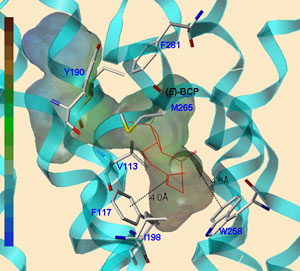
Model of the interaction of BCP with the CB2 receptor

“(E)-beta-caryophyllene (BCP) is an aromatic sesquiterpene that has used for many years as a food additive because of its peppery flavour. The researchers now say that it interacts selectively with one of two cannabinoid receptors, CB2, blocking the chemical signals that lead to inflammation without triggering cannabis’s mood-altering effects.
 
Many cannabinoids bind to the CB2 receptor, but few target it selectively. Most also interact with CB1, which is responsible for cannabis’ psychoactive properties. CB1 is found in brain tissue, whereas CB2is found only in cells elsewhere in the body.”
 

More:http://www.rsc.org/chemistryworld/News/2008/June/24060801.asp

HIV Infection Weakened By Marijuana: Study Shows Cannabis Helps Synthetic Anti-inflammatory Substances

“Researchers discovered that the synthetic anti-inflammatory substances distantly related to the active ingredient of marijuana may be able to weaken the most common strain of HIV while inside one of its major hideouts, the immune cells known as macrophages.”

HIV REsearch

“Despite drug therapy, HIV is notorious for hiding within certain types of cells, where it reproduces at a slower rate and eventually gives rise to chronic inflammation.

A study done by researchers at Temple University School of Medicine’s Department of Pathology and Laboratory Medicine(TUSM) and Center for Substance Abuse Research discovered that the synthetic anti-inflammatory substances distantly related to the active ingredient of marijuana may be able to weaken the most common strain of HIV while inside one of its major hideouts, the immune cells known as macrophages.”

More: http://www.beautyworldnews.com/articles/3589/20130502/hiv-infection-weakened-marijuana-study-shows-cannabis-helps-synthetic-anti.htm

Foot Pain Associated With HIV Reduced By Smoked Cannabis In Placebo Trial

“In a randomized placebo-controlled trial, patients smoking cannabis experienced a 34 percent reduction in intense foot pain associated with HIV- twice the rate experienced by patients who smoked placebo.

“This placebo-controlled clinical trial showed that people with HIV who smoked cannabis had substantially greater pain reduction than those who did not smoke the cannabis,” said study lead author Donald I. Abrams, MD, UCSF professor of clinical medicine.

 “These results provide evidence that there is a measurable medical benefit to smoking cannabis for these patients.”

The results of this first study indicate that cannabis may indeed be useful in the amelioration of a very distressing, disabling, and difficult to treat complication of HIV…”

More: http://www.medicalnewstoday.com/releases/62917.php

Researchers Have Discovered Synthetic Agents Used To Treat HIV Inflammation – Medical News Today

“HIV can cause serious inflammation, regardless of drug therapy, as it develops slowly in immune cells called macrophages. However, new research conducted at the Temple University School of Medicine’s Department of Pathology and Laboratory Medicine and Center for Substance Abuse Research (CSAR) has just found that there are synthetic agents with anti-inflammatory properties, related to the active ingredient in cannabis, THC (tetrahydrocannabinol) which could limit and treat the chronic inflammation.

These findings suggest that CB2 agonists could be used along with antiretroviral drugs which could lead to a new form of therapy for HIV/AIDS.

It also suggests that the human immune system itself could be used to fight off the HIV infection.

According to Persidsky: “Our study suggests that the body’s own natural defenses can be made more powerful to fight some of the worst symptoms of HIV.”

Stimulating CB2 receptors could also be applied for treating other infections.”

More: http://www.medicalnewstoday.com/articles/260152.php